
How often do electrical gloves have to be tested?
Rubber insulating gloves must be electrically tested before they are first issued and at least every 6 months after that. They also go back for a test whenever their insulating value is suspect, after any repair, and after they have been used without leather protectors. A glove that was tested but sat in stock may not be issued unless the test was within the last 12 months. Besides the lab test, the wearer inspects the gloves and gives them an air test before each day’s use and after anything that could have damaged them. Blankets and sleeves are on a 12-month cycle.
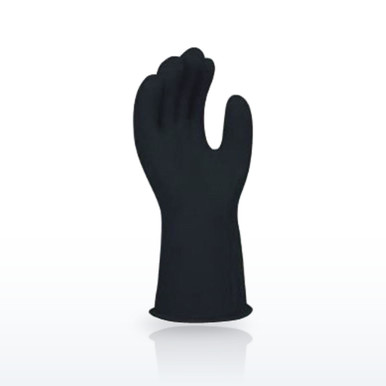 Salisbury Class 0 rubber insulating gloves, 11 inchMaximum use voltage 1,000 V AC. Protectors sold separately.
Why retest a glove that looks fine? Rubber ages. Ozone, sunlight, heat, oil and flexing open cracks too small to see, and a pinhole that passes an air test can still let current through at 7,500 volts. The electrical proof test puts the glove at a voltage well above its use rating and watches for leakage current; it is the only check that finds a glove which has quietly stopped insulating. OSHA fixed the interval at 6 months for gloves because they take more abuse than any other rubber insulating equipment.
When does OSHA require a test?
The schedule is Table I-5 of 1910.137. Every entry is a separate trigger; any one of them sends the glove to the test lab.
What is the daily inspection and air test?
Before each day’s use, and immediately after any incident that could reasonably be suspected of causing damage, the wearer inspects the gloves. Gloves also get an air test: the cuff is rolled or the glove is inflated so the rubber stretches, and the wearer looks and listens for leaks and feels for weak spots. Any glove with a hole, tear, puncture or cut, ozone cutting or checking, an embedded foreign object, or a change in texture (swelling, softening, hardening, stickiness or inelasticity) may not be used. A glove with any other defect that might affect its insulating properties is removed from service and sent for testing.
29 CFR 1910.137(c)(2)(ii), (c)(2)(iii)(A) through (E) and (c)(2)(iv).Between uses the gloves are cleaned as needed and stored where light, temperature extremes, excessive humidity, ozone and anything else that could damage them cannot reach them: a glove bag, cuff up, not the dash of the truck.
29 CFR 1910.137(c)(2)(v) and (c)(2)(vi).What do the glove classes mean?
| Class | Maximum use voltage, AC | AC proof-test voltage | DC proof-test voltage |
|---|---|---|---|
| 00 | 500 V | 2,500 V | 10,000 V |
| 0 | 1,000 V | 5,000 V | 20,000 V |
| 1 | 7,500 V | 10,000 V | 40,000 V |
| 2 | 17,000 V | 20,000 V | 50,000 V |
| 3 | 26,500 V | 30,000 V | 60,000 V |
| 4 | 36,000 V | 40,000 V | 70,000 V |
Maximum use voltage is the highest phase-to-phase AC voltage of the circuit the glove may be used on; the proof-test voltage is what the lab applies at each test. Every glove is marked with its class and with Type I (not ozone-resistant) or Type II (ozone-resistant) on the cuff, and the marking must not impair the insulation. Equipment that has been through a minimum breakdown voltage test may not be used for electrical protection. Rubber insulating gloves meeting ASTM D120 are deemed to comply with the manufacture and marking paragraph.
29 CFR 1910.137 Table I-4 (maximum use and retest voltages); Table I-1 and Table I-2 (AC and DC proof-test voltages); 1910.137(a)(1)(ii) through (iv) marking; (a)(2)(iii); note to paragraph (a) listing ASTM D120.
Do you have to wear leather protectors over them?
Yes, with two narrow exceptions. Protector gloves are worn over insulating gloves to keep the rubber from being cut, punctured or abraded. Class 0 gloves may be used without protectors under limited-use conditions where small equipment and parts manipulation requires unusually high finger dexterity. Class 00 gloves may be used without protectors under the same limited-use conditions when the voltage does not exceed 250 V AC or 375 V DC. In both cases extra care is taken in the inspection, and the gloves may not be reused until retested. Protectors are sized to the rubber glove and bought separately; the band below lists them.
29 CFR 1910.137(c)(2)(vii)(A) and (B) and the note that follows; Table I-5, gloves: after use without protectors.Who does the testing, and what record is kept?
The standard does not name a lab. It requires a test method that reliably indicates whether the equipment can withstand the voltages involved, and it notes that the ASTM F496 in-service care standard describes acceptable methods. Most employers send gloves to an accredited test lab on a swap program, or the glove manufacturer offers the service. The employer must certify that the equipment has been tested; the certification identifies the equipment and the date of the test and is available to employees and to OSHA on request. Labs stamp the test date on the cuff, which is what an inspector reads.
29 CFR 1910.137(c)(2)(ix) and its note (ASTM F496); (c)(2)(xii) certification.Equipment that fails an inspection or a test may not be used by employees. The only salvage the standard allows is for line hose (cut off the defective length) and blankets (cut away the defective area); a failed glove is out of service unless it is repaired and then retested. Most crews cut the cuff off a failed glove so it cannot find its way back into a truck.
29 CFR 1910.137(c)(2)(x) and (c)(2)(xi).Rubber insulating gloves and leather protectors
18 items · prices liveClass, cuff length and maximum use voltage are as published by the manufacturer under ASTM D120; each glove ships with its factory test date. Protectors are sized to the rubber glove. Free shipping on orders over $199.
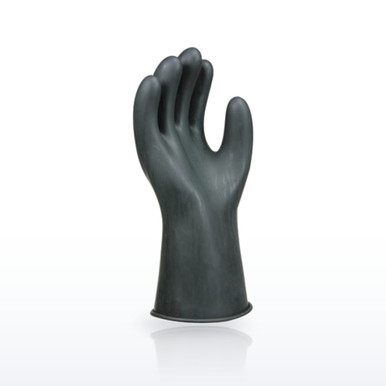
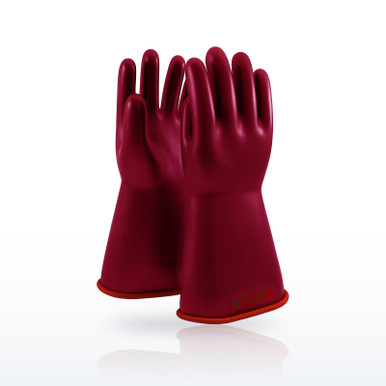
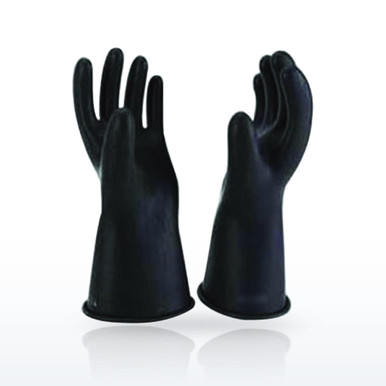
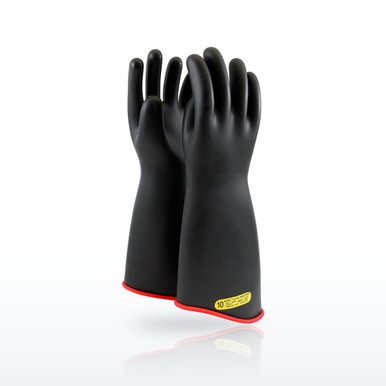
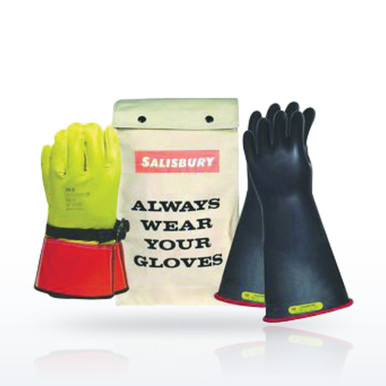

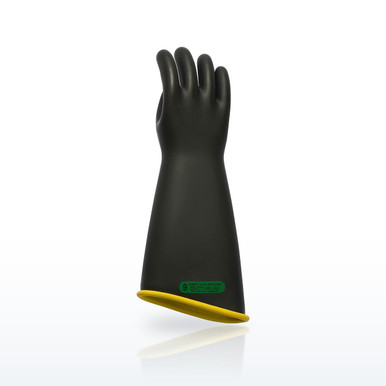
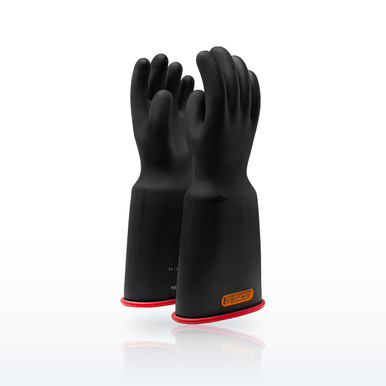

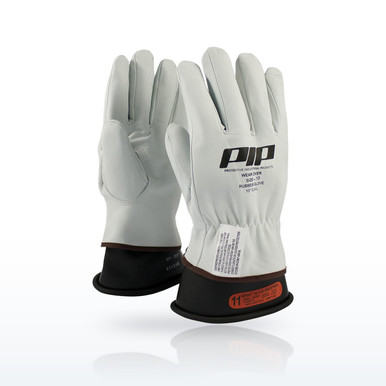
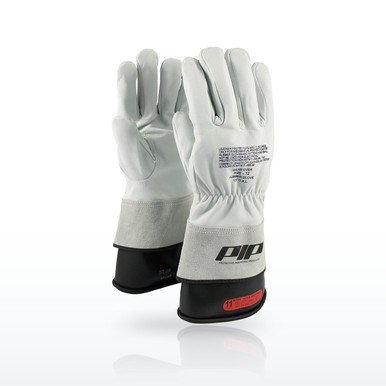
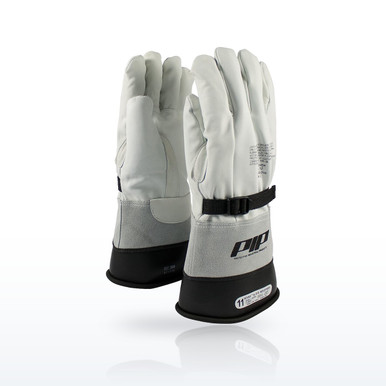
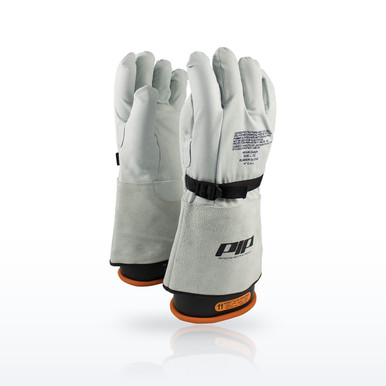
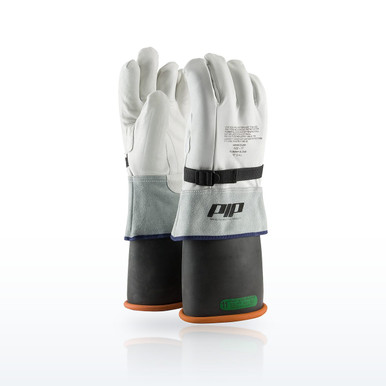
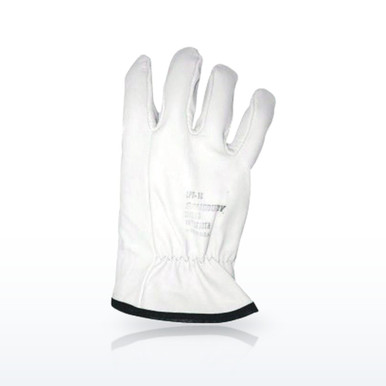
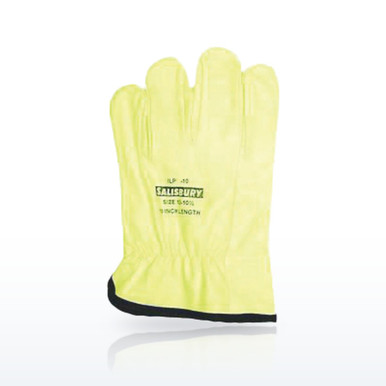
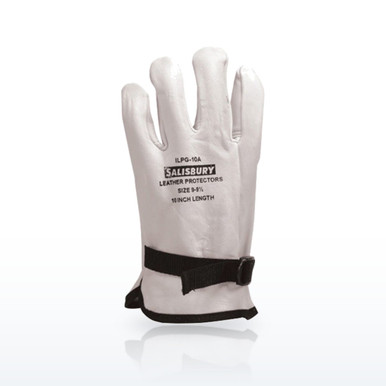
Classes and lengths not listed, and glove bags and inflators, are quoted on request: call (925) 215-7337.
Questions people ask
How often must rubber insulating gloves be tested?
Before first issue and every 6 months thereafter, plus whenever their insulating value is suspect, after repair, and after use without protectors. (1910.137 Table I-5.)
How long can tested gloves sit in stock?
12 months from the test date. After that they must be retested before they are issued. (Table I-5, footnote 1.)
How often are insulating sleeves and blankets tested?
Every 12 months, before first issue, when suspect and after repair. Line hose and covers only when suspect or after repair.
What is the glove air test?
A daily check in which the glove is inflated, by rolling the cuff or with a portable inflator, and inspected for leaks and weak spots. Required before each day’s use along with the visual inspection. (1910.137(c)(2)(ii).)
What class of glove do I need?
The class whose maximum use voltage covers the circuit: Class 00 to 500 V, Class 0 to 1,000 V, Class 1 to 7,500 V, Class 2 to 17,000 V, Class 3 to 26,500 V, Class 4 to 36,000 V AC. (Table I-4.) The employer’s hazard assessment decides.
Do Class 0 gloves need leather protectors?
Yes, except under limited-use conditions where fine finger work is required; then they may be worn without protectors but must be retested before the next use. (1910.137(c)(2)(vii)(A).)
Can I use electrical gloves that failed the air test?
No. Any glove with a hole, tear, cut, ozone checking, embedded object or texture change may not be used. (1910.137(c)(2)(iii).)
Does the employer have to keep test records?
The employer must certify that the equipment was tested, identifying the equipment and the test date, and make the certification available on request. (1910.137(c)(2)(xii).)
Standards and ratings on this page are as published in the documents named and by the manufacturers named. The employer’s hazard assessment and written program decide what applies at a given workplace. Verify a rating on the product and its spec sheet before use.