
MIG vs stick vs TIG welding: what each process is, and what PPE each one needs
All three join metal with an electric arc; they differ in what carries the arc and what keeps air off the molten weld. Stick (shielded metal arc, SMAW) uses a flux-coated rod that burns away as it feeds, with the flux making the shielding gas and slag; it works outdoors and on dirty steel. MIG (gas metal arc, GMAW) feeds a bare wire from a spool through a gun, with a bottled shielding gas; fast, easy to learn, indoor work. TIG (gas tungsten arc, GTAW) holds the arc on a tungsten electrode that does not melt, with filler rod fed by the other hand and argon shielding; slow, precise, clean, and the process for aluminum and stainless. The PPE follows the heat and the spatter: stick throws the most, TIG the least, and the gloves run from heavy split cowhide to thin goatskin in that order.
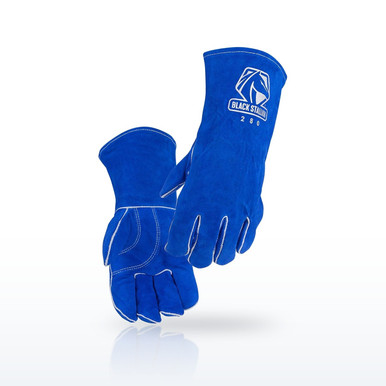
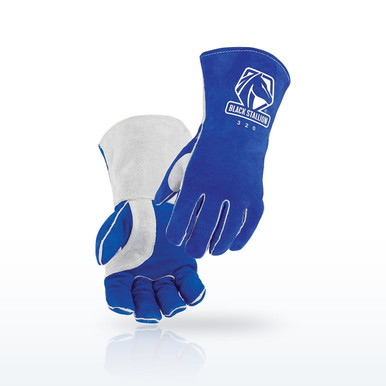
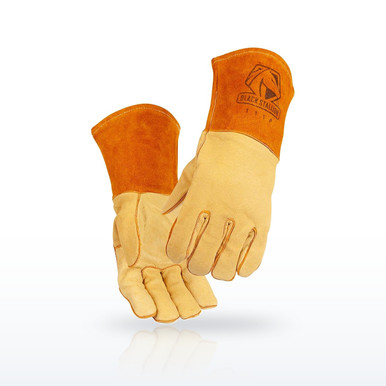
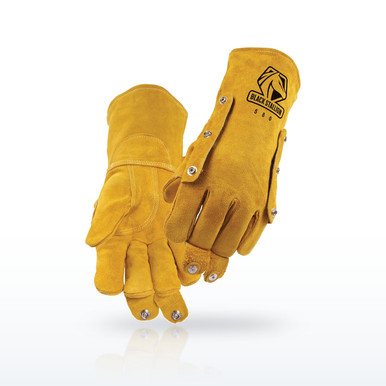
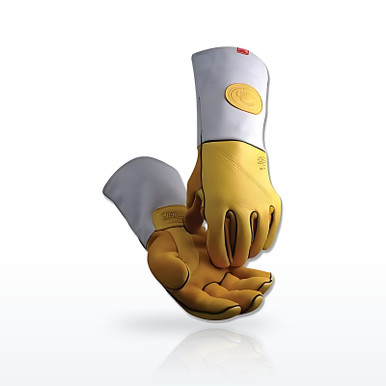
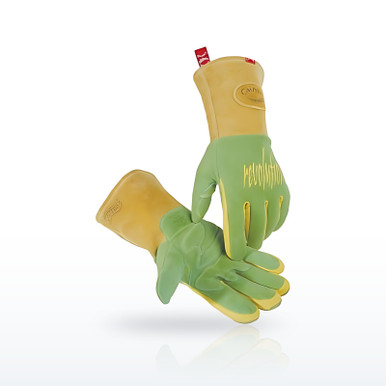
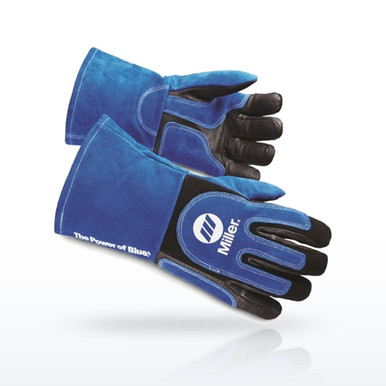
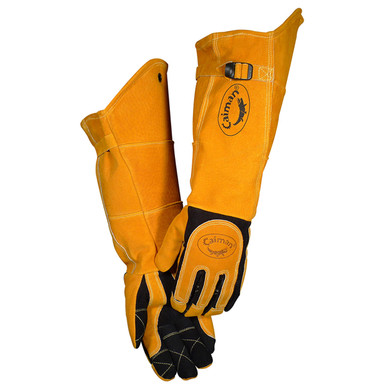
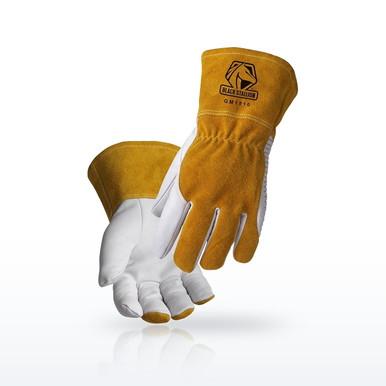
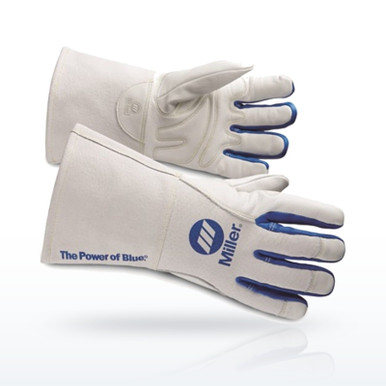
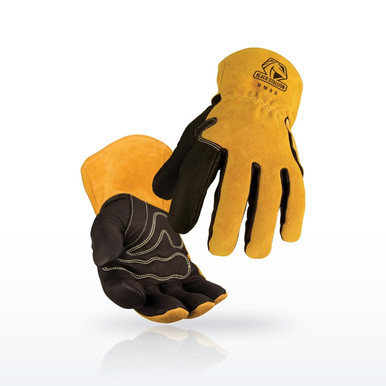
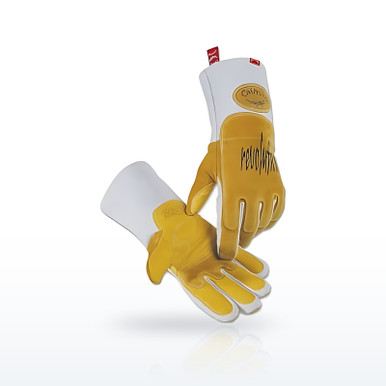
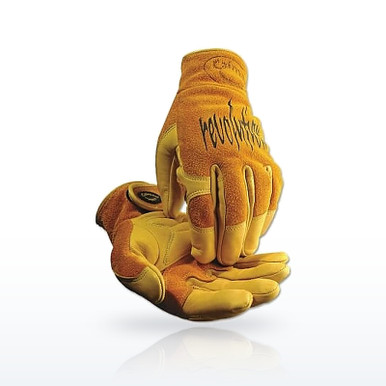
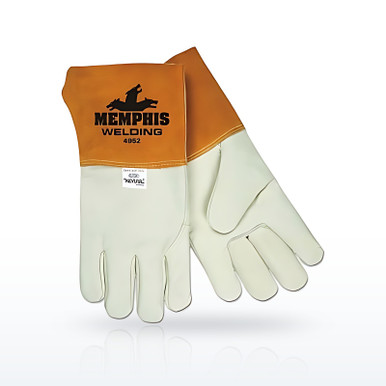
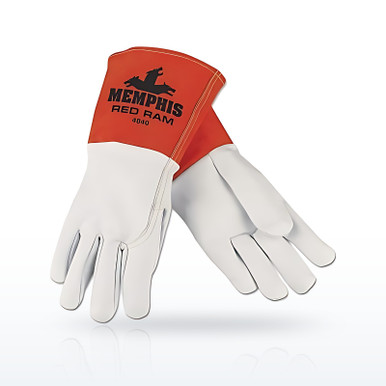
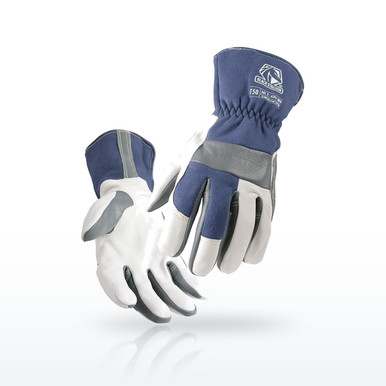
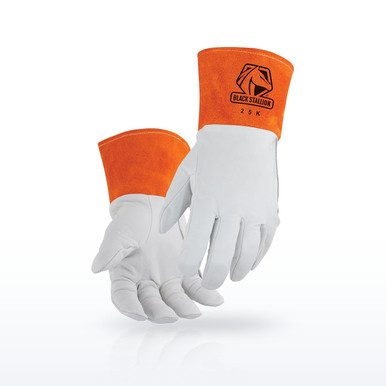
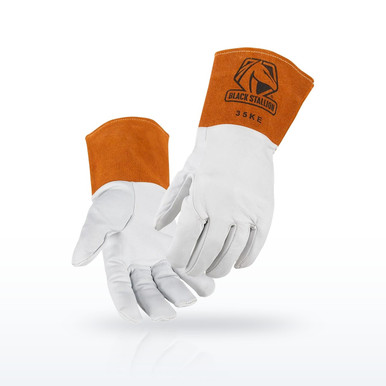
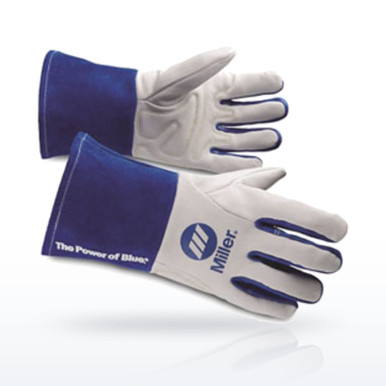
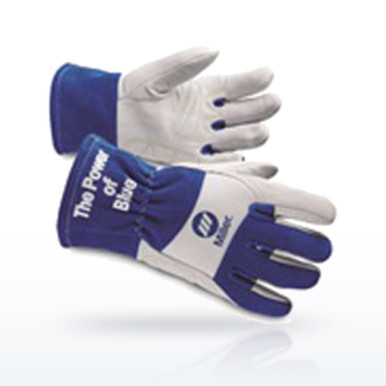
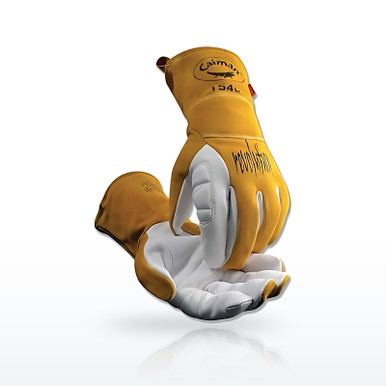
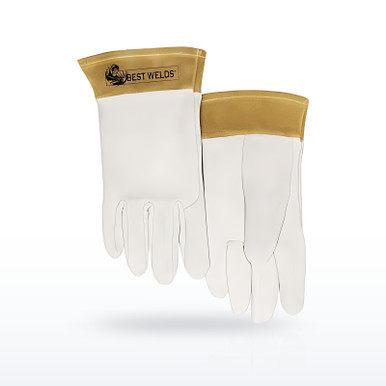
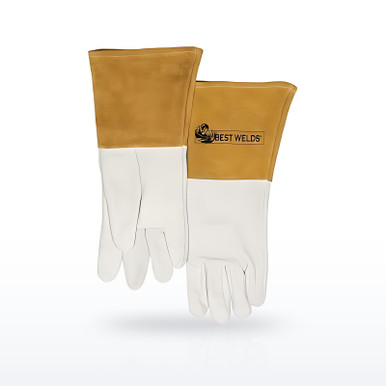
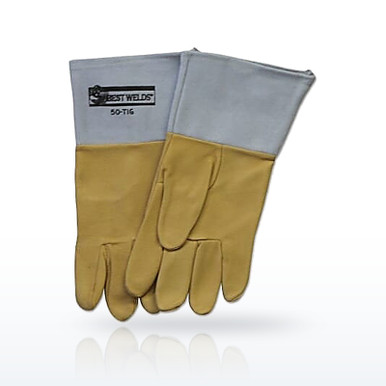
Why does the glove change with the process? A stick welder holds a rod that is burning a few inches from the hand, in a shower of spatter and slag; the glove is heavy split cowhide, often lined, with a long gauntlet, and feel does not matter. A TIG welder feeds filler rod through the fingers of one hand while holding a torch with the other, with almost no spatter; the glove is thin goatskin or kidskin so the rod can be felt and rolled. MIG sits between: a gun, moderate spatter, a mid-weight grain leather glove. Put a stick glove on a TIG welder and the weld suffers; put a TIG glove on a stick welder and the hand does.
What is each process?
The three in plain terms.
What does each process need?
| Stick (SMAW) | MIG (GMAW) | TIG (GTAW) | |
|---|---|---|---|
| OSHA minimum lens shade | 10 (rods to 5/32 in), 12 (3/16 to 1/4), 14 (5/16 and up) | 11 nonferrous, 12 ferrous | 11 nonferrous, 12 ferrous |
| Spatter and slag | Heavy; slag to chip | Moderate | Almost none |
| Gloves | Heavy split cowhide or elk, lined, long gauntlet | Mid-weight grain cowhide, pigskin or goatskin, gauntlet | Thin goatskin, kidskin or deerskin, unlined, short cuff |
| Jacket | Leather or heavy FR cotton; leather sleeves for overhead | FR cotton; leather sleeves and bib for heavy work | FR cotton; arc radiation is the main skin hazard |
| Helmet | Passive or auto-darkening, shade 10 to 14 | Auto-darkening covers the range; large viewing area helps | Auto-darkening with a low-amperage sensitivity for small arcs |
| Fume | Flux makes the most; ventilate | Wire and gas; CO from CO2 shielding; ozone | Least fume; ozone and argon displacement in a tight space |
| Where | Outdoors, field, dirty steel | Shop, production | Shop, precision |
Shades are the OSHA general industry table by operation; the 1910.133 table by arc current gives the same processes with finer steps. Glove weights and leathers are how the manufacturers below label their welding gloves for each process; the standard requires protective clothing suited to the work and does not specify leather by process.
29 CFR 1910.252(b)(2)(ii)(H); 29 CFR 1910.133(a)(5); 1910.252(b)(3) and (c); manufacturer product data (Black Stallion, Caiman, Miller, MCR, Tillman).
Which process is easiest to learn, and which is safest?
MIG is the easiest: pull the trigger and the wire feeds; most people lay a usable bead on the first day. Stick takes practice to strike and hold an arc and read the puddle through the slag. TIG takes the longest, two hands and a foot. On hazards, the standard treats them the same, arc radiation, fume, fire, shock, and the shade table covers all three; what changes is the amount of spatter and fume, highest with stick and flux-cored, lowest with TIG. A TIG torch at low amperage in a shop is the gentlest welding gets; it is still an arc, and arc eye from a TIG flash is as real as from a stick rod.
29 CFR 1910.252(b) and (c); manufacturer training guides.Welding helmets and gloves by process
31 items · prices liveProcess, leather type, lining and cuff are as labeled by the manufacturer on each product page. Contractor Direct orders ship free.

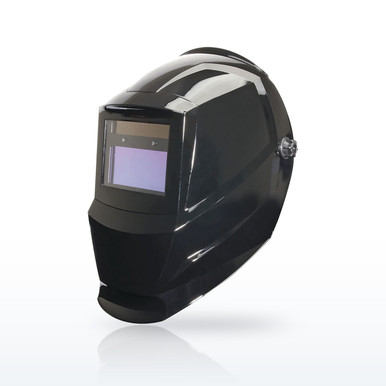
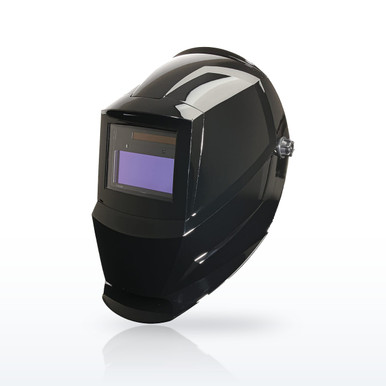
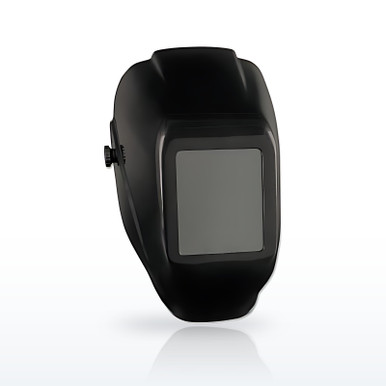
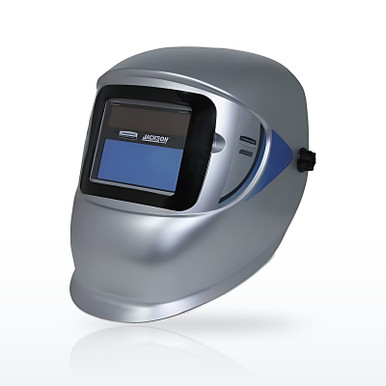
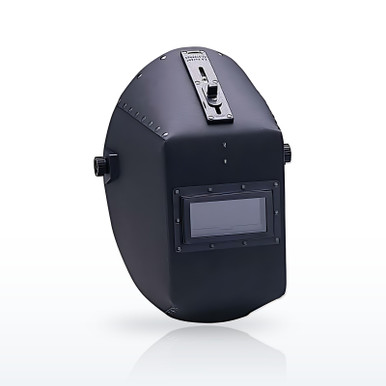
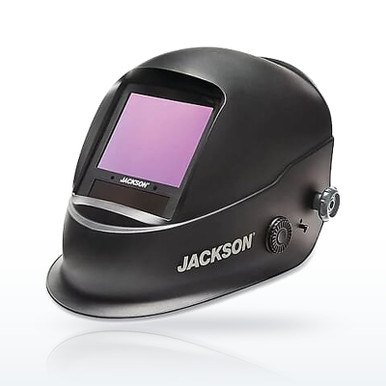
Jackets, sleeves, lenses and the full glove range are in the welding finder.
Questions people ask
What is the difference between MIG, TIG and stick welding?
Stick uses a flux-coated rod that shields itself; MIG feeds bare wire with bottled gas; TIG uses a tungsten electrode that does not melt, with hand-fed filler and argon.
Which is stronger, MIG or stick?
A sound weld from either meets the same strength the procedure calls for; the process is chosen for the metal, position, location and speed, not strength.
Which welding is best for beginners?
MIG is the easiest to start with. Stick is the most forgiving of conditions, TIG the hardest to learn.
What shade for stick welding?
OSHA: 10 for electrodes up to 5/32 inch, 12 for 3/16 to 1/4, 14 for 5/16 and 3/8.
What shade for TIG?
Gas-shielded arc welding in the OSHA table: 11 nonferrous, 12 ferrous. The 1910.133 table steps it by amperage.
Why are TIG gloves so thin?
The welder feeds filler rod through the fingers and needs to feel it; TIG makes almost no spatter, so a heavy glove is not needed.
Can you MIG weld outdoors?
Wind blows the shielding gas off the puddle. Flux-cored wire (FCAW) is the usual outdoor alternative; stick works anywhere.
Is TIG welding safer?
Less spatter and fume, but the same arc radiation, shock and fire hazards; the shade table and the rest of 1910.252 apply.
Standards and ratings on this page are as published in the documents named and by the manufacturers named. The employer’s hazard assessment and written program decide what applies at a given workplace. Verify a rating on the product and its spec sheet before use.