
What is a GHS label, and what are the six required elements?
A GHS label is the standardized hazard label that OSHA’s Hazard Communication Standard requires on every container of a hazardous chemical shipped into or used in a workplace. It carries six things: the product identifier, a signal word (Danger or Warning), the hazard statements, the red-diamond pictograms, the precautionary statements, and the name, address and phone number of the manufacturer or supplier. GHS stands for the Globally Harmonized System, the United Nations format OSHA adopted in 2012 so a label in Ohio reads the same as one in Germany.
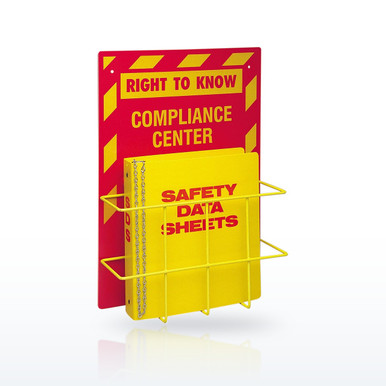 Brady Right-to-Know compliance center with SDS binderWall station for the written program, the SDS binder and the labels
Why does the label matter? Because the label is the only safety information that travels with the chemical to the point of use. The safety data sheet is in a binder or on a server; the label is on the jug in the worker’s hand. A GHS label tells the person pouring it, in a glance, whether it burns, whether it eats skin, whether the fumes are a problem, and what to wear. HazCom has been one of OSHA’s most-cited standards every year since 1983, and missing or incomplete labels are a large share of those citations.
What are the six elements of a GHS label?
All six are required on a shipped container. The same six, or a shorter form, on containers you fill in the workplace.
The nine GHS pictograms and what each means
| Pictogram | Hazard classes it stands for |
|---|---|
| Flame | Flammable gases, aerosols, liquids and solids; self-heating; pyrophoric; emits flammable gas on contact with water; organic peroxides |
| Flame over circle | Oxidizers: gases, liquids and solids that feed a fire |
| Exploding bomb | Explosives, self-reactive substances, organic peroxides |
| Gas cylinder | Gases under pressure: compressed, liquefied, dissolved, refrigerated |
| Corrosion | Skin corrosion, serious eye damage, corrosive to metals |
| Skull and crossbones | Acute toxicity, the most severe categories (fatal or toxic if swallowed, on skin, or inhaled) |
| Exclamation mark | Irritants, skin sensitizers, acute toxicity (harmful), narcotic effects, respiratory irritation, ozone layer |
| Health hazard | Carcinogens, mutagens, reproductive toxicity, respiratory sensitizers, target organ toxicity, aspiration hazard |
| Environment (dead tree and fish) | Hazardous to the aquatic environment. Not mandatory under OSHA, since OSHA does not regulate environmental hazards, but allowed and common on shipped labels |
Each pictogram is a black symbol on white inside a red diamond border; a blank red diamond is not permitted on a shipped label. The pictograms assigned to a product come from the hazard classification on its safety data sheet, section 2. The 2024 HazCom update aligned OSHA with the seventh revision of the UN GHS, added a new hazard class for desensitized explosives and new categories for flammable gases and aerosols, and set label rules for small containers and for chemicals released for shipment; manufacturers, importers and distributors have until May 19, 2026 for substances and November 19, 2027 for mixtures; employers have until November 20, 2026 and May 19, 2028 respectively to update workplace labels and training.
29 CFR 1910.1200 Appendix C (label elements and pictograms); OSHA Hazard Communication Standard final rule, 89 FR 44144 (May 20, 2024), compliance dates in 1910.1200(j).
What has to be on a secondary or workplace container label?
When a chemical is transferred from the shipped container into a spray bottle, a tank, a drum or a jug for use in the workplace, that container needs a label too. The employer has two choices: reproduce the shipped label (all six elements), or use a workplace label that gives the product identifier plus words, pictures, symbols or a combination that convey the general hazards, as long as the employees have the rest of the information through the written program and the SDS. In practice that means at least the product name and the pictograms or hazard words. The one exception: a portable container filled from a labeled container for the immediate use of the employee who fills it, during that shift, needs no label at all.
29 CFR 1910.1200(f)(6)(i) and (ii) (workplace labeling); (f)(8) (portable containers for immediate use).What about NFPA 704 and HMIS labels?
The NFPA 704 diamond (the four-colored diamond with numbers 0 to 4) and the HMIS color bar are rating systems that predate GHS. OSHA allows them on workplace containers as part of a workplace labeling system, provided employees are trained on them and the full information is available on the SDS, but they cannot replace the GHS label on a shipped container. The two systems rank hazards in opposite directions from each other in one respect: on NFPA 704 and HMIS, 4 is the most severe; in GHS, Category 1 is the most severe. Training has to cover that.
29 CFR 1910.1200(f)(6)(ii); OSHA letters of interpretation on NFPA 704 and HMIS as workplace labels; NFPA 704.What does the rest of HazCom require?
- A written hazard communication program listing the chemicals, who is responsible for labels and SDSs, and how employees are trained.
- A safety data sheet for every hazardous chemical, in the 16-section GHS format, readily accessible to employees on every shift.
- Labels on every container as above, kept legible and not removed or defaced.
- Training at initial assignment and whenever a new hazard is introduced: how to read the labels and SDSs, the hazards in the area, and the protective measures.
- Information to contractors on the chemicals their employees will be exposed to.
Who makes the label, and who updates it?
The manufacturer or importer classifies the chemical and writes the label and the SDS; the distributor passes them along; the employer keeps them on the containers, makes workplace labels for anything transferred, and updates labels within six months of learning of a new hazard. When a label on a shipped container is damaged or missing, the employer must replace it with the same information, which is where printable GHS labels and a label printer come in.
29 CFR 1910.1200(d) (classification by manufacturer or importer); (f)(1) and (f)(2) (labels on shipped containers; distributor duties); (f)(11) (revising labels within six months); (f)(9) (labels not removed or defaced).GHS labels, SDS binders and HazCom supplies
9 items · prices liveLabels and supplies are as described by the manufacturer; printable labels require the hazard information from the product’s SDS. Contractor Direct orders ship free.
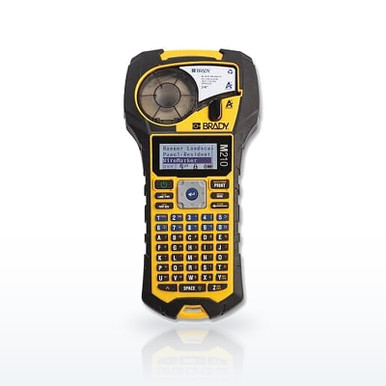
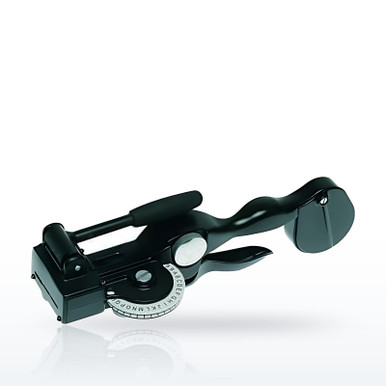
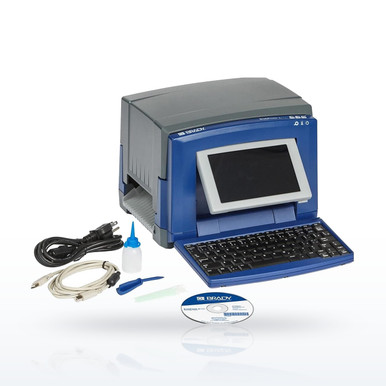
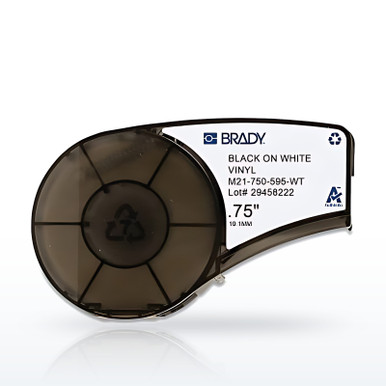
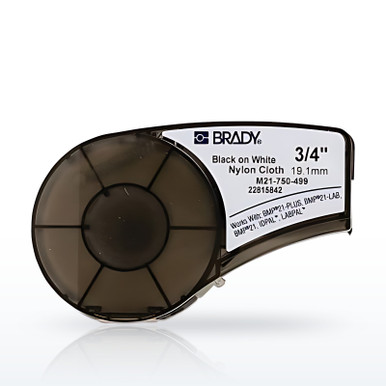

Pre-printed GHS pictogram labels, additional right-to-know centers and SDS binders are quoted on request: call (925) 215-7337.
Questions people ask
What does GHS stand for?
Globally Harmonized System of Classification and Labelling of Chemicals, the United Nations format OSHA adopted into the Hazard Communication Standard in 2012 and updated in 2024.
What are the six elements of a GHS label?
Product identifier, signal word, hazard statements, pictograms, precautionary statements, and supplier identification. (1910.1200(f)(1).)
What are the signal words on a GHS label?
Danger (more severe) or Warning (less severe). A label carries one or the other, never both.
How many GHS pictograms are there?
Nine. Eight are mandatory under OSHA when the hazard applies; the environmental pictogram is optional because OSHA does not regulate environmental hazards.
What does the flame pictogram mean?
The chemical is flammable: gas, aerosol, liquid or solid, or it self-heats, is pyrophoric, releases flammable gas with water, or is an organic peroxide.
Do I need a GHS label on a spray bottle?
Yes, unless you filled it for your own immediate use during that shift. Otherwise it needs at least the product identifier and the general hazard information. (1910.1200(f)(6) and (f)(8).)
What is the OSHA secondary container labeling requirement?
Either the full shipped label or a workplace label with the product identifier plus words, pictures or symbols conveying the hazards, backed by the SDS and training. (1910.1200(f)(6).)
What changed in the 2024 HazCom update?
Alignment with UN GHS Revision 7: new and revised hazard classes and categories, small-container label relief, label rules for chemicals released for shipment, and SDS changes. Manufacturer compliance dates are May 19, 2026 for substances and November 19, 2027 for mixtures; employers follow six months after each.
Standards and ratings on this page are as published in the documents named and by the manufacturers named. The employer’s hazard assessment and written program decide what applies at a given workplace. Verify a rating on the product and its spec sheet before use.