
OSHA safety sign requirements: danger, warning, caution and notice
OSHA sorts safety signs by how bad the hazard is. Danger is for an immediate hazard that will cause death or serious injury: red, black and white. Caution is for a potential hazard or unsafe practice: yellow with a black panel. Safety instruction signs are green and white. OSHA’s rule names only those three for signs; Warning (orange) and Notice (blue) come from the ANSI Z535.2 standard, which OSHA accepts, and Warning is written into OSHA’s tag rule as the level between Caution and Danger. Every sign must have rounded corners, be readable at a glance, and state the hazard in a positive way. The same signal words and colors apply to accident prevention tags, which must also be readable from 5 feet.
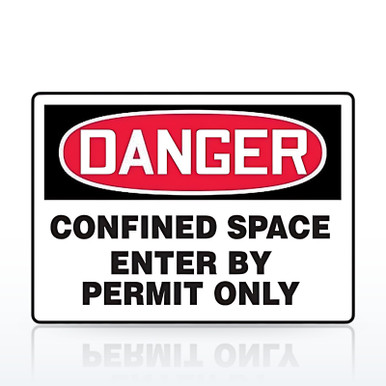 Accuform MCSP133VS OSHA Danger sign, 7 x 10 in vinylANSI Z535 format; meets 1910.145 as published by Accuform
Why are the signal words and colors fixed? A sign only works if a worker who has never seen that particular sign knows what it means from across the shop. OSHA fixes the words and colors so that red always means an immediate hazard and yellow always means take care, in every plant and on every site, and it requires employers to teach employees what each class means. ANSI Z535 adds the middle level, Warning, and a non-injury level, Notice, with their own colors, so the severity scale has five steps instead of three.
What does each signal word mean, and what color is it?
The three OSHA classes, plus the two ANSI Z535.2 headers OSHA accepts. Colors are the ANSI Z535.1 safety colors OSHA incorporates by reference.
What does OSHA require of every sign?
- Rounded or blunt corners, no sharp edges, burrs or splinters, and bolt heads placed so they are not a hazard.
- Wording that is easy to read and concise, with enough information to be understood, phrased as a positive instruction rather than a negative one, and accurate in fact.
- Colors matched to the opaque glossy samples in ANSI Z53.1-1967 or Table 1 of ANSI Z535.1-2006(R2011).
- Employees instructed in what danger and caution signs mean.
- All new signs and replacements built to these specifications. Street, highway and railroad signs are excluded; so are bulletin boards and safety posters.
What are the rules for accident prevention tags?
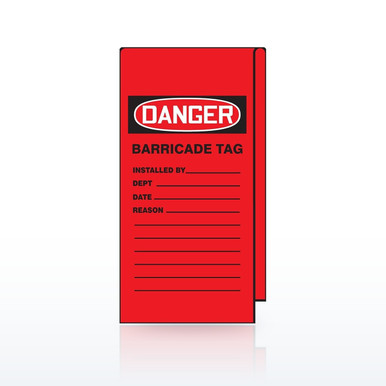
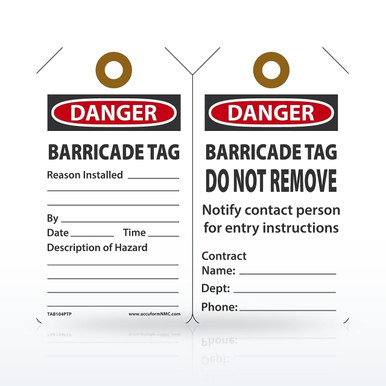
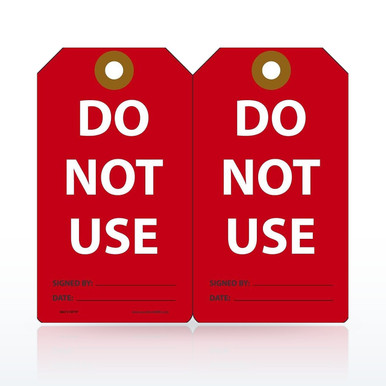
A tag is the temporary version of a sign: it marks a hazard that is out of the ordinary, unexpected or not readily apparent, such as a defective tool or a machine being worked on, and stays on until the hazard is gone. Every required tag has a signal word (Danger, Caution, Biological Hazard or the biohazard symbol) and a major message that says what the hazard is or what to do, in words, a pictograph or both. The signal word must be readable from at least 5 feet, both must be understandable to everyone exposed, and the tag is attached as close to the hazard as safely possible by string, wire or adhesive so it cannot fall off. Warning tags are allowed for the level between Caution and Danger. Tags are not required where a sign, guarding or another positive means is already in place.
1910.145(f)(3) use; (f)(4)(i) through (vi) general criteria; (f)(7) warning tags. The tag paragraph does not apply to construction or agriculture, (f)(1)(ii); construction tags follow 1926.200(h).OSHA does not mandate tag colors; Appendix A to the tag paragraph lists the scheme OSHA suggests: Danger red, Caution yellow, Warning orange, Biological Hazard fluorescent orange or orange-red, each with lettering in a contrasting color. Lockout tags have their own additional requirements in 1910.147.
Appendix A to 1910.145(f), color coding for tags; 1910.147(c)(5)(ii) and (iii).How do OSHA and ANSI Z535 fit together?
OSHA’s sign rule dates from 1974 and names three sign classes. In 2013 OSHA updated 1910.145 and 1926.200 to add the ANSI Z535 editions as an accepted alternative to the 1967 and 1968 ANSI standards they originally cited, so a sign built to the current ANSI Z535.2 format, with its header, safety alert symbol, message panel and optional symbol panel, satisfies OSHA. ANSI Z535.2 sets the five-level severity scale: Danger, Warning, Caution, Notice and Safety Instructions. Danger and Warning headers carry the safety alert symbol (the exclamation point in a triangle); it is optional on Caution and never used on Notice. Z535.1 defines the safety colors, Z535.3 the symbols, Z535.4 product labels and Z535.5 tags. Manufacturers state on the product which standard a sign is built to.
1910.145(d)(2), (d)(4) and (d)(6) referencing ANSI Z535.1-2006(R2011); 1926.200(b)(1), (c)(1), (h)(2) and (i) referencing ANSI Z535.2-2011 and Z535.5-2011; ANSI Z535.2-2011 (R2017) signal words, header colors and safety alert symbol as summarized by sign manufacturers.Which signs does OSHA actually require you to post?
- Exit: every exit marked with a sign reading Exit; doors along the route that could be mistaken for an exit marked Not an Exit or by their use.
- Confined spaces: danger signs or an equally effective means to tell employees a permit space exists and what the danger is.
- Electrical: safety signs, symbols or tags where necessary to warn of electrical hazards, with barricades where needed.
- Bloodborne pathogens: biohazard labels on regulated waste and contaminated containers and equipment.
- Hazardous chemicals: signs and placards may replace labels on stationary process containers.
- Construction: signs and symbols visible whenever work is being performed and removed when the hazard is gone; traffic control devices to MUTCD Part 6.
OSHA and ANSI safety signs and tags
16 items · prices liveSignal word, format and the standard each item is built to are as published by the manufacturer; see each product page. Contractor Direct orders ship free.
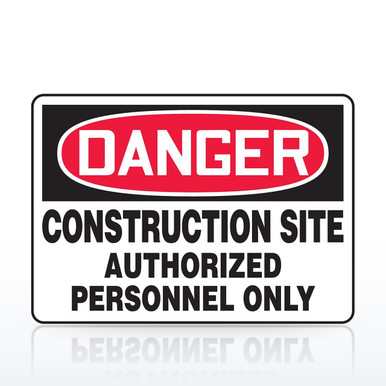
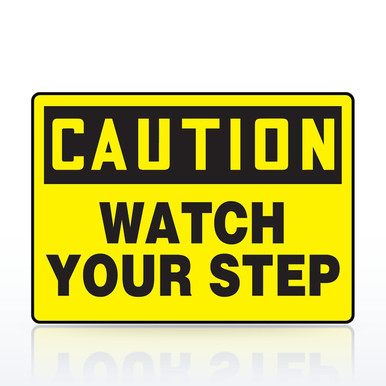
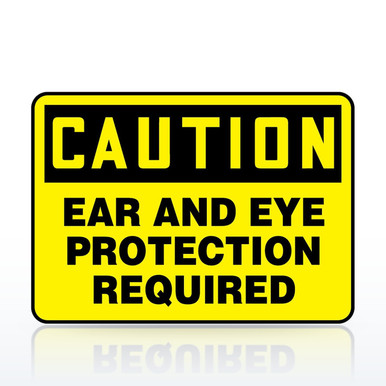
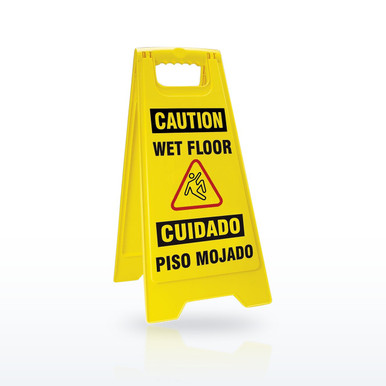

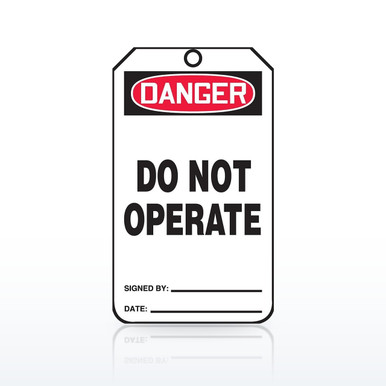
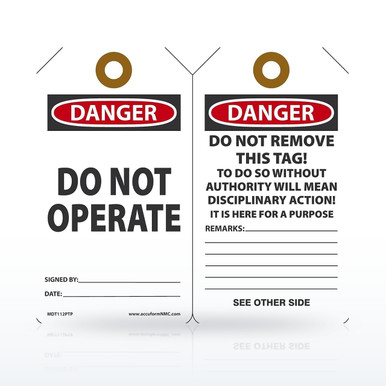
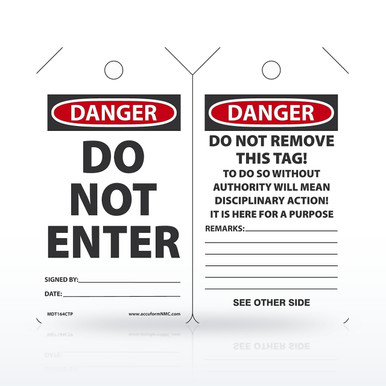
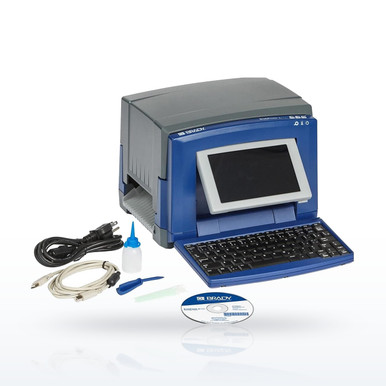
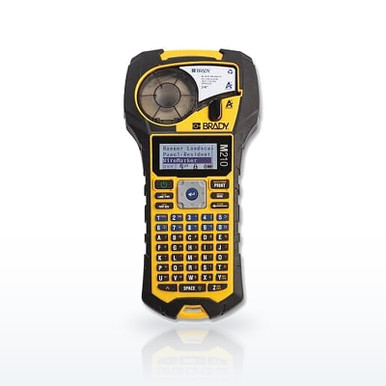
Custom legends, bilingual signs, Warning and Notice headers and other sizes are quoted on request: call (925) 215-7337. Walk-up sign printers let a facility print its own.
Questions people ask
What is the difference between a danger sign and a warning sign?
Danger is for a hazard that will cause death or serious injury if not avoided; Warning is for one that could. Under OSHA, Danger is the top class and means immediate hazard; Warning is the ANSI Z535 level between Caution and Danger. (1910.145(c)(1), (f)(5), (f)(7).)
What color is a caution sign?
Yellow background with a black panel and yellow letters; any lettering on the yellow is black. (1910.145(d)(4).)
What color is a danger sign?
Red, black and white: a red upper panel with the word Danger, black border, white lower panel for the message. (1910.145(d)(2); 1926.200(b)(2).)
What does a Notice sign mean?
Information not related to personal injury, such as security, property or procedures. Blue header with white letters under ANSI Z535.2. It is not an OSHA sign class.
Does OSHA require ANSI Z535 signs?
OSHA requires signs to meet 1910.145 (or 1926.200 on construction sites). Since 2013 those rules accept the ANSI Z535 editions named in them, so a Z535-format sign complies.
How far away must a tag be readable?
The signal word must be readable from at least 5 feet, or farther if the hazard warrants it. (1910.145(f)(4)(ii).)
When must an accident prevention tag be used?
To mark a hazardous condition that is out of the ordinary, unexpected or not readily apparent, until the hazard is eliminated. Not required where a sign, guard or other positive means already protects employees. (1910.145(f)(3).)
Can safety signs be in Spanish?
OSHA requires that signs be understandable to the employees exposed; a bilingual sign meets that where the crew reads Spanish. The wording rules in 1910.145(e)(2) still apply.
Standards and ratings on this page are as published in the documents named and by the manufacturers named. The employer’s hazard assessment and written program decide what applies at a given workplace. Verify a rating on the product and its spec sheet before use.