
What is a glove coating? Nitrile, polyurethane, latex and foam coatings compared
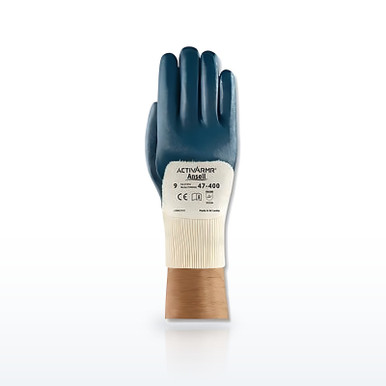
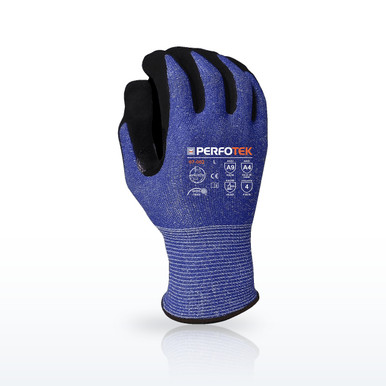
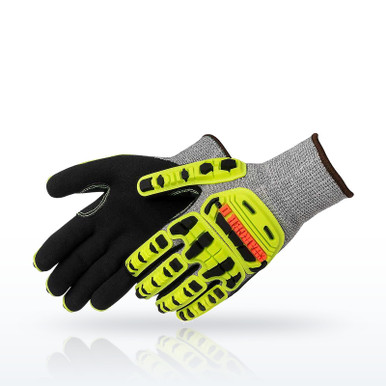
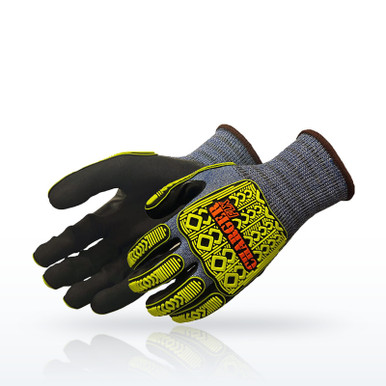
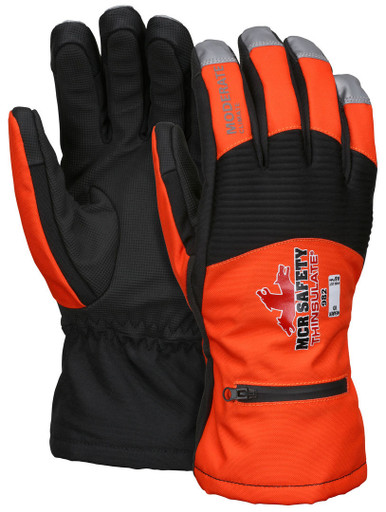
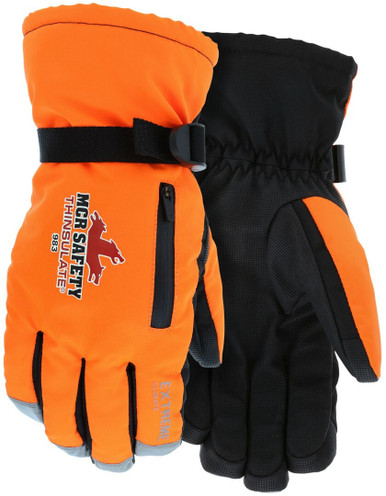
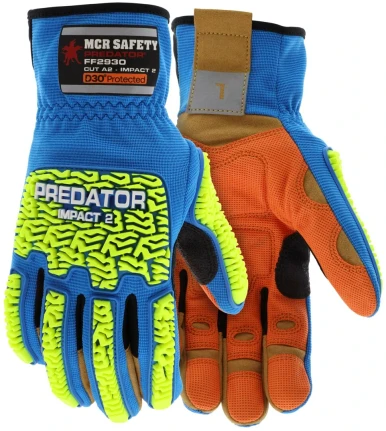
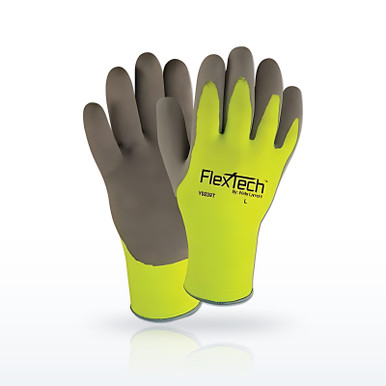
A coated glove is a knit fabric glove (the liner) that has been dipped in a liquid polymer that cures into a grip surface on the palm and fingers. The knit gives the cut rating, the fit and the breathability; the coating gives the grip, the abrasion resistance and the barrier against oil or water. Nitrile stands up to oil and abrasion. Foam nitrile adds grip on oily parts. Polyurethane is thin and gives good feel in dry, light work. Latex gives a strong dry and wet grip but is not for oil and can trigger latex allergy. PVC is a heavier barrier for wet, cold or chemical splash. The product band groups our coated gloves by the coating each manufacturer publishes.
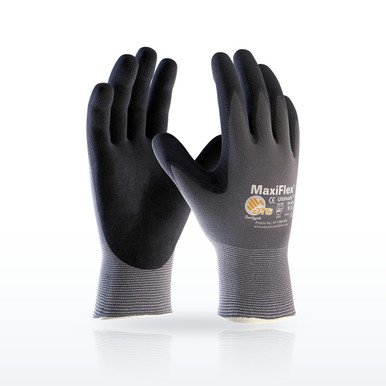 PIP MaxiFlex Ultimate 34-874Micro-foam nitrile palm on a 15-gauge nylon knit, ANSI A1, abrasion 4
Why coat a knit glove at all? A bare knit glove is comfortable but slippery, wears through at the fingertips in days, and soaks up whatever the hand touches. The dip fixes all three. It also lets a manufacturer build one liner, say a 13-gauge cut-resistant yarn, and offer it with four different palms for four different jobs. The coating is the part you choose for the surface you grip; the knit is the part you choose for the hazard.
What does each coating do?
Grip and barrier behavior as published by the manufacturers whose gloves are in the band below. A given glove can differ; the spec sheet governs.
What is the difference between palm dip, three-quarter dip and full dip?
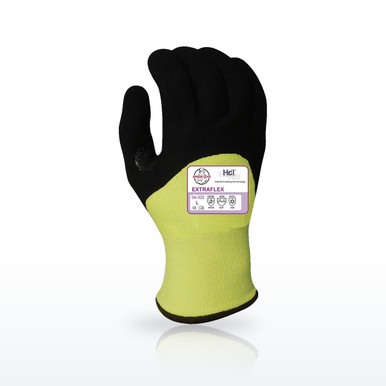
The dip depth is how far the coating goes up the glove. A palm dip covers the palm, the fingers and the fingertips and leaves the back of the hand bare knit, which is the most breathable and the most common. A three-quarter dip wraps the coating over the knuckles and partway up the back, for work where the back of the hand contacts the wet or oily surface. A full dip coats the whole glove and turns it into a liquid barrier; the trade-off is that the hand does not breathe at all. Some makers add a thin second dip, a sandy or foam grip layer on the palm only, over a smooth full dip to get barrier and grip at once.
Manufacturer product data (PIP, MCR Safety, G-Tek); the dip coverage is printed on each spec sheet as palm, 3/4 or full.What does the knit under the coating decide?
Everything the coating does not. Gauge is the knitting machine’s needle count per inch; a higher number (15, 18, 21) is a finer, thinner glove with more feel, and a lower number (7, 10, 13) is thicker and warmer. The yarn decides the cut level: nylon or polyester knits are ANSI A1, and high-performance polyethylene, glass, steel or aramid blends reach A2 through A9. The same coating on a 13-gauge A4 liner and on an 18-gauge nylon liner will grip the same and protect very differently, so read both lines on the spec sheet.
ANSI/ISEA 105-2016, cut levels A1 to A9 by ASTM F2992 test; gauge and yarn as published by each manufacturer.Abrasion is the one coating property that ANSI/ISEA 105 does rate. A coated glove is tested on a Taber abrader until the coating wears through: level 0 to 3 at a 500-gram load (under 100, 100, 500 and 1,000 revolutions) and level 4 to 6 at a 1,000-gram load (3,000, 10,000 and 20,000 revolutions). Nitrile and PVC palms typically publish level 4 and up; thin PU palms are often level 2 or 3. The product band shows the ANSI abrasion level where the manufacturer publishes one.
ANSI/ISEA 105-2016, abrasion resistance classification by ASTM D3389 (H-18 wheel).Which coating for which job?
- Dry parts, assembly, packaging, electronics: polyurethane for feel, or a light foam nitrile where parts have a film of oil.
- Machining, automotive, oily parts: foam or micro-foam nitrile. Smooth nitrile where the oil is heavy and the job is abrasive.
- Concrete, block, lumber, landscaping, wet material handling: crinkle latex, unless anyone on the crew has a latex allergy, in which case a sandy or foam nitrile.
- Cold, wet, oilfield, fish and food processing, chemical splash: full-dip PVC or nitrile over an insulated or terry liner.
- Any job with a cut hazard: pick the ANSI cut level first from the hazard assessment, then the coating. The coating does not change the cut level.
Coated gloves by coating
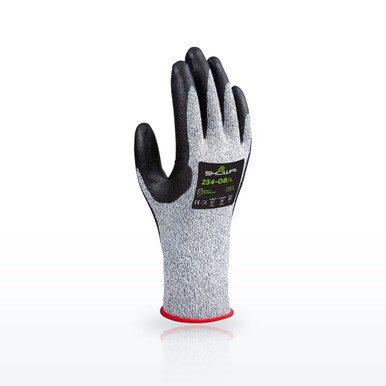
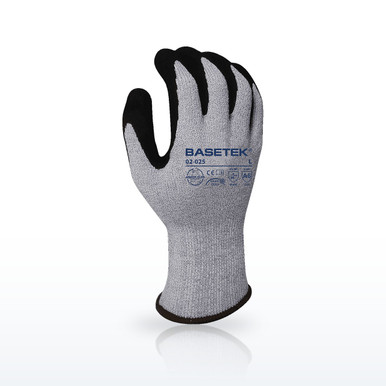
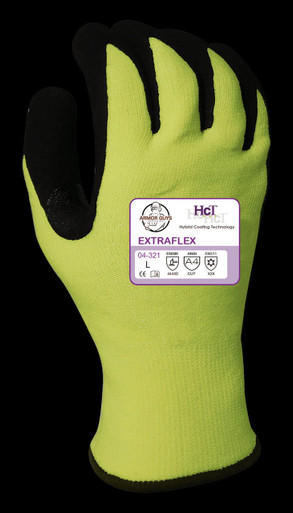
32 items · prices liveCoating, dip coverage and gauge are as published by the manufacturer; the ANSI abrasion and cut levels are on each product page where the maker publishes them. Free shipping on orders over $199.

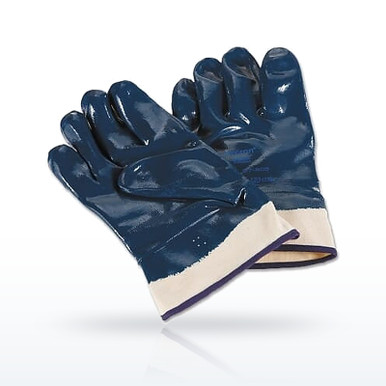
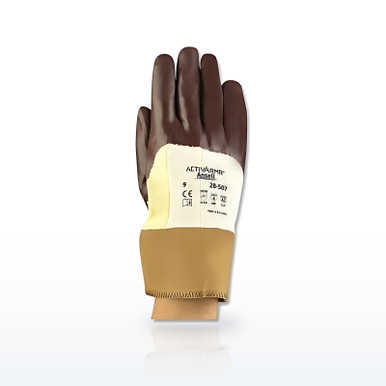

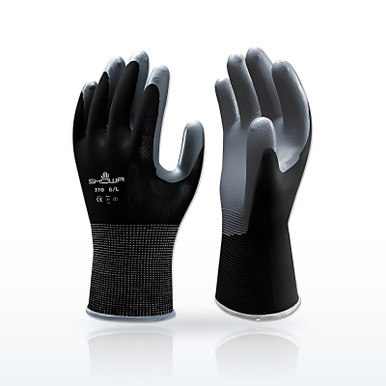



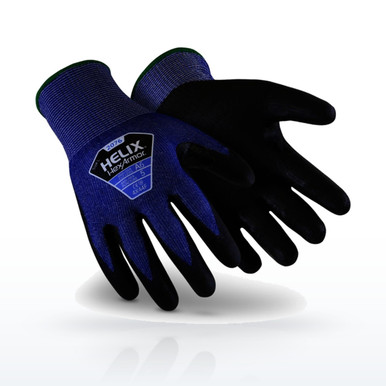
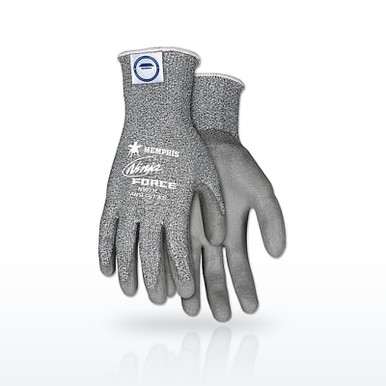
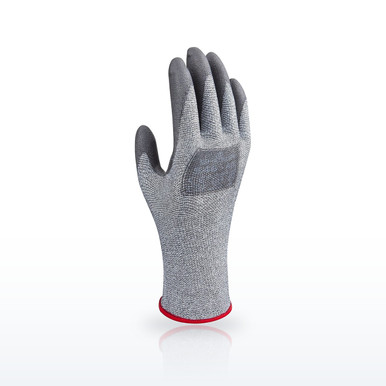

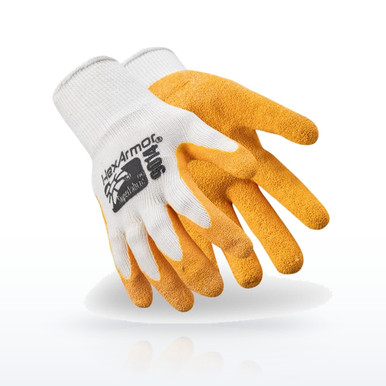
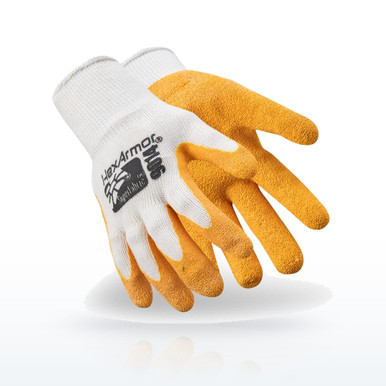
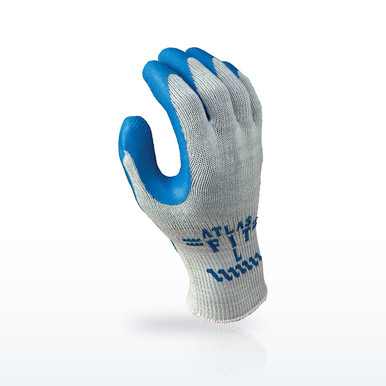
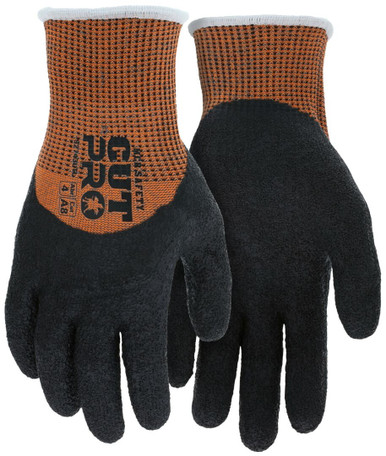
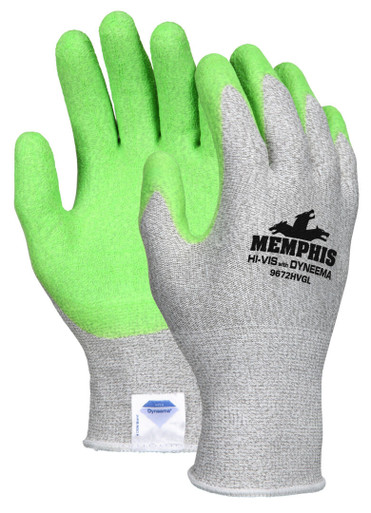
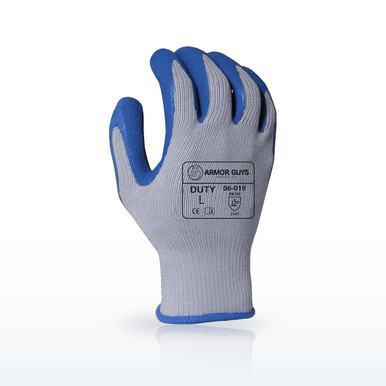
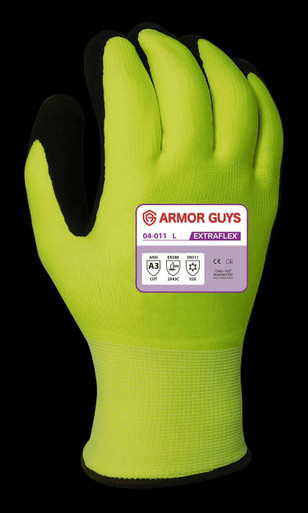
All coated gloves we carry, more than 1,500 of them, are on the work glove selector, filtered by coating, cut level, gauge and brand.
Questions people ask
What is a coated glove?
A knit glove dipped in a polymer (nitrile, polyurethane, latex, PVC or a blend) that cures into a grip and barrier layer on the palm and fingers. The knit is the liner; the dip is the coating.
Which is better, nitrile or polyurethane coated gloves?
They do different jobs. Nitrile resists oil and abrasion and lasts longer on rough work; polyurethane is thinner, gives more feel and costs less for dry, light work. The spec sheet for each glove states the coating and the abrasion level.
What is foam nitrile good for?
Oily parts. The open foam surface channels oil away so the glove keeps its grip, which a smooth nitrile palm loses once it is wet with oil (PIP, Honeywell coating data).
Are latex coated gloves good for oil?
No. Natural rubber latex swells and softens in oil and solvents. It is a dry and wet grip coating for masonry, lumber and material handling, and it is unsuitable for anyone with a latex allergy.
Does the coating change the cut level?
No. The ANSI/ISEA 105 cut level comes from the knit yarn under the coating. The same liner with a nitrile or a PU palm carries the same cut level.
What does 13-gauge or 15-gauge mean?
The needle count per inch of the knitting machine. Higher is finer and thinner (15, 18, 21); lower is thicker and warmer (7, 10, 13).
What is the difference between palm dip and full dip?
Palm dip coats the palm and fingers and leaves the back breathable. Full dip coats the whole glove for a liquid barrier. Three-quarter dip covers the knuckles as well as the palm.
Can coated gloves be washed?
Many can, by hand or machine in warm water with mild detergent and air dried; the coating may lose some grip or abrasion resistance with each wash. Follow the manufacturer’s care instructions on the product page.
Standards and ratings on this page are as published in the documents named and by the manufacturers named. The employer’s hazard assessment and written program decide what applies at a given workplace. Verify a rating on the product and its spec sheet before use.