
What is ergonomics, and what are ergonomic hazards at work?
Ergonomics is fitting the job to the worker instead of forcing the worker to fit the job. In a workplace it means arranging the task, the tools and the workstation so that the body is not loaded by heavy force, constant repetition, awkward postures, vibration or pressure on soft tissue. Those five are the ergonomic hazards; the injuries they cause are called musculoskeletal disorders, and they are the largest single category of workplace injury in the United States.
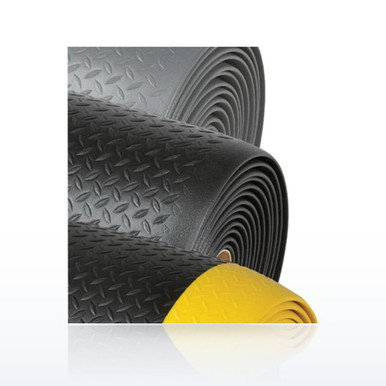
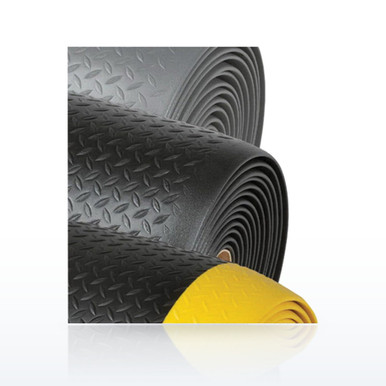
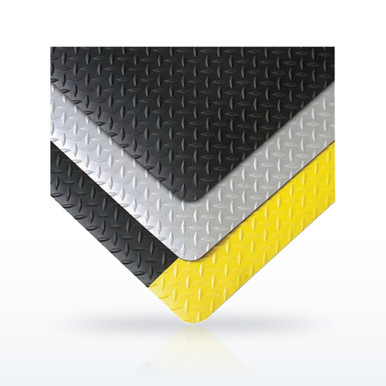
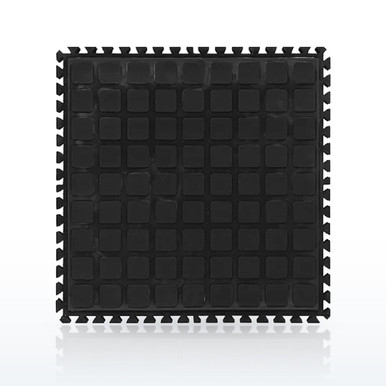
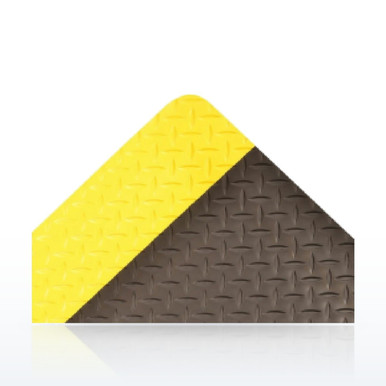 NoTrax 509 Diamond-Tuff anti-fatigue matCushioned standing surface for fixed workstations
Why does ergonomics matter at work? Musculoskeletal disorders, meaning sprains, strains, back injuries, tendinitis and carpal tunnel, make up about a third of all lost-workday injuries reported to the Bureau of Labor Statistics every year. They are not sudden accidents; they build from the same motion, the same lift or the same standing position repeated across months. That is also why they are preventable: change the task, the tool or the surface, and the load on the body changes with it.
What are the ergonomic risk factors?
OSHA and NIOSH name the same set. A task with two or more of them at once is where most injuries come from.
What does OSHA require?
There is no federal OSHA ergonomics standard; the one issued in 2000 was repealed by Congress in 2001. OSHA enforces ergonomics through the general duty clause, which requires every employer to provide a workplace free of recognized hazards likely to cause death or serious harm, and it has cited employers for ergonomic hazards under it. OSHA also publishes industry guidelines (nursing homes, poultry, retail grocery, shipyards, meatpacking) that describe what a reasonable program looks like. California’s Cal/OSHA has a repetitive-motion injury standard, Title 8 section 5110, that is triggered when two or more employees doing the same task have reported RMIs within a year.
OSH Act section 5(a)(1); OSHA Ergonomics: enforcement; OSHA industry-specific ergonomic guidelines; Cal/OSHA Title 8 section 5110.What is a musculoskeletal disorder?
An injury or disorder of the muscles, nerves, tendons, joints, cartilage or spinal discs that is caused or made worse by the work environment, not by a slip, trip, fall or vehicle accident. Common ones: low back strain, rotator cuff injuries, tendinitis, epicondylitis (tennis elbow), carpal tunnel syndrome, and trigger finger. OSHA’s recordkeeping rule counts them like any other injury once they meet the recording criteria.
OSHA Ergonomics: overview; 29 CFR 1904 (recording criteria); BLS Survey of Occupational Injuries and Illnesses.What does a workplace ergonomics program look like?
- Management commitment and worker involvement. Someone owns it, and the people doing the work help find the problems; they know where it hurts.
- Identify the problem jobs. Injury and illness logs, workers’ comp claims, symptom surveys, and walking the floor to look for the risk factors above.
- Analyze the task. Break the job into steps and score each for force, repetition, posture and duration. The NIOSH lifting equation, the RULA and REBA posture tools, and checklists are the usual methods.
- Fix it, in this order. Engineering controls first (change the workstation, the tool, the height, the surface, add a lift assist); then administrative controls (rotation, rest breaks, pacing); then personal equipment (anti-fatigue mats, knee pads, anti-vibration gloves) as a supplement, not a substitute.
- Train. Workers learn to recognize the risk factors and the early symptoms, and how to use the controls.
- Manage injuries early. Report symptoms early, get evaluation, modify the work while healing.
- Evaluate. Did the injury rate and the symptom reports go down? If not, go back to step 2.
Where do anti-fatigue mats fit?
Standing on concrete for a shift is a static-posture hazard: the muscles of the legs and back hold one position with no movement to pump blood, and feet, knees and low back take the load. An anti-fatigue mat gives a slightly yielding surface that causes small, continuous muscle movement and reduces the pressure on the feet; studies and OSHA’s guidelines list them among the controls for prolonged standing, alongside footrests, sit-stand options and rotation. They are a supplement to a better-designed workstation, not a replacement for one.
OSHA, Ergonomics: solutions (prolonged standing); NIOSH and university studies on anti-fatigue matting; manufacturer data.What about back belts and anti-vibration gloves?
NIOSH reviewed back belts in 1994 and found no evidence that they prevent back injury in uninjured workers, and OSHA does not treat them as PPE; a belt is not a reason to lift more. Anti-vibration gloves are tested to ANSI S2.73 / ISO 10819 and reduce the vibration reaching the hand from tools in a defined frequency range; they help with hand-arm vibration but do nothing for force or posture. Knee pads reduce contact stress when kneeling is unavoidable.
NIOSH, Workplace Use of Back Belts (94-122); ANSI S2.73-2014 / ISO 10819:2013; OSHA Ergonomics: solutions.Anti-fatigue mats, knee pads and supports
14 items · prices liveProducts are described as the manufacturer publishes them. A mat or a pad is a supplement to a redesigned task, not a substitute. Free shipping on orders over $199.
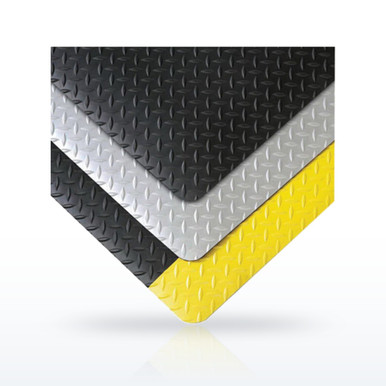
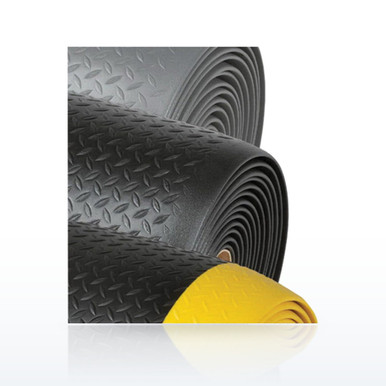
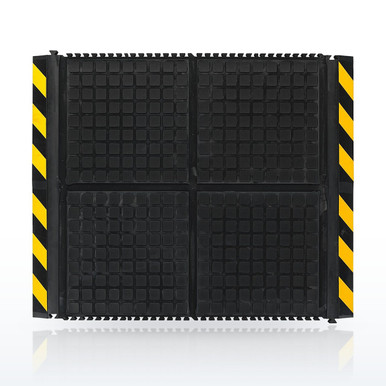
Mats in custom lengths and runners are quoted on request.
Questions people ask
What is the simple definition of ergonomics?
Designing the job to fit the worker: the task, tools and workstation arranged so the body is not overloaded by force, repetition, posture, vibration or pressure.
What are examples of ergonomic hazards?
Lifting heavy boxes from the floor, scanning items for hours, working overhead, standing on concrete all shift, kneeling on hard floors, running a jackhammer, gripping a tool with a bent wrist.
What is the goal of ergonomics?
Fewer musculoskeletal injuries, and work that people can do for a career without being worn down by it. OSHA adds that well-designed work is also more productive.
Does OSHA have an ergonomics standard?
Not federally. OSHA enforces ergonomic hazards under the general duty clause and publishes industry guidelines. Cal/OSHA has a repetitive-motion standard (Title 8 section 5110).
What is an ergonomic assessment?
A review of a job for the risk factors: observing the task, measuring forces and postures, scoring them with tools like the NIOSH lifting equation or REBA, and recommending controls.
Can ergonomic hazards exist in any workplace?
Yes. Offices, warehouses, construction, healthcare, food processing and vehicles all have them; the specific risk factors differ.
How much weight does NIOSH say a person can lift?
The lifting equation starts at 51 pounds under ideal conditions (close to the body, waist height, no twisting, infrequent) and reduces it for every departure from ideal; most real lifts come out far lower.
Standards and ratings on this page are as published in the documents named and by the manufacturers named. The employer’s hazard assessment and written program decide what applies at a given workplace. Verify a rating on the product and its spec sheet before use.