
Pallets
16 pallets from every brand we carry, listed with what each manufacturer publishes, and live prices.
Pick a sorbent type, form or brand; the list below narrows as you choose. Prices are live.
16 products
Ratings and specifications are as published by each manufacturer. Tap a group to open it.
EAGLE8 products
- EAGLE 163 Pallets, Spill Containments — EAGLE
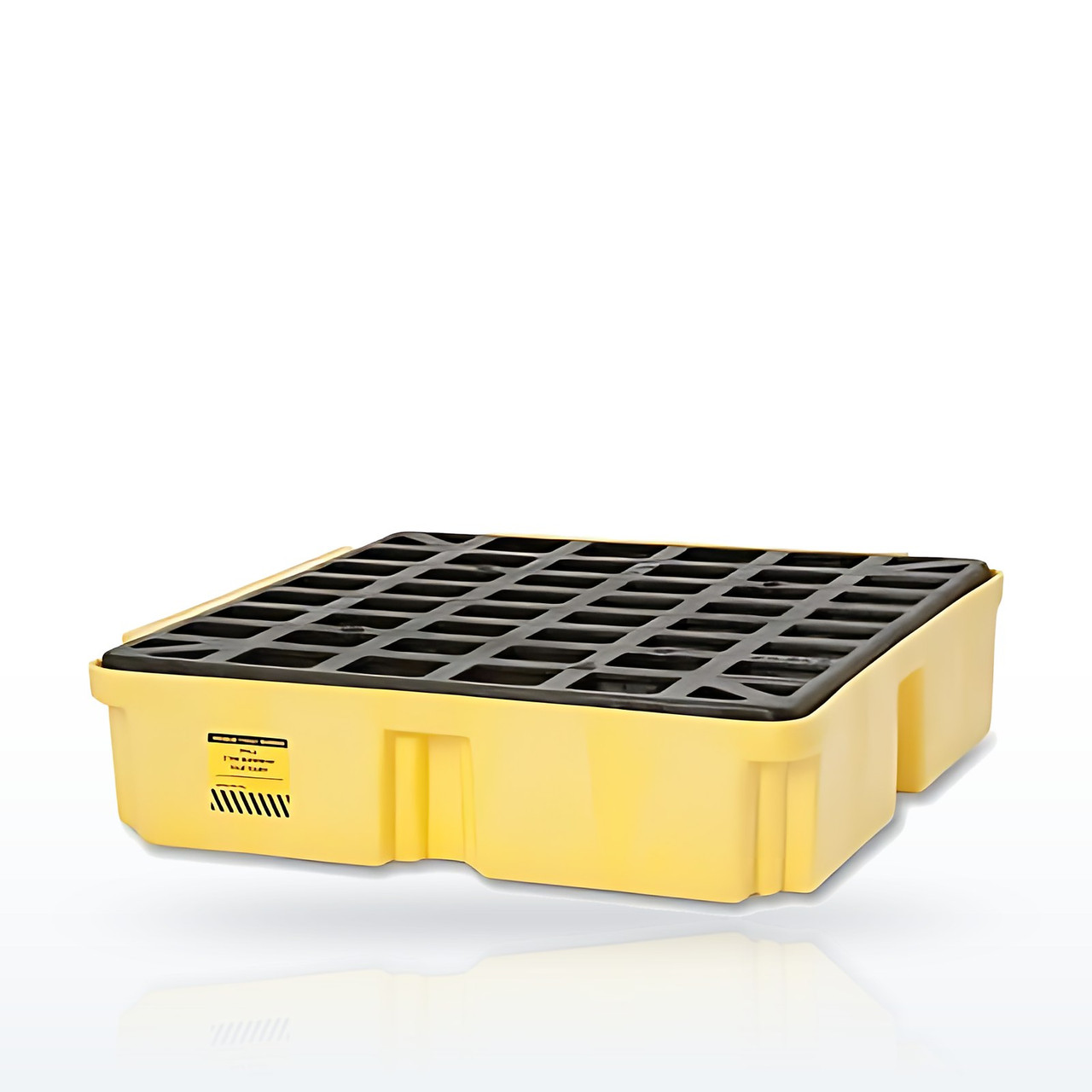
- EAGLE 1634 Pallets, 4-Drum Modular Spill Platform, No Drain — EAGLE · Capacity: 30 gal
- EAGLE 1635 Pallets, 4-Drum Modular Spill Platform, No Drain — EAGLE · Capacity: 60.5 gal
- EAGLE 1640 4-Drum Large Capacity Spill Pallet, Drain, 132 Gal — EAGLE · Capacity: 132 gal
- EAGLE 1645 4-Drum Low Profile Spill Pallet, Drain, 66 Gal — EAGLE · Capacity: 66 gal
- EAGLE 1646 4-Drum Nestable Spill Containment Pallet, 66 Gal — EAGLE · Capacity: 66 gal
- EAGLE 1688 Pallets, 8-Drum Low Profile Spill Containment Platform — EAGLE · Capacity: 121 gal
- EAGLE 1689 Poly Ramp for Spill Containment Pallets — EAGLE
UltraTech4 products
- UltraTech 1144 Twin IBC Spill Pallet, Drain, 535 Gallon — UltraTech · Capacity: 535 gal
- UltraTech 1157 Ultra-IBC Spill Pallet Plus, Drain, 365 Gallon — UltraTech · Capacity: 365 gal
- UltraTech 9612 Ultra-Hard Top P2 Plus 2-Drum Covered Spill Pallet, No Drain — UltraTech · Capacity: 66 gal
- UltraTech ULT-1000 Ultra-Spill Pallet P4 Hi-Load, 4-Drum, 66 Gallon — UltraTech · Capacity: 66 gal
Justrite3 products
- Justrite 28674 EcoPolyBlend Indoor IBC Spill Pallet, 372 Gallon — Justrite · Capacity: 372 gal
- Justrite 28715 Pallets, EcoPolyBlend Spill Tray, 46 x 16 in — Justrite · Capacity: 12 gal · Size: 46 in x 16 in x 5-1/2 in
- Justrite 28716 Pallets, EcoPolyBlend Spill Tray, 38 x 26 in — Justrite · Capacity: 20 gal · Size: 38 in x 26 in x 5-1/2 in
Enpac1 product
- Enpac 5469-YE IBC Tote Spill Containment Pallet, 385 Gal — Enpac · Capacity: 385 gal
Do not see what you need? Browse the category or call (925) 215-7337.
In plain words. Spill control products are described by what they soak up and what shape they come in. Universal (grey) sorbents take up oils, water-based liquids and most chemicals; oil-only (white) sorbents float and take up oil and fuel but repel water, for use on water or in rain; hazmat (yellow or pink) sorbents are for aggressive chemicals such as acids and caustics. Forms are pads, rolls, socks, pillows and booms, plus kits that bundle them with disposal bags; capacity is the manufacturer's stated volume absorbed per pad, bale or kit. Containment pallets and berms hold drums and leaks under them.
Technical. Sorbent capacity is published by the manufacturer per unit (gallons per pad, bale or kit) and is not standardised across brands; ASTM F726 describes a sorbent performance test some manufacturers cite. Spill pallets are sized to EPA 40 CFR 264.175 secondary containment (the larger of 10% of total volume or the volume of the largest container); SPCC rules under 40 CFR 112 apply to oil storage. Colour coding (grey, white, yellow) is a convention, not a standard. Values shown are the manufacturer's.
Ratings and specifications on this page are shown as published by the manufacturer or the named standard and describe performance in that standard's test. They are not a recommendation for any task. The employer's hazard assessment decides what protective equipment a job needs. Verify details against the manufacturer's current documentation before you buy.
The standard at a glance
Copied from the named standard or regulation and shown with its source; nothing in these tables is Bayshore's recommendation.
Secondary containment sizing (EPA)
| Rule | Requirement |
|---|---|
| 40 CFR 264.175 (hazardous waste container storage) | Containment capacity at least the larger of 10% of the total volume of all containers or the volume of the largest container |
| 40 CFR 112 (SPCC) | Spill prevention, control and countermeasure plans for oil storage above the threshold quantities |
Source: EPA 40 CFR 264.175 and 40 CFR 112. Sorbent capacities are the manufacturer's per-unit figures; ASTM F726 is the sorbent test some manufacturers cite. Colour coding (grey, white, yellow) is a trade convention, not a standard.