
Anti-fatigue mats: what they do and where OSHA guidance recommends them
An anti-fatigue mat is a cushioned standing surface, usually PVC sponge, rubber or vinyl over foam, a half inch to an inch thick. Standing still on a hard floor for a shift causes muscle fatigue and lets blood pool in the legs; the mat gives slightly under the feet, so the leg muscles make small, constant adjustments that keep blood moving, and it takes the hard-contact pressure off the soles. There is no OSHA standard that requires one. OSHA’s industry ergonomics guidelines and its eTools list anti-fatigue mats, with footrests and sit-stand stools, as a control for workers who stand in one place for long periods, and the general duty clause is how OSHA enforces ergonomic hazards when it does.
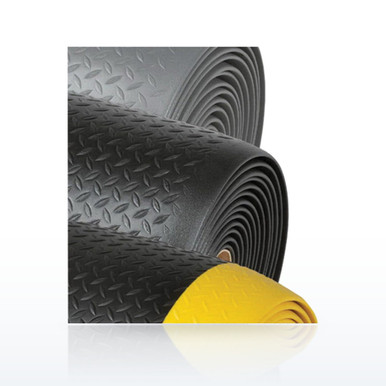
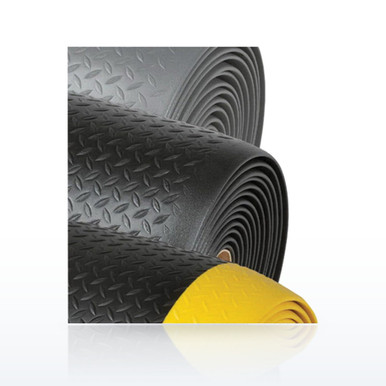
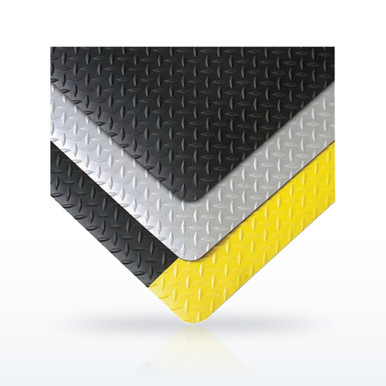
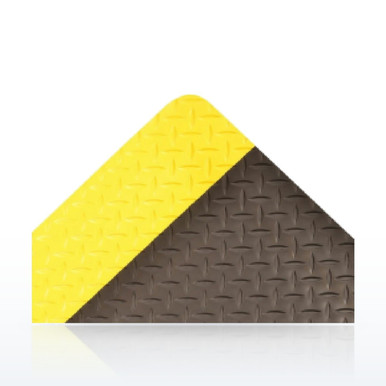 NoTrax 509 Diamond-Tuff anti-fatigue mat, 3 x 5 ft9/16-inch closed-cell PVC foam under a diamond-plate vinyl top
Why does standing still hurt more than walking? Walking pumps blood back up the legs with every step. Standing in one spot shuts that pump off: the calf muscles hold one position, blood pools in the feet and lower legs, and the soles press against a surface that does not give. OSHA’s electrical contractors eTool puts it in one sentence: continuously standing in one position causes muscle fatigue and pooling of blood in the lower extremities, and standing on hard surfaces such as concrete creates contact trauma and pain to the feet. A mat does not fix the posture; it changes the surface so the body can keep moving a little while the feet stay put.
What does OSHA guidance say about anti-fatigue mats?
OSHA has no mat standard. What it has are guidelines and eTools, which are advisory, and the general duty clause, which is law.
Where do anti-fatigue mats help, and where do they not?
They help where a worker stands in one place: a workbench, an assembly or packing station, a checkstand, a machine control position, a parts counter, a lab bench, a kitchen line, a shipping desk. The common thread is standing for an hour or more at a time without walking. They do little for a worker who walks the floor all shift; for that, OSHA’s eTool points to cushioned footwear instead. They also do not fix a bench that is the wrong height, a reach that is too long, or a task that keeps the back bent; those are posture and force hazards and need their own controls.
OSHA Electrical Contractors eTool, Static Postures (mats, foot rest bar, cushioned shoes where mats are not practical); OSHA 3192, checklist for cashiering (anti-fatigue mat and/or footrest).A mat is also a trip hazard if it is the wrong one. Beveled edges, a mat sized to the station rather than a loose runner, and a mat that lies flat without curling are what keep it from becoming the problem it was meant to solve. Mats in walkways and at doors should be the entrance kind, not the cushioned kind.
Manufacturer installation guidance (NoTrax, M+A Matting); 29 CFR 1910.22(a) requires walking-working surfaces to be kept free of hazards such as loose boards and protruding objects, cited at the section level.How do you choose a mat?
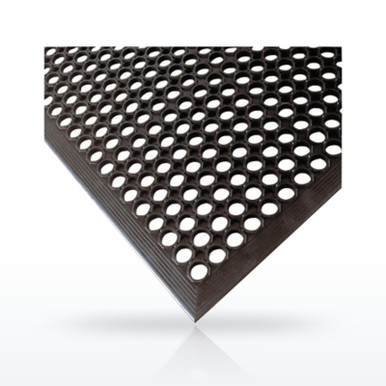
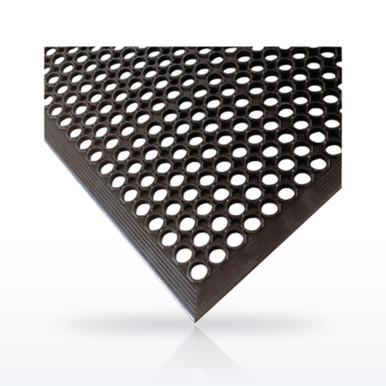
- Dry or wet. Closed-cell PVC sponge and vinyl-top foam mats are for dry areas: workstations, packing, assembly. Rubber drainage mats with holes are for wet areas: kitchens, washdown, cutting rooms, where water must pass through and the mat must be hosed off.
- Thickness. 3/8 and 1/2 inch is the common range for light standing; 9/16 inch for all-shift standing; 3/4 to 1 inch for heavy industrial use where the mat also takes dropped parts and cart traffic. Thicker is not always better: a very soft, thick mat is tiring in its own way and raises the step-up at the edge.
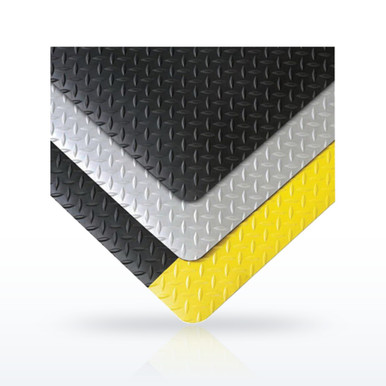
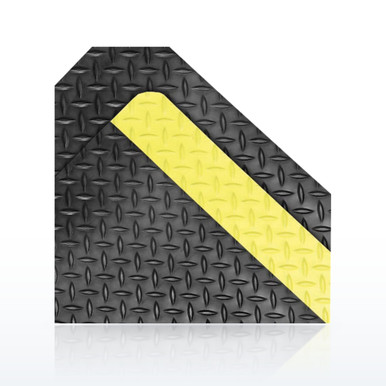
- Surface. Diamond-plate or pebble textures for traction; smooth for easy cleaning. Nitrile rubber where oil, grease or chemicals are present.
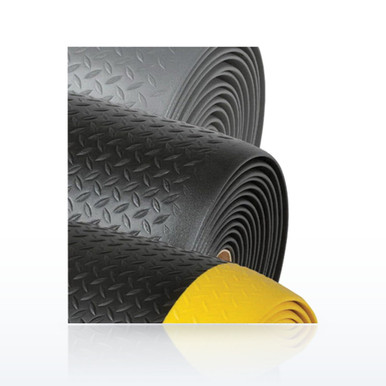
- Size and shape. One mat per station cut to the footprint, or modular tiles linked into a run along a line. Rolls are for long benches.
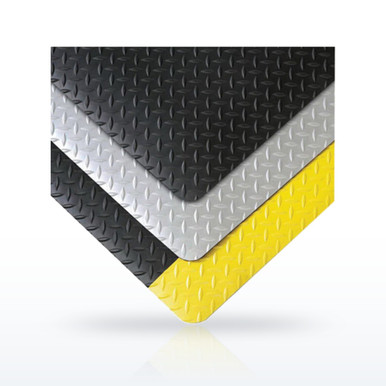
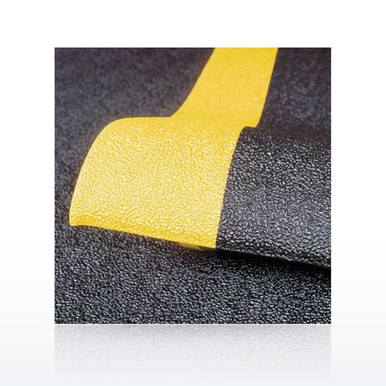
- Edges. Beveled on all exposed sides, and a yellow border where the mat sits in a traffic area so it is seen.
- Static. Where electronics are assembled, an ESD-rated mat; a standard anti-fatigue mat is an insulator.
Where does a mat sit in an ergonomics program?
In the engineering tier, after the task and the workstation have been looked at. The order NIOSH and OSHA both describe: first change the job so the hazard is smaller (a sit-stand option, a bench at the right height, a footrest, rotation to a walking task), then cushion what remains. A mat under a badly designed station is a mat under a badly designed station. A mat under a well-designed station is what keeps the people at it on their feet without pain through the shift. OSHA’s grocery guidelines pair the two: footrests and anti-fatigue mats together, so the worker can shift weight and stand on something that gives.
NIOSH Elements of Ergonomics Programs (DHHS 97-117), hierarchy of controls; OSHA 3192, Front End solutions (footrests and anti-fatigue mats).Anti-fatigue mats by thickness
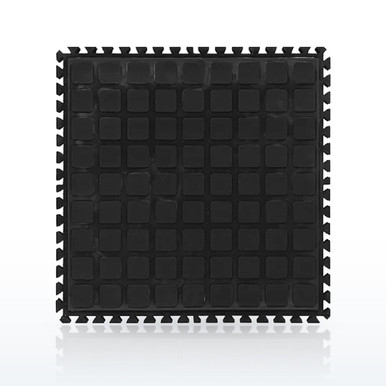
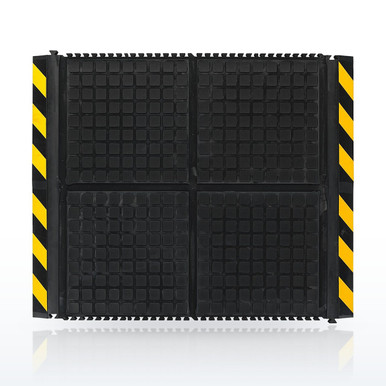
14 items · prices liveMaterial, thickness and intended area (dry or wet) are as published by the manufacturer on each product page. Sizes other than those shown, and custom lengths, are quoted on request. Free shipping on orders over $199.
Knee pads, back supports and other ergonomic protection are in the ergonomics catalog.
Questions people ask
Does OSHA require anti-fatigue mats?
No. There is no OSHA standard for them. OSHA’s industry ergonomics guidelines and eTools list them as a control for prolonged standing, and those documents are advisory.
What does an anti-fatigue mat do?
It gives a cushioned surface that lets the leg muscles make small, constant adjustments, which keeps blood from pooling in the legs, and it removes the hard contact between the soles and a concrete floor.
Do anti-fatigue mats actually work?
OSHA’s grocery guidelines say standing on them, compared with bare floors, provides a noticeable improvement in comfort, and list them with footrests as a solution for prolonged standing. They reduce fatigue; they do not change a bad workstation.
How thick should an anti-fatigue mat be?
Most workstation mats are 1/2 to 9/16 inch. Heavy industrial mats are 3/4 to 1 inch. Thickness is as published by the manufacturer and shown next to each mat above.
What is the difference between a dry-area and a wet-area mat?
Dry-area mats are closed-cell PVC sponge or foam with a solid top. Wet-area mats are rubber with drainage holes so water passes through and the mat can be hosed off.
Can an anti-fatigue mat be a trip hazard?
Yes, if the edges are not beveled, the mat curls, or a loose runner is used where a sized mat belongs. Beveled edges and a mat fitted to the station are the fix.
Are anti-fatigue mats PPE?
No. They are an engineering control that changes the workstation surface. OSHA does not list them under 1910.132.
Should the mat go in the aisle too?
Not the cushioned kind. Aisles and entrances get entrance and runner matting; anti-fatigue mats belong at the standing positions.
Standards and ratings on this page are as published in the documents named and by the manufacturers named. The employer’s hazard assessment and written program decide what applies at a given workplace. Verify a rating on the product and its spec sheet before use.