
How do cooling vests and cooling towels work, and when do they help?
An evaporative cooling towel or vest is a fabric that holds a lot of water and lets it evaporate slowly against your skin; evaporation pulls heat out of the fabric and out of you, the same way sweat does, which is why it works in dry heat and does almost nothing on a humid day. A phase-change vest uses sealed packs of a material that melts at about 58°F and absorbs heat as it melts, so it cools for two to three hours regardless of humidity and then has to be re-frozen. An ice vest is the same idea with ice: colder, heavier, shorter. None of them replaces water, rest breaks and shade; OSHA and NIOSH list them as one more control for workers who cannot get out of the heat.
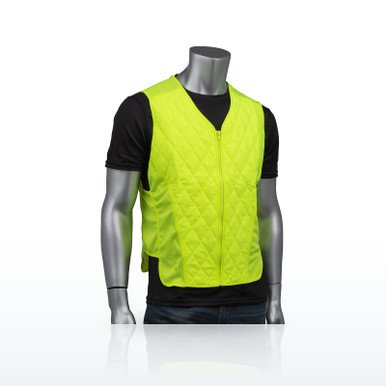
Why does the mechanism matter? Because a cooling product that cannot work in your conditions gives a false sense of safety. Evaporative gear is useless at 90 percent humidity and under a vapor-barrier suit, and a crew that trusts it in those conditions is in more danger, not less. Knowing which kind works where is the difference between a control and a decoration.
What are the three kinds, and where does each work?
Different physics, different limits.
How does an evaporative towel work?
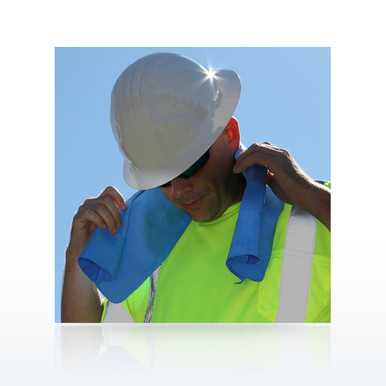
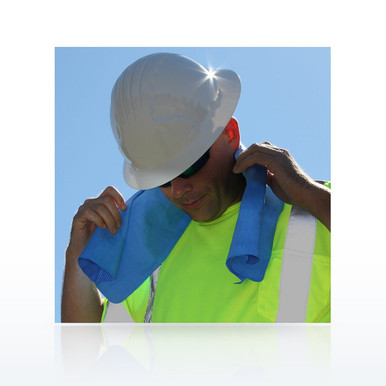
Water needs energy to turn from liquid to vapor, about 580 calories per gram, and it takes that energy from whatever it is touching. A soaked PVA towel holds several times its weight in water and releases it slowly, so it stays cool for an hour or two of light breeze. Draped on the neck it cools the blood passing close to the skin there, which is why the neck is where it feels like it does the most. When the air is already full of water vapor, evaporation slows to almost nothing and the towel is just a wet rag; and when the towel is under a jacket, the vapor has nowhere to go. Snap it in the air to restart evaporation, and re-wet it when it dries.
Manufacturer instructions (PIP, Ergodyne, MCR Safety); basic thermodynamics (latent heat of vaporization of water).How does a phase-change vest work?
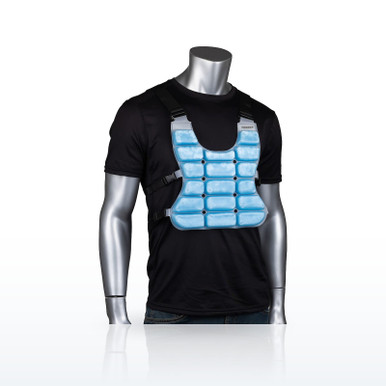
The packs hold a material chosen to melt at a comfortable temperature, usually 58°F. A solid absorbs a large amount of heat while it melts without getting any warmer, so the packs sit at 58°F against your torso until they are fully liquid, two to three hours of steady cooling that does not depend on evaporation. That makes PCM the choice under coveralls, FR clothing, chemical suits and in humid climates. The packs are re-frozen in a cooler of ice water in about 20 minutes, in a refrigerator in about 45, in a freezer faster; a second set of packs in a cooler keeps a worker cooled through a shift. The vest adds about 3 to 5 pounds.
Manufacturer data (PIP EZ-Cool phase change, Ergodyne Chill-Its 6260); NIOSH Criteria Document 2016, chapter 6.How much do they actually help?
NIOSH reviewed cooling garments and concluded that cooling vests can reduce physiological strain and extend work time in hot environments, with the benefit depending on the garment, the workload and the conditions; the effect is real but modest, on the order of a lowered heart rate and core temperature rise during a work bout, not a change in the weather. The practical rule from both OSHA and NIOSH: cooling garments are an auxiliary control for workers who must stay in the heat, used on top of the main controls, never instead of them.
NIOSH Criteria for a Recommended Standard: Occupational Exposure to Heat and Hot Environments (2016), section 6.3 (auxiliary body cooling); OSHA Heat Illness Prevention guidance.Where do they fit in a heat program?
- Water: a quart an hour, close by, cool, with electrolytes for long shifts of heavy sweating.
- Rest: scheduled breaks in shade or air conditioning, longer as the heat index rises.
- Shade: a shaded or cooled rest area the crew can reach without walking far.
- Acclimatization: new and returning workers ramp up over one to two weeks; most heat deaths are in the first week.
- Scheduling and engineering: heavy work in the cool hours, fans, misting, ventilation, shielding from radiant heat.
- Then auxiliary cooling: vests and towels for the people who cannot leave the heat, chosen for the humidity and the clothing they wear over them.
- Training and monitoring: everyone knows the signs of heat exhaustion and heat stroke, and someone is watching.
How do you use and care for them?
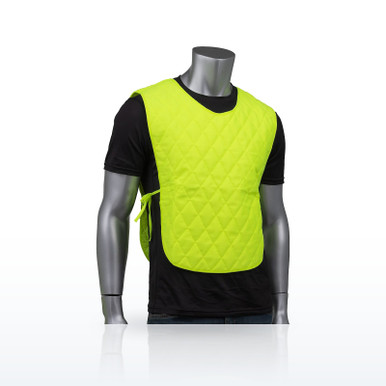
- Evaporative towel or bandana: soak in cool water for a minute, wring until it stops dripping, snap it, wear it on the neck or head. Re-wet when it dries. Rinse and air-dry at the end of the day; a PVA towel stored damp in a sealed bag mildews.
- Evaporative vest: soak 2 to 5 minutes, press out the excess, wear over a shirt. Re-soak as needed. Machine-washable on most models; check the label.
- Phase-change vest: freeze or chill the packs until solid, load them into the vest, wear over a base layer. Swap in a second set from a cooler at the break. Wipe the packs; wash the vest shell.
- Ice vest: freeze the packs flat; wear over a shirt, never on bare skin.
Cooling vests, towels and bandanas
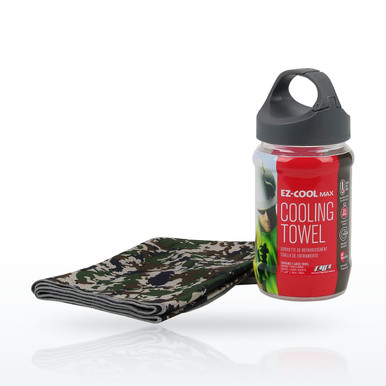
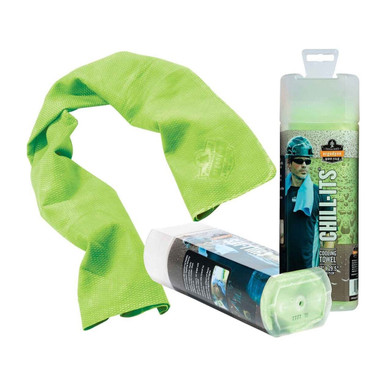
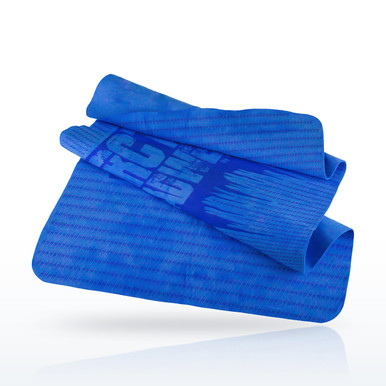
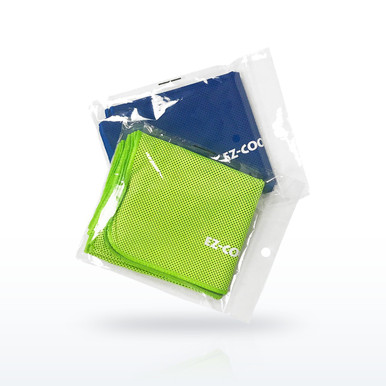
14 items · prices liveCooling type (evaporative, phase-change) and duration are as published by the manufacturer; see each product page. Free shipping on orders over $199.
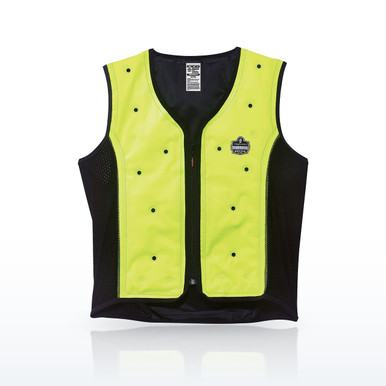
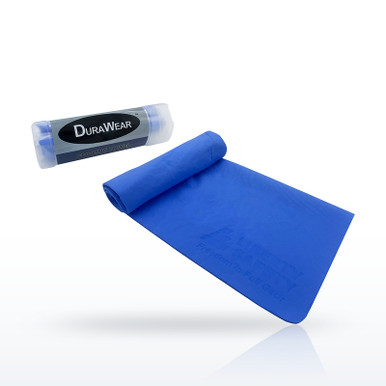
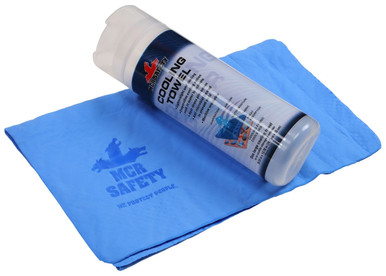
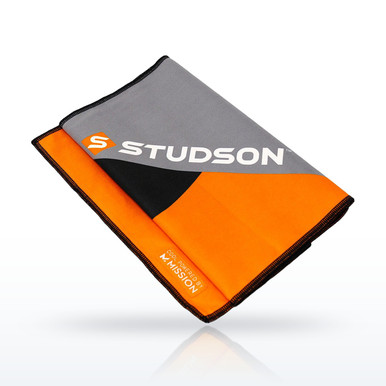
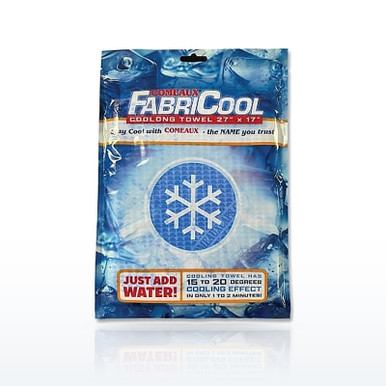
Electrolyte drinks, shade canopies and heat-stress monitors are on the cooling products page.
Questions people ask
How does a cooling towel work?
It holds a lot of water and lets it evaporate slowly against your skin; evaporation pulls heat out. It works in dry, moving air and barely at all in high humidity or under a jacket.
Do cooling towels really work?
In dry heat with some air movement, yes; a wet PVA towel on the neck measurably lowers skin temperature and feels cooler for an hour or more. In humid, still air, or under clothing, no. For those conditions use a phase-change vest.
How do you use a cooling towel?
Soak it in cool water, wring it until it stops dripping, snap it a few times to start evaporation, and wear it on the neck. Re-wet when it dries out.
How long does a cooling vest last?
Evaporative: one to two hours per soaking, unlimited re-soaks. Phase-change: two to three hours per charge, re-chargeable in 20 to 45 minutes. Ice: one to two hours per freeze.
What is a phase-change cooling vest?
A vest with packs of a material that melts at about 58°F and absorbs heat as it melts, so it cools steadily in any humidity and under clothing. Re-freeze in ice water or a cooler.
Does OSHA require cooling vests?
No. OSHA requires employers to protect workers from heat under the general duty clause and state rules like Cal/OSHA 3395 require water, shade, rest and acclimatization. Cooling garments are an auxiliary control the employer may add.
Can you wear a cooling vest under FR clothing?
A phase-change vest, yes, over a non-melting base layer; it works without evaporation. An evaporative vest under FR does little and wets the FR garment. Check the FR program; some require the cooling vest itself to be FR.
How much do cooling vests weigh?
Evaporative vests under a pound wet; phase-change vests about 3 to 5 pounds with packs; ice vests more.
Standards and ratings on this page are as published in the documents named and by the manufacturers named. The employer’s hazard assessment and written program decide what applies at a given workplace. Verify a rating on the product and its spec sheet before use.