
Are Oakley and other brand sunglasses Z87 rated? How to tell, and what counts on the job
Only if the pair is marked. A sunglass is safety eyewear when its manufacturer has tested it to ANSI/ISEA Z87.1 and put the Z87 or Z87+ mark on the frame or lens; the brand name on the temple does not do it. Most consumer sunglasses, Oakley’s included, are made to sunglass rules and carry no Z87 mark. Oakley sells a separate industrial line that is marked Z87+, and other sunglass brands do the same; those pairs count, the rest do not. OSHA’s rule requires eye protection that complies with Z87.1, is marked by the manufacturer and has side protection where objects can fly. Look at the temple: Z87+ and the maker’s mark, or it is not PPE.
Why doesn’t a $200 sunglass count? Price and lens quality are not the test. Z87.1 fires a quarter-inch steel ball at the lens at 150 feet per second and drops a 500-gram pointed weight on the frame, and the lens has to stay in the frame with nothing reaching the eye. It also requires side coverage and a minimum lens area in front of each eye. A fashion sunglass can have a superb polycarbonate lens and still fail on the frame, the fit, the side gap or simply because nobody tested it. The mark is the only evidence the tests were run, and OSHA accepts nothing else short of the employer proving equivalence itself.
How do you tell if sunglasses are Z87 rated?
Five things to check on the pair in your hand.
What does OSHA say about sunglasses at work?
Nothing about sunglasses by name, which is the point. 1910.133 requires appropriate eye protection for the listed hazards, side protection for flying objects, a manufacturer’s mark, and compliance with Z87.1. A sunglass that meets all of that is safety eyewear that happens to be dark. A sunglass that does not is a personal item, and the rule on who pays for PPE lists ordinary sunglasses with winter coats and sunscreen as things the employer does not have to buy, because they are not PPE.
29 CFR 1910.133(a)(1), (a)(2), (a)(4) and (b)(1); 1910.132(h)(4)(iii) (ordinary sunglasses are not reimbursable PPE).Can a worker wear their own Z87+ sunglasses? The PPE rule lets an employer allow employee-owned PPE that is adequate, without paying for it, as long as the employer does not require employees to supply their own. So a crew member’s Z87+ pair from the industrial line of a sunglass brand can be approved by the employer; the employer is still responsible for making sure it is adequate for the hazard and in good condition.
29 CFR 1910.132(h)(6) (employee-owned PPE) and 1910.132(a) (adequate and maintained).What do the tint marks on Z87 glasses mean?
- U followed by a number: an ultraviolet filter lens, tested to the transmittance limits of Table 8. The higher the scale number, the less UV passes. Many manufacturers state UV blocking for their clear polycarbonate lenses on the spec sheet; the U mark is the tested claim.
- L followed by a number: a visible-light filter lens, tested to Table 10. This is what a gray or smoke lens is when the manufacturer has had it tested as a filter.
- No number after the tint: a tinted lens. It cuts glare; it has not been tested as a filter. OSHA’s guidance says tinted lenses are not filter lenses unless marked.
- W followed by a number: a welding shade. A sunglass is never one; welding shades start where sunglass tints end.
- Polarized, mirror, photochromic (V): lens treatments, not ratings. A polarized lens cuts reflected glare off water, glass and flat metal; mirror coatings reflect some light; V marks a lens that darkens in sunlight. None of them changes what the Z87+ mark means.
When should the lens be dark, and when should it not?
Outdoors in sun, a gray or smoke Z87+ lens is the right tool and is why the catalog carries them. Indoors, or moving in and out, a dark lens restricts vision, and OSHA’s guidance treats a lens that impairs vision as a problem to fix. Indoor-outdoor (lightly mirrored clear) and amber lenses are the usual answers for crews that go both ways; photochromic lenses are the other. For equipment operators, polarized lenses can make some LCD screens hard to read; the lens choice is part of the employer’s hazard assessment, not a style call.
1910 Subpart I Appendix B, Section 8, Note 1 (protection against the highest level of each hazard) and Section 12 (lenses that impair vision); lens tints as published by the manufacturers listed below.Tinted, mirrored and polarized safety glasses by ANSI mark
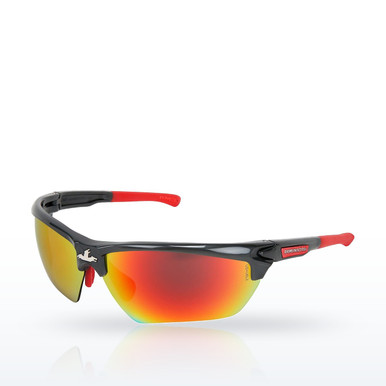
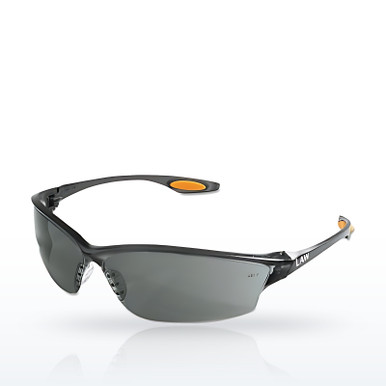
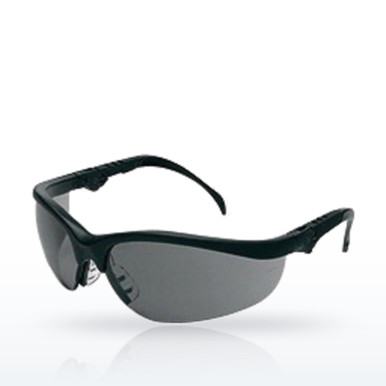
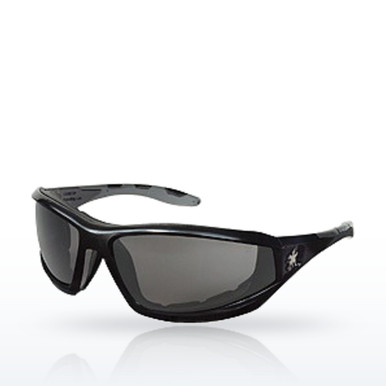
18 items · prices liveThe mark shown is the one the manufacturer publishes for each item: Z87.1+ for impact rated, Z87.1 for basic impact. Lens tint, mirror and polarization are on the product page; any U or L filter number is on the lens as marked by the manufacturer. We do not carry Oakley. Contractor Direct orders ship free.

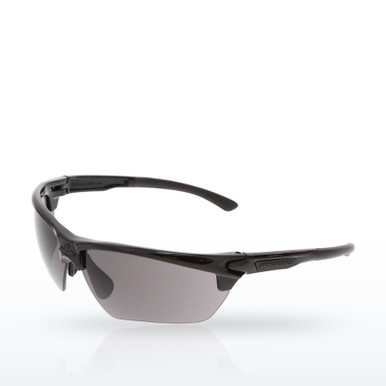
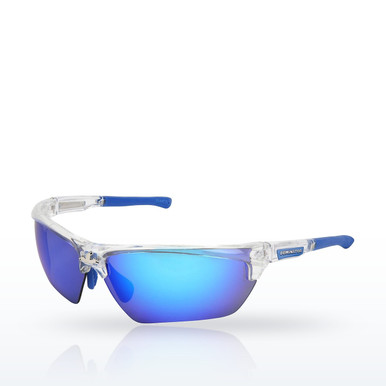
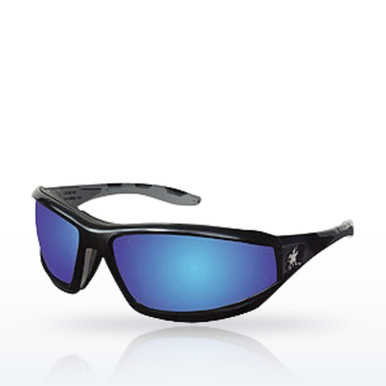
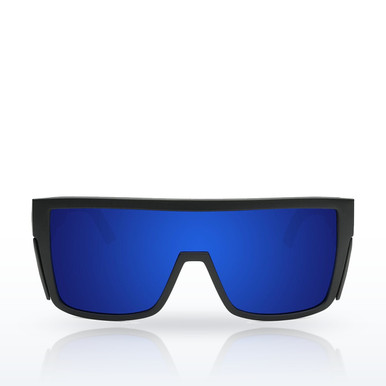
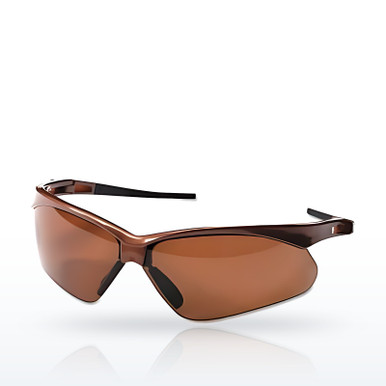
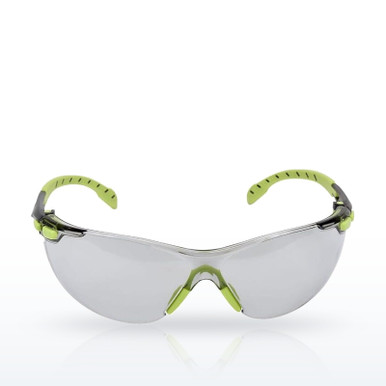
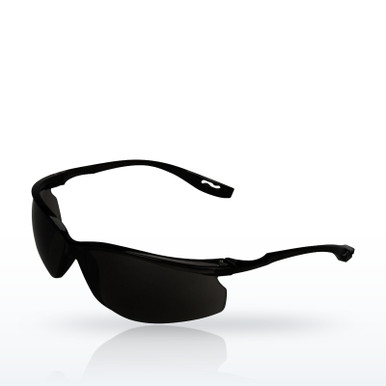
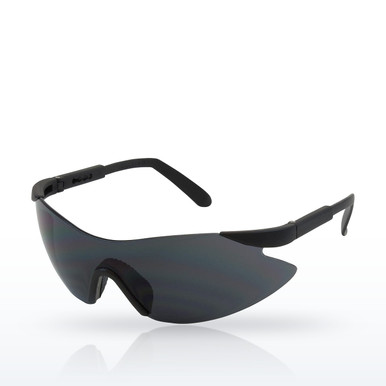
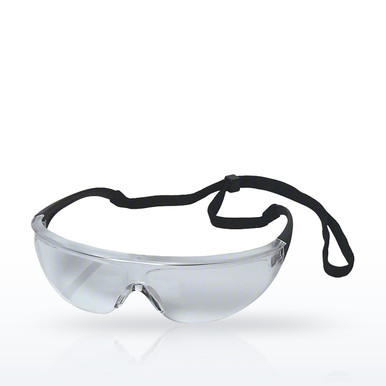
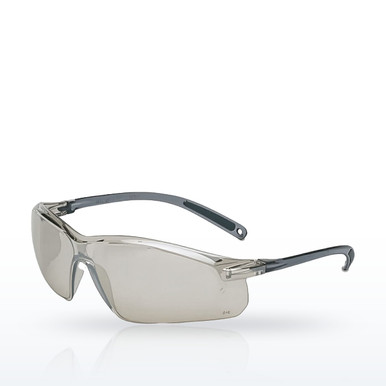
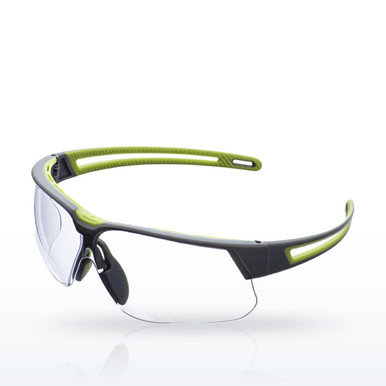
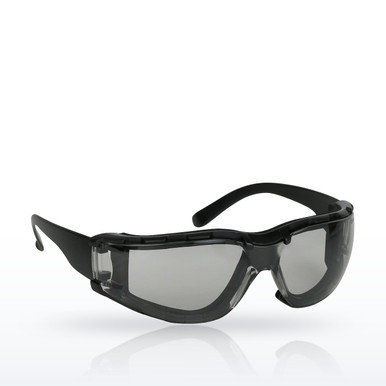
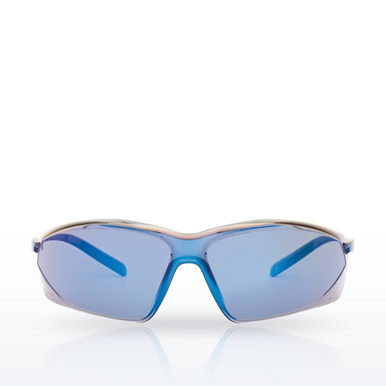
Clear and indoor-outdoor lenses in the same frames are in the eye protection finder.
Questions people ask
Are Oakley sunglasses Z87 rated?
Only the pairs Oakley makes and marks as such, sold in its Standard Issue industrial line. Oakley’s consumer sunglasses are not sold as Z87 eyewear and are not safety eyewear under OSHA. Check the temple for Z87+ and the manufacturer’s mark.
How do I know if my sunglasses are safety rated?
Look for Z87 or Z87+ with the manufacturer’s mark on the temple, frame front or lens. No mark means the pair was not certified to ANSI Z87.1. (Z87.1-2020 Table 3; 1910.133(a)(4).)
Can I wear regular sunglasses on a construction site?
Not as eye protection. 1926.102 requires Z87.1-compliant, manufacturer-marked eyewear with side protection where objects can fly. A tinted Z87+ safety glass does the job of sunglasses and meets the rule.
Do polarized safety glasses exist?
Yes. Polarization is a lens treatment, and manufacturers make Z87+ frames with polarized lenses; the band above shows the ones we carry with the mark the manufacturer publishes.
Does Z87 mean UV protection?
Not by itself. A U number on the lens is the tested UV filter claim; most polycarbonate safety lenses block UV, and manufacturers state it on the spec sheet. (Z87.1-2020 Table 3 and Table 8.)
Does the employer have to pay for safety sunglasses?
If tinted Z87 eyewear is the protector chosen for an outdoor hazard, it is PPE and the employer provides it at no cost. Ordinary sunglasses are not PPE and are not reimbursable. (1910.132(h)(1) and (h)(4)(iii).)
Can I wear my own Z87+ sunglasses at work?
If the employer allows employee-owned PPE and the pair is adequate for the hazard, yes; the employer cannot require you to supply your own. (1910.132(h)(6).)
Are dark lenses OK indoors?
Generally not; a lens that impairs vision for the task is a hazard of its own in OSHA’s guidance. Indoor-outdoor, amber or photochromic lenses cover crews that move between the two. (Appendix B to Subpart I.)
Standards and ratings on this page are as published in the documents named and by the manufacturers named. The employer’s hazard assessment and written program decide what applies at a given workplace. Verify a rating on the product and its spec sheet before use.