
Safety glasses that fit over prescription glasses (OTG): what to look for, and what OSHA requires
Over-the-glass (OTG) safety glasses are Z87-rated frames with a deep, wide lens and temples shaped to fit over a pair of prescription glasses, so a worker who needs corrective lenses can have impact protection without paying for prescription safety glasses. OSHA requires that a worker who wears corrective lenses either wear eye protection that incorporates the prescription or wear protection that can be worn over the prescription glasses without disturbing them. Regular eyeglasses, even with impact-resistant lenses, are not safety glasses: they are not tested to Z87.1, they have no side protection, and the lenses pop out of the frame toward the eye.
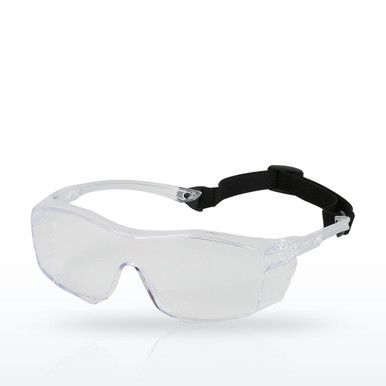
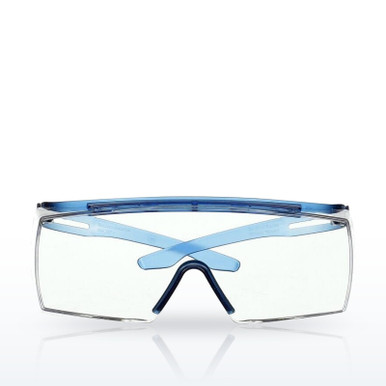 3M SecureFit 3700 over-the-glass safety glassesZ87+ OTG frame, clear anti-fog lens
Why can’t prescription glasses be the safety glasses? Because they were made to correct vision, not to stop a chip of steel. FDA requires dress eyeglass lenses to pass a drop-ball test, which is a fraction of the Z87.1 high-impact test; the frames are not tested at all; there is no side shield; and in an impact, a dress frame lets the lens eject rearward into the eye. OSHA inspectors cite the missing side protection and the absence of the Z87 mark. OTG glasses exist so the worker keeps their own glasses and adds the protection over them.
What does OSHA say about workers who wear glasses?
One paragraph, and it gives the employer two choices.
What makes an OTG frame work?
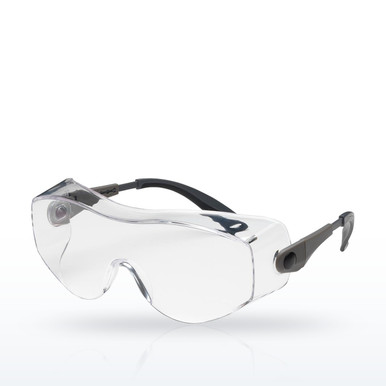
- Depth: the lens sits far enough forward that it clears the prescription lenses and frame front without touching them.
- Width: wide enough to cover the temples of the glasses underneath and still give side protection.
- Temples: straight or adjustable temples that ride above or alongside the prescription temples without pushing the glasses down the nose.
- Vented lens or anti-fog coating: two pairs of lenses trap air and fog; OTG frames without venting or an anti-fog lens fog within minutes of hard work.
- A brow guard and side shields that are part of the frame, so protection does not depend on the glasses underneath.
- The Z87+ mark on the frame and lens.
How do you size OTG glasses over your own?
Measure the width of your prescription frame across the front, temple hinge to temple hinge, and its height at the tallest point of the lens. OTG frames list the maximum glasses they fit, usually something like 5.5 inches wide by 1.75 inches tall; pick one with a little room. Large or wide frames and heavy plastic frames need the larger OTG models; small metal frames fit nearly any. Put them on over your glasses and check: the OTG lens does not touch your lenses, your glasses have not moved down your nose, the side shields close the gap at the temples, and you can look down without the two frames colliding. If you work with a hard hat or earmuffs, check with those on.
Manufacturer OTG size specifications (maximum frame width and height); ANSI/ISEA Z87.1-2020 (coverage).When is an OTG goggle better than OTG glasses?
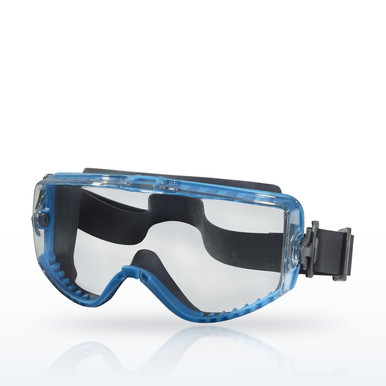
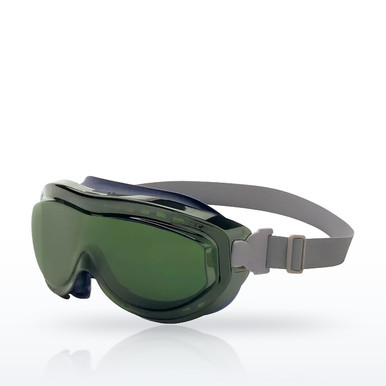
When the hazard is dust, chemical splash, or fine particles coming from any direction, or when the job is grinding or working overhead, a goggle seals to the face and OTG glasses do not. OTG goggles are built deep enough to go over prescription glasses with the strap around the head; indirect vents keep splash out while letting air through, and a good anti-fog coating is essential since a sealed goggle over glasses fogs fastest of all. Z87.1 marks goggles for the hazard: D3 for splash and droplet, D4 for dust, D5 for fine dust.
ANSI/ISEA Z87.1-2020 (goggle markings D3, D4, D5); 29 CFR 1910.133(a)(1); manufacturer data.What about prescription safety glasses?
For a worker who wears eye protection all day, prescription safety glasses are the better long-term answer: one pair, better optics, no fogging between two sets of lenses, no frame-on-frame wear. They are made by an optical lab to the wearer’s prescription in a Z87-rated frame with permanent or removable side shields, and the frame and lens carry the Z87 (or Z87-2 for prescription) marking. Lenses are polycarbonate or Trivex for impact; glass is not used for safety work. The employer pays for the frame and lenses; the eye exam and prescription are the employee’s. Lead time is one to three weeks, which is why OTG glasses still cover the gap.
ANSI/ISEA Z87.1-2020 (prescription safety eyewear requirements and Z87-2 marking); 29 CFR 1910.132(h)(2); optical lab lead times.How do you stop OTG glasses fogging?
- Buy the anti-fog version; the coating matters more on OTG than on any other frame.
- Wipe both pairs of lenses with an anti-fog cloth or spray at the start of the shift.
- Choose a vented OTG frame for hot work; choose a sealed OTG goggle only where splash or dust requires it.
- Keep the OTG frame from sitting flush against your glasses; a small air gap lets vapor escape.
- Replace a scratched coating; an abraded anti-fog lens fogs worse than an uncoated one.
Over-the-glass safety glasses and goggles
11 items · prices liveEach frame is listed as the manufacturer publishes it, with its Z87 marking and the maximum prescription frame size on the product page. Contractor Direct orders ship free.
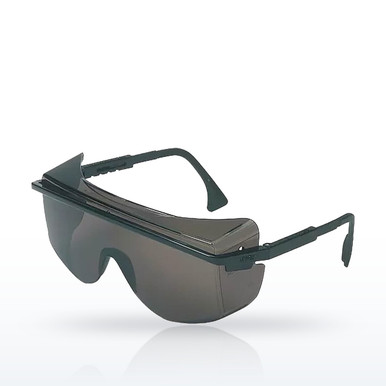
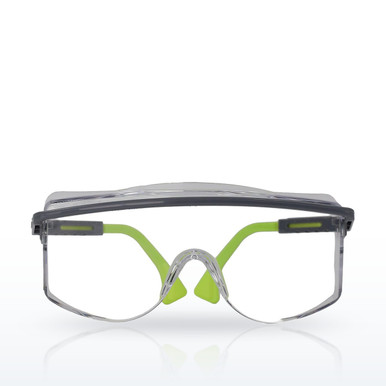
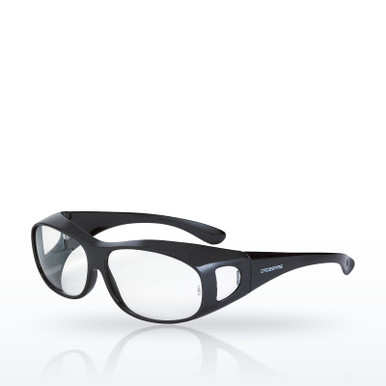
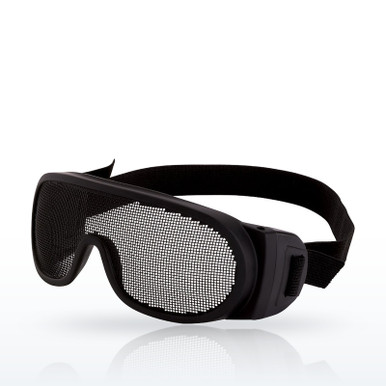
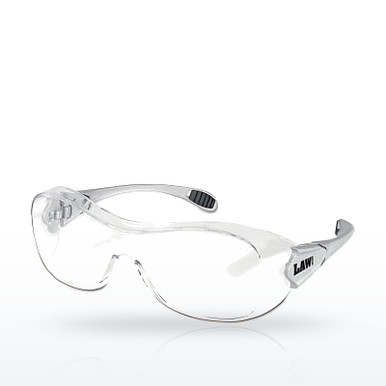
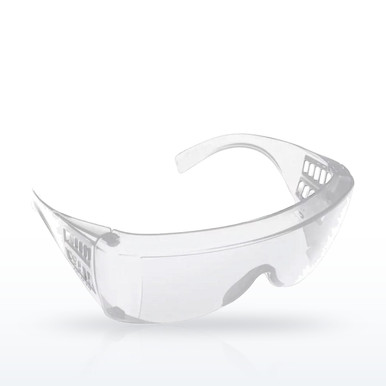
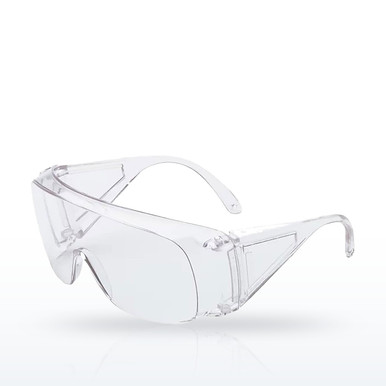
Prescription safety frames and every other style we carry are on the eye protection finder, filtered by tint, coating and frame.
Questions people ask
Can you wear safety glasses over prescription glasses?
Yes, if they are OTG (over-the-glass) safety glasses or goggles made for it: a Z87 frame deep and wide enough to clear your glasses with side protection. OSHA specifically allows this. (1910.133(a)(3).)
Are prescription glasses OSHA-approved safety glasses?
No, unless they are Z87-marked prescription safety glasses with side shields. Ordinary eyeglasses are not tested to Z87.1 and have no side protection.
What does OTG mean on safety glasses?
Over the glass: a frame sized to fit over prescription eyeglasses.
How do I know if OTG glasses will fit over my glasses?
Compare your frame’s width and lens height to the OTG model’s stated maximum, then check that the lenses do not touch, your glasses do not slide, and the side shields close the gap.
Do OTG safety glasses fog up?
More than other styles, because two pairs of lenses trap air. Choose an anti-fog coated or vented OTG frame and wipe both pairs with anti-fog at the start of the shift.
Who pays for prescription safety glasses?
The employer pays for the Z87 frame and lenses; the employee pays for the eye exam and prescription. (1910.132(h)(2).)
Can I put clip-on side shields on my regular glasses?
Clip-on shields do not turn dress glasses into Z87 safety glasses; the frame and lens are still untested. OSHA does not accept them as compliance.
Are OTG goggles different from OTG glasses?
Goggles seal to the face with a strap and protect against dust and splash from all sides; OTG glasses protect against impact with side shields. Pick by the hazard.
Standards and ratings on this page are as published in the documents named and by the manufacturers named. The employer’s hazard assessment and written program decide what applies at a given workplace. Verify a rating on the product and its spec sheet before use.