
Back supports and lifting belts: what NIOSH says
NIOSH reviewed the research on industrial back belts in 1994 and found no evidence that wearing one prevents back injury in workers who are not already hurt. Its working group did not recommend back belts for preventing injury among uninjured workers, said they are not personal protective equipment, and found insufficient data that they reduce the load on the spine during lifting. It raised two worries: a belt can give a sense of security that is not warranted, and wearers in studies lifted heavier loads, which is the opposite of protection. What NIOSH does say works is an ergonomics program: assess the lifting, redesign it so it stays within what workers can do, train, watch for symptoms, and manage injuries early. A belt is not a reason to lift more.
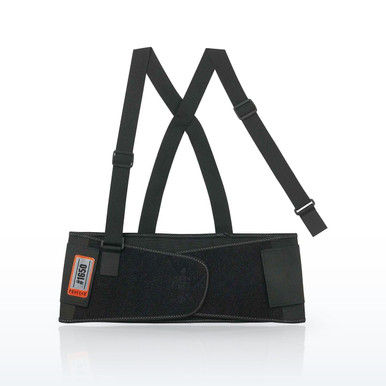
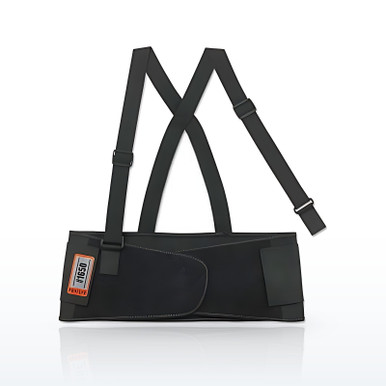
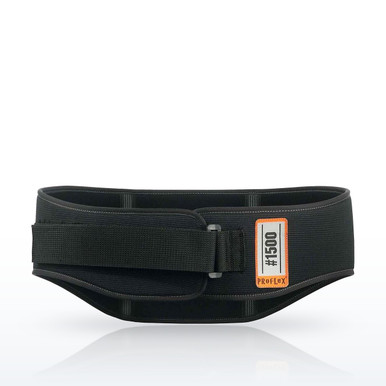
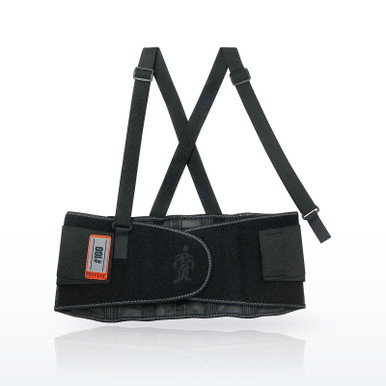 Ergodyne ProFlex 100 economy spandex back supportElastic body, mesh back, webbing stays; sold as a support, not as PPE
Why did NIOSH review back belts? Because by the early 1990s belts were everywhere, on warehouse crews, grocery stockers and delivery drivers, and employers were buying them as if they were safety equipment. The NIOSH director formed a working group in 1992 to go through the published laboratory research on the biomechanical, physiological and psychophysical effects of wearing one, and to say whether the science supported what the belts were being sold to do. The 1994 report is the result, and it is still the reference every safety program and every back-belt manufacturer cites.
What did the NIOSH working group conclude?
The findings, in NIOSH’s words where the words matter.
What does NIOSH say to do instead?
- An ergonomics program as the most effective means of minimizing the likelihood of back injury, with these parts:
- Ergonomic assessment of the work, so that tasks can be accomplished without exceeding the physical capabilities and capacities of the workers. The NIOSH lifting equation is the tool: 51 pounds is the load limit under ideal conditions, and it drops as the lift gets lower, farther, more frequent or twisted.
- Ongoing training for all workers in lifting mechanics and techniques.
- Surveillance to identify potential work-related musculoskeletal problems before they become injuries.
- A medical management program for the people who do get hurt.
- Then the engineering fixes that take the lift out of the job: lift tables, hoists, carts, conveyor height, pallet positioners, team lifts and smaller packages.
Where does OSHA stand on back belts?
OSHA has no standard on back belts and does not require or prohibit them. It does not treat them as PPE under 1910.132, which means a hazard assessment cannot be satisfied by issuing belts, and a belt program does not shift the lifting hazard off the general duty clause. OSHA enforces lifting hazards the way it enforces other ergonomic hazards, under section 5(a)(1) where the hazard is recognized, serious and feasibly fixable, and its industry ergonomics guidelines point to the same engineering and work-practice controls NIOSH does. An employer that wants to let workers wear belts can; an employer that counts a belt as its lifting control has not addressed the hazard.
OSH Act section 5(a)(1); 29 CFR 1910.132(a) and (d) (PPE for hazards of the extremities and body; back belts are not listed); NIOSH Publication 94-122 (not personal protective equipment). OSHA has issued no standard or formal policy adopting back belts; cited at the agency level.If a program does use back supports, what matters?
Some workers who have had a back injury are fitted with a support by their physician for a period of recovery, and some employers let workers wear one by choice. The things that keep that from doing harm are the ones NIOSH flagged. The belt is worn loose while standing and walking and tightened only for the lift, so it is not squeezing the trunk and raising blood pressure all shift. It is never a reason to lift something heavier or more often than the job allowed before. The lifting rules do not change: load close, feet set, back straight, no twisting, and a cart or a second person for anything the equation says is too much. Anyone with a heart condition or high blood pressure talks to a doctor before wearing one. And the support is taken off at the end of the lift task, not worn home.
NIOSH Publication 94-122, physiology section (cardiovascular strain, compromised cardiovascular system) and psychophysics section (sense of security, heavier loads); manufacturer wearing instructions for the supports in the band.What do the supports in the catalog actually do?
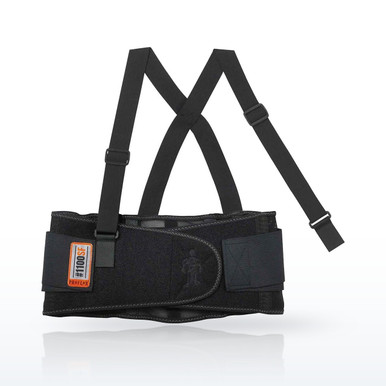
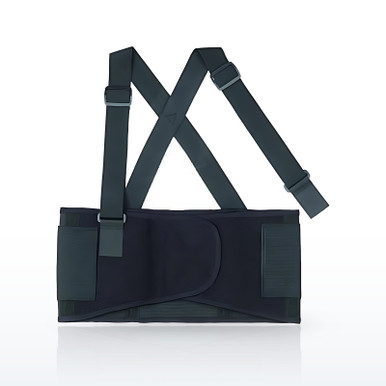
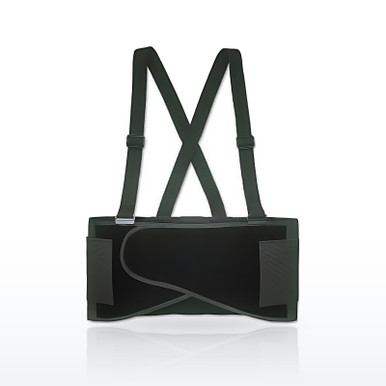
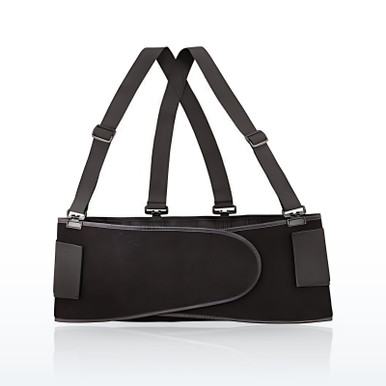
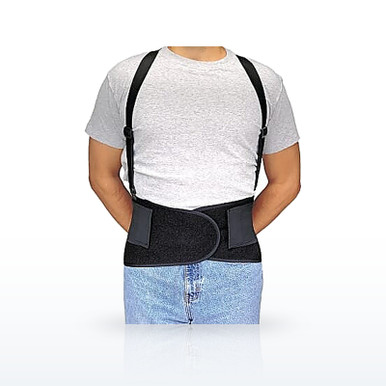
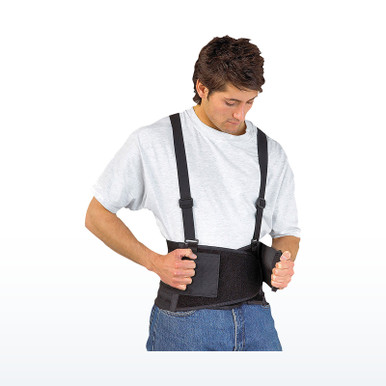
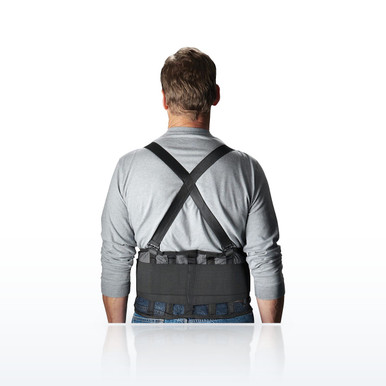
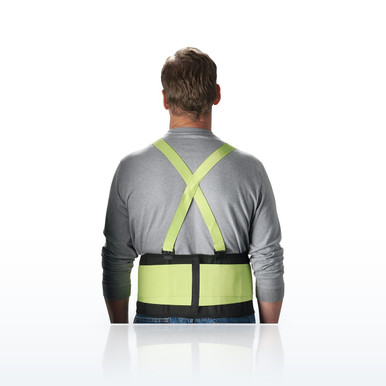
They are elastic or spandex belts, 5 to 9 inches wide at the back, with stays to keep them from rolling, a cinch strap for tension, and usually suspenders to hold them up when loose. Manufacturers describe them as lumbar supports and sell them for comfort and as a reminder of posture; none of the makers in our catalog claims that the belt prevents injury, and the NIOSH finding is why. We list them by width and construction as each manufacturer publishes them, for the programs and individuals that choose to use one.
Manufacturer product data (Ergodyne ProFlex, PIP, Allegro, CLC, Portwest) for the supports in the band; NIOSH Publication 94-122.Back supports we carry
13 items · prices liveWidth, material and closure are as published by each manufacturer. These are sold as supports, not as personal protective equipment; see the NIOSH findings above. Free shipping on orders over $199.
Anti-fatigue mats and knee pads are in the ergonomics catalog.
Questions people ask
Do back belts prevent back injuries?
NIOSH reviewed the research in 1994 and found the effectiveness of back belts in reducing injury among uninjured workers unproven, and did not recommend them for that purpose. That remains the NIOSH position.
Does OSHA require back belts?
No. OSHA has no standard on them and does not treat them as PPE. Lifting hazards are enforced under the general duty clause and addressed with engineering and work-practice controls.
Are back belts PPE?
No. NIOSH states that back belts are not personal protective equipment because they do not mitigate the hazards of lifting, pushing, pulling, twisting or bending.
Can a back belt let me lift more?
No, and that is the specific danger NIOSH named: wearers tend to feel safer and lift heavier loads, with no evidence the belt protects them. The NIOSH lifting equation limit, 51 pounds under ideal conditions, does not change with a belt.
Are there health risks to wearing a back belt?
NIOSH found wearing one may put temporary strain on the cardiovascular system, and that workers with a compromised cardiovascular system may be at greater risk. A belt is worn loose except during the lift.
What should a company do instead of buying belts?
What NIOSH recommends: assess the lifting tasks, redesign them to stay within workers’ capacities, train on lifting mechanics, watch for symptoms, and manage injuries early. Lift assists, carts and smaller loads do what a belt cannot.
Why do you sell back supports if NIOSH does not recommend them?
Because physicians prescribe them during recovery and some workers choose to wear one, and the makers sell them as supports, not as injury prevention. The guide says what NIOSH found; the band shows what we carry, as each manufacturer describes it.
How is a back support worn?
Loose while standing and walking, tightened for the lift, taken off when the lifting task is done. Suspenders hold it up when loose. It is not worn over the hips or under the ribs.
Standards and ratings on this page are as published in the documents named and by the manufacturers named. The employer’s hazard assessment and written program decide what applies at a given workplace. Verify a rating on the product and its spec sheet before use.