
What is first aid under OSHA, and when is a trained first aid provider required?
First aid in OSHA’s rules is the immediate care given to an injured or ill worker before medical help arrives. A trained first aid provider is required whenever there is no infirmary, clinic or hospital in near proximity to the workplace. OSHA has long read near proximity as 3 to 4 minutes where life-threatening injuries are possible (bleeding, electrocution, suffocation), and up to 15 minutes in low-hazard places like offices. Most shops, yards and jobsites cannot get an ambulance there in 4 minutes, so in practice they need a trained person on every shift, and first aid supplies readily available alongside.
Why 3 to 4 minutes? The rule says near proximity and nothing more. OSHA’s interpretation, upheld by the Review Commission and the courts, is that a severe bleed, a stopped heart or a blocked airway has to be treated inside about four minutes to matter, so if help cannot arrive that fast, someone on site has to be able to give it. The longer figure, up to 15 minutes, is for workplaces where injuries of that kind are remote. Either way the clock starts when the injury happens, not when 911 is dialed.
What does the rule require?
General industry and construction, side by side.
What training counts as adequately trained?
The general industry rule does not name a course. OSHA’s guidance and its letters point to a program that teaches the skills the site’s hazards call for, covers CPR, and is refreshed: Red Cross, American Heart Association, National Safety Council and equivalent programs are the ones employers use, with first aid retrained every three years and CPR annually in common practice. The construction rule is stricter on paper: a valid certificate from the Red Cross or equivalent training that can be verified by documentary evidence. Keep the cards on file; an inspector asks for them.
29 CFR 1910.151(b); 29 CFR 1926.50(c); OSHA Best Practices Guide: Fundamentals of a Workplace First-Aid Program (OSHA 3317).Does the bloodborne pathogens standard apply to first aiders?
If an employee is designated to give first aid as part of the job, the employer reasonably anticipates they will contact blood, and 1910.1030 applies: an exposure control plan, training, gloves and other PPE, a sharps and cleanup procedure, and the hepatitis B vaccine. OSHA’s enforcement directive allows one exception for employees whose first aid duty is collateral to their main job: the employer may hold the vaccine until an exposure incident occurs, provided the rest of the standard is met and the vaccine is then offered within 24 hours. The exception does not cover people whose job is responding, such as security or public safety staff. Workers who help in an emergency without being designated are Good Samaritans and outside the standard.
29 CFR 1910.1030(b) (occupational exposure) and (f)(2); OSHA Directive CPL 02-02-069, section XIII.F.8 (collateral-duty first aid providers); OSHA letter of interpretation, April 10, 2017.What supplies does a first aid provider need on hand?
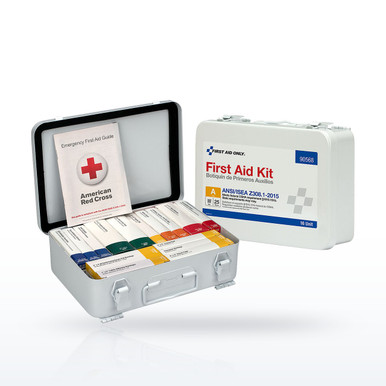
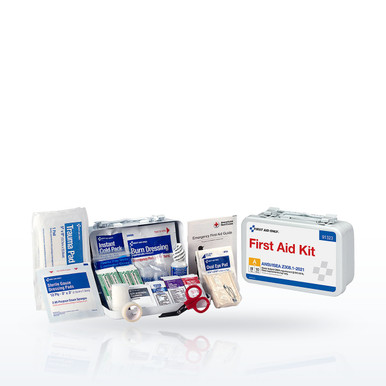
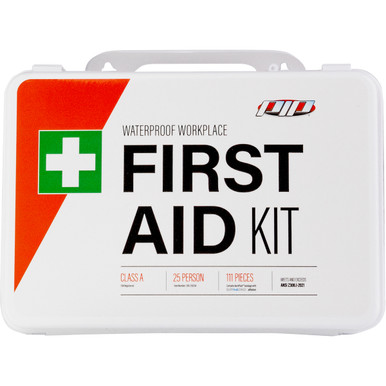
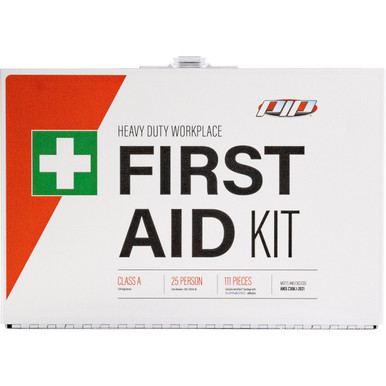
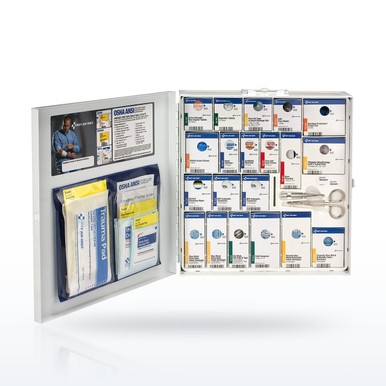
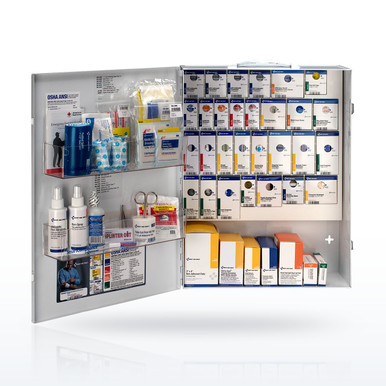
- A kit sized to the crew and the hazard. OSHA’s non-mandatory appendix points to ANSI Z308.1; the current edition sets Class A for common injuries and Class B for larger or higher-risk sites, with a minimum fill for each.
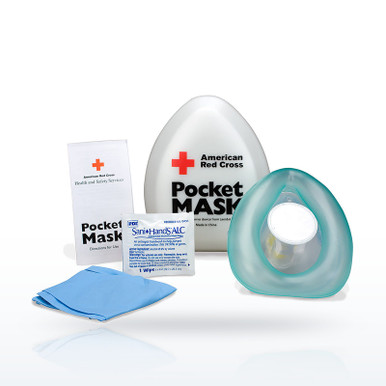
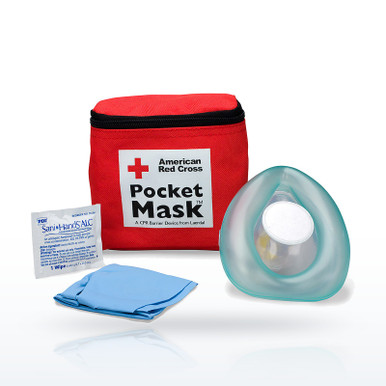
- Gloves and a CPR barrier in the kit, so the first aider is protected before the first step.
- Bleeding control where severe bleeding is a credible injury: a tourniquet, hemostatic or pressure dressings, chest seals for some trades. Z308.1-2021 lists a tourniquet in both classes.
- Eyewash where corrosives are used, under the separate paragraph.
- A way to call for help and a posted location, per the construction rule.
- A restock routine: construction requires a weekly check; general industry requires supplies to stay readily available, which comes to the same thing.
First aid kits, CPR supplies and bleeding control
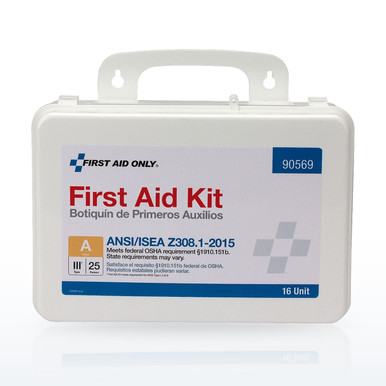
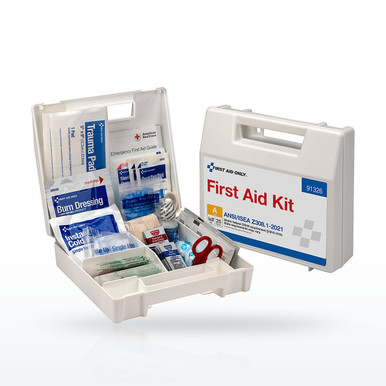
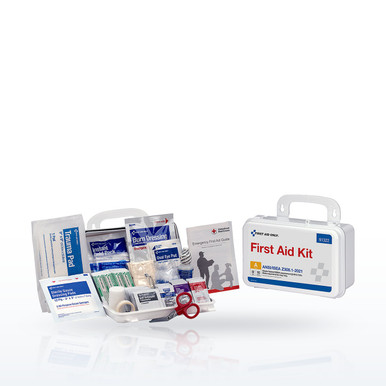
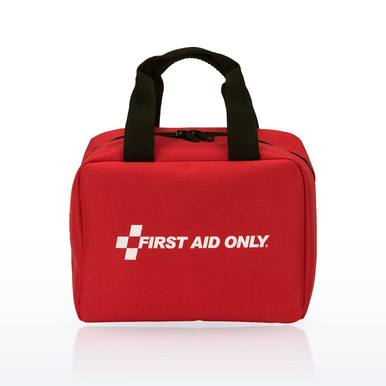
28 items · prices liveKit class, person count and contents are as published by the manufacturer on each product page. Contractor Direct orders ship free.
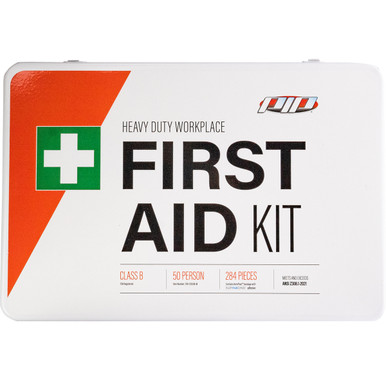
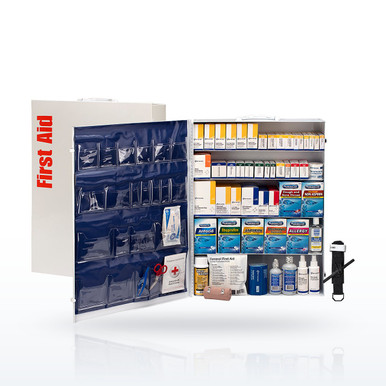
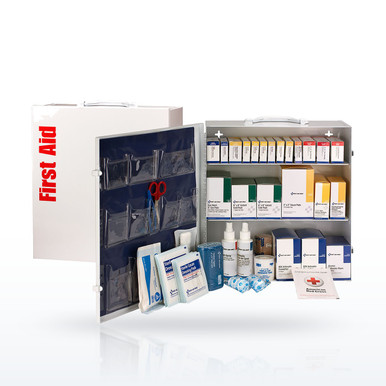
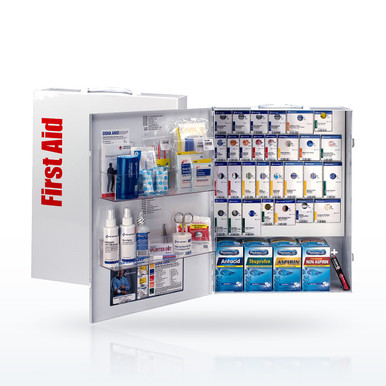
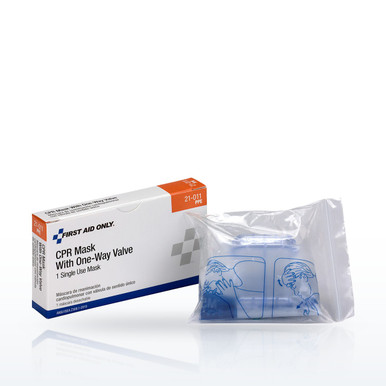
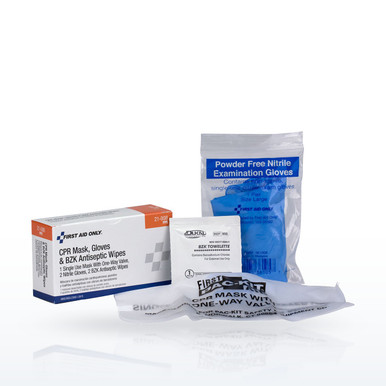
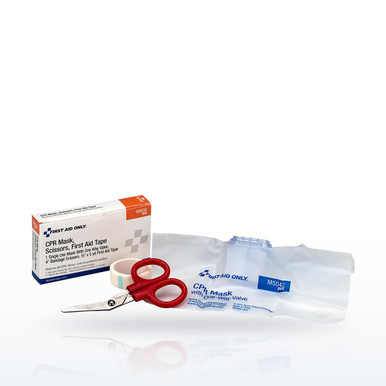
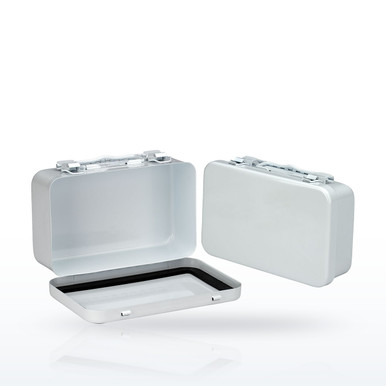
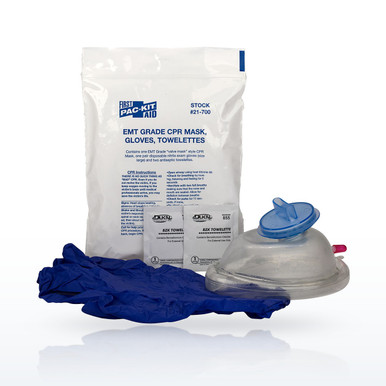
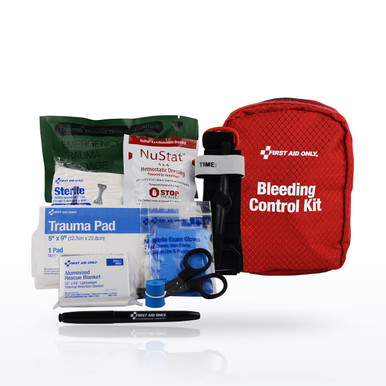
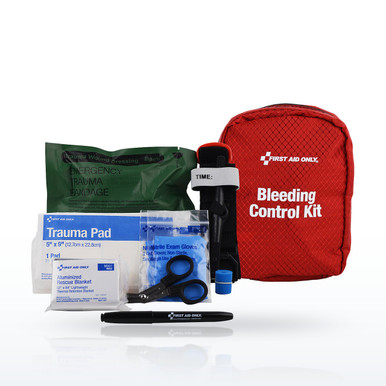
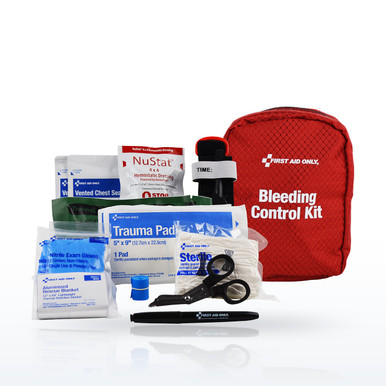
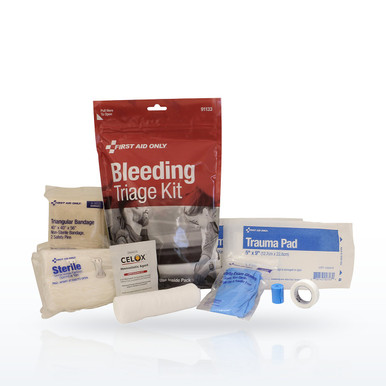
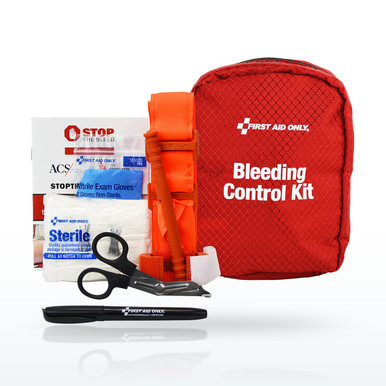
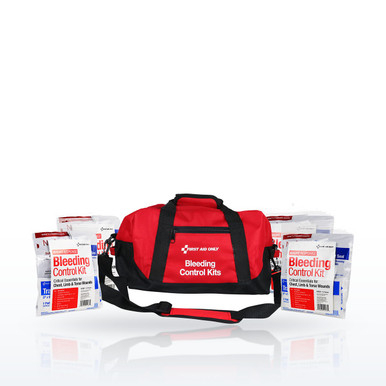
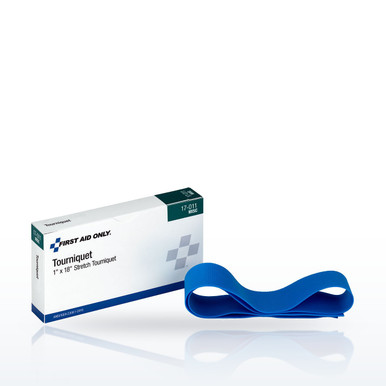
Refills, cabinets and eyewash are in the first aid finder.
Questions people ask
What does OSHA consider first aid?
Immediate care for injury or illness before medical help arrives. OSHA’s recordkeeping rule separately lists what counts as first aid treatment, such as bandages, cleaning wounds and non-prescription medication at non-prescription strength (1904.7(b)(5)(ii)).
Is a first aid trained person required at work?
Yes, unless an infirmary, clinic or hospital is in near proximity, which OSHA reads as 3 to 4 minutes where serious injury is possible and up to about 15 minutes in low-hazard workplaces.
Does OSHA require CPR training?
Not by name in 1910.151, but OSHA’s guidance treats CPR as part of adequate first aid training, and the 3-to-4-minute reading exists because of cardiac arrest and airway cases.
How many first aiders do I need?
The rule says a person or persons; enough that one is on every shift and reachable in the time above across the site. OSHA does not set a ratio.
Does calling 911 satisfy the rule?
Only if the ambulance can reach the injured worker inside the near-proximity window, which an employer has to be able to show.
Do first aiders need the hepatitis B vaccine?
Designated first aiders are covered by 1910.1030. For collateral-duty responders OSHA allows the vaccine to be deferred until an exposure incident, if the rest of the standard is in place.
What first aid kit does OSHA require?
Adequate supplies readily available; the appendix points to ANSI Z308.1 Class A or B as the reference fill. Construction adds a weatherproof container with sealed packages, checked weekly.
Is first aid training required every year?
OSHA sets no interval. Red Cross and AHA cards run two years; common practice is first aid every three years and CPR annually.
Standards and ratings on this page are as published in the documents named and by the manufacturers named. The employer’s hazard assessment and written program decide what applies at a given workplace. Verify a rating on the product and its spec sheet before use.