
What is a bloodborne pathogen, and what does OSHA 1910.1030 require?
A bloodborne pathogen is a germ carried in human blood and certain body fluids that can infect a person who is exposed to them: hepatitis B, hepatitis C and HIV are the three OSHA names. If your job can reasonably be expected to involve contact with blood, OSHA’s 1910.1030 applies to you: a written exposure control plan, universal precautions, gloves and other PPE, the hepatitis B vaccine offered free, a procedure for cleaning up, and training every year.
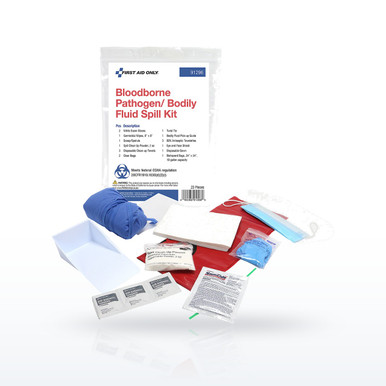
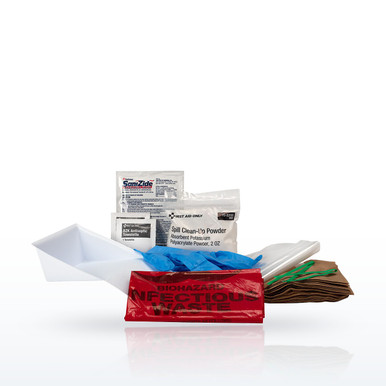
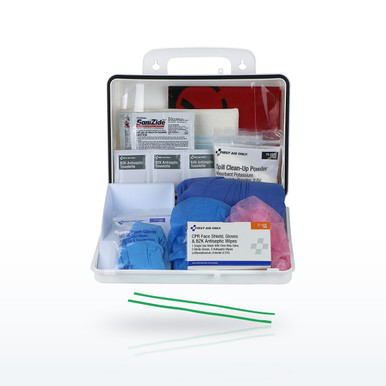
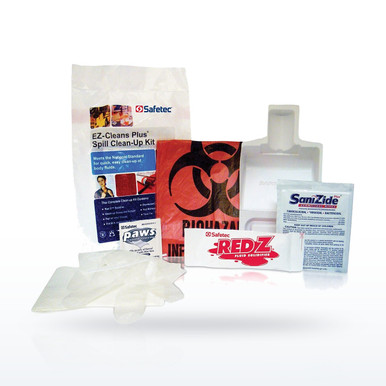
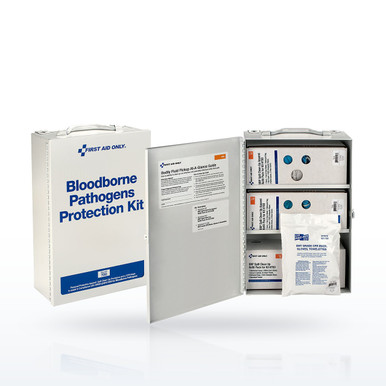 First Aid Only bloodborne pathogen spill cleanup kitGloves, gown, mask, absorbent, disinfectant, biohazard bag, scoop
Why does the standard exist? Hepatitis B can survive in dried blood on a surface for a week and infects far more easily than HIV; a needle stick or a splash to a cut can be enough. Before 1991 that risk fell mostly on healthcare workers. OSHA’s rule made it the employer’s job, in any workplace where contact with blood is a reasonable expectation, to plan for it, protect against it, vaccinate against hepatitis B and clean up properly.
Who does 1910.1030 apply to?
The test is “reasonably anticipated” contact with blood or other potentially infectious materials as part of the job, not the industry.
What counts as a bloodborne pathogen and an infectious material?
The standard names hepatitis B virus (HBV) and HIV and defines the term to include any pathogenic microorganism in human blood that can cause disease; hepatitis C is the third one OSHA and NIOSH emphasize. “Other potentially infectious materials” are listed: semen, vaginal secretions, cerebrospinal, synovial, pleural, pericardial, peritoneal and amniotic fluids, saliva in dental procedures, any body fluid visibly contaminated with blood, any fluid where you cannot tell, and unfixed human tissue.
1910.1030(b): definitions of bloodborne pathogens and other potentially infectious materials.Sweat, tears, urine, feces, vomit and nasal secretions are not on the list unless they visibly contain blood. Tuberculosis is not a bloodborne pathogen; it is airborne and handled under a different set of rules.
1910.1030(b); CDC, Bloodborne Infectious Diseases.What does the employer have to do?
- Write an exposure control plan that lists the jobs and tasks with exposure, and review it every year.
- Use universal precautions: treat all human blood and the listed fluids as infectious, every time.
- Provide engineering controls (sharps containers, safer needles where used) and work-practice controls (handwashing, no recapping).
- Provide PPE at no cost: gloves, and gowns, face shields, masks or eye protection where splashes are possible, and replace them.
- Offer the hepatitis B vaccine series free within 10 working days of assignment, and post-exposure evaluation and follow-up after any exposure.
- Keep the workplace clean: a written decontamination schedule, regulated-waste containers, biohazard labels.
- Train every covered employee at assignment and every year after, and keep training and medical records.
What PPE does the standard require?
Gloves whenever hand contact with blood or the listed fluids is reasonably anticipated, and when handling contaminated items or surfaces. Disposable gloves are replaced as soon as they are contaminated, torn or punctured, and never washed for reuse. Hypoallergenic gloves or liners must be available for workers who react to the standard glove.
1910.1030(d)(3)(ix) and (d)(3)(iii).Masks, eye protection and face shields whenever splashes, spray or droplets of blood can reasonably be expected to reach the eyes, nose or mouth. Gowns, aprons or other body clothing appropriate to the task and the degree of exposure, and removed before leaving the work area.
1910.1030(d)(3)(x), (xi) and (xii).The employer provides, cleans, repairs, replaces and disposes of PPE at no cost. An employee may decline PPE in a rare, specific circumstance where it would have prevented care or put someone at greater risk; the employer must then investigate.
1910.1030(d)(3)(i), (ii), (iv).How is a blood spill cleaned up?
- Put on PPE first. Gloves at minimum; a gown, mask and eye protection if there is any chance of splashing. A kit with all of them in one bag is the easiest way to make sure it happens.
- Contain and absorb. Cover the spill with absorbent powder or pads so it can be picked up without smearing. A scoop and scraper keep hands away from it.
- Bag it. All absorbed material, used pads and anything disposable that touched it goes into a labeled red biohazard bag.
- Disinfect the surface. Use an EPA-registered disinfectant effective against HBV and HIV, or a fresh dilution of household bleach (about 1 part bleach to 10 parts water), and allow the contact time on the label.
- Remove PPE last, then wash. Gloves come off inside out and go in the bag; wash hands with soap and water right away.
- Dispose of the bag as regulated waste. Closed, labeled or color-coded, and handled under the employer’s plan and state rules.
What are the hepatitis B vaccine rules?
The employer must make the vaccine series available, free, within 10 working days of initial assignment, after training. An employee may decline by signing the standard’s declination statement and can change their mind later. After any exposure incident (needle stick, splash to broken skin or mucous membrane), the employer provides a confidential medical evaluation and follow-up, including testing of the source if consent allows and post-exposure prophylaxis where recommended.
1910.1030(f)(1), (f)(2) and Appendix A (declination); (f)(3) post-exposure evaluation and follow-up.What training and records are required?
Training at the time of assignment and at least annually after, covering the standard, the diseases, the exposure control plan, PPE, the vaccine, what to do after an exposure, and labels. The trainer must be knowledgeable and able to answer questions. Training records are kept 3 years; medical records for the length of employment plus 30 years; a sharps injury log where applicable.
1910.1030(g)(2) training; (h)(1) medical records; (h)(2) training records; (h)(5) sharps injury log.Bloodborne pathogen kits and supplies
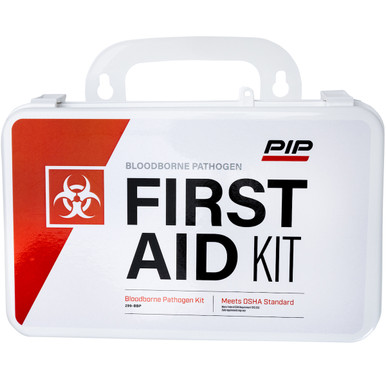
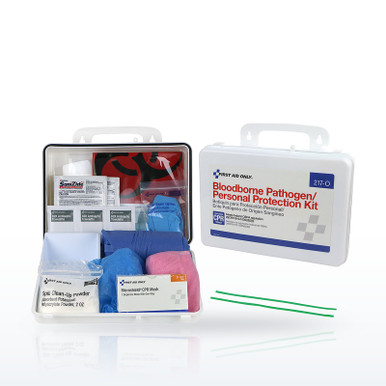
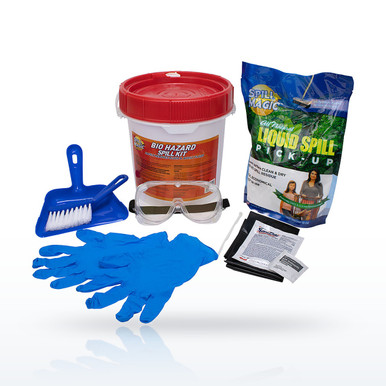
13 items · prices liveKits and refills whose manufacturer data describes them as bloodborne pathogen or biohazard spill cleanup kits. Contents are as published by the manufacturer; see each product page. Free shipping on orders over $199.
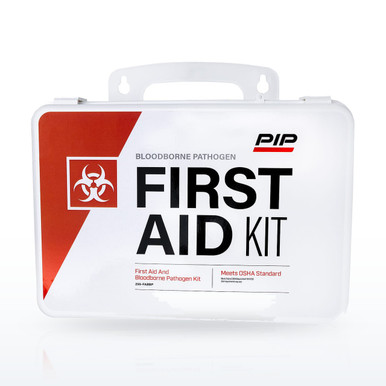
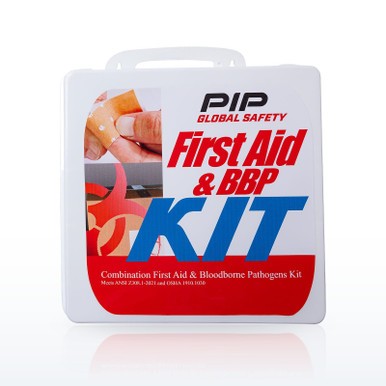
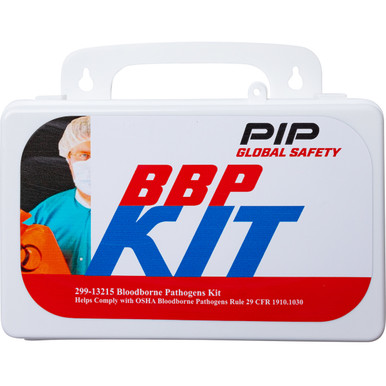


Disposable nitrile gloves, gowns and face shields are on the first aid finder and the glove selector.
Questions people ask
What are the three most common bloodborne pathogens?
Hepatitis B (HBV), hepatitis C (HCV) and HIV. Hepatitis B is the most infectious of the three and the one with a vaccine.
How are bloodborne pathogens transmitted at work?
Through a needle stick or cut with a contaminated sharp, a splash to the eyes, nose or mouth, or contact with broken skin. Intact skin is a barrier; that is why gloves and covering cuts matter.
Is TB a bloodborne pathogen?
No. Tuberculosis spreads through the air and is covered by other OSHA guidance, not 1910.1030.
How long can hepatitis B survive on a surface?
CDC states HBV can remain infectious in dried blood on surfaces for at least 7 days, which is why surfaces are disinfected, not just wiped.
Does OSHA require the hepatitis B vaccine?
The employer must offer it free within 10 working days of assignment. The employee may decline in writing and may accept later. (1910.1030(f).)
What should be in a bloodborne pathogen kit?
At minimum gloves, a gown or apron, a face mask and eye protection, absorbent material, a scoop and scraper, disinfectant, a red biohazard bag, and antiseptic towelettes for hands. The kits above list their contents on the product page.
Does the standard apply to construction sites?
Not directly; it is a general industry standard. OSHA can cite the same hazard under the general duty clause, and designated first-aid responders on construction crews are usually covered by the employer’s program anyway.
Standards and ratings on this page are as published in the documents named and by the manufacturers named. The employer’s hazard assessment and written program decide what applies at a given workplace. Verify a rating on the product and its spec sheet before use.