
Bleeding control kits and tourniquets: what Stop the Bleed and Z308.1 cover
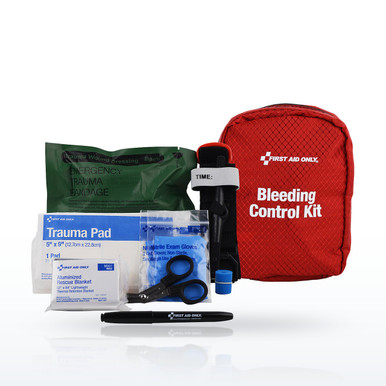
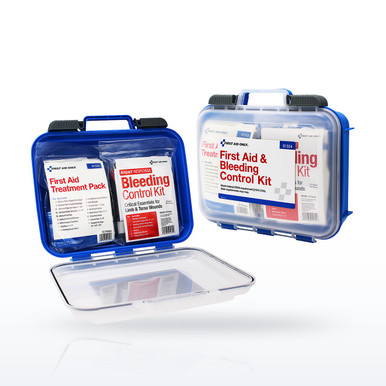
A person can bleed to death from a limb wound in minutes, before an ambulance arrives, and the three things that stop it are simple enough to teach in an hour: press hard on the wound, pack a deep wound with gauze and keep pressing, and put a tourniquet on an arm or leg wound that will not stop. That is the Stop the Bleed program from the American College of Surgeons. ANSI/ISEA Z308.1-2021 puts a tourniquet in every Class B first aid kit, defines it so a rubber blood-draw band does not count, and adds guidance on a separate bleeding control kit for sites where severe bleeding is a credible injury. The kit holds a windlass tourniquet, hemostatic or plain packing gauze, a pressure bandage, gloves, shears and a marker, in a bag that opens fast.
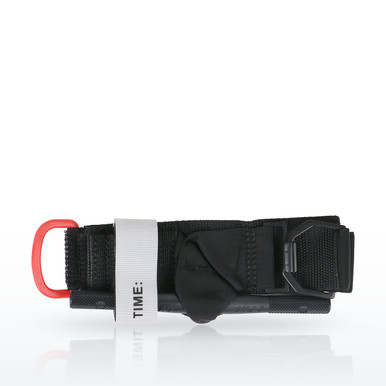
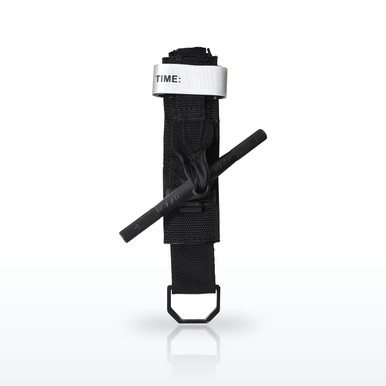 First Aid Only 91160 windlass tourniquetStrap, windlass rod and time tab; the tourniquet type Z308.1-2021 describes
Why is bleeding control separate from the first aid kit? The ordinary kit is built for the cut that needs a bandage. A saw kickback, a sheet-metal edge, an auger, a fall through glass or a vehicle strike makes a wound that empties the body faster than help can come, and a 3 x 3 gauze pad is no use against it. The military learned in the 2000s that tourniquets and packing by the person next to the casualty saved lives that had been lost to bleeding for a century, and the Stop the Bleed program was launched in 2015 to teach the same skills to the public. Z308.1-2021 followed by writing the tourniquet into Class B and the bleeding control kit into its guidance.
What does Stop the Bleed teach?
The ABCs, then three ways to stop the bleeding, in order of how severe the wound is.
What does ANSI Z308.1-2021 say about tourniquets and bleeding control kits?
Three things. First, a tourniquet is a required item in every Class B first aid kit (one per kit, at least 1.5 inches wide); it is not required in Class A. Second, the 2021 edition defines what a tourniquet is: a device that can stop arterial blood flow in a limb, which separates it from the thin rubber band used to hold a vein for a blood draw. Those bands were being packed into kits as “tourniquets” and cannot stop a bleed. Third, the standard adds guidance on designated bleeding control kits: separately packaged supplies for immediately treating life-threatening external bleeding, for sites where the hazard assessment shows that kind of injury is credible.
ANSI/ISEA Z308.1-2021 Table 1 (tourniquet, Class B, 1.5 in minimum width) and bleeding control kit guidance, as summarized by ISEA (Just the Facts flyer; release notes) and the kit manufacturers.OSHA does not name tourniquets or bleeding control kits. 1910.151(b) requires adequate supplies and a trained person where a clinic is not close, and Appendix A points to Z308.1 and tells the employer to add supplies for the specific hazards. On a jobsite with saws, blades, presses, augers or vehicle traffic, severe bleeding is the specific hazard, and the bleeding control kit is the supply. The person using it is exposed to blood, so the bloodborne pathogens standard applies to designated first aiders: gloves in the kit, a cleanup kit nearby and the hepatitis B vaccine offered.
29 CFR 1910.151(b) and Appendix A; 29 CFR 1910.1030 (applied to designated first aid providers; see the bloodborne pathogens guide).What is in a bleeding control kit?
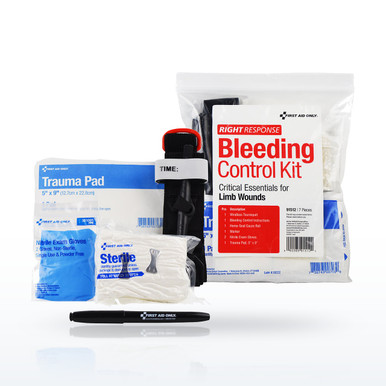
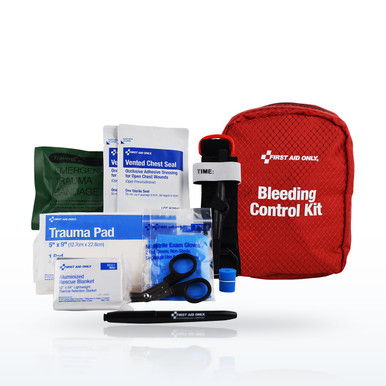
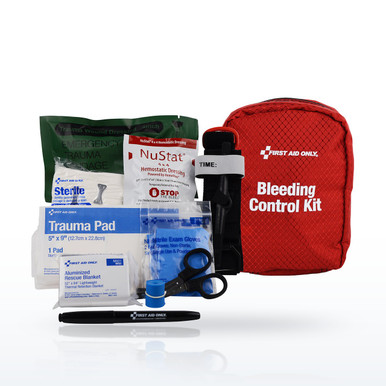
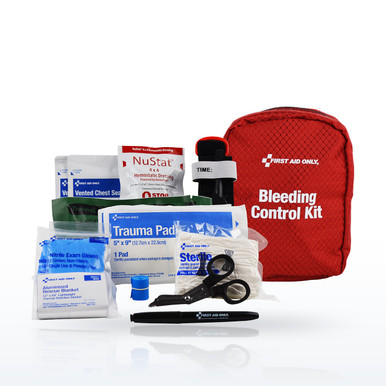
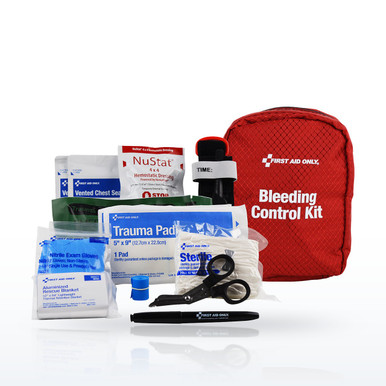
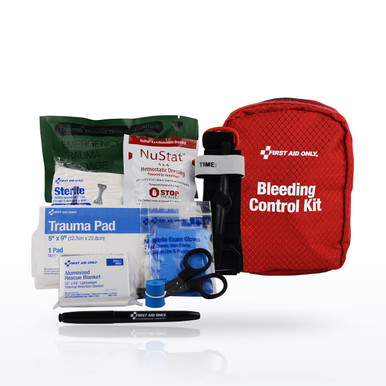
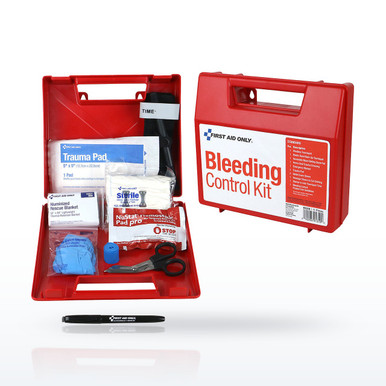
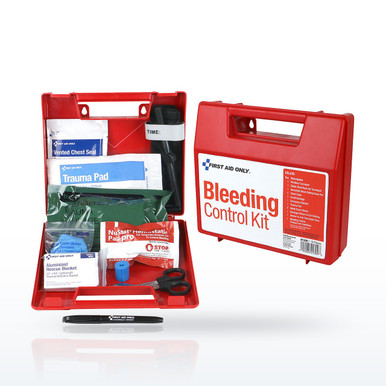
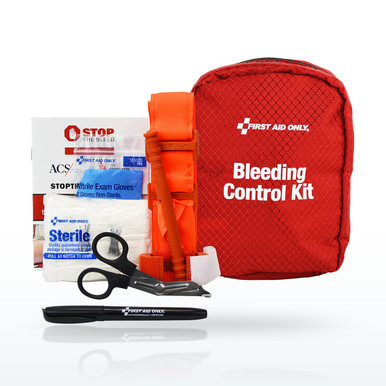
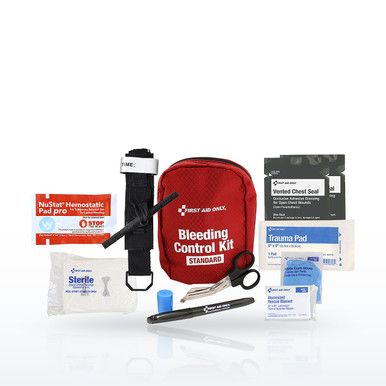
- A windlass tourniquet (strap, buckle, rod and a tab to write the time). Some kits carry a second one; a thigh wound can take two side by side.
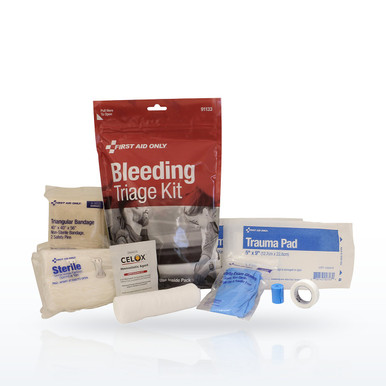
- Packing gauze: a compressed roll of plain gauze, or hemostatic gauze treated with a clotting agent, for stuffing a deep wound.
- A pressure (trauma) dressing: a thick pad with an elastic wrap built in, to hold pressure on a packed wound without a second pair of hands.
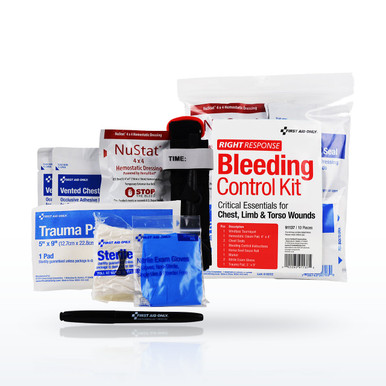
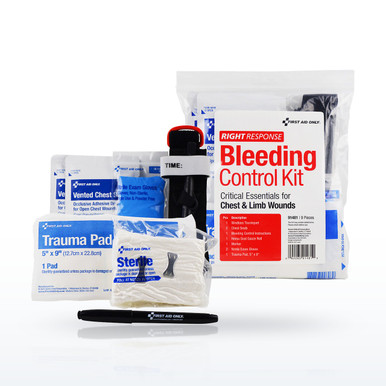
- Chest seals in kits labeled for chest or torso wounds: an adhesive patch with a vent for a puncture to the chest wall.
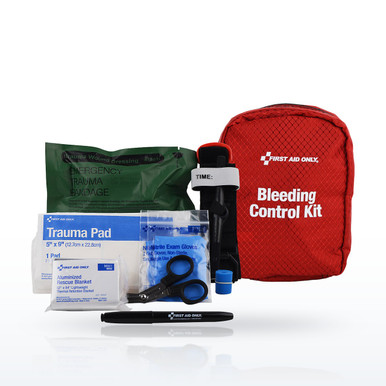
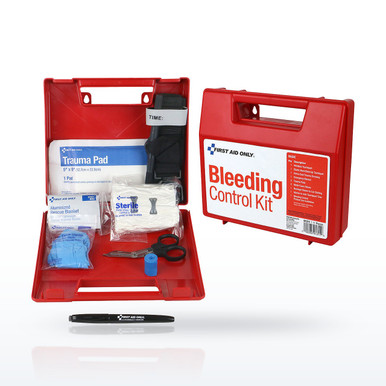
- Nitrile gloves, trauma shears to cut clothing, a permanent marker for the time, and a card with the steps.
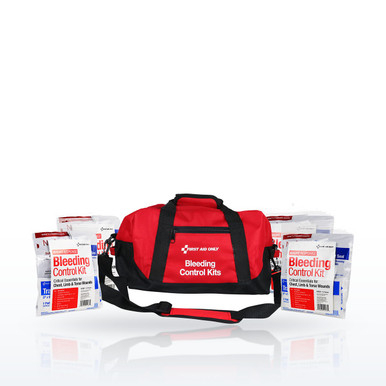
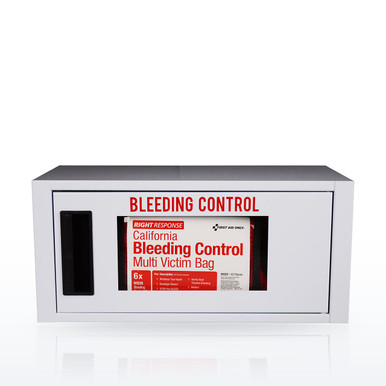
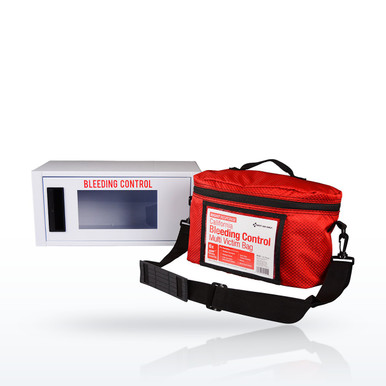
- A bag or pouch that opens in one motion, in a marked wall station or cabinet next to the AED and the first aid kit. Multi-victim bags hold four or more single-victim kits for a plant or a school.
Which kit for which site?
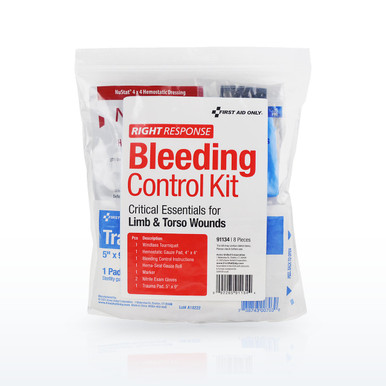
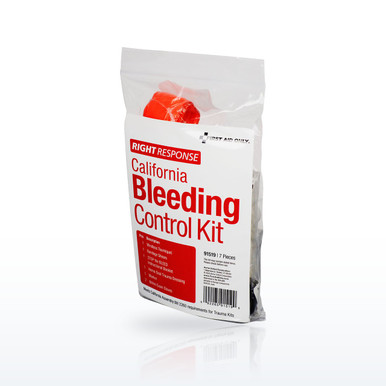
Limb kits cover the arms and legs: tourniquet, packing gauze, pressure dressing. Limb and chest kits add chest seals; limb, chest and torso kits add more packing gauze for the places a tourniquet cannot go. One single-victim kit at each work area where blades or machinery are, a wall station at the main first aid point, and a multi-victim bag where many people gather. Several states have written kits into law for schools and public buildings; California and Texas kits in the band are built to those contents lists, and the manufacturer names the statute on the product page.
Manufacturer kit descriptions (First Aid Only: limb; limb and chest; limb, chest and torso; California AB 2260 and Texas kits as labeled); ANSI/ISEA Z308.1-2021 hazard assessment guidance.Does the crew need training?
The equipment is only as good as the hands on it, and a tourniquet put on loosely does more harm than none. Stop the Bleed is a free course of about an hour, taught by instructors through hospitals, fire departments and trauma centers nationwide, and the materials are public. OSHA’s requirement for an adequately trained first aid provider where a clinic is not in near proximity is met by first aid and CPR training; adding Stop the Bleed to it costs an hour. Put the course card in the kit.
Stop the Bleed, American College of Surgeons (course availability); 29 CFR 1910.151(b); OSHA letter of interpretation, January 16, 2007 (near proximity, 3 to 4 minutes for life-threatening injuries).Tourniquets, bleeding control kits and wall stations
25 items · prices liveKit coverage (limb; limb and chest; limb, chest and torso) and contents are as labeled by the manufacturer. Tourniquet type is as described on each product page. Contractor Direct orders ship free.
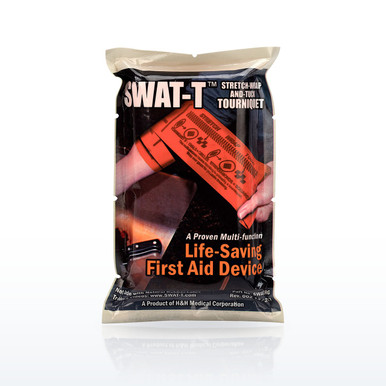
The rubber blood-draw bands in the catalog are not tourniquets under Z308.1-2021 and are not listed here. Class B first aid kits with a tourniquet inside are in the Class A vs Class B guide below.
Questions people ask
What is Stop the Bleed?
A public training program run by the American College of Surgeons under license from the Department of Defense that teaches three ways to stop life-threatening bleeding: direct pressure, wound packing and a tourniquet. The course takes about an hour.
Where do you put a tourniquet?
2 to 3 inches above the wound on an arm or leg, never on a joint; go above the joint if the wound is close to it. Tighten until the bleeding stops, lock the rod and write down the time.
How tight should a tourniquet be?
Tight enough that the bleeding stops. It will hurt. If blood is still flowing, twist more; if it is at the limit, add a second tourniquet above the first.
Should you ever loosen a tourniquet?
No. Once it is on, only medical staff remove it. Tell the responders the time it was applied.
Does OSHA require a tourniquet in the first aid kit?
OSHA requires adequate supplies for the hazards. ANSI Z308.1-2021, which OSHA points to, requires one in a Class B kit and not in a Class A kit, and gives guidance on separate bleeding control kits.
Is a rubber tourniquet from a first aid kit any good?
The thin rubber band used for blood draws is not a tourniquet under Z308.1-2021 and cannot stop arterial bleeding. A tourniquet has a strap at least 1.5 inches wide and a way to tighten it, usually a windlass rod.
What is hemostatic gauze?
Gauze treated with an agent that speeds clotting, used to pack deep wounds. Plain packing gauze works too; the pressure applied over it is what does most of the work.
How many bleeding control kits does a site need?
One within reach of each area where blades, machinery or vehicles can cause a severe wound, plus a wall station at the main first aid point. The hazard assessment under Z308.1 decides.
Related guides
Class A vs Class B first aid kitsThe Class B tourniquet and the rest of the fillWhat should be in a workplace first aid kit?The Z308.1 minimum fillFirst aid provider under OSHAWhen a trained person is requiredBloodborne pathogensGloves, cleanup and the vaccine for first aidersANSI cut levelsGloves rated against the bladeStandards and ratings on this page are as published in the documents named and by the manufacturers named. The employer’s hazard assessment and written program decide what applies at a given workplace. Verify a rating on the product and its spec sheet before use.