
Coverall size chart: how to size disposable and work coveralls
Coveralls are sized by chest and height, not by waist like pants. A work coverall is sized to your chest measurement with a regular or tall leg. A disposable coverall is sized larger on purpose, because it goes on over your work clothes and has to let you crouch and reach without the back seam or the crotch splitting. The usual rule is to take the size the manufacturer’s chart gives for your chest and height, and go one size up if you are at the top of a range, will wear it over a jacket or tool belt, or need a hood over a respirator and hard hat. Disposable coveralls do not come in half sizes or short legs; the length is set by the height range.
Why do disposable coveralls fit differently from work coveralls? A cotton work coverall is clothing: it is cut to the body and stretches a little. A disposable coverall is a barrier layer made of a non-stretch fabric, worn over clothing, and often with a hood pulled over a hard hat. If it is tight it tears at the crotch or the back when you bend, and a torn coverall is no barrier at all. So manufacturers cut them full and size them by both chest and height, and the industry sizing standard, ANSI/ISEA 101, defines the body size ranges that a given label size is meant to fit. That is why a worker who wears a large shirt is often an extra-large in a disposable coverall.
How do you measure for a coverall?
Four numbers, taken over the clothes you will wear under it.
DuPont Tyvek 400 coverall size chart
| Size | Fits chest (in) | Fits height | Garment inseam (in) |
|---|---|---|---|
| MD | 36 3/4 to 40 1/4 | 5'0" to 5'7" | 28 1/2 |
| LG | 39 3/4 to 43 1/4 | 5'5" to 5'9" | 29 1/2 |
| XL | 42 3/4 to 46 1/4 | 5'8" to 6'2" | 30 |
| 2X | 45 1/4 to 48 3/4 | 6'0" to 6'4" | 31 |
| 3X | 49 1/4 to 52 3/4 | 6'2" to 6'4" | 32 |
| 4X | 52 3/4 to 56 1/4 | 6'4" to 6'7" | 33 |
| 5X | 55 3/4 to 59 1/4 | 6'7" to 6'10" | 34 |
| 6X | 59 1/4 to 62 3/4 | 6'9" to 7'1" | 35 |
| 7X | 61 3/4 to 65 1/4 | 7'0" to 7'4" | 36 |
Choose the size where both your chest and your height fall inside the range. Where they land in different sizes, take the larger. The ranges overlap on purpose. This chart applies to Tyvek 400 coveralls only; Tychem 2000 coveralls run about 1 1/2 inches smaller in the chest at each size, and other brands publish their own charts, so check the chart on the product page before ordering a case.
DuPont Tyvek 400 TY122S and TY120S product data, fit chart and finished garment dimensions, as published by DuPont. Tychem 2000 QC125S fit chart for the comparison.
What does ANSI/ISEA 101 sizing mean on a disposable coverall?
ANSI/ISEA 101 is the American National Standard for limited-use and disposable coverall size and labeling. It sets the body dimensions (chest and height) that each label size is meant to fit, so that a large from one brand covers about the same person as a large from another. DuPont states its Tyvek 400 and Tychem 2000 coveralls meet or exceed ANSI/ISEA 101 sizing; Posi-Wear and PIP label their disposable coveralls "ANSI sized." A coverall that does not mention it may be cut to its own pattern, and the only way to know is the brand’s chart.
ANSI/ISEA 101, limited-use and disposable coveralls, size and labeling requirements, as cited in DuPont Tyvek 400 and Tychem 2000 product data and in Posi-Wear and PIP product data on our product pages.The standard governs the size, not the fabric or the barrier. Two coveralls can both be ANSI sized and protect against completely different things. Sizing tells you it will fit; the material tells you what it stops.
ANSI/ISEA 101 scope as described by the manufacturers citing it.How do you size a work coverall?
By chest, like a jacket, with the leg length chosen separately where the maker offers it. Portwest sizes its cotton and polycotton coveralls on body chest and waist: a medium fits a 40 to 41 inch chest, a large 42 to 44, an extra-large 46 to 48, and so on up to 7XL, with short (29 inch), regular (31 inch) and tall (33 inch) legs on the styles that offer them. PIP work coveralls run small 36 inch chest, medium 38, large 40, extra-large 42, then 2 inches per size, with a 31 inch garment inseam from medium up. Red Kap sizes its twill coveralls by chest number, 44, 46, 48 and up. These are body measurements; the garment is cut with room over them.
Portwest men’s garment size chart (portwest.com sizing); PIP Master Sizing Guide, coveralls; Red Kap CT10 product data.A work coverall worn over a sweatshirt or an insulated liner needs one size up. An insulated coverall is already cut for that and is sized to your normal chest.
Manufacturer fit notes on the product pages.When should you go up a size?
- You are at the top of the chest or height range in the chart.
- The coverall goes over a jacket, tool belt, fall harness or knee pads.
- A hooded coverall will be worn over a hard hat, or the hood needs to close around a full-face respirator.
- The job involves kneeling, crawling or climbing, which pulls the back and crotch seams.
- The coverall has attached boots or socks and you wear large work boots; the boot pocket is sized with the garment.
- Go down a size only when the coverall will be worn over a T-shirt for light work and the extra length is dragging at the ankles, which is a trip hazard.
Coveralls by fabric
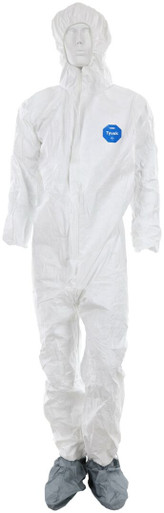
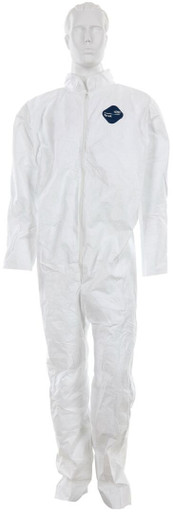
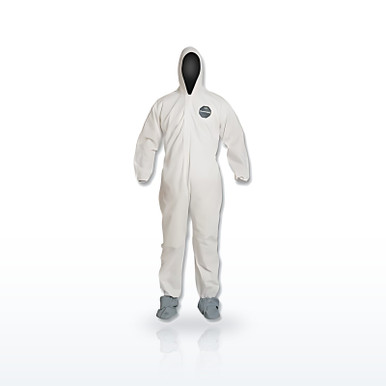
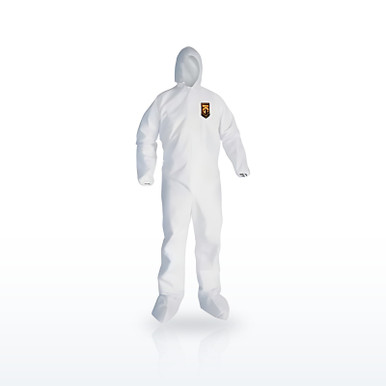
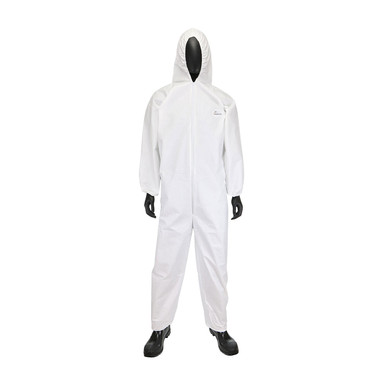
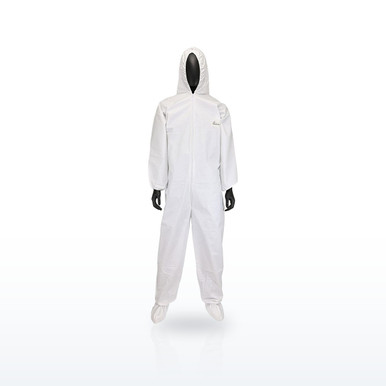
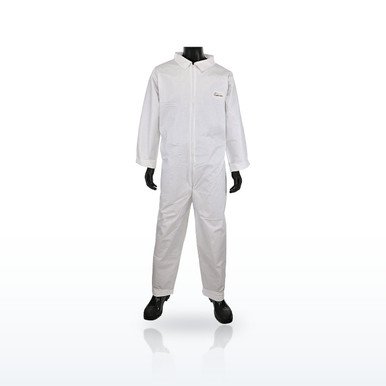
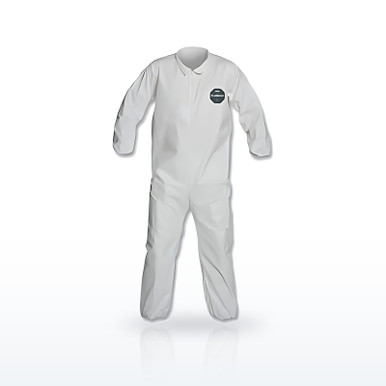
27 items · prices liveSizes available for each style are on its product page, usually medium through 4X or 5X; cases hold one size each. Fabric is as published by the manufacturer. Free shipping on orders over $199.
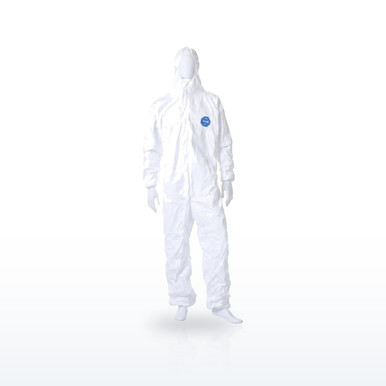
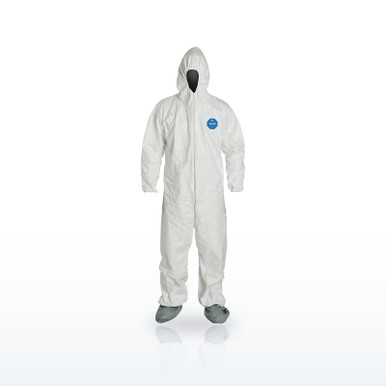
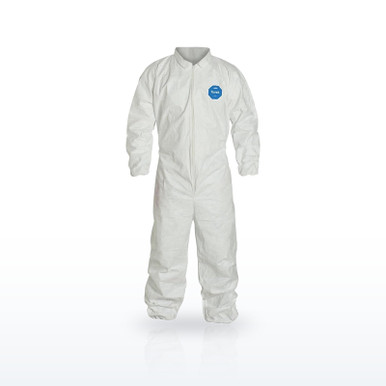
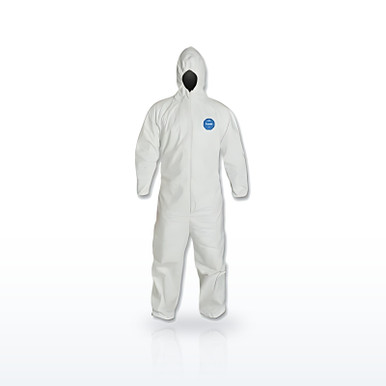
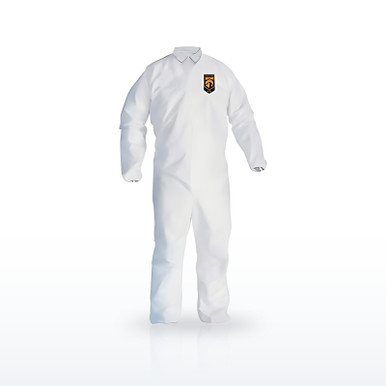
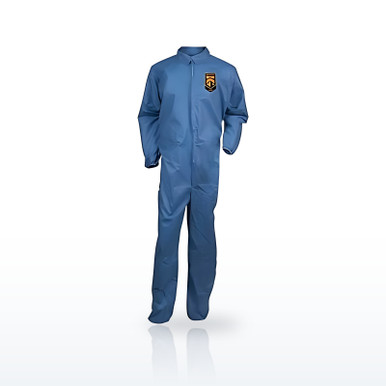
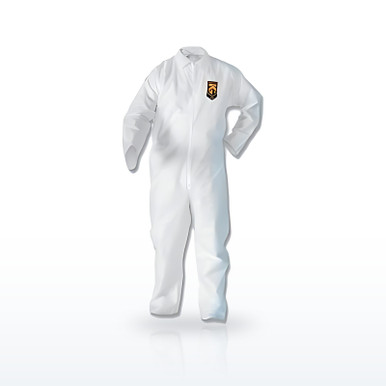
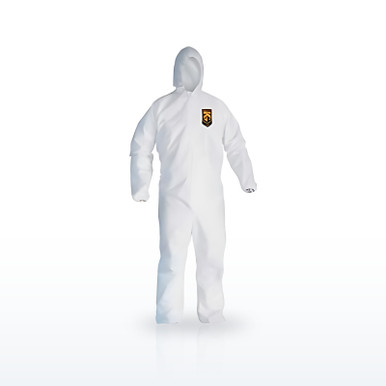
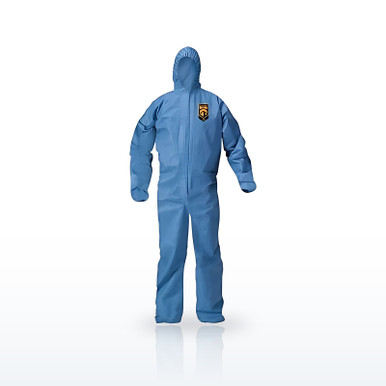
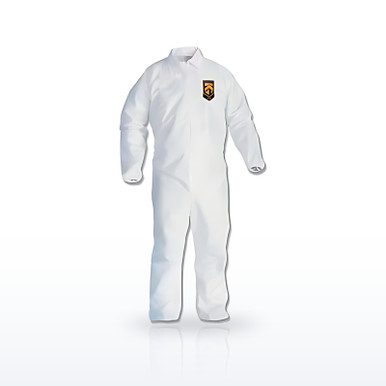
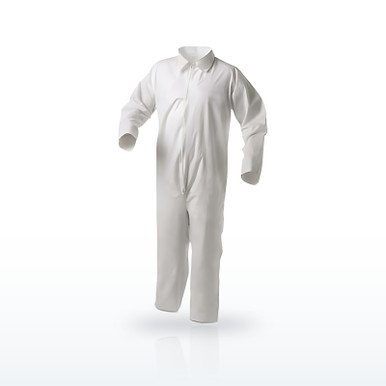
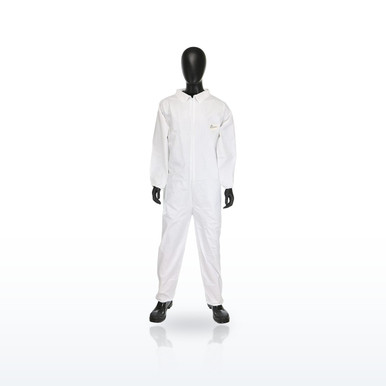
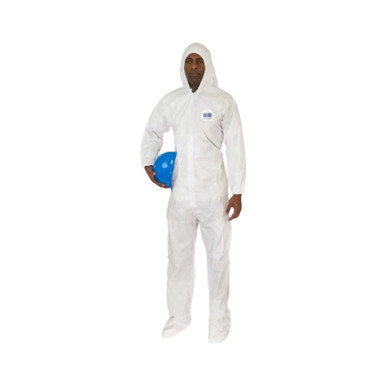
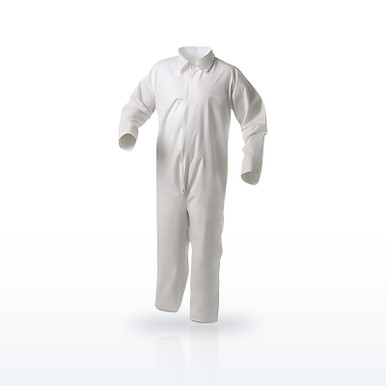

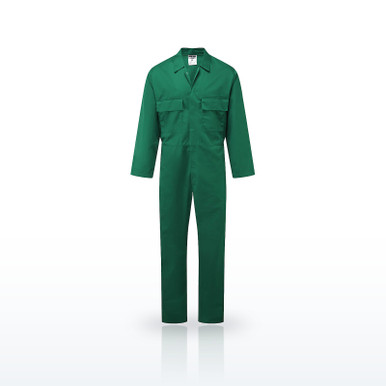
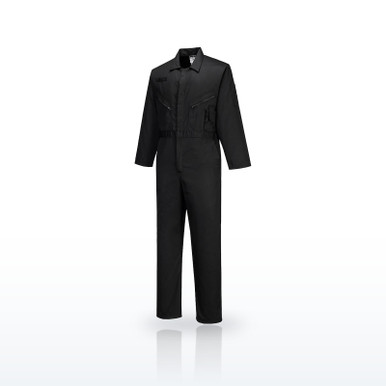
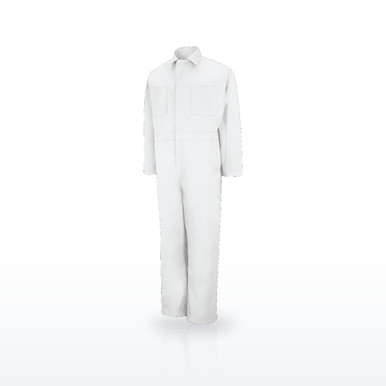
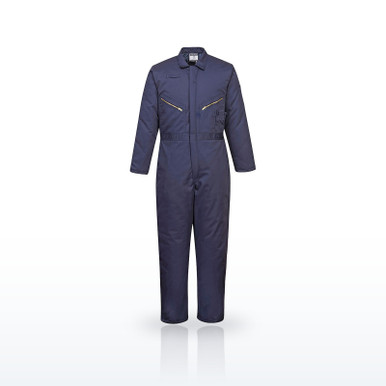
The full range, including FR, hi-vis and cleanroom coveralls, is in the coverall finder.
Questions people ask
What size Tyvek suit should I get?
Find your chest and height in the DuPont chart above. A 42 inch chest at 5 foot 10 is an XL; the same chest at 5 foot 6 is a large. If the two numbers land in different sizes, take the larger.
Do disposable coveralls run big?
They are cut full on purpose, to go over work clothes and allow bending without tearing. Most people take one size larger than their shirt size.
What is ANSI sized?
The coverall is cut to the body-size ranges in ANSI/ISEA 101, the sizing and labeling standard for limited-use and disposable coveralls, so a large fits about the same person across brands that follow it.
Are coverall sizes the same across brands?
Not exactly. Brands that cite ANSI/ISEA 101 are close; DuPont’s own Tyvek 400 and Tychem 2000 differ by about 1 1/2 inches of chest at each size. Use the chart on the product page.
How do I size a work coverall?
By chest measurement, with the leg length chosen separately where offered. Portwest: medium is a 40 to 41 inch chest, large 42 to 44, XL 46 to 48. PIP: medium 38, large 40, XL 42.
Do coveralls come in tall sizes?
Work coveralls from Portwest come in regular and tall on several styles. Disposable coveralls do not; the height range in the chart does the job, so a tall worker with an average chest sizes up.
Does the employer have to provide a coverall that fits?
When a coverall is required PPE, yes: 1910.132(d)(1)(iii) requires the employer to select PPE that properly fits each affected employee.
Standards and ratings on this page are as published in the documents named and by the manufacturers named. The employer’s hazard assessment and written program decide what applies at a given workplace. Verify a rating on the product and its spec sheet before use.