
Coveralls vs overalls vs bib overalls: the difference
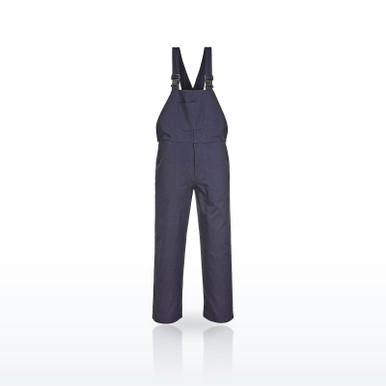
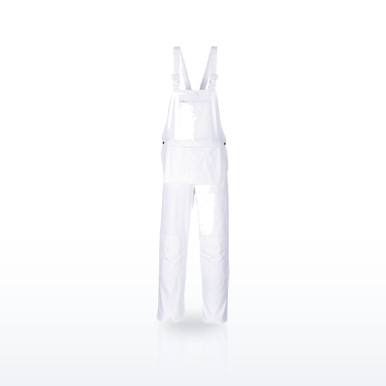
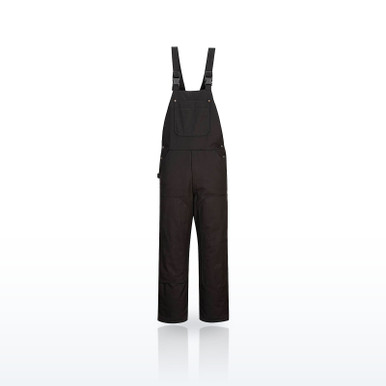
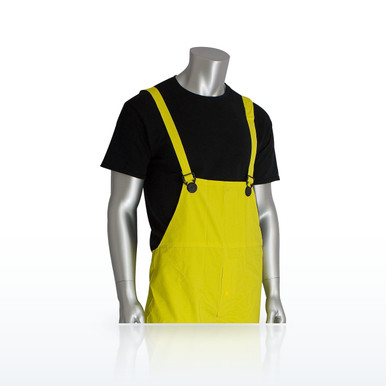
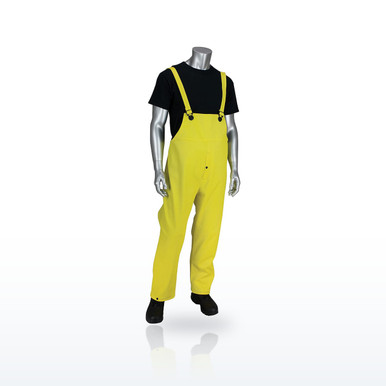
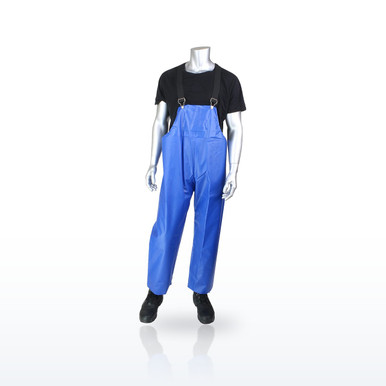
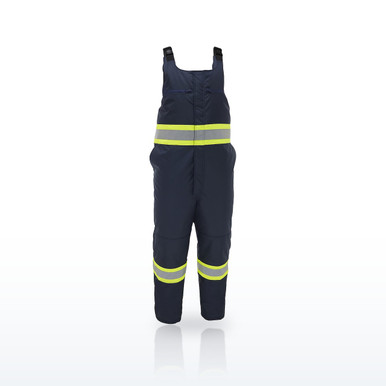
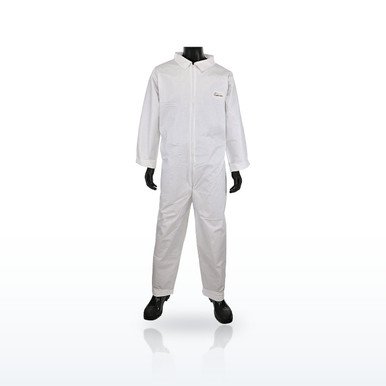
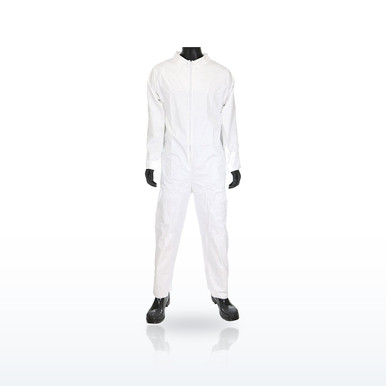
A coverall is one piece that covers you from neck to ankle with sleeves: a boilersuit. A bib overall is pants with a chest bib held up by shoulder straps, and no sleeves; it is worn over a shirt. In American trade use "overalls" on its own almost always means bib overalls. The confusion comes from the catalogs and the OSHA standards, which use "overalls" for both: OSHA’s hazmat levels list "overalls and long-sleeved jacket" as one option and "coveralls" as another. The practical difference is coverage. A coverall protects the arms and seals at the wrists, which is why disposable protective coveralls are coveralls, not bibs. A bib overall protects the legs and torso and leaves the arms to the shirt, which is why insulated, rain and FR bibs are worn over a matching jacket.
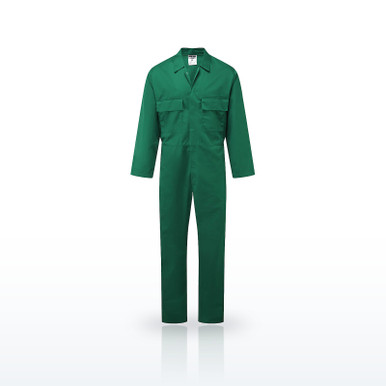 Portwest S999 Euro work coverallPolycotton boilersuit, regular and tall, XS to 6XL.
Why does the word matter? Because the two garments protect different parts of the body, and the standards that require protective clothing are written around coverage. A rule that calls for coveralls or similar whole-body clothing, as the asbestos and lead standards do, is asking for sleeves. A bib overall over a short-sleeved shirt does not meet it. On the other side, a crew ordering "overalls" for cold or wet work usually wants bibs that go over a jacket, and a case of one-piece coveralls is the wrong order. Knowing which word the catalog is using saves a return.
What is each garment?
The three terms as the trade uses them.
Which one is PPE?
Either can be, and neither is by itself. OSHA requires protective equipment wherever a hazard assessment finds it necessary, and the employer must provide it at no cost to the employee. The employer does not have to pay for everyday clothing such as long-sleeve shirts, long pants, street shoes and normal work boots, or for ordinary clothing worn only for weather. A cotton work coverall worn as a uniform is everyday clothing. A disposable coverall required for lead or asbestos work, an arc-rated bib worn for an electrical hazard, or a hi-vis bib worn on a road job is PPE, and the employer buys it.
29 CFR 1910.132(a) and (d)(1); 1910.132(h)(1), (h)(4)(ii) and (h)(4)(iii).The asbestos and lead standards name the garment: "coveralls or similar whole-body clothing." Both standards are written for protective clothing that is laundered or thrown away, so a disposable coverall or a dedicated laundered coverall meets them; a worker’s own bib overalls over a T-shirt do not.
29 CFR 1926.1101(i)(1); 1926.62(g)(1)(i); 1910.1001(h)(1)(i).When is a coverall the right garment?
- Any job that needs the arms covered: abatement, spraying, grinding, fiberglass, animal and food handling, anything that gets on the forearms.
- Where the garment is the barrier and has to seal at the wrists and ankles, which is every disposable protective coverall.
- Uniform wear in a shop or plant, where one piece over street clothes is faster than a shirt and pants.
- FR daily wear in oil and gas and utilities, where a one-piece FR coverall covers the whole body in one rated garment.
- Insulated coveralls for cold work where the wearer does not need to shed a jacket indoors.
When is a bib overall the right garment?
- Cold work where a jacket comes off and on: the bib stays, the jacket goes.
- Rain gear, where a rain bib with a rain jacket sheds water better than a one-piece suit at the waist and seals over boots.
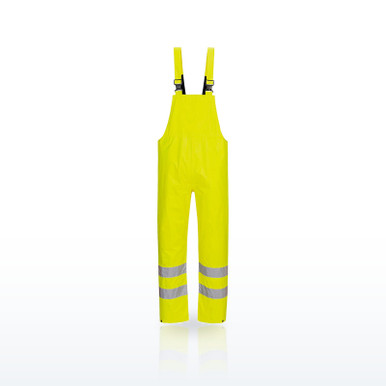
- Hi-vis on roads, where the bib adds leg visibility to a Class 2 or 3 vest or jacket; the bib is what makes a Class E garment.
- Arc-rated and FR layering, where a rated bib over rated pants raises the arc rating of the ensemble.
- Carpentry and general trades, for the pockets and the lack of a waistband.
Which is sized how?
Coveralls are sized by chest and height. Bib overalls are sized by waist and inseam like pants, with the straps taking up the rest; some brands sell them in small through 3XL by waist range instead. Disposable coveralls are cut a size full so they go over clothing. See the size chart guide for the numbers.
Portwest, PIP and DuPont published size charts.Work coveralls, bib overalls and disposable coveralls
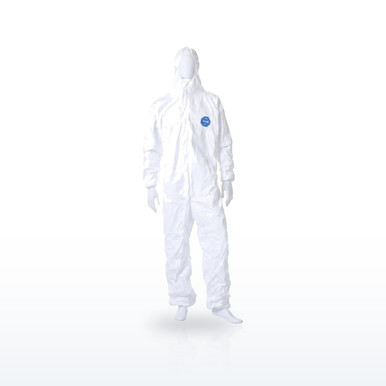
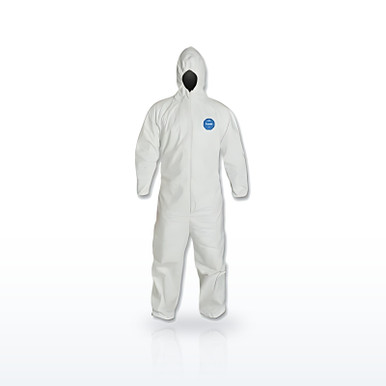
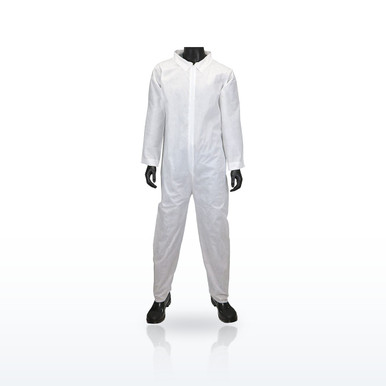
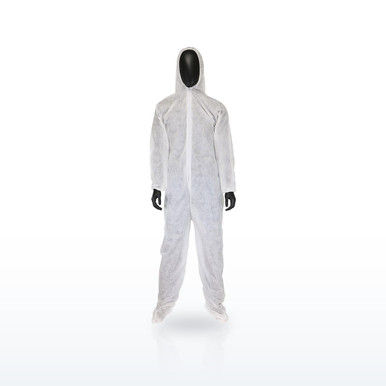
19 items · prices liveGarment type is as described by the manufacturer. Fabric, weight, sizes and colors are on each product page. Contractor Direct orders ship free.

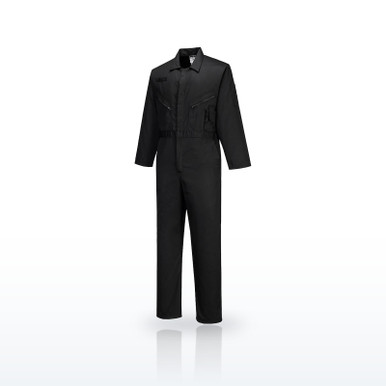
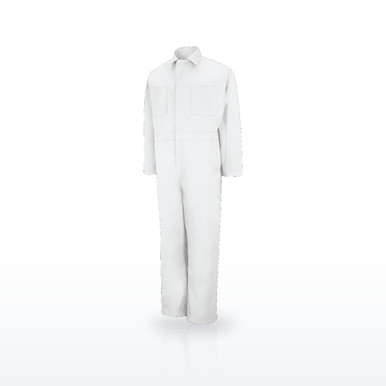
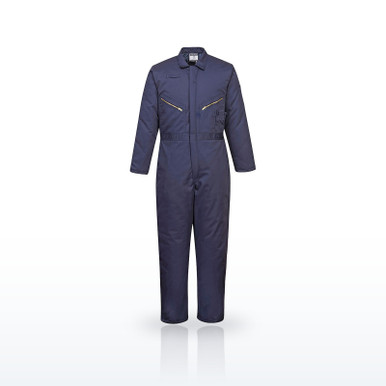
FR coveralls, hi-vis coveralls and cleanroom coveralls are in the coverall finder; arc-rated bibs are in the arc flash finder.
Questions people ask
What is the difference between coveralls and overalls?
A coverall is one piece with sleeves. In the US, "overalls" means bib overalls: pants with a chest bib and shoulder straps, no sleeves. In British usage overalls can mean a coverall.
Are overalls and bib overalls the same thing?
In American use, yes. "Bib overalls" is the full name and "overalls" the short one.
What is a boilersuit?
The British name for a one-piece coverall.
Is a Tyvek suit a coverall or an overall?
A coverall. Disposable protective suits have sleeves and seal at the wrists, which is the point of them.
Does OSHA require coveralls?
Where a hazard assessment finds whole-body protection is needed. The asbestos and lead standards name "coveralls or similar whole-body clothing" outright (1926.1101(i)(1), 1926.62(g)(1)(i)).
Who pays for coveralls?
If they are required PPE, the employer (1910.132(h)(1)). Everyday work clothing the employee would wear anyway is not covered (1910.132(h)(4)(ii)).
Can bib overalls be hi-vis?
Yes. A hi-vis bib worn with a Class 2 or 3 top is a Class E garment under ANSI/ISEA 107, as labeled by the maker.
Standards and ratings on this page are as published in the documents named and by the manufacturers named. The employer’s hazard assessment and written program decide what applies at a given workplace. Verify a rating on the product and its spec sheet before use.