
What is a Tyvek suit made of, and what does it protect against?
Tyvek is a DuPont fabric made of very fine continuous fibers of high-density polyethylene, spun and bonded to each other under heat and pressure with no binder. The result is a sheet that looks like paper, tears like cloth and has pores so small that it blocks particles down to 1.0 micron while letting water vapor out. A Tyvek 400 suit protects against dry particles, fibers and light liquid splash: asbestos, lead dust, mold, fiberglass, paint overspray. It does not protect against chemical liquids under pressure or soaking, gases or vapors, or heat and flame; it melts and burns. "Tyvek suit" is also used loosely for any white disposable coverall. Most of those are SMS or microporous film polypropylene, which are different fabrics with different limits.
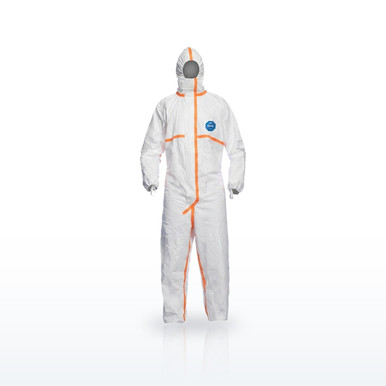
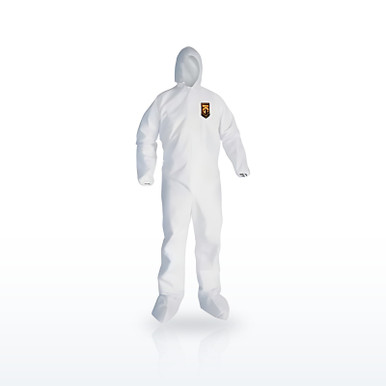
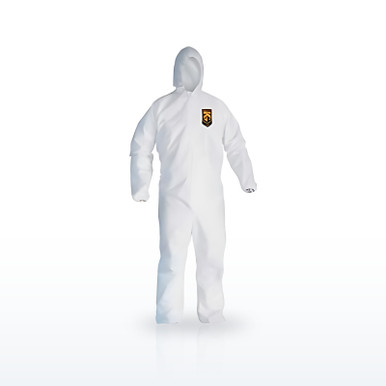
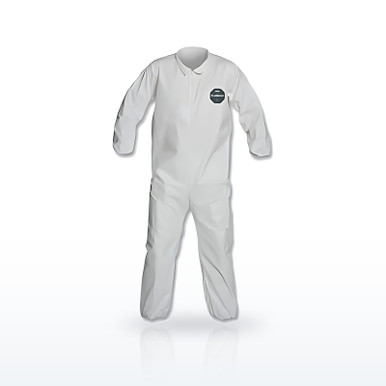
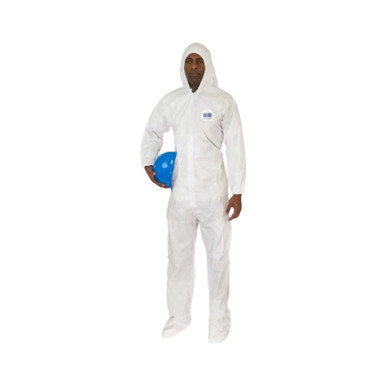
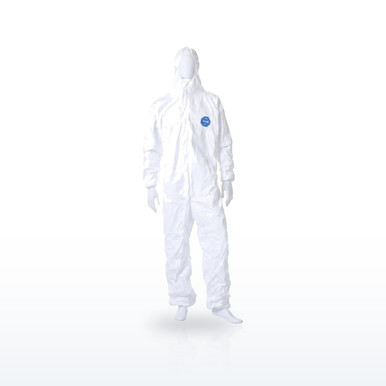 DuPont Tyvek 400 hooded coverallElastic wrists and ankles, serged seams, 5.9 mil.
Why is Tyvek different from other white coveralls? Most disposable coveralls get their barrier from a layer: a meltblown web sandwiched between spunbond sheets (SMS), or a thin film glued to a spunbond sheet (microporous). The layer does the work and the rest is carrier. Tyvek has no layer. The barrier is the fabric itself, all the way through, so DuPont can say it is not lost to abrasion the way a film or a meltblown web can be. That is the reason it is the reference garment for abatement work, where the suit gets scraped on framing and crawled across a floor.
What does a Tyvek 400 suit protect against?
From the manufacturer’s data for the fabric, not the whole garment.
What is Tyvek made of?
One material: high-density polyethylene, the same polymer as a milk jug, drawn into continuous fibers far finer than a human hair. DuPont calls the process flash spinning. The fibers are laid down at random and bonded to each other with heat and pressure, with no glue or binder. Because there is no binder filling the gaps, tiny pores remain that let water vapor through, which is why a Tyvek suit is less sweaty than a coated one. Because the fibers are fused, the sheet resists tearing and puncture and liquid water beads on it.
DuPont, What is Tyvek: 100 percent high-density polyethylene, continuous fibers spun and bonded under heat and pressure, no binders.Tyvek 400 is the protective apparel grade. It is 5.9 mil thick, treated with an antistatic agent to reduce cling (but not guaranteed static dissipative), made without natural rubber latex, and rated Class 1 under the 16 CFR 1610 clothing flammability test, which is a general apparel classification and not an FR rating. DuPont states the coveralls meet or exceed ANSI/ISEA 101 sizing. Tyvek 800 is a different grade built for liquid work and sold with taped seams; DuPont lists it under the European Types 3 through 6.
DuPont Tyvek 400 TY122S product data; Tyvek 800 D154416 product data (EN 14126, Type 3-B through 6-B).What is SMS vs microporous film in a disposable coverall?
SMS stands for spunbond-meltblown-spunbond: three layers of polypropylene bonded together. The outer spunbond layers give strength; the meltblown middle layer is a web of very fine fibers that catches particles. SMS is light, breathable and the lowest cost of the three, and manufacturers rate it for dry particles and light liquid spray. KleenGuard A20 and A30, PIP C3850 series and Liberty ProGard are SMS. It is the garment for dusty work where a soaking is not expected: insulation, sanding, sweeping, light overspray.
KleenGuard A20 4912 product data (SMS; dry particles, light liquid sprays); PIP C3850 and Liberty ProGard product data, as published by the manufacturers.Microporous film is a spunbond polypropylene sheet laminated to a thin polyethylene film with microscopic holes: too small for liquid water, large enough for water vapor. The film is the barrier, so these coveralls hold liquids better than SMS and most are tested to ASTM F1670 for blood penetration; some, such as the Posi-Wear UB Plus, are also tested to ASTM F739 and F903 for chemical permeation and penetration. They are less breathable than SMS and the film can abrade. KleenGuard A35 and A40, PIP 3650 series, Posi-Wear BA and Liberty PermaGard are microporous. It is the garment for wet work, pressure washing, tank cleaning with water-based liquids and biological hazards.
KleenGuard A35 389 and A40 4433 product data; Posi-Wear BA 3600 (ASTM F1670) and UB Plus 3679B (ASTM F1670, F739, F903); PIP 3650 and Liberty PermaGard product data, as published by the manufacturers.Tyvek sits between them on liquids and above both on durability. DuPont’s claim is that the particle barrier holds after wear and abrasion because it is in the fabric, where a microporous film fabric loses barrier where the film is worn away. Where that matters is a job that lasts a shift and involves crawling and scraping. Where the suit is worn for an hour and thrown away, SMS or microporous film does the same job for less.
DuPont Tyvek 400 TY151S product data, barrier after abrasion statement, as published by DuPont.What do Type 5 and Type 6 mean on a coverall?
They are the European chemical protective clothing types. Type 5 is clothing tested as a whole suit for protection against airborne solid particles (EN ISO 13982-1). Type 6 is limited protection against a light spray or mist of liquid chemical (EN 13034). Types 3 and 4 are liquid-tight and spray-tight suits (EN 14605). A coverall sold for the European market carries its type on the label; the Portwest BizTex ST30 and ST40 are Type 5 and 6, and the Tyvek 800 is Type 3-B through 6-B. DuPont’s US product data for Tyvek 400 lists ANSI/ISEA 101 and 16 CFR 1610 and no EN type, so the absence of a type on a US Tyvek label does not mean a lower barrier; it means the garment was certified for a different market.
EN ISO 13982-1 (Type 5), EN 13034 (Type 6) and EN 14605 (Types 3 and 4), scope as published by the standards bodies and cited by the manufacturers; Portwest ST30 and ST40 and DuPont Tyvek 800 product data; DuPont Tyvek 400 TY122S product data (no EN type listed).How long does a Tyvek suit last?
- It is a limited-use garment. DuPont states it is not for washing; once it is torn, heavily soiled or contaminated it is discarded.
- Unused, DuPont suggests use within 5 years of receipt when stored properly and inspected before use.
- Seams and the zipper are the weak points. Serged seams are stitched through the fabric, so a seam leaks before the fabric does; taped-seam styles exist for liquid work.
- Under a respirator hood, the chin flap on hood-and-boot styles seals the hood to the mask; it is the first thing to check after donning.
- Heat stress is the usual limit on wear time. A non-breathing coated suit in summer is a bigger hazard than the dust it stops, which is one reason Tyvek and SMS exist.
Disposable coveralls by fabric
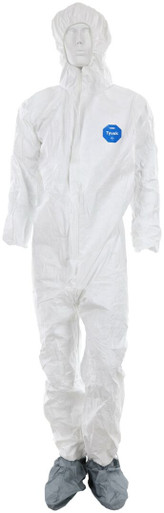
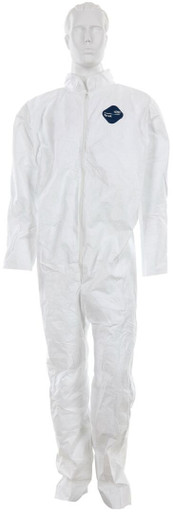
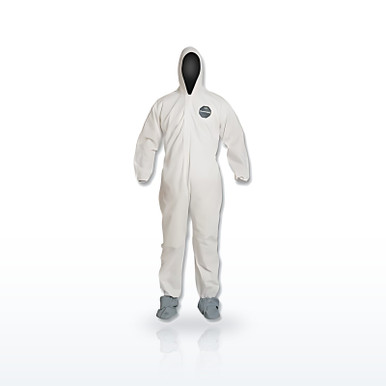
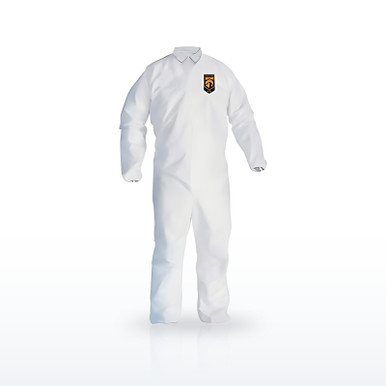
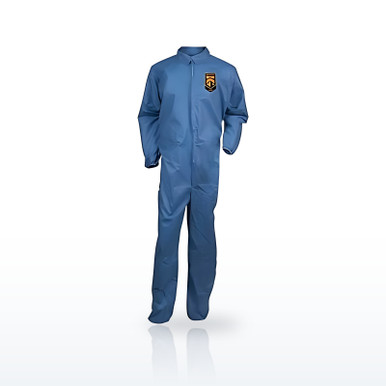
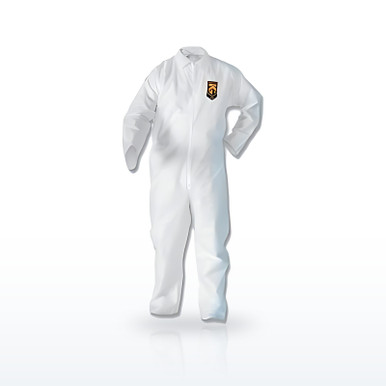
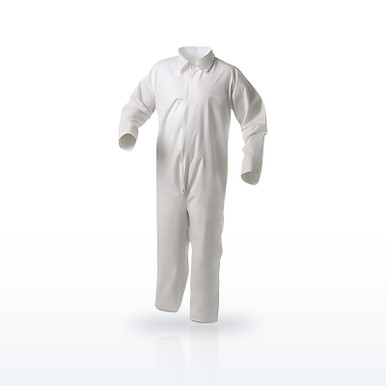
23 items · prices liveFabric is as published by the manufacturer for each style. Hood, boots, elastic and seam type are on the product page. Most are sold by the case; the Tyvek 400 styles are also sold by the each. Free shipping on orders over $199.
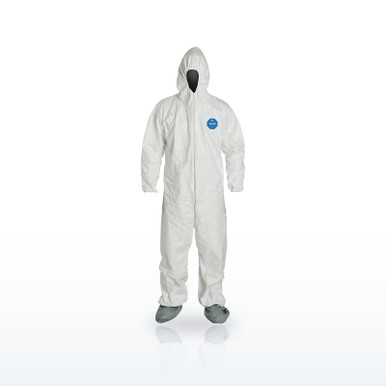
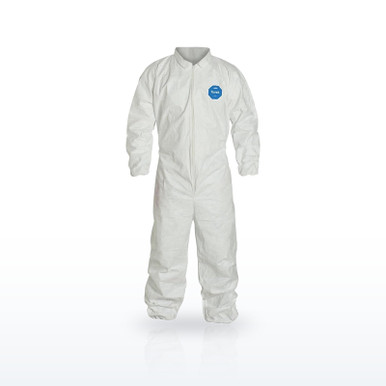
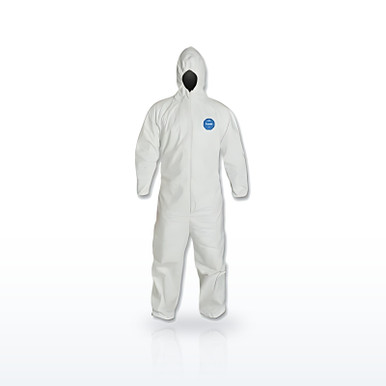
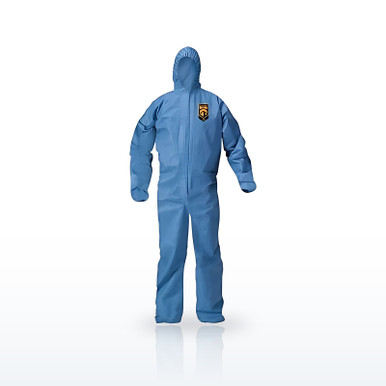
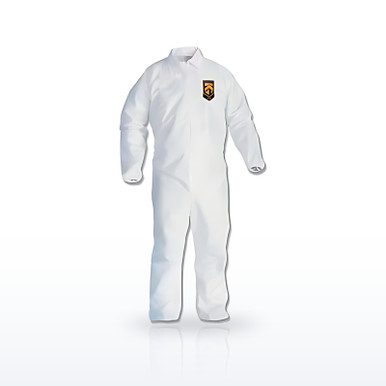
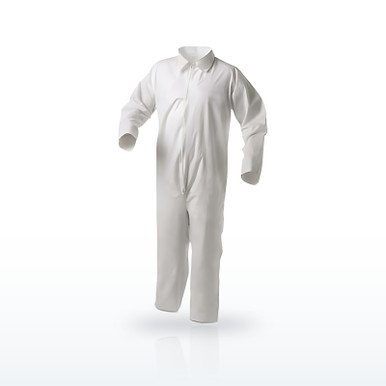
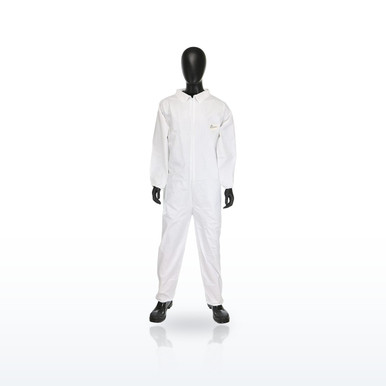
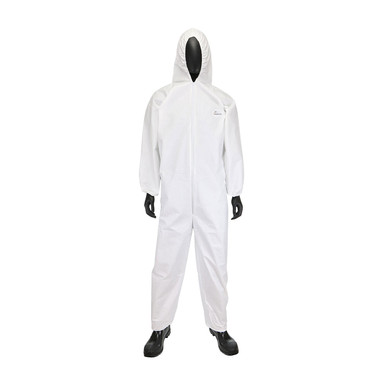
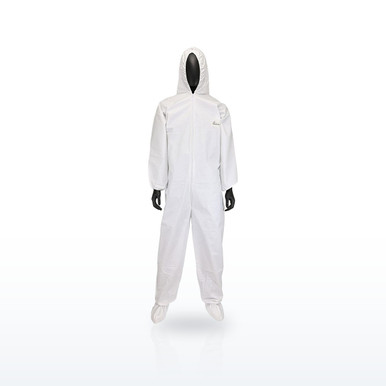
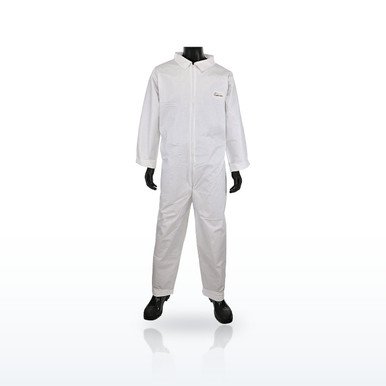
Chemical splash coveralls (Tychem) are in the Tyvek vs Tychem guide and the coverall finder.
Questions people ask
What is Tyvek made of?
High-density polyethylene, flash-spun into continuous fine fibers and bonded under heat and pressure with no binder. One material, no coating.
Is Tyvek waterproof?
Liquid water beads on it and it resists light splash (45 inch hydrostatic head), but water vapor passes through and a soaking exposure will get through. DuPont says a Tyvek 400 garment that is getting wet is the wrong garment.
Does a Tyvek suit protect against chemicals?
Tyvek 400 is not a chemical barrier; it is for particles and light splash of water-based liquids. Tychem fabrics are the chemical-resistant line.
Is Tyvek flame resistant?
No. It ignites, burns and melts. It must not be worn near heat, sparks or flame, or in a flammable atmosphere.
What is the difference between Tyvek and SMS?
Tyvek is bonded polyethylene fibers with the barrier in the fabric; SMS is a three-layer polypropylene fabric whose meltblown middle layer is the barrier. SMS is lighter, more breathable and lower cost; Tyvek holds its particle barrier after abrasion.
What is a microporous coverall?
A polypropylene sheet laminated with a polyethylene film that has pores too small for liquid. Better liquid holdout than SMS, less breathable, and the film can wear.
Can you wash and reuse a Tyvek suit?
DuPont states it is not for washing. It is a limited-use garment, discarded when torn, soiled or contaminated.
What does Type 5/6 mean on a coverall?
European ratings: Type 5 is tested against airborne solid particles (EN ISO 13982-1), Type 6 against a light liquid spray (EN 13034). DuPont’s US product data for Tyvek 400 lists no EN type.
Standards and ratings on this page are as published in the documents named and by the manufacturers named. The employer’s hazard assessment and written program decide what applies at a given workplace. Verify a rating on the product and its spec sheet before use.