
Eyewash saline solution: sterile saline vs tap water, shelf life, and what goes in a station
Eyewash saline is sterile water with 0.9 percent salt, matched to the eye’s own fluid so it does not sting or swell the cornea, usually buffered to a neutral pH and sealed sterile. ANSI Z358.1 allows potable (tap) water, saline, or any flushing fluid approved for the purpose, so plumbed stations run on tap water; portable stations and bottles use sealed sterile saline because standing tap water grows bacteria. Sealed saline keeps about two to three years unopened; an opened bottle is used once and discarded; a portable tank of tap water with preservative is changed on the manufacturer’s schedule, usually every three to six months.
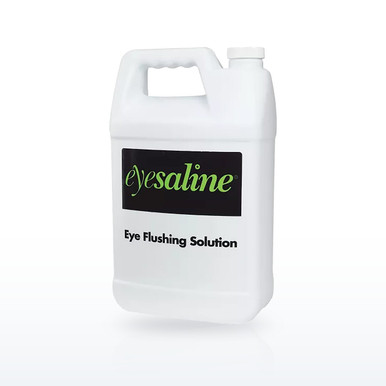 Eyesaline 1-gallon pre-mixed salineBuffered sterile saline for portable eyewash stations
Why not just use water? Plain water is fine from a plumbed station, where it is fresh every time. The problem is water that sits. A portable tank or a squeeze bottle filled from the tap and left on a wall for months grows Acanthamoeba and Pseudomonas, organisms that cause eye infections that are hard to treat, and the first time it is used is on an eye that has just been injured. Sterile saline in a sealed container is sterile until it is opened; that is the whole reason it exists.
What does the standard say about the fluid?
ANSI Z358.1 defines the fluid, the temperature and the maintenance; the FDA regulates saline sold as an eyewash.
What is in eyewash saline?
Purified water and 0.9 percent sodium chloride, the same concentration as tears and blood, so the fluid is isotonic: it neither pulls water out of the eye’s tissue nor pushes it in. Most products are also buffered with small amounts of phosphate or borate to hold the pH near 7, and some contain a preservative so a multi-use bottle stays clean after opening. The label lists all of it. Contact-lens saline and nasal saline are also 0.9 percent, but they are not labeled for eyewash use and bottle sizes are wrong for flushing.
Product labeling (Eyesaline, Fendall, First Aid Only); 21 CFR 349.What kind of fluid, in which kind of station
| Station | Fluid | How long it lasts | Upkeep |
|---|---|---|---|
| Plumbed eyewash | Potable water from the building | Unlimited | Activate weekly; tempering valve where cold |
| Portable gravity-fed tank (9 to 16 gal) | Tap water with a preservative additive, or pre-mixed saline concentrate | 3 to 6 months per fill, per the manufacturer | Inspect weekly; empty, clean and refill on schedule |
| Sealed-cartridge station | Factory-sealed sterile saline bags | About 24 months unopened (expiration on the cartridge) | Inspect weekly; replace cartridges at expiration or after use |
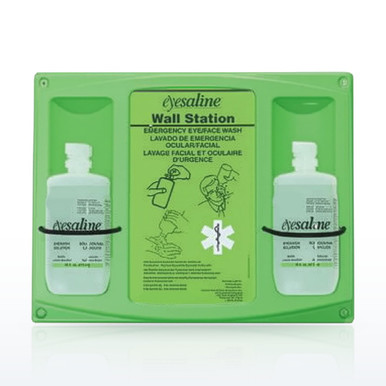
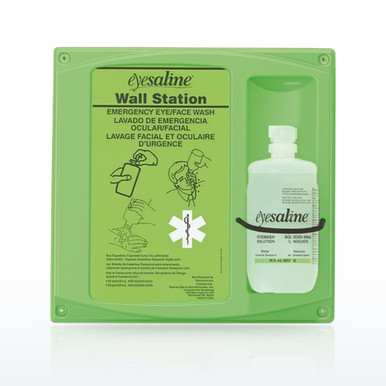
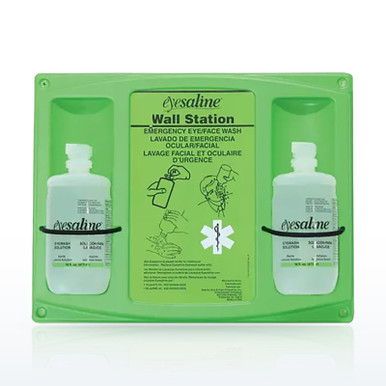
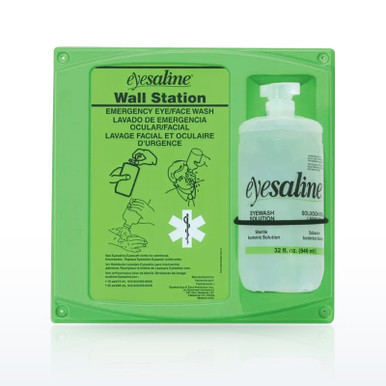
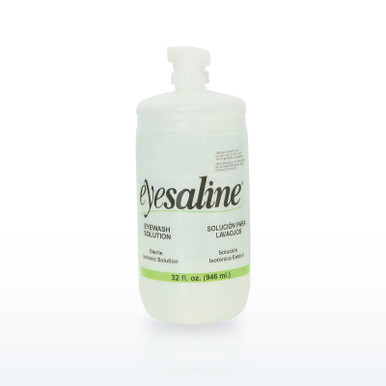
| Wall-mounted bottle station (16 or 32 oz) | Sealed sterile saline bottles | About 2 to 3 years unopened | Check expiration monthly; replace after any use |
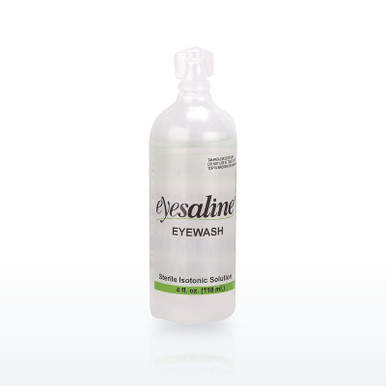
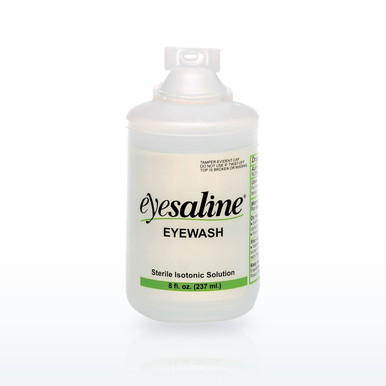
| Personal bottle (1 to 8 oz) | Sealed sterile saline | About 2 to 3 years unopened | Single use; discard after opening |
Shelf lives are typical manufacturer figures; the date printed on the product governs. A personal bottle and a wall-mounted bottle station are personal wash units under Z358.1 section 8: they support the walk to a 15-minute station and do not replace one. A portable tank filled with untreated tap water does not meet the standard’s intent and is the source of most contaminated-eyewash cases.
ANSI/ISEA Z358.1-2014 sections 5.4, 5.5 and 8; manufacturer maintenance instructions (Honeywell Fendall, Bradley, Haws, First Aid Only).
How is a portable station refilled?
- Drain it completely. Do not top off old fluid.
- Clean the tank with the manufacturer’s cleaning kit or a mild bleach solution, rinse until clear, and let it dry.
- Fill with potable water and add the measured dose of preservative, or with pre-mixed saline, to the fill line.
- Write the fill date and the next change date on the tag.
- Test the flow: both nozzles, steady, 15 minutes of fluid in the tank.
Can eyewash saline be used after it expires?
No. The expiration date is the end of the period the manufacturer has proven the sealed product stays sterile and the buffer holds. After it, the seal may have let in air, the pH may have drifted, and the fluid may be contaminated without looking any different. Expired bottles are replaced, not used; the cost of a bottle is nothing next to an eye infection on a burned cornea.
21 CFR 211.137 (expiration dating for drug products); manufacturer labeling.What about contact lenses and the first aid kit?
Flushing starts immediately with the lens in; it is removed as soon as it can be without stopping the flush, and never reinserted. A 4-ounce or larger bottle of sterile saline belongs in every first aid kit and vehicle, so flushing can start on the way to a station; ANSI Z308.1 lists eye wash among the required contents of a workplace kit. Those bottles are for the first minute, not the fifteenth.
ANSI/ISEA Z308.1-2021 Table 1 (eye/skin wash, 1 fluid ounce minimum, Class A and B); ANSI/ISEA Z358.1-2014 section 8.Eyewash solutions, refills and bottle stations
12 items · prices liveVolumes, shelf life and sterility are as published by the manufacturer; the expiration date on the product governs. Free shipping on orders over $199.

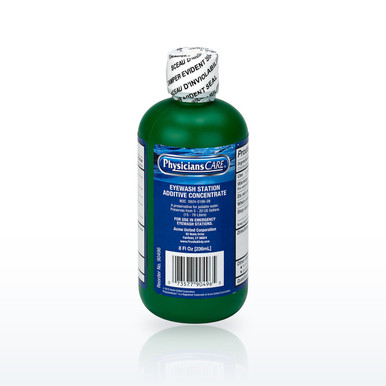
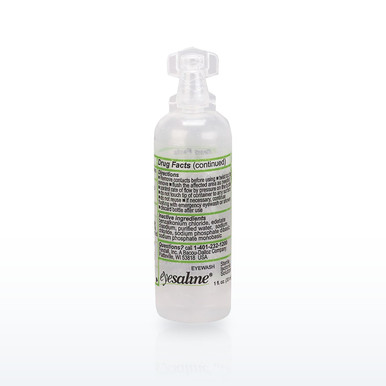
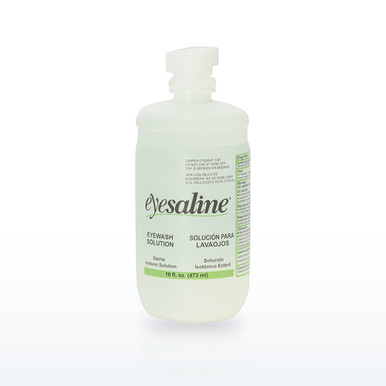
15-minute portable and plumbed stations are in the eyewash station guide and on the first aid finder.
Questions people ask
What is eyewash solution made of?
Sterile purified water with 0.9 percent sodium chloride, usually buffered to a neutral pH, sometimes with a preservative. The label lists the contents.
Can you use tap water as eyewash?
From a plumbed station, yes; that is what it runs on. In a portable tank or a bottle, only with a preservative additive and a change schedule, because standing tap water grows organisms that infect eyes.
How long does eyewash saline last?
Sealed, about two to three years; the printed expiration date governs. Once opened, a bottle is single-use. A portable tank fill lasts three to six months per the manufacturer.
Is sterile saline the same as eyewash?
Not always. Eyewash saline is labeled and packaged for flushing eyes under FDA ophthalmic rules. Contact-lens and nasal saline are the same concentration but not labeled for the purpose.
How often should eyewash solution be changed?
Portable tanks: on the manufacturer’s schedule, commonly every three to six months, with cleaning each time. Sealed cartridges and bottles: at expiration or after any use.
Does OSHA require saline or water?
OSHA requires suitable flushing facilities; ANSI Z358.1 allows potable water, preserved water, buffered saline or other approved fluids. The station type decides which is practical.
What size eyewash bottle for a first aid kit?
ANSI Z308.1 requires at least 1 fluid ounce of eye wash in a Class A or B kit; 4 ounces is common and better. A bottle is for starting the flush, not finishing it.
Standards and ratings on this page are as published in the documents named and by the manufacturers named. The employer’s hazard assessment and written program decide what applies at a given workplace. Verify a rating on the product and its spec sheet before use.