
Are eyewash bottles OSHA compliant?
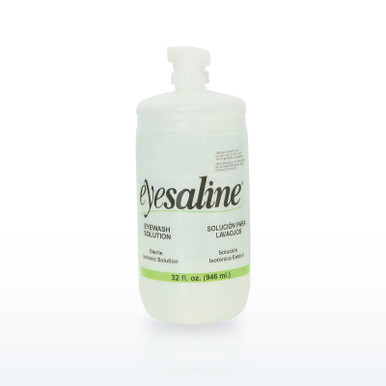
On their own, no. OSHA 1910.151(c) requires suitable facilities for quick drenching or flushing where people can be exposed to injurious corrosives, and OSHA measures suitable against ANSI/ISEA Z358.1. That standard calls for 0.4 gallons per minute to both eyes for 15 minutes. A 32-ounce bottle delivers about a minute of flushing. Z358.1 classes bottles and bottle wall stations as personal wash units: supplemental equipment that may be kept right at the work area so flushing starts immediately, and that does not take the place of a plumbed or self-contained station. Where the work only involves dust, grit and mild irritants, with no corrosive on the SDS, 1910.151(c) is not triggered and a bottle is a sensible first aid item.
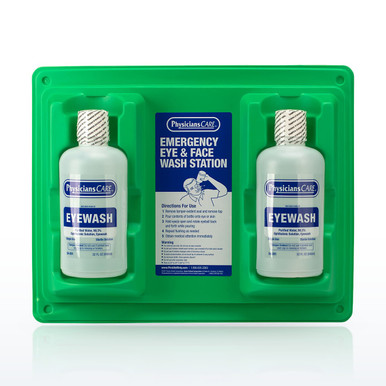
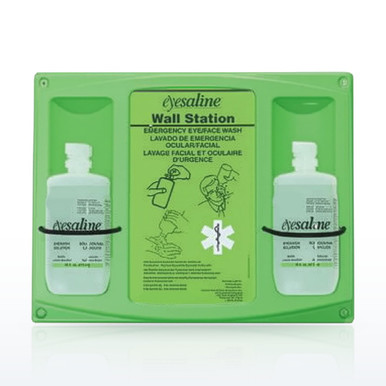 Eyesaline 16-ounce double-bottle eyewash wall stationTwo sealed sterile saline bottles in a wall case. A personal wash unit.
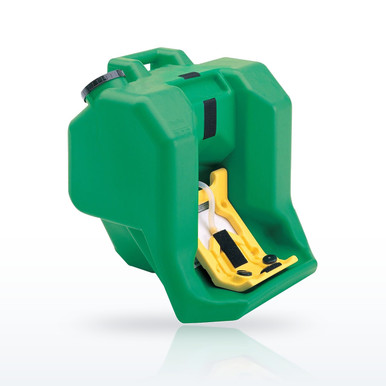
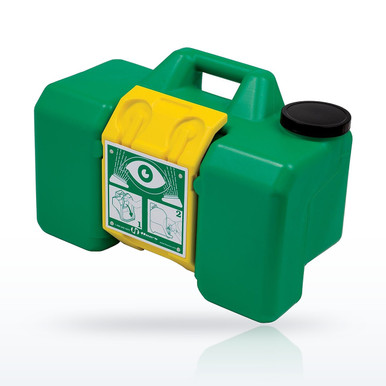
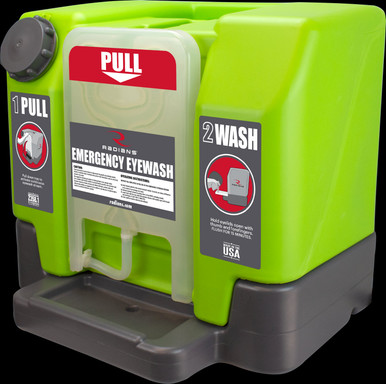
Why does the standard draw the line at 15 minutes? A corrosive keeps burning as long as it is in the eye. Flushing works by dilution, and it takes continuous water for minutes, not seconds, to bring the chemical in the tear film down to a level that stops the damage. That is why Z358.1 sets 15 minutes as the duration for every station and sizes self-contained units at 6 gallons and up. A bottle cannot hold that much, so the standard gives it a different job: start the flush on the spot, then get to the station.
What does Z358.1 say a personal wash unit is for?
The standard’s own position, in four pieces.
How long does a bottle actually flush?
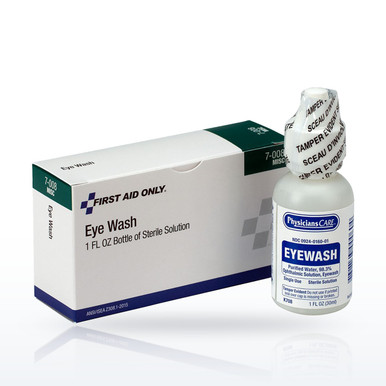
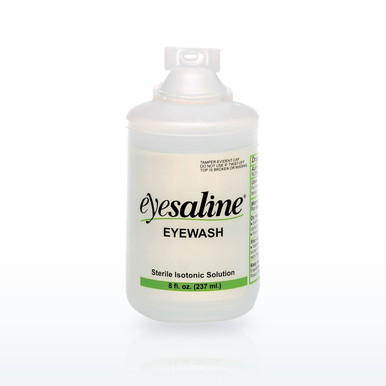
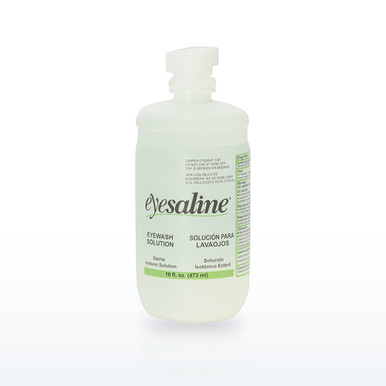
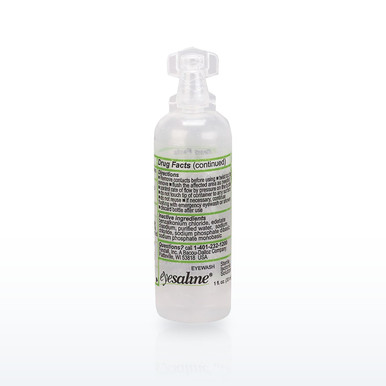
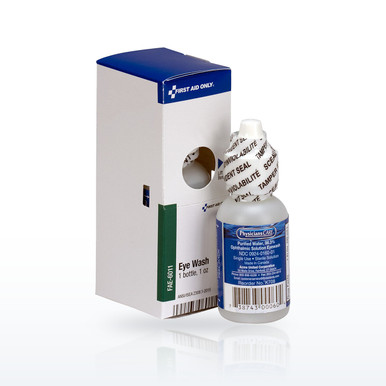
Do the arithmetic with the station figure. The standard’s eyewash flow is 0.4 gallons per minute, which is 51 fluid ounces a minute to both eyes. A 32-ounce bottle is empty in well under a minute at that rate; a 16-ounce bottle in about 20 seconds; the 1-ounce vials in a first aid kit are a single rinse. A double 32-ounce wall station holds 64 ounces, still a fraction of the 6 gallons a self-contained station carries for the 15 minutes. That is the whole case against treating a bottle as a station.
ANSI/ISEA Z358.1-2014 section 5.1.6 (0.4 gpm for 15 minutes); bottle capacities as labeled by the manufacturers.What the bottle is good for is the first 20 seconds, which matter more than any other 20 seconds. A worker splashed at a bench with a bottle on the wall starts flushing with sterile saline before taking a step, then walks the 10 seconds to the station with the bottle still running. Without the bottle, the first flush starts after the walk. The standard allows exactly this use.
ANSI/ISEA Z358.1-2014, personal wash units section (kept in the immediate vicinity of employees in a potentially hazardous area).When is a bottle enough?
- When nothing in the work area is an injurious corrosive. OSHA’s 2009 letter says 1910.151(c) is not triggered where no material is a corrosive, judged from the safety data sheet, and that sealed containers that are never opened do not create exposure. Sawdust, metal grindings, insulation fibers and pollen irritate the eye; they do not burn it. For those, a bottle in the first aid kit or on the wall is appropriate first aid.
- When it is paired with a station. The bottle at the bench starts the flush; the station within 10 seconds finishes it.
- Never in place of a station where a corrosive is handled: battery charging, acid cleaners, caustic degreasers, concrete and mortar work, lab reagents, pool and water-treatment chemicals. The SDS section 2 phrase to look for is “causes serious eye damage” or “corrosive.”
- A bottle is also what ANSI Z308.1 puts in the first aid kit: 1 fluid ounce of eye/skin wash in a Class A kit and 4 fluid ounces in a Class B kit. That is a first aid supply, not a 1910.151(c) facility.
What should a bottle station have on it?
Sterile, sealed, single-use bottles with a tamper-evident seal and an expiration date; a buffered saline rather than tap water, because an open bottle of water grows bacteria within days; a mounting location at eye level in the work area with a sign; and a place on the inspection schedule. A bottle whose seal is broken is replaced, not topped up. The sterile saline guide covers what is in the fluid and how long it lasts.
Manufacturer instructions for the Eyesaline and First Aid Only units in the band (sealed sterile saline, single use, expiration dating); ANSI/ISEA Z358.1-2014 section 5.4.3 (sign) applied to the station the bottle supports.Eyewash bottles, wall stations and the stations they support
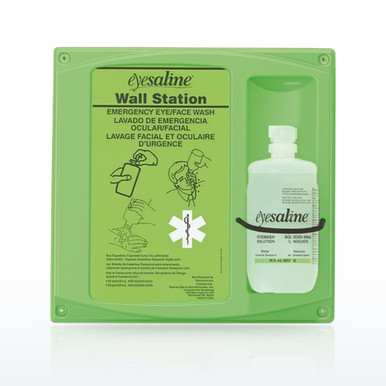
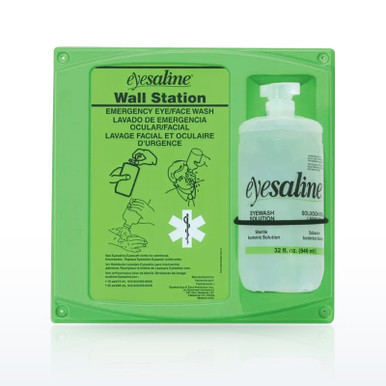
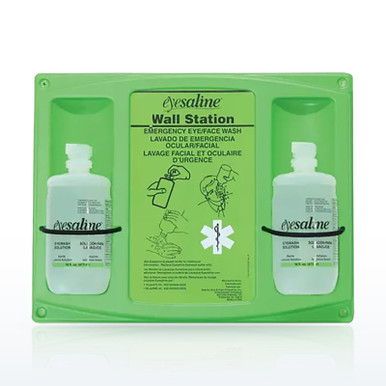
24 items · prices liveUnit type is as labeled by the manufacturer. Bottle sizes, counts and expiration dating are on each product page. Free shipping on orders over $199.
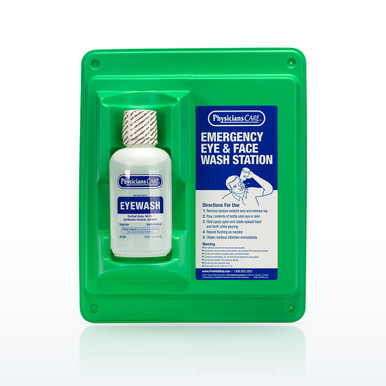
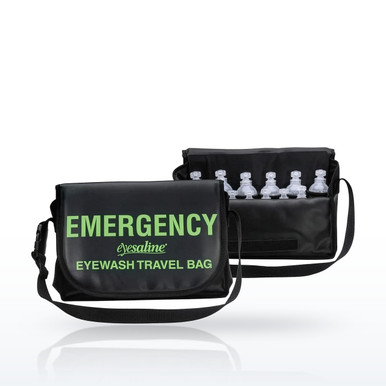
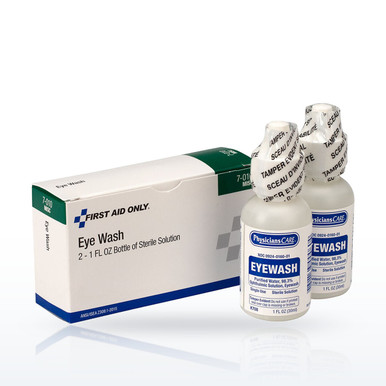
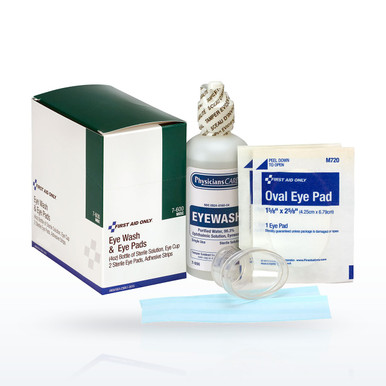
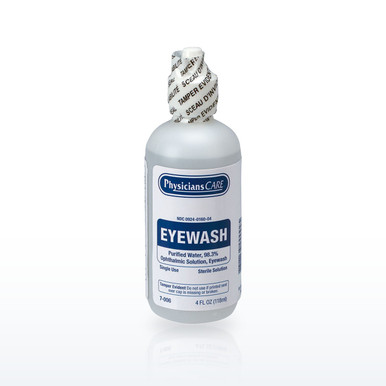
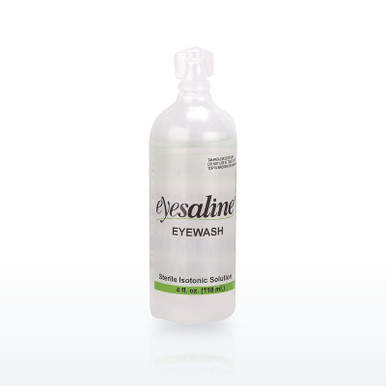
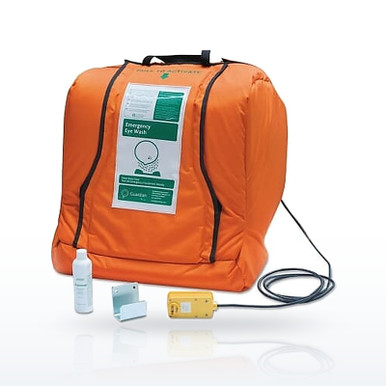
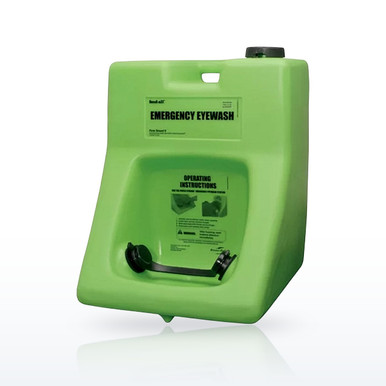
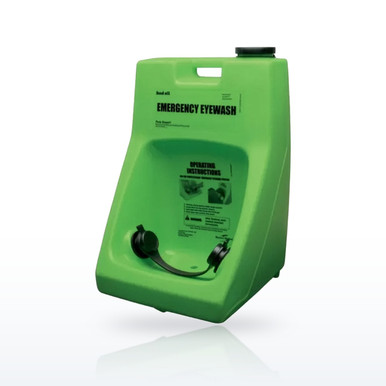
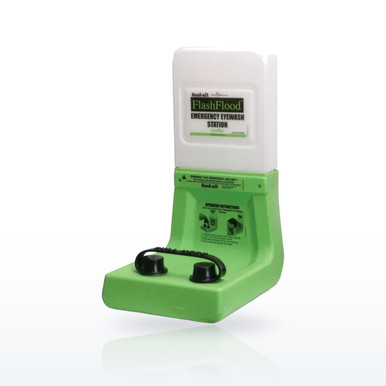
Plumbed eyewash, eye/face wash and drench showers are in the eyewash requirements guide below.
Questions people ask
Are eyewash bottles OSHA approved?
OSHA does not approve equipment. The question is whether a bottle is a suitable facility under 1910.151(c), and measured against ANSI Z358.1 it is not: the standard treats bottles as supplemental personal wash units, not stations.
Can I use an eyewash bottle instead of an eyewash station?
Not where a corrosive is present. A bottle gives under a minute of flushing; the standard requires 15 minutes at 0.4 gallons per minute. Use the bottle to start the flush and the station to finish it.
What is a personal wash unit?
Z358.1’s term for a squeeze bottle or bottle wall station: equipment kept in the immediate vicinity of workers to deliver immediate flushing fluid, supporting the plumbed or self-contained station rather than replacing it.
How long does a 32-ounce eyewash bottle last?
Under a minute at the standard’s 0.4 gallons per minute (51 ounces a minute). A 16-ounce bottle, about 20 seconds at that rate.
Do I need an eyewash station for a woodshop or a warehouse?
If no injurious corrosive is handled there, 1910.151(c) does not apply and a bottle station for dust and grit is good first aid practice. Check every SDS; forklift batteries and floor cleaners are the usual surprises.
Can I refill an eyewash bottle with tap water?
No. The bottles are sterile, sealed and single-use; once opened the fluid is no longer sterile, and tap water in an open bottle grows bacteria. Replace the bottle.
How much eyewash does a first aid kit need?
ANSI Z308.1-2021: 1 fluid ounce of eye/skin wash in a Class A kit, 4 fluid ounces in a Class B kit. That is a first aid supply, separate from the eyewash station rule.
Standards and ratings on this page are as published in the documents named and by the manufacturers named. The employer’s hazard assessment and written program decide what applies at a given workplace. Verify a rating on the product and its spec sheet before use.