
Type I, II, III and IV first aid kits: the container ratings
The type is the container; the class is the contents. ANSI/ISEA Z308.1-2021 rates first aid kit containers in four types by where they can be used. Type I is stationary and indoor, mounted in a fixed place, not meant for rough handling. Type II is portable and indoor, where the supplies are unlikely to be damaged. Type III is portable, for indoor or outdoor mobile use, with a water-resistant seal and a way to mount it. Type IV is portable, for mobile industries and outdoor use where damage is a real risk, and must be mountable and meet the standard’s corrosion, moisture and impact requirements. Either class of contents, A or B, can go in any type of container, and the kit label states both.
Why does the standard rate the box as well as the contents? A Class A fill that is right for the job is useless if the gauze is soaked, the ointment has frozen in a truck bed, or the case cracked when it fell off a tailgate. Earlier editions of Z308.1 described the container in general terms. The type ratings tie the case to its use: an office cabinet does not need to survive rain, and a kit riding in a service truck does. The rating lets a buyer match the case to the environment without reading a spec sheet, and lets an inspector see that a kit on an outdoor site was built for one.
What do the four types mean?
From the container classification in ANSI/ISEA Z308.1-2021.
Type I to IV at a glance
| Type | Where | Portable | Mountable | Water | Rough handling |
|---|---|---|---|---|---|
| Type I | Indoor, fixed position | No | Yes, mounted | Not required | Not expected |
| Type II | Indoor | Yes | Not required | Not required | Minimal |
| Type III | Indoor or outdoor, mobile | Yes | Yes | Water-resistant seal | Not likely |
| Type IV | Outdoor, mobile industries | Yes | Yes | Moisture resistance | Significant; corrosion and impact resistance |
The standard’s own wording for each type is in the cards above. Water resistance and impact resistance for Types III and IV are shown by the manufacturer under the standard’s test methods; the kit label states the type the maker certifies. Many kits sold for vehicles and outdoor sites are labeled weatherproof or waterproof without a type rating; that is the manufacturer’s description, not a Z308.1 type.
ANSI/ISEA Z308.1-2021, container types; manufacturer kit labels.
Which type fits which workplace?
- Office, retail, school, clinic, break room: Type I wall cabinet or Type II portable kit. Dry, climate-controlled, nobody drops it.
- Shop, warehouse, plant floor: Type I cabinet at a fixed station, often with a Type II or III kit for a forklift or a maintenance cart.
- Service trucks, delivery vehicles, crew cabs: Type III at least, mounted so it stays put and can be found in the dark. Sealed against road dust and the odd leak.
- Construction sites, utilities, oil and gas, forestry, marine: Type III or Type IV, depending on weather and handling. OSHA’s construction rule separately requires a weatherproof container with individually sealed packages, which a Type III or IV case is built to be.
- A kit that moves between the truck and the site: Type III or IV, with a mounting bracket in the truck and a hook or flat back for the site.
What else is on a Z308.1-2021 kit label?
The class (A or B), the type (I to IV), and the edition of the standard the kit meets. A kit built to the 2015 edition may still be labeled Type I to IV, since the types carried over, but its contents follow the older list; the 2021 edition added a foil blanket to both classes, raised the hand sanitizer count and made an arterial tourniquet a required Class B item. When replacing a kit or a refill, match the edition on the label to the list you are buying against.
ANSI/ISEA Z308.1-2021 labeling (class and type); changes from the 2015 edition as summarized by ISEA member manufacturers (foil blanket, hand sanitizer, Class B tourniquet); effective date October 2022.The type rating does not replace the construction and logging rules. On a jobsite the kit must still be weatherproof with sealed packages and checked weekly; in logging it must hold the listed items at all times and be on each transport vehicle. The type tells you the case was built for the setting; the OSHA rule tells you what the employer has to do with it.
29 CFR 1926.50(d)(2); 29 CFR 1910.266(d)(2)(i) and (ii).Type-rated kits, wall cabinets and weatherproof portable kits
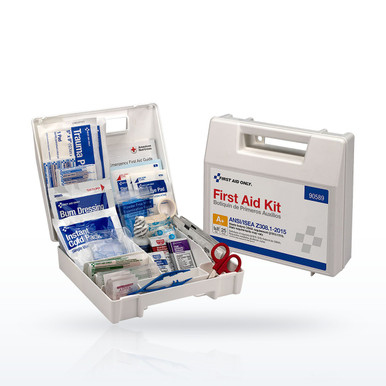
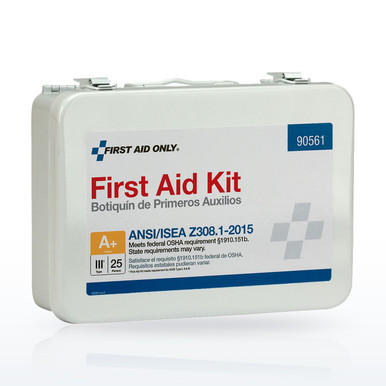
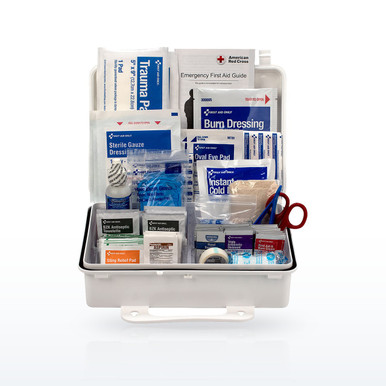
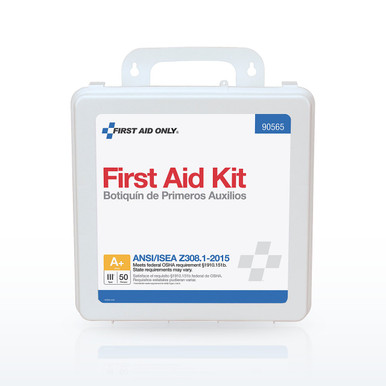
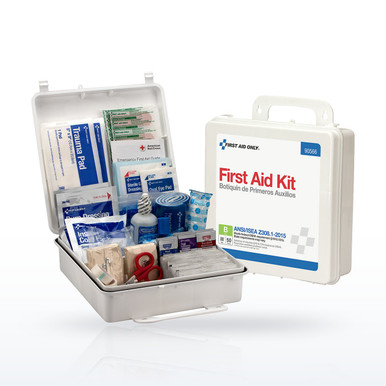
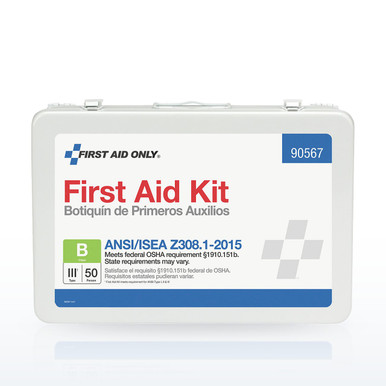
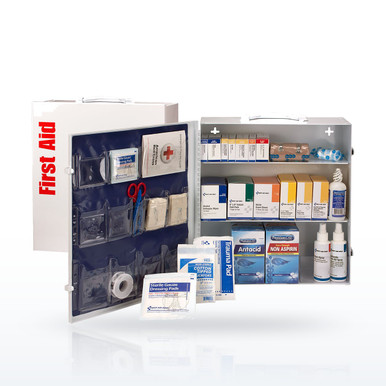
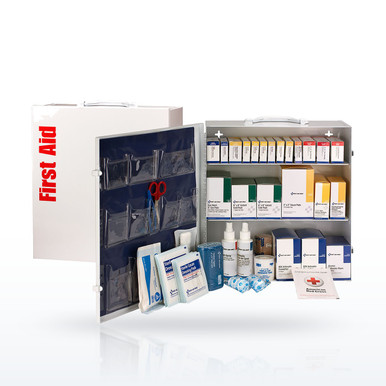
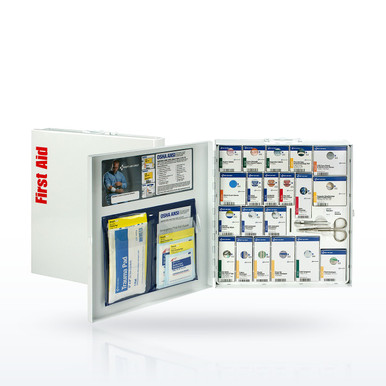
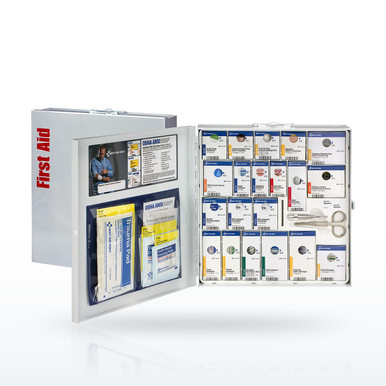
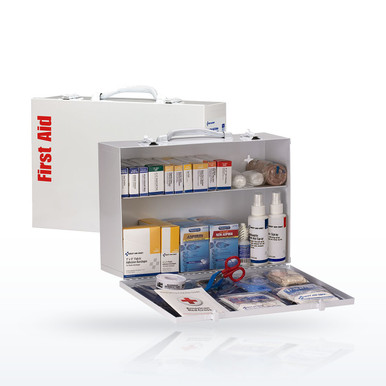
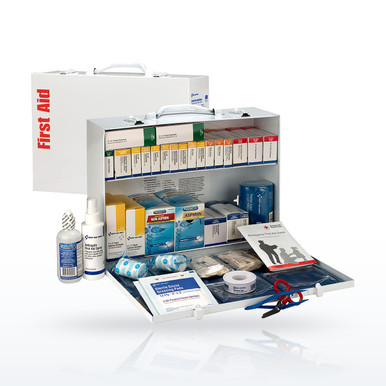
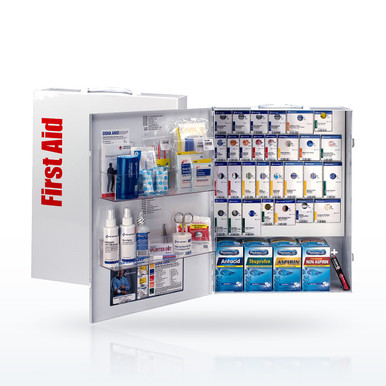
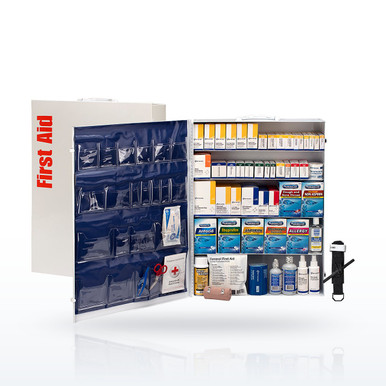
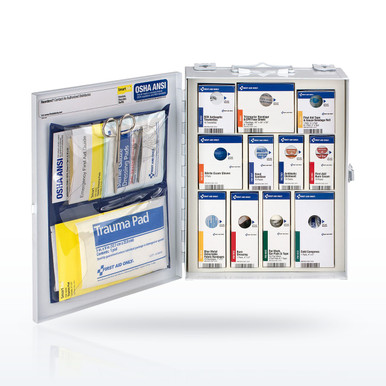
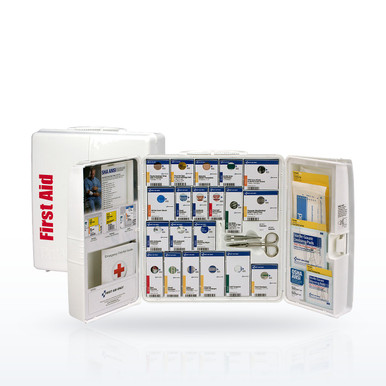
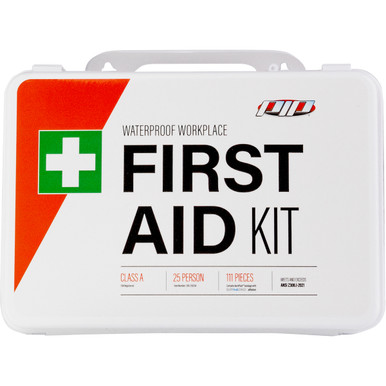
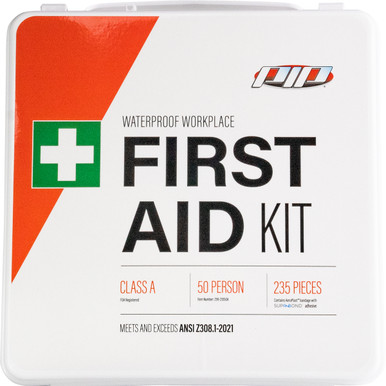
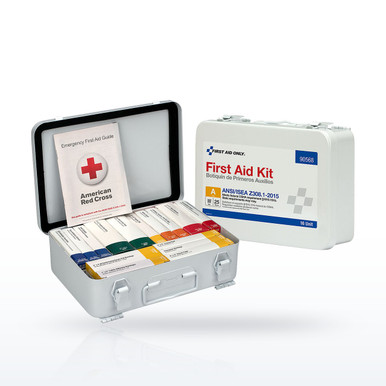
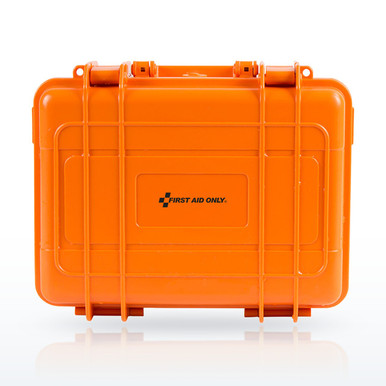
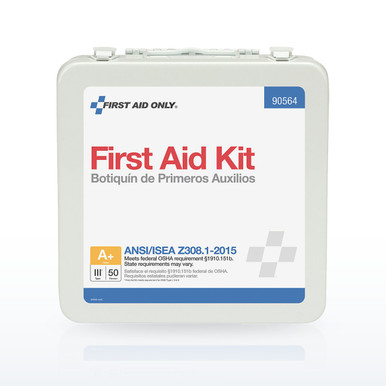
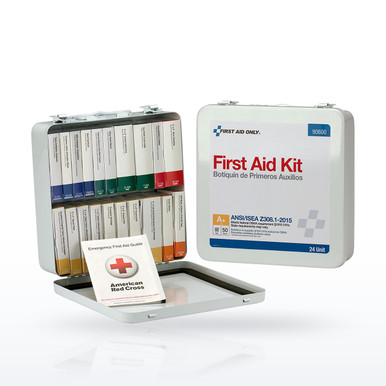
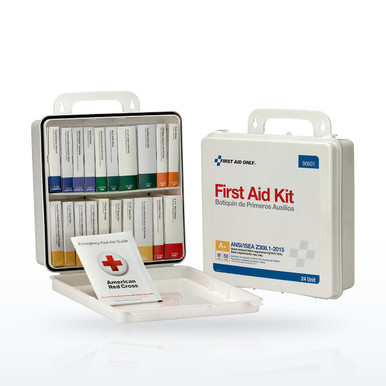
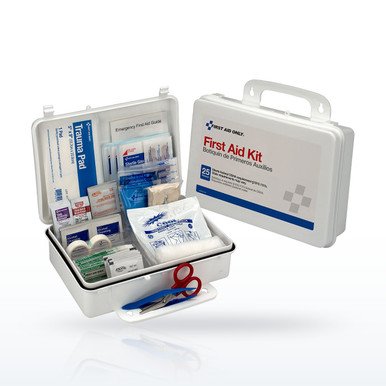
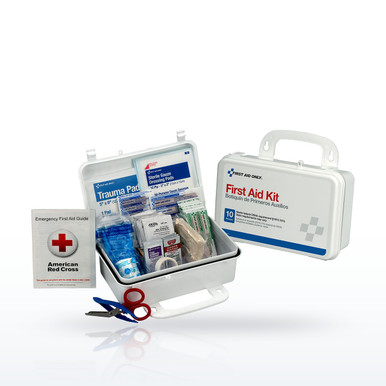
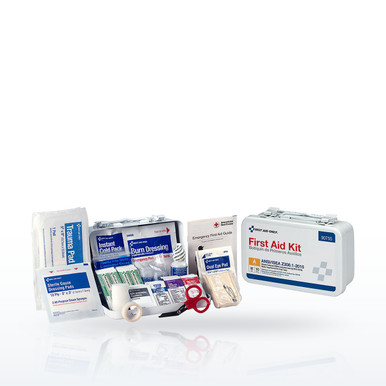
28 items · prices liveThe first group shows the ANSI/ISEA Z308.1 type the manufacturer publishes for the kit. Cabinets and weatherproof kits in the other groups are listed as labeled by the manufacturer (wall-mount, weatherproof, waterproof) and do not carry a published type rating; see each product page. We do not currently carry a kit labeled Type IV. Contractor Direct orders ship free.
Refills and vehicle kits are on the first aid finder.
Questions people ask
What is the difference between Type and Class on a first aid kit?
Type (I to IV) rates the container: portable or fixed, indoor or outdoor, water-resistant or not. Class (A or B) sets the contents. Any class can be in any type.
What is a Type III first aid kit?
A portable kit for mobile indoor or outdoor use where environmental damage is not likely. The case has a water-resistant seal and can be mounted. (ANSI/ISEA Z308.1-2021.)
What is a Type IV first aid kit?
A portable kit for mobile industries and outdoor settings with significant risk of damage from the environment and rough handling. It must be mountable and meet the standard’s corrosion, moisture and impact resistance requirements.
Is a Type I kit the same as a first aid cabinet?
A Type I container is stationary, indoor and mounted, which is what a wall cabinet is. The cabinet is Type I only if the manufacturer certifies it to the standard and labels it so.
Which type does OSHA require for construction?
OSHA does not name a type. 1926.50(d)(2) requires a weatherproof container with individually sealed packages; a Type III or IV case is built for that use.
Can a Type II kit go in a truck?
The standard defines Type II as indoor use with minimal risk of damage. A truck is a mobile setting, which the standard assigns to Type III or IV.
Did the 2021 edition change the types?
The four container types carried over from the 2015 edition. The 2021 changes were to the contents: a foil blanket in both classes, more hand sanitizer, and a required arterial tourniquet in Class B.
Standards and ratings on this page are as published in the documents named and by the manufacturers named. The employer’s hazard assessment and written program decide what applies at a given workplace. Verify a rating on the product and its spec sheet before use.