
First aid kits for vehicles and crews: what 1926.50 requires on a jobsite
Construction has its own first aid rule, 1926.50, and it is more specific than the general industry one. First aid supplies must be easily accessible, the kit contents must be in a weatherproof container with each type of item in its own sealed package, and the employer must check the kit before it goes out on each job and at least weekly on the job to replace what has been used. Unless a clinic, hospital or physician is reasonably accessible in time and distance, someone with a valid first aid certificate must be on the site. Transport for an injured worker, or a way to call an ambulance, must be arranged, and where there is no 911 the phone numbers are posted. A crew truck carries its own kit because the truck is often the only thing on the site that stays put.
Why does construction get its own rule? A jobsite moves, gets wet and gets dusty, and the nearest clinic may be 40 minutes away. The general industry rule says supplies must be readily available and stops there. The construction rule adds the things a site needs to make that true: a container that keeps the contents dry, items sealed so the first bandage used does not contaminate the rest, a weekly check because a crew works through supplies fast, and a plan for getting a badly hurt worker off the site.
What does 1926.50 require?
Seven paragraphs, (a) through (g). Four of them are about the kit and the people; the rest are about getting help.
What makes a kit a vehicle or jobsite kit?
- A weatherproof case. Gasketed plastic or a metal case with a gasket keeps rain and dust out when the kit rides in a truck bed or sits on a site. This is the 1926.50(d)(2) container requirement.
- Individually sealed packages. Unitized kits have each item type in its own sealed box or pouch; bulk kits have each item in its own wrapper. Either meets the sealed-package requirement as long as every type of item is sealed.
- A mounting method. Vehicle kits have brackets or a flat back so they can be fixed in the cab or the bed and found in the dark.
- An ANSI class. The construction rule does not name ANSI Z308.1, but OSHA’s general industry appendix accepts a Z308.1 kit as adequate, and the same Class A or B fill is what manufacturers put in vehicle kits. A kit labeled Type III or Type IV under Z308.1 has been built for portable, outdoor use with a water-resistant seal.
- Supplies sized for the crew. The 10-person and 25-person labels are the manufacturer’s sizing; a crew of 6 in a truck is a 10-person kit, a site with 20 is a 25-person kit or two.
What does the weekly check look like?
- Open the kit and compare it to the contents card. Every kit ships with a list. Count what is there against it.
- Replace what has been used. The rule is written around expended items: what the crew used this week goes back in before next week.
- Pull anything opened, wet or out of date. A torn seal is no longer a sealed package. Ointments, eyewash, burn gel and sterile dressings carry dates.
- Check the case. Gasket intact, latches working, no water inside. A case that leaks does not meet weatherproof.
- Write it down. The rule does not require a log, but a dated initial on the card is the easiest way to show an inspector the kit was checked before the job and weekly on it.
When does a jobsite need a trained first aid person?
Whenever a clinic, hospital or physician is not reasonably accessible in terms of time and distance. OSHA does not put a number in the construction rule, but in its reading of the matching general industry rule it says emergency care must be available within 3 to 4 minutes where a serious injury such as a severe bleed is possible. Most construction sites have that kind of hazard, so most sites keep a certified person on each shift. The certificate must be one that can be verified by documentary evidence; a card from a recognized provider is what inspectors ask to see.
29 CFR 1926.50(c); OSHA letter of interpretation, February 5, 2007 (3 to 4 minutes for serious hazards, under 1910.151(b)).A certified responder who treats a bleeding coworker is a designated first aider, and OSHA regards designated first aiders as covered by the bloodborne pathogens standard. That is why a jobsite kit carries exam gloves, a CPR barrier and often a small spill cleanup pack.
29 CFR 1910.1030(d)(3); OSHA letter of interpretation, May 16, 2011.Vehicle, weatherproof and Type III first aid kits
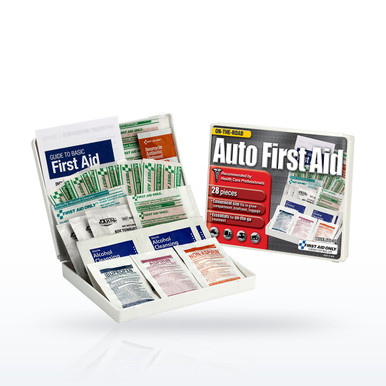
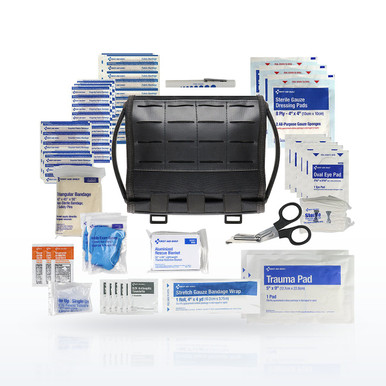
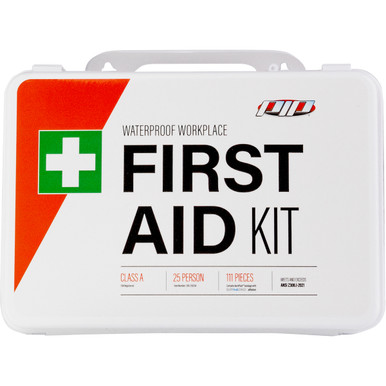
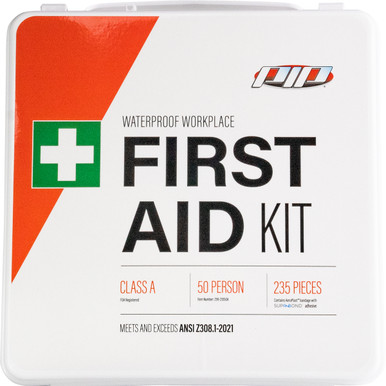
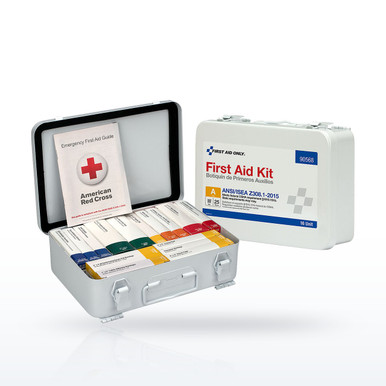
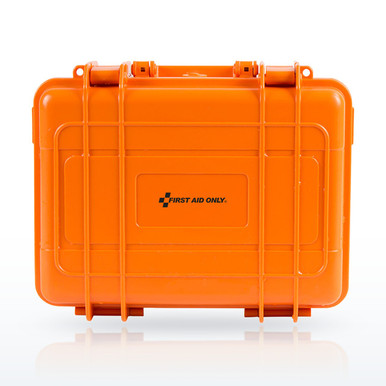
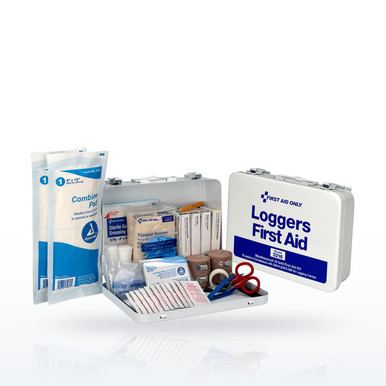
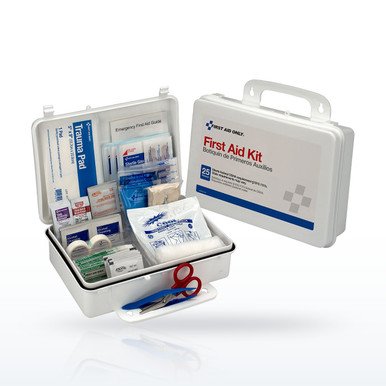
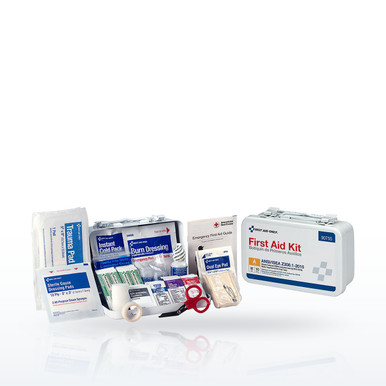
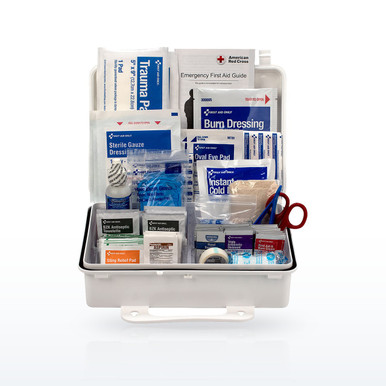
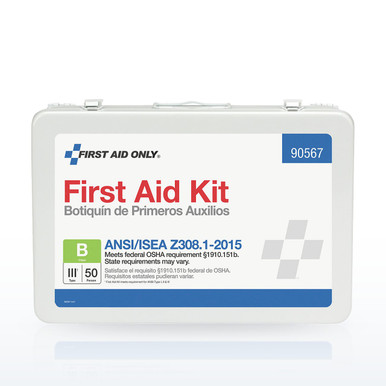
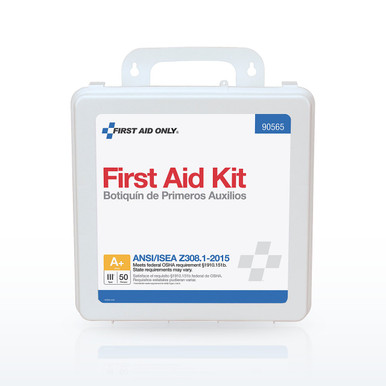
26 items · prices liveVehicle and weatherproof kits are listed as labeled by the manufacturer; Type III kits carry the manufacturer’s ANSI/ISEA Z308.1 container rating. Case material, mounting and class are on each product page. Contractor Direct orders ship free.
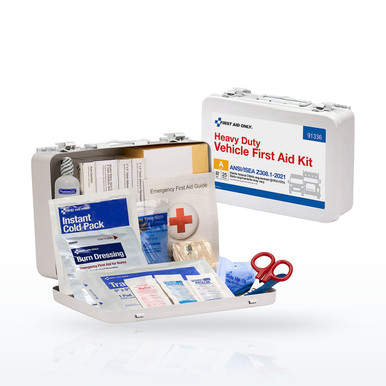
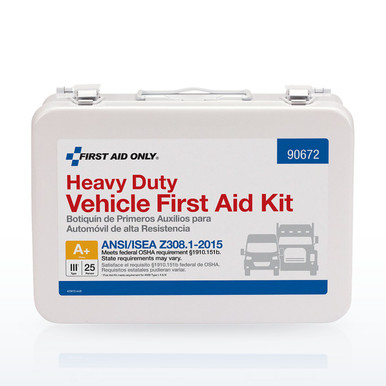
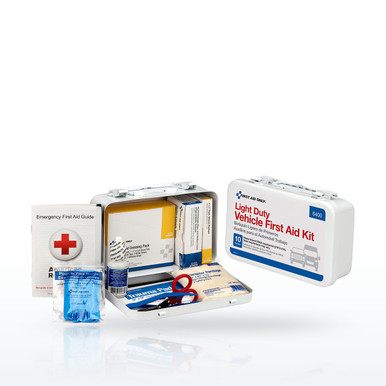
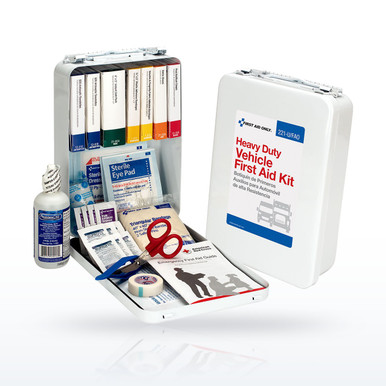
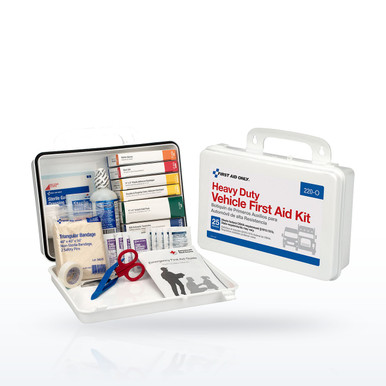
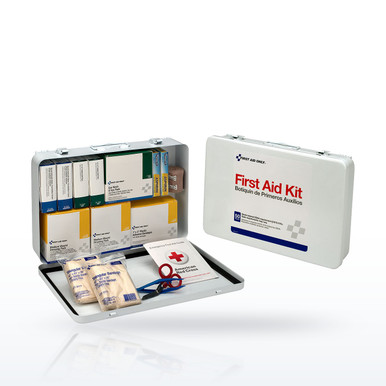
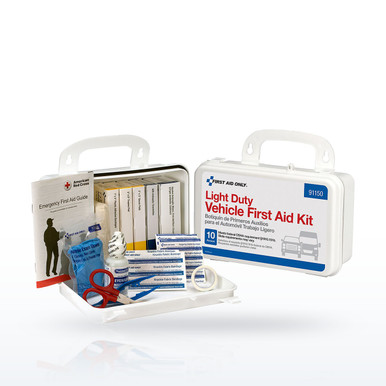
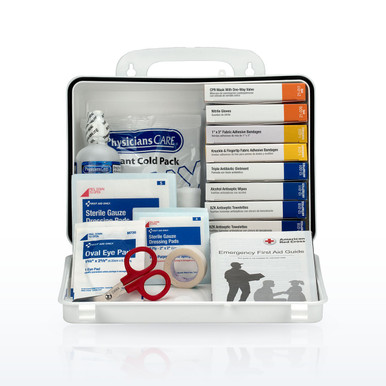
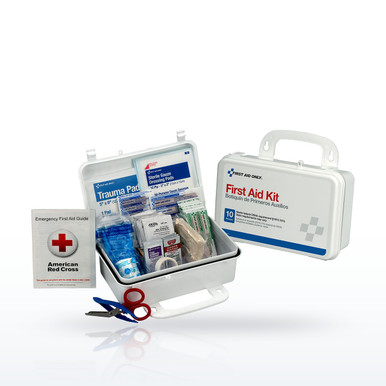
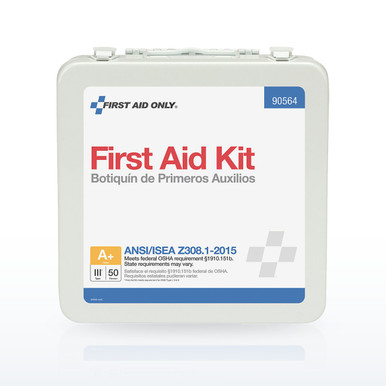
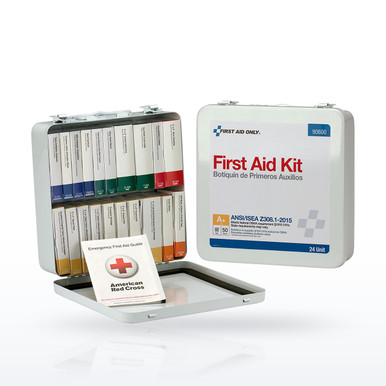
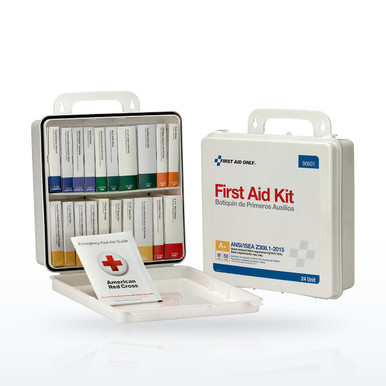
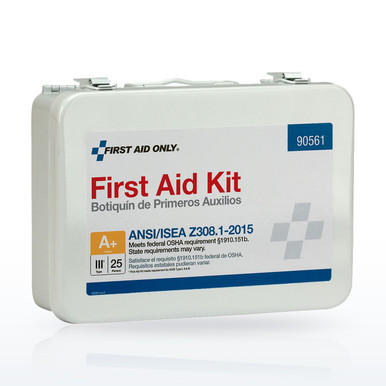
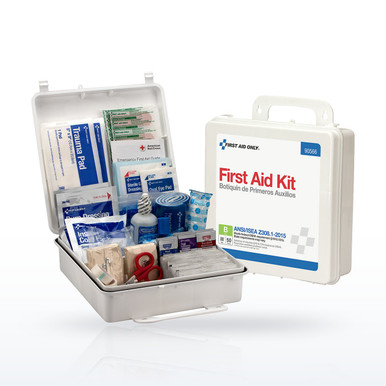
Refills, cabinets and bleeding control kits are on the first aid finder.
Questions people ask
Does OSHA require a first aid kit in every work truck?
1926.50(d)(1) requires first aid supplies to be easily accessible when required. A crew working from a truck with no kit on the site has no supplies, so the kit rides with the crew. The rule does not say per vehicle; it says accessible.
Does a construction first aid kit have to be weatherproof?
Yes. 1926.50(d)(2) requires the contents to be in a weatherproof container with individual sealed packages for each type of item.
How often must a jobsite first aid kit be checked?
Before it is sent out on each job and at least weekly on each job, by the employer, so that expended items are replaced. (1926.50(d)(2).)
Does 1926.50 require an ANSI kit?
It does not name ANSI Z308.1. OSHA’s general industry appendix accepts a Z308.1 kit as adequate for a small worksite, and the Type III and IV container ratings in that standard describe the weatherproof, portable case 1926.50 calls for.
Is a certified first aid person required on every construction site?
Only where a clinic, hospital or physician is not reasonably accessible in time and distance. OSHA reads serious-hazard response time as 3 to 4 minutes, which few sites can meet from outside, so most keep a certified person on each shift. (1926.50(c).)
What has to be posted?
Where there is no 911, the phone numbers of physicians, hospitals or ambulances. Where 911 is used but does not pass the caller’s location automatically, the site’s latitude and longitude or other location information. (1926.50(f).)
Does the site need an eyewash?
Where eyes or body can be exposed to injurious corrosive materials, facilities for quick drenching or flushing must be in the work area. The small bottle in a kit is not that. (1926.50(g).)
Related guides
OSHA first aid kit requirementsWhat 1910.151 and ANSI Z308.1 requireHow many first aid kits does a workplace need?And where to put themType I, II, III and IV first aid kitsThe container ratingsWho is a first aid provider under OSHA?When a trained responder is requiredWhat is an eyewash station?When OSHA requires oneStandards and ratings on this page are as published in the documents named and by the manufacturers named. The employer’s hazard assessment and written program decide what applies at a given workplace. Verify a rating on the product and its spec sheet before use.