
How many first aid kits does a workplace need, and where?
No OSHA rule gives a number of kits per employee. OSHA 1910.151 requires that adequate first aid supplies be readily available, and OSHA reads that as a matter of time: help within 3 to 4 minutes where a serious injury is possible, and up to about 15 minutes in a low-hazard office. So the count comes from the floor plan, not the head count. One kit per floor or work area that a worker can reach in that time, one near each hazard that can cause a bleed or a burn, one in each vehicle that carries a crew, and one at any remote site. The 10, 25, 50 and 100-person sizes on the box are the manufacturer’s way of scaling the same ANSI fill to the number of people who draw on it between restocks.
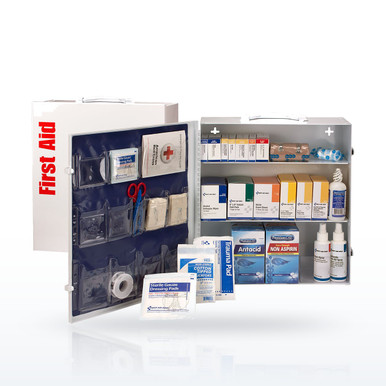
Why does OSHA not give a number? Because 1910.151 is written around outcome, not inventory. A warehouse with 20 people spread over 200,000 square feet needs more kits than an office with 60 people on one floor, and a single kit locked in a supervisor’s office is not readily available to anyone. OSHA’s appendix tells employers to look at the size of the site, the number of operations, the injury log and the hazards, then decide how many kits and what goes in them. The person-count sizes sold by manufacturers are a sizing aid for that decision, not a rule.
What do the rules actually say?
Four sources, none with a number per employee.
What do the 10, 25, 50 and 100-person sizes mean?
They are the manufacturer’s sizing of the same fill. A 10-person and a 50-person ANSI Class A kit hold the same kinds of items; the 50-person kit holds more of each so it lasts between restocks with more people drawing on it. The person count is a usage estimate, not a legal capacity, and the ANSI minimum quantities for the class apply to every size the maker labels with that class. A 25-person kit does not become non-compliant on the day a 26th person is hired; it becomes a kit that empties faster.
Manufacturer sizing as published on the product pages below; ANSI/ISEA Z308.1-2021 Table 1 sets minimum quantities by class, not by person count.Use the count to match the kit to the group that will use it. A crew of 8 in a truck is a 10-person kit. A shop floor of 40 is a 50-person kit or a 2-shelf cabinet. A plant of 150 on one level is a large cabinet at the center plus smaller kits at the far ends, because a cabinet 400 feet away does not meet the 3 to 4 minute clock for a saw injury.
OSHA letter of interpretation, February 5, 2007, response time; 1910.151 Appendix A on larger operations.Where should the kits go?
- One on every floor and in every separate building, so no one has to use a stair or cross a yard to reach supplies.
- One in each work area with its own hazards: the shop, the warehouse, the kitchen, the lab, the loading dock. Place it near the hazard, not near the office.
- One in every vehicle that carries a crew to a site, and a weatherproof kit at any outdoor or remote site the vehicle does not stay at.
- In a fixed, marked, unlocked location at eye level, with a sign. A kit in a locked cabinet or a desk drawer is not readily available.
- Within the response clock: 3 to 4 minutes at a walk, round trip, from any point where a serious injury can happen; a longer walk only in a low-hazard office.
- Next to, not instead of, an eyewash station where corrosives are used. The small eyewash bottle in an ANSI kit does not satisfy the drenching requirement.
How do you work out the number for a given site?
- Draw the site and mark where injuries happen. Use the OSHA 300 log and the hazard assessment. Saws, presses, chemicals, hot surfaces and vehicles are the places that set the clock.
- Walk the response time from each hazard. If a kit is not reachable and back within 3 to 4 minutes, add one closer. Offices and low-hazard areas can share one kit on a longer walk.
- Count the people who will draw on each kit. Pick the person-count size that matches each group, and the class (A or B) that matches the hazard level.
- Add vehicles and remote sites. One kit per crew vehicle, weatherproof for construction, and one at any site that is worked without a vehicle on hand.
- Review it. When the floor plan, the head count or the injury log changes, repeat the walk. OSHA’s appendix calls for periodic reassessment.
First aid kits and cabinets by person count
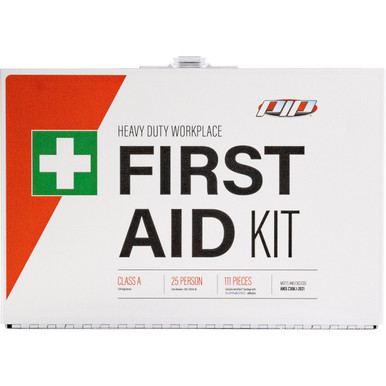
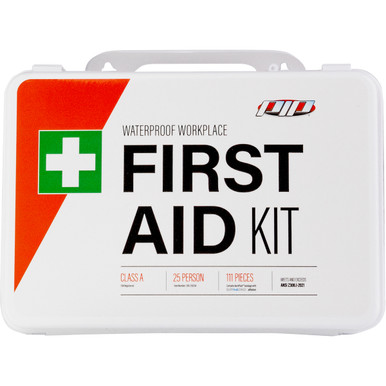
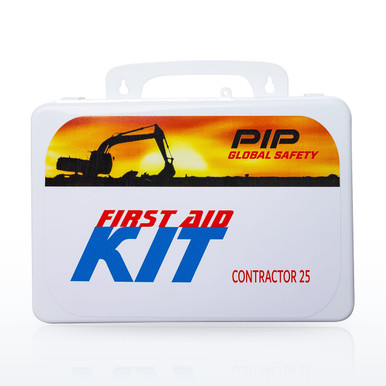
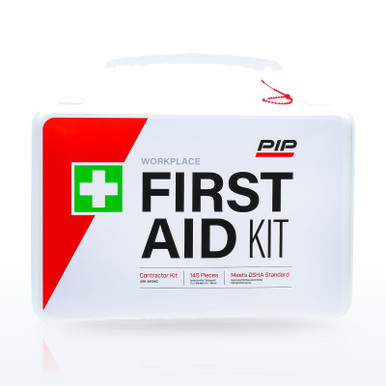
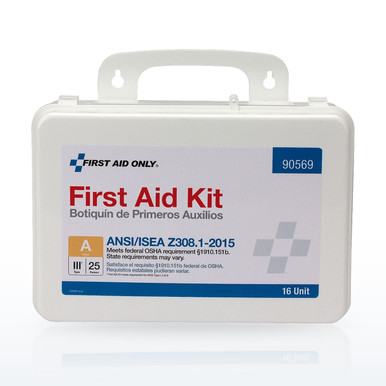
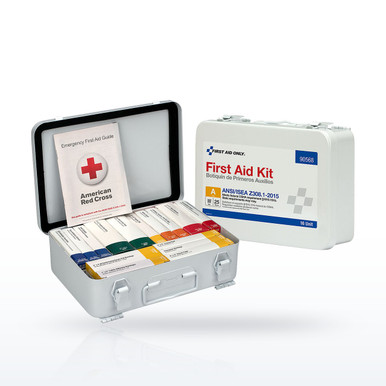
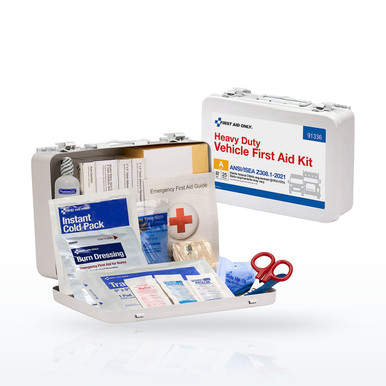
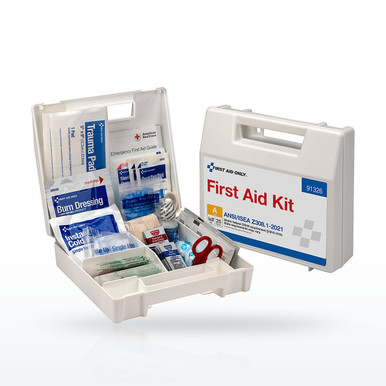
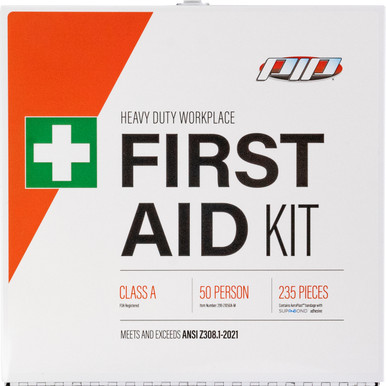
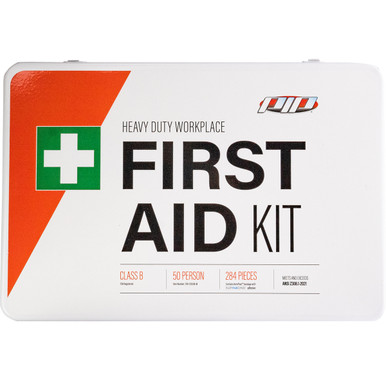
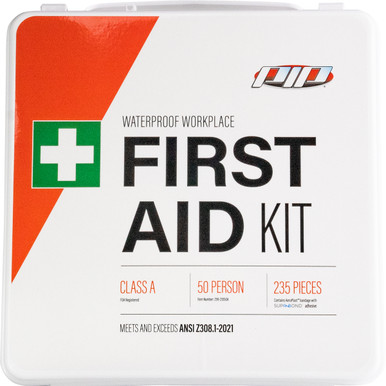
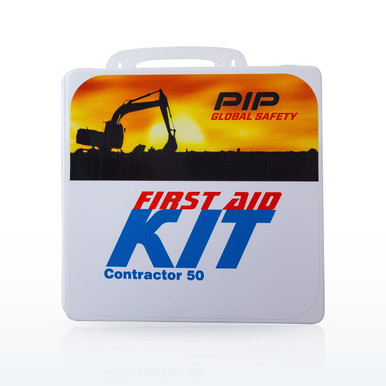
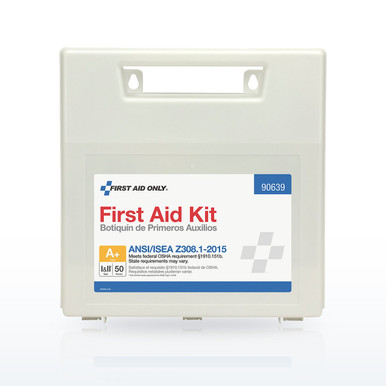
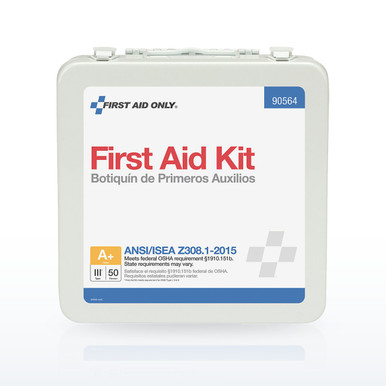
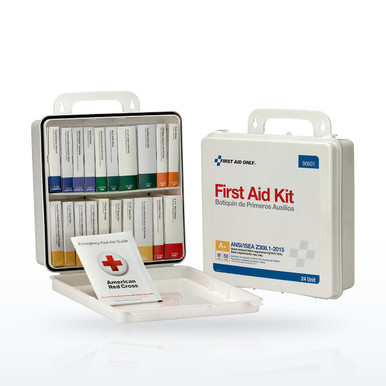
24 items · prices livePerson count and ANSI class are as published by the manufacturer. The count is the maker’s sizing of the fill, not a legal limit; the product page lists the contents. Contractor Direct orders ship free.
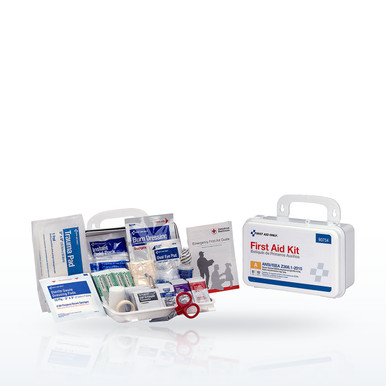
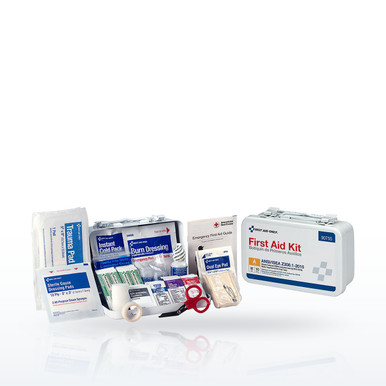
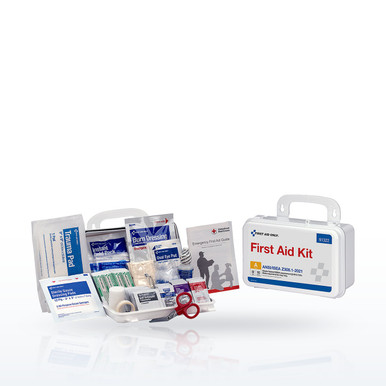
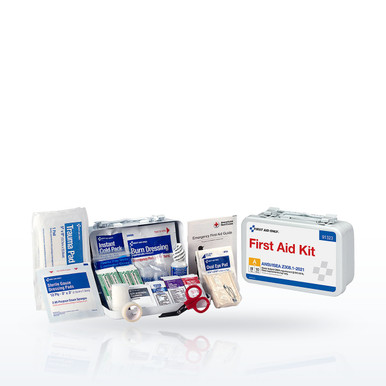
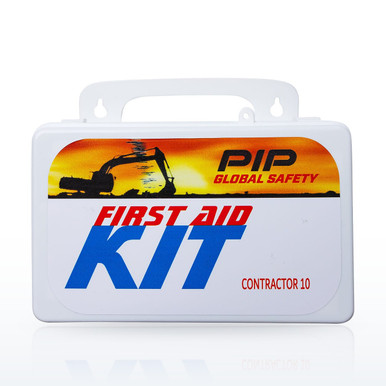
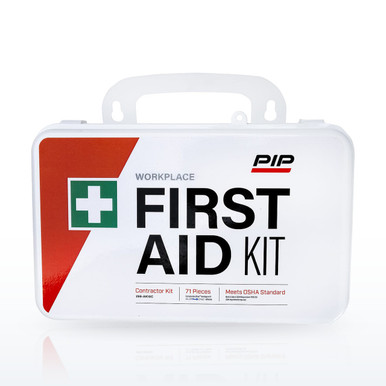
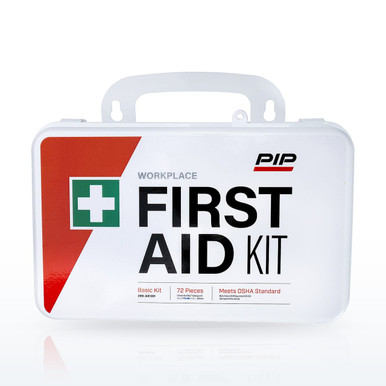

Vehicle kits, refills and bleeding control kits are on the first aid finder.
Questions people ask
How many first aid kits does OSHA require?
OSHA sets no number. 1910.151(b) requires adequate supplies readily available; OSHA’s response-time interpretation (3 to 4 minutes for serious hazards, up to 15 in an office) and the site layout decide how many that takes.
Is one first aid kit per 25 employees a rule?
No. The 10, 25 and 50-person labels are manufacturer sizing of the same ANSI fill. No OSHA or ANSI rule ties the number of kits to head count.
Does every floor need a first aid kit?
The rule is readily available. A kit on another floor rarely meets a 3 to 4 minute response for a serious injury, so in practice each floor and each separate building has one.
Does a work truck need a first aid kit?
On construction, 1926.50(d) requires easily accessible supplies in a weatherproof container, and a crew in a truck away from the shop has no other supplies. For general industry the same readily-available rule applies to a crew in a vehicle.
Where should the first aid kit be mounted?
In a fixed, marked, unlocked spot in the work area, near the hazards, at a height anyone can reach. Not in a locked office or a drawer.
What size kit do I need for 30 employees?
A 50-person kit or a 2-shelf cabinet for a group of 30 in one area, Class A or Class B by hazard. If the 30 are spread across floors or buildings, more than one smaller kit.
Does the eyewash bottle in the kit count as an eyewash station?
No. Where corrosives are used, 1910.151(c) requires facilities for quick drenching or flushing in the work area. The kit bottle is for rinsing a speck, not a chemical splash.
Related guides
OSHA first aid kit requirementsWhat 1910.151 and ANSI Z308.1 requireType I, II, III and IV first aid kitsThe container ratingsFirst aid kits for vehicles and crewsWhat 1926.50 requires on a jobsiteWho is a first aid provider under OSHA?When a trained responder is requiredWhat is an eyewash station?When OSHA requires oneStandards and ratings on this page are as published in the documents named and by the manufacturers named. The employer’s hazard assessment and written program decide what applies at a given workplace. Verify a rating on the product and its spec sheet before use.