
Floor marking colors: what OSHA requires and the common standard
OSHA requires that permanent aisles and passageways be appropriately marked. It does not say what color or how wide; an OSHA letter of interpretation says any color that clearly defines the aisle, and any width of 2 inches or more. The only colors OSHA assigns are in the safety color code: yellow for caution and physical hazards such as tripping, striking against and caught-in-between, and red for fire protection equipment, danger and emergency stops. Everything else, white for equipment, blue for materials, red and white stripes for keep-clear zones, is an industry convention published by tape manufacturers, not a regulation. A plant can use any scheme as long as it is consistent and employees are trained on it.
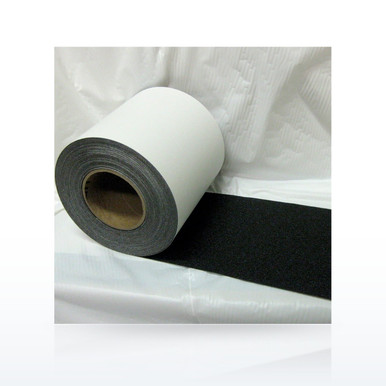
 Brady ToughStripe floor marking tape, 2 in x 100 ftPolyester, forklift-rated as published by Brady; yellow, white, blue or yellow/black
Why is there so little in the rule? OSHA’s walking-working surface and materials handling rules were written for every kind of workplace, from a bakery to a steel mill, so they say what the result must be, a marked aisle, and leave the method open. The color scheme most plants use grew out of lean and 5S programs, where the floor is organized so that anyone can see at a glance where to walk, where product goes and what to keep clear. Tape manufacturers wrote those schemes down, and they became the common standard. The two colors OSHA does fix, yellow and red, are the ones that carry over from the safety color code for signs and equipment.
What does OSHA require?
The three rules that apply to a floor, and the one letter that fills in the width and color.
What is the common floor marking color scheme?
| Color | What it marks | Where it comes from |
|---|---|---|
| Yellow | Aisles, traffic lanes, walkways and work cell boundaries | OSHA 1910.144 caution color; industry convention |
| White | Equipment and fixtures not otherwise color coded: workstations, racks, carts, benches | Industry convention |
| Blue, green or black | Materials and components: raw material, work in progress, finished goods | Industry convention |
| Orange | Material or product held for inspection | Industry convention |
| Red | Defects, scrap, rework and red-tag areas; fire equipment zones | OSHA 1910.144 fire and danger color; industry convention |
| Red and white stripes | Areas to keep clear for safety or compliance: in front of electrical panels, eyewash stations, fire extinguishers | Industry convention; the clearances themselves are in 1910.303(g) and NFPA 10 |
| Black and white stripes | Areas to keep clear for operational reasons, not safety | Industry convention |
| Yellow and black stripes | Areas that may expose employees to a physical or health hazard: pinch points, dock edges, low clearance | OSHA 1910.144 caution color; industry convention |
| Photoluminescent | Egress paths and stair edges that must be visible when the lights go out | Industry convention; 1910.37(b) requires exits lit and marked |
The scheme is the one published by floor tape manufacturers (Brady’s floor marking guide is the reference used here) and is the convention most lean and 5S programs follow. It is not an OSHA or ANSI requirement. ANSI Z535.1 defines safety colors for signs, and its 2002 edition removed the earlier floor-marking color specifications; Z535.1 states its colors are for safety signage, not floor marking. A plant that uses a different scheme is in compliance as long as aisles are clearly defined and the scheme is taught and used consistently.
Brady, Floor Marking Guide (color standards and 1910.144, 1910.176(a) references); ANSI Z535.1 as summarized by Brady; OSHA 1910.144(a).
How wide should the lines be, and where do they go?
- Width: 2 inches is the OSHA-accepted minimum; 2 inches for pedestrian aisles and 4 inches for forklift aisles is the usual practice because the wider line survives traffic and reads from a seat.
- Aisle width is set by the equipment: enough clearance for the forklift, at loading docks, through doorways and at turns, with nothing stored in the aisle.
- Keep-clear zones: the working space in front of an electrical panel (the depth in Table S-1, at least 30 inches wide), the path to fire extinguishers, and the eyewash station, which ANSI Z358.1 says must be reachable in 10 seconds with no obstructions.
- Dock edges, pit edges and low clearances get the yellow and black hazard stripe; the standard calls these caught-in, striking and falling hazards.
- Tape versus paint: the standard is silent. Polyester or vinyl tape with a forklift-rated adhesive goes down without downtime and can be changed when the layout changes; paint lasts longer under heavy traffic but has to be cured and re-striped.
Does OSHA require floor marking at all?
Only in one place, and conditionally: where mechanical handling equipment such as forklifts is used, permanent aisles and passageways must be appropriately marked. A shop with no powered handling equipment has no explicit floor-marking requirement, though the general duty to keep walking surfaces clear and the exit route rules still apply. Beyond that, floor marking is a method employers choose to meet other rules, such as keeping the electrical working space clear or keeping people out of a swing radius, and once a plant adopts a color scheme, employees must be told what it means.
1910.176(a); 1910.22(a); 1910.37(b); 1910.303(g)(1)(ii) no storage in working space.Floor marking tape by color
10 items · prices liveColor, width, material and traffic rating are as published by the manufacturer; see each product page. Free shipping on orders over $199.


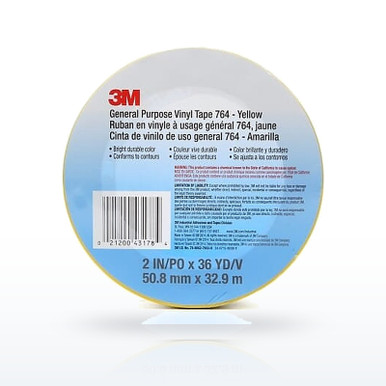

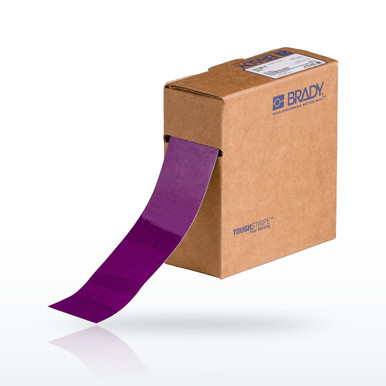
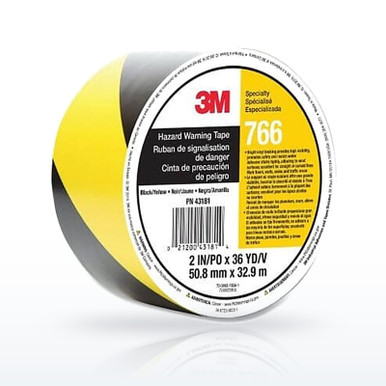
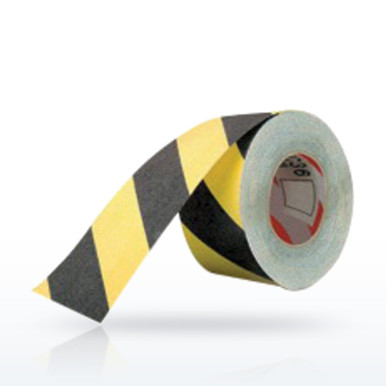

Floor marking shapes (corners, dots, footprints), striping paint and other colors are quoted on request: call (925) 215-7337.
Questions people ask
What color does OSHA require for aisle marking?
None. OSHA requires permanent aisles to be appropriately marked and accepts any color that clearly defines the aisle. Yellow is the convention because 1910.144 makes it the caution color. (1910.176(a); 1972 interpretation.)
How wide do floor marking lines have to be?
At least 2 inches, per an OSHA letter of interpretation; 2 to 6 inches is the usual range.
What does yellow floor tape mean?
Aisles, walkways and work cell boundaries in the common scheme; under OSHA 1910.144, yellow designates caution and physical hazards.
What does red floor tape mean?
Under 1910.144, red is for fire protection equipment, danger and emergency stops. In the common scheme it also marks scrap, defect and red-tag areas, and red and white stripes mark keep-clear zones.
What do yellow and black stripes on a floor mean?
A physical hazard: pinch point, dock edge, low clearance, equipment swing. Yellow is OSHA’s caution color; the stripe is the convention for a hazard rather than an aisle.
What does blue floor tape mean?
Materials and components (raw material, work in progress, finished goods) in the common scheme. OSHA assigns no meaning to blue on a floor.
Is the floor marking color code an OSHA or ANSI standard?
No. It is an industry convention published by tape manufacturers and used in 5S programs. ANSI Z535.1 covers sign colors and states it is not a floor marking standard.
Do I have to mark the area in front of an electrical panel?
OSHA requires the working space to be kept clear and not used for storage (1910.303(g)(1)(ii)); it does not require tape. Red and white striped tape is the common way to show the zone.
Standards and ratings on this page are as published in the documents named and by the manufacturers named. The employer’s hazard assessment and written program decide what applies at a given workplace. Verify a rating on the product and its spec sheet before use.