
What is a leading edge, and why does it need a leading-edge SRL?
A leading edge is the unprotected edge of a floor, roof or deck that moves as the work advances. OSHA requires fall protection at 6 feet for anyone building or working near one. The equipment problem is the anchor: on a deck under construction there is usually nothing overhead, so the self-retracting lifeline is anchored at the worker’s feet, and in a fall the line goes over the edge of the deck. A standard SRL is not tested for that. A leading-edge SRL (ANSI Z359.14 Class 2) is: its line is tested over a sharp steel edge, it carries an energy absorber to take the shock of a longer free fall, and it is labeled for anchorage at foot level.
Why is a fall over an edge different? Under an overhead anchor the SRL locks within inches and the line stays in the air. Anchored at the feet, the worker falls the full distance to the edge before the line even begins to tension, then the line bends over the edge under load. A web or cable line that is not built for it can be cut there, and the extra free fall puts an arresting force on the body that an SRL with no energy absorber is not designed to limit. Those are the two things the Class 2 design and test address.
What does OSHA say about leading edges?
The construction rule, Subpart M.
What do Class 1 and Class 2 mean on an SRL?
ANSI/ASSP Z359.14-2021 replaced the older SRL, SRL-R and SRL-LE types with two classes defined by where the device may be anchored. Class 1: anchorage at or above the dorsal D-ring, overhead work, not tested for edge contact. Class 2: anchorage at, above, or up to 5 feet below the dorsal D-ring, tested for a fall over a sharp edge, and labeled with a fall-clearance table or diagram on the device and in the manual. A Class 2 SRL is what the trade calls a leading-edge SRL. Devices built to the 2021 edition carry the class label; devices built to the 2014 edition were marked LE, and manufacturers list which edition each model meets.
ANSI/ASSP Z359.14-2021, class definitions and labeling; effective August 1, 2023. OSHA does not adopt Z359.14 by reference; it is the industry standard manufacturers certify to.The practical rule: if the anchor is below the D-ring, or the line can touch an edge in a fall, the SRL must be Class 2 (or LE on an older label). Overhead anchor with no edge in the path, Class 1 is sufficient. A Class 2 device can be used overhead; a Class 1 device cannot be used at foot level.
ANSI/ASSP Z359.14-2021, anchorage location by class; manufacturer instructions for each device govern.What makes a leading-edge SRL different to look at?
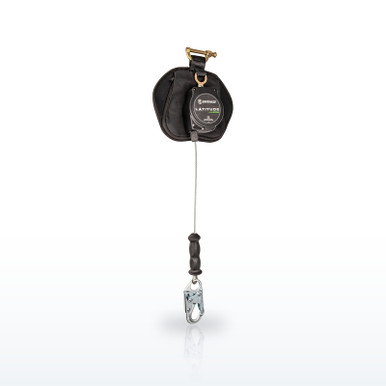
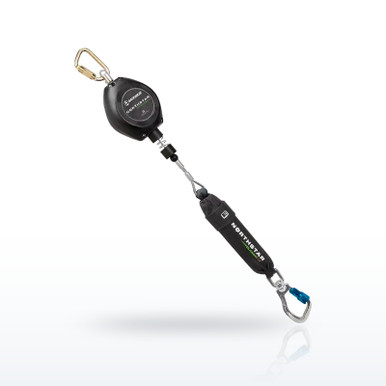
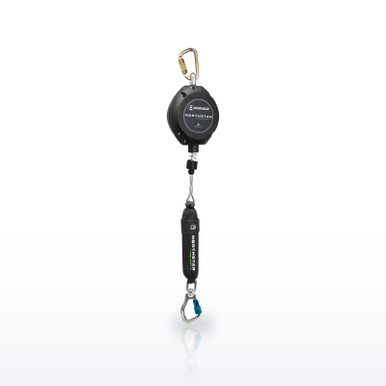
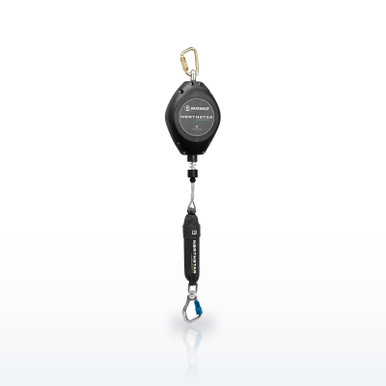
- Galvanized or stainless cable line rather than web, in most models. Some Class 2 web models exist; the label and manual say what the line was tested over.
- An energy absorber, either a pack at the harness end or built into the housing, to limit force on the body after the longer free fall.
- A fall-clearance chart on the device: the distance needed below the edge depends on the setback from the edge and the anchor height, and it is more than for an overhead SRL.
- A Class 2 or LE marking on the label, with the ANSI edition.
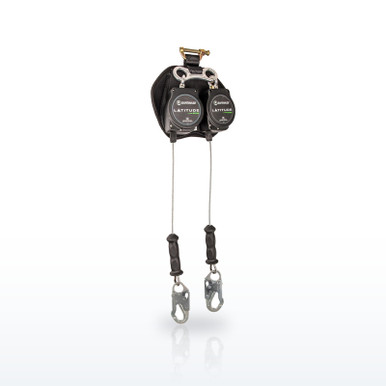
- Twin-leg versions for 100 percent tie-off while moving between anchors on a deck.
What else changes when you tie off at the feet?
Setback. Work as far from the edge as the job allows; a fall from several feet back swings the worker into the edge and lengthens the line over it. Clearance. Read the chart; a 6-foot free fall plus deceleration plus harness stretch plus the lanyard over the edge needs more room than most people estimate, and Subpart M prohibits contact with a lower level. Edge condition. The Class 2 test uses a steel edge of a stated radius; a sharper or abrasive edge (concrete, cut rebar) may need an edge protector or a different anchor placement, per the manufacturer. Inspection after a fall over an edge: remove from service.
29 CFR 1926.502(d)(16)(iii); ANSI/ASSP Z359.14-2021 sharp-edge test; manufacturer user instructions.Leading-edge (Class 2) self-retracting lifelines
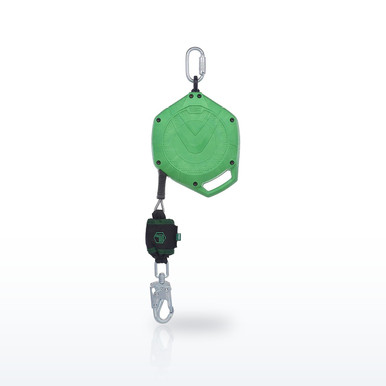
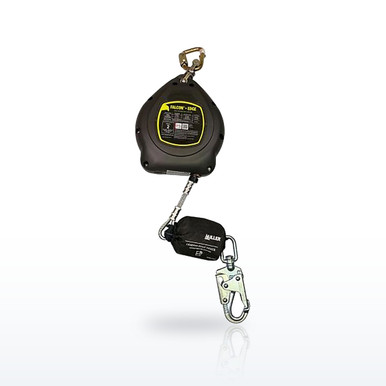
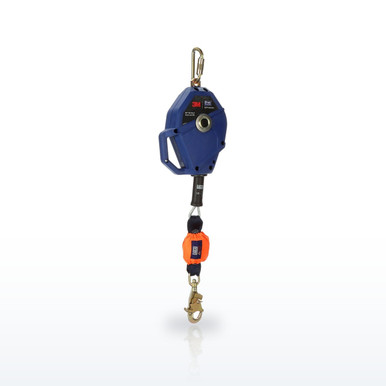
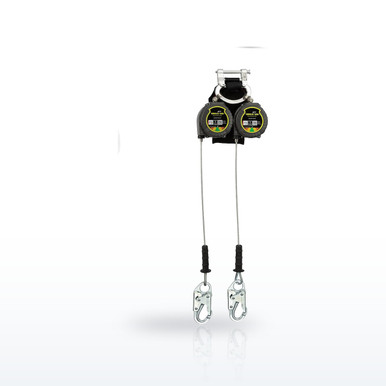
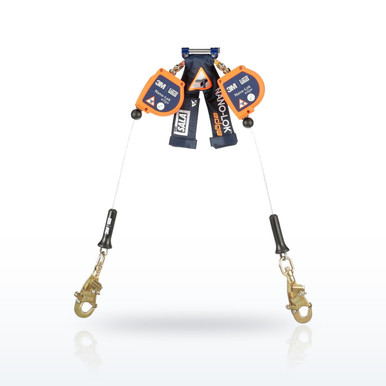
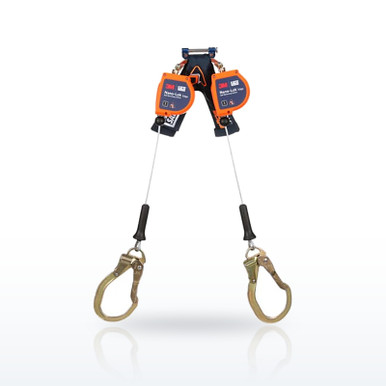
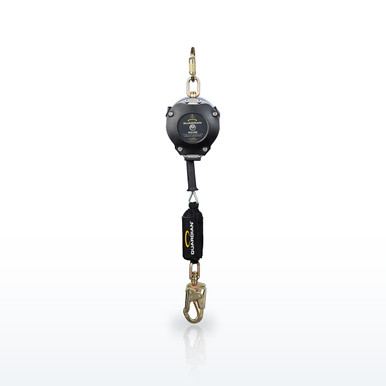
12 items · prices liveClass and ANSI edition are as stated on each manufacturer’s spec sheet. Line length and connector type are on the product page. Contractor Direct orders ship free.
Harnesses, anchors and standard overhead SRLs are in the fall protection finder.
Questions people ask
What is a leading edge in OSHA terms?
The edge of a floor, roof, formwork or other walking surface that changes location as more sections are placed. When not actively under construction it is an unprotected side or edge.
What is a leading-edge SRL?
A self-retracting lifeline tested for a fall over a sharp edge with the anchor below the D-ring: ANSI Z359.14-2021 Class 2, marked LE on older labels.
Can I use a regular SRL anchored at my feet?
No. A Class 1 SRL is tested for overhead anchorage only. Foot-level anchorage requires a Class 2 device.
How much clearance does a leading-edge SRL need?
More than an overhead SRL; the exact distance is on the fall-clearance chart the standard requires on every Class 2 device, and depends on setback and anchor height.
Does OSHA require Class 2?
OSHA requires that the system limit force and free fall and not let the worker hit a lower level (1926.502(d)(16)). The Class 2 test is how manufacturers show an SRL can do that over an edge; OSHA does not cite Z359.14 by number.
What happened to Class A and Class B?
Those were 2014-edition performance classes for arrest distance. The 2021 edition dropped them; Class 1 and Class 2 now refer to anchorage location.
Standards and ratings on this page are as published in the documents named and by the manufacturers named. The employer’s hazard assessment and written program decide what applies at a given workplace. Verify a rating on the product and its spec sheet before use.