
What is a carabiner and a snap hook, and what does the 3,600-pound gate rating mean?
A carabiner and a snap hook are the connectors that join the parts of a fall protection system: the hook on the end of a lanyard, the link between a lifeline and an anchor. OSHA requires both to have a minimum breaking strength of 5,000 pounds and to be proof-tested to 3,600 pounds, and requires the gate to close and lock by itself so it cannot be opened by accident. ANSI Z359.12 goes further and requires the gate itself to hold 3,600 pounds in every direction, which is the number stamped on modern connectors.
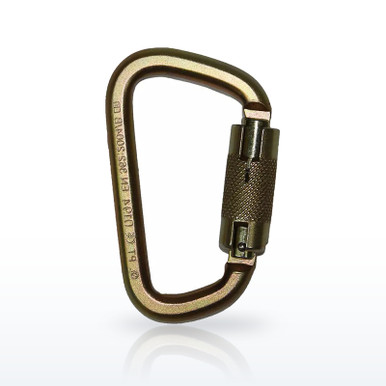
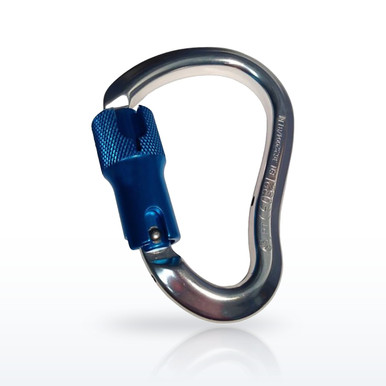
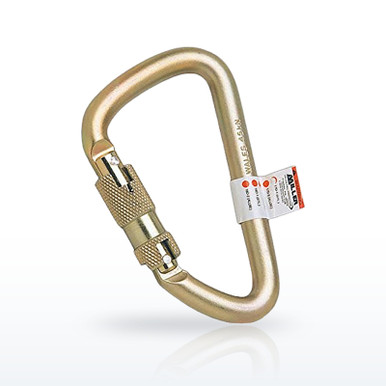 Miller 17D-1 Specialty, Double-Action Twist-Lock Carabiner, SteelSteel carabiner, 3,600 lb gate, auto-locking
Why do the gate and the strength matter? Falls have been caused not by a connector breaking but by its gate opening: a hook twisted against a D-ring until the gate pressed open and the hook slid off, called roll-out. The old 220-pound gate ratings allowed it. The 3,600-pound gate rating and the self-locking requirement exist so that the one piece of the system that opens and closes cannot be the piece that fails.
What does OSHA require of a snap hook or carabiner?
The numbers below are the OSHA floor; ANSI Z359.12 adds to them.
What is the difference between a carabiner and a snap hook?
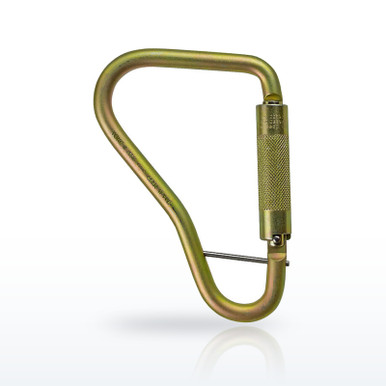
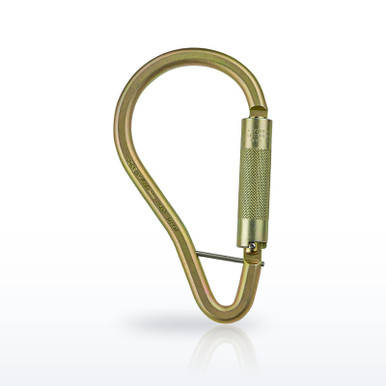
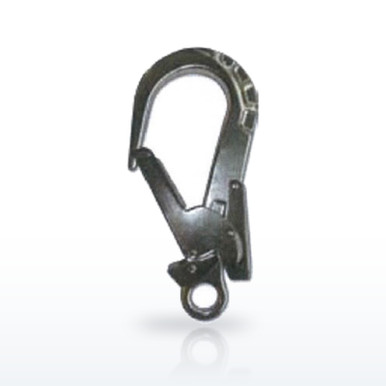
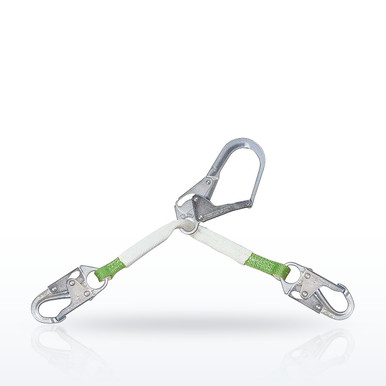
A snap hook is a hook with a spring-loaded gate across its mouth; it is the connector sewn onto the end of most lanyards and lifelines, and it is made to clip into a D-ring. A carabiner is a closed loop with a gate on one side; it is used where two things need to be joined by hand, such as a lanyard to an anchor strap, a lifeline to an anchor, or in rescue and positioning. Both do the same job of connecting, and both must meet the same strength and gate rules. A rebar hook is a large snap hook with a wide throat made to go around rebar or pipe.
ANSI/ASSP Z359.12-2019 definitions; 1926.502(d)(5) and (d)(6).What does ANSI Z359.12 add to the OSHA rules?
Z359.12 is the connector standard in the Z359 fall protection code. It requires the gate to withstand 3,600 pounds applied to its face and to its side, and a minor-axis load without opening, which is why connectors made since 2007 carry a “3,600 lb” gate marking. It requires self-closing, self-locking gates on every connector, sets the 5,000-pound minimum breaking strength, requires markings (manufacturer, model, gate strength, standard), and requires a captive-eye or swivel design where the manufacturer specifies one. OSHA does not adopt Z359.12 by reference, but the Z359 code is what manufacturers build to and what OSHA cites as an industry-recognized standard.
ANSI/ASSP Z359.12-2019 sections 3 (design: gate face and side loads 3,600 lbf, minor-axis) and 4 (marking); OSHA letters of interpretation citing the Z359 series.What is roll-out, and how do the rules prevent it?
Roll-out happens when a snap hook is loaded against a D-ring at an angle, so the D-ring presses on the gate and levers it open, and the hook slides free under load. The fixes are the self-locking gate (the gate cannot open without the lock being pressed first), the 3,600-pound gate strength (the gate does not deflect open under a side load), and the rule against hooking a snap hook to anything it was not designed for, including another snap hook or an undersized or oversized ring.
1926.502(d)(5) and (d)(6); ANSI/ASSP Z359.12-2019 section 3.How do you inspect a connector?
- Gate action. Open and release; the gate must snap closed and lock on its own, every time, with no sticking. A gate that stays open or closes slowly fails.
- Lock. With the gate closed, press on it; it must not open without the lock being operated first.
- Body and nose. Look for cracks, deep nicks, bending, corrosion, and wear at the nose where the gate seats.
- Rivets and springs. Loose rivets, a weak spring, or a gate that rattles side to side means retire it.
- Markings. Manufacturer, model and gate strength must be legible; an unmarked connector cannot be verified.
- After a fall. Any connector that has arrested a fall is removed from service, with the rest of the system, until the manufacturer or a competent person clears it.
Which connector goes where?
- Lanyard to harness dorsal D-ring: the lanyard’s snap hook, into the D-ring only.
- Lanyard or SRL to an anchor: the connector the anchor is designed for; a carabiner to a certified anchor eye or strap D-ring; a rebar hook around a bar or pipe the manufacturer’s instructions allow.
- Vertical lifeline to anchor: carabiner or snap hook to a rated anchorage connector, never tied or wrapped.
- Never: hook to hook, hook to webbing loop unless it is a sewn loop designed for it, two hooks in one D-ring, or a snap hook on a horizontal lifeline.
Carabiners, snap hooks and rebar hooks
17 items · prices liveEvery connector shown is published by its manufacturer as meeting ANSI Z359.12 and the OSHA 1926.502 strength requirements; the gate rating and material are on the product page. Free shipping on orders over $199.
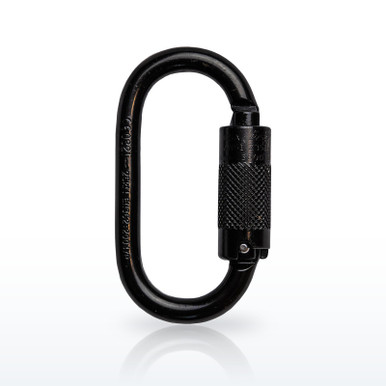
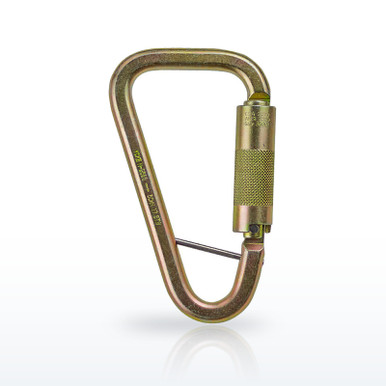
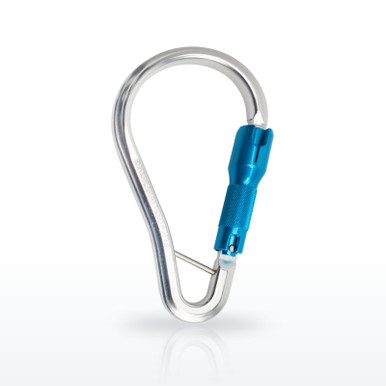
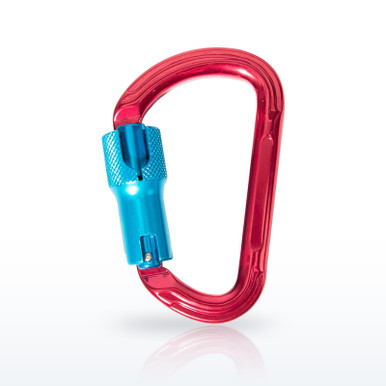
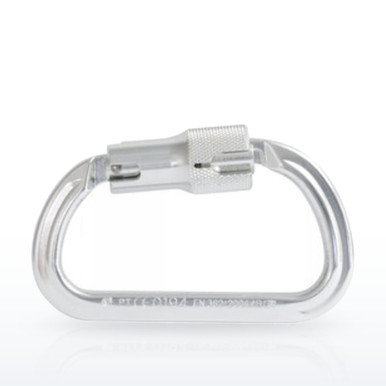
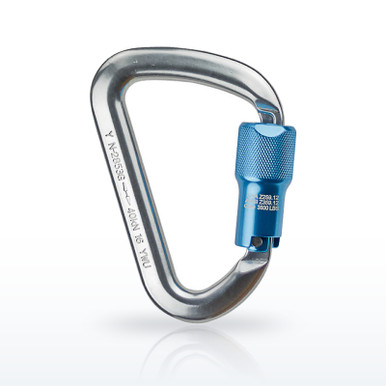
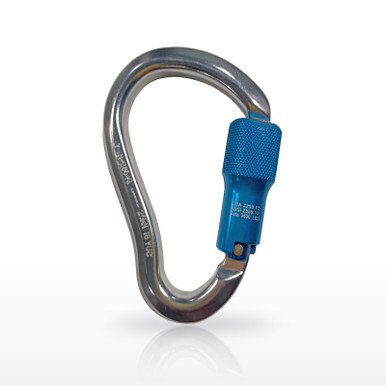
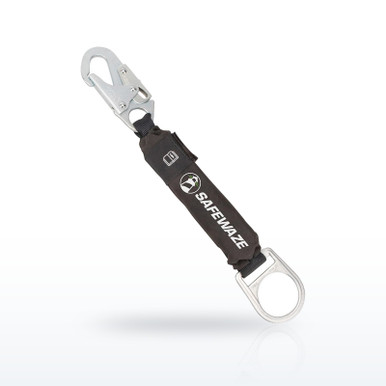
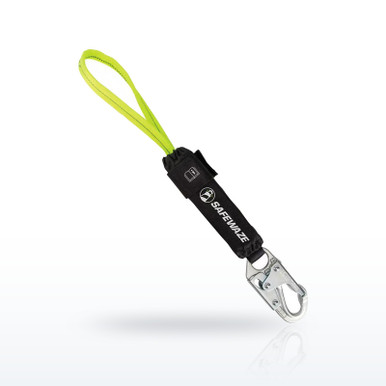
Lanyards and self-retracting lifelines with these connectors already attached are on the fall protection finder.
Questions people ask
What is the 3,600 lb rating on a carabiner?
The gate strength: the gate holds 3,600 pounds applied to its face or side without opening, per ANSI Z359.12, and the connector is proof-tested to 3,600 pounds per OSHA 1926.502(d)(4). Breaking strength is a separate number, 5,000 pounds minimum.
What is a carabiner used for in fall protection?
To connect parts of the system by hand: a lanyard or SRL to an anchor, a lifeline to an anchor, or in rescue and positioning rigs. It must be rated, self-closing and self-locking.
Can two snap hooks be connected to each other?
No. OSHA prohibits hooking snap hooks to each other, to webbing or rope, or into a D-ring already occupied by another connector, unless the hook is designed for it. (1926.502(d)(6).)
Are non-locking snap hooks allowed?
Not in a personal fall arrest system. Since January 1, 1998 only locking-type snap hooks may be used. (1926.502(d)(5).)
What is a rebar hook?
A large-throat locking snap hook designed to close around rebar or pipe. It still needs the same ratings, and the manufacturer’s instructions say what it may be hooked around.
How big should the carabiner gate be?
Big enough to close fully around the anchor eye or D-ring it is used with, with the lock engaged. A gate that is forced over an oversized ring can be levered open. Match the connector to the anchor.
What is a captive-eye carabiner?
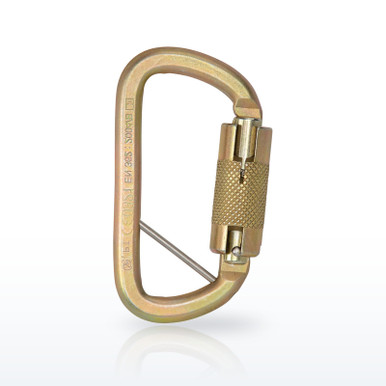
One with a pin or bar across the eye end so a lanyard or SRL cannot slide around the body and load the gate; the Z359.12 standard covers them.
Standards and ratings on this page are as published in the documents named and by the manufacturers named. The employer’s hazard assessment and written program decide what applies at a given workplace. Verify a rating on the product and its spec sheet before use.