
Lockout vs tagout: when a tag alone is allowed
A lock physically keeps the breaker, switch or valve from being operated. A tag only warns; anyone can still move the switch. That is why OSHA requires lockout wherever the energy-isolating device can take a lock. A tag alone is allowed in exactly two cases: the device cannot be locked out, or the employer can show that its tagout program gives protection equal to a lock, which means adding another measure such as pulling a fuse, removing a valve handle, blocking the switch or opening a second disconnect. Since January 2, 1990, any new, replaced or overhauled machine must be built so it can be locked. In practice a lock and a tag go on together; the tag identifies the worker and says do not operate.
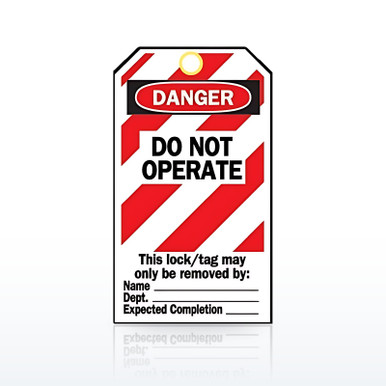
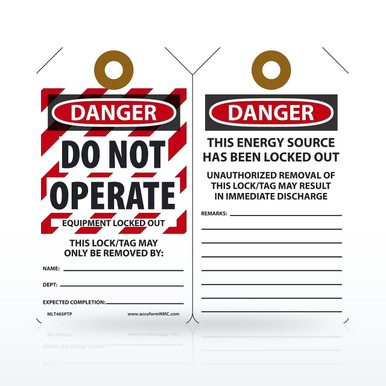
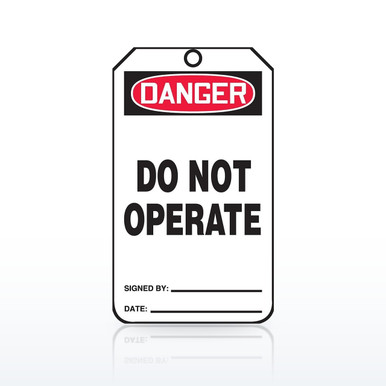
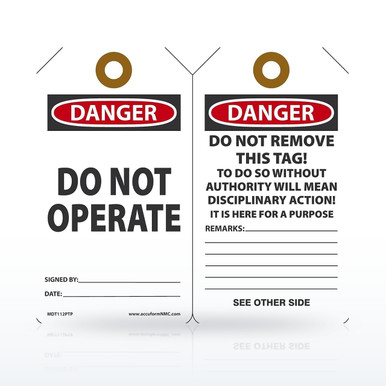
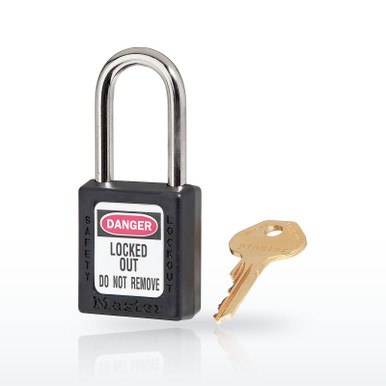
 Master Lock 497A Danger Do Not Operate tagsHeavy-duty tag, 80 lb pull-out as published by Master Lock, brass grommet fits a safety padlock
Why does OSHA treat a tag as weaker than a lock? The standard says it outright: tags are warning devices and do not provide the physical restraint a lock does, and they can give a false sense of security. A tag can be missed, misread, ignored or knocked off. A lock cannot be operated around without bolt cutters. So the rule is written as a hierarchy: lock where you can; tag alone only where you cannot or where you have added something that makes the tag as good as a lock, and then train and inspect harder.
When may a tag be used without a lock?
The two cases in 1910.147(c)(2), and what each one requires.
What is the difference between a lockout device and a tagout device?
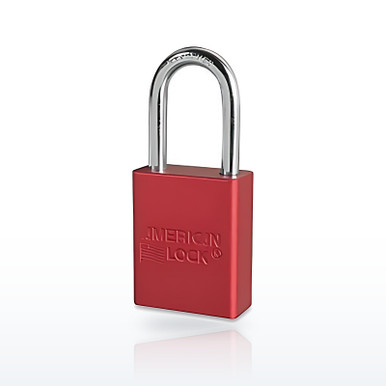
A lockout device uses a positive means, a key or combination lock, to hold the energy-isolating device in the safe position so the equipment cannot be operated until the lock is removed; blank flanges and bolted slip blinds count. A tagout device is a prominent warning tag with an attachment, fastened to the isolating device to indicate that it and the equipment may not be operated until the tag is removed. The lock prevents; the tag indicates. Both have to be durable, standardized within the facility, substantial, and identify the worker who applied them.
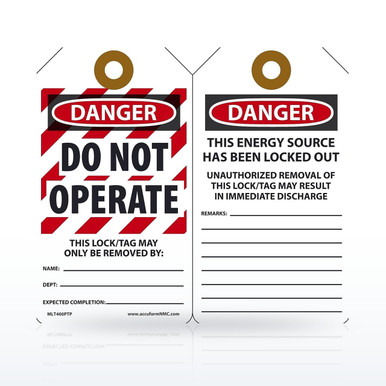
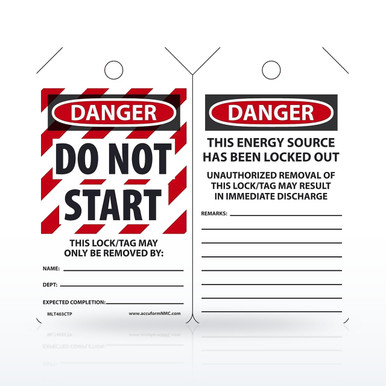
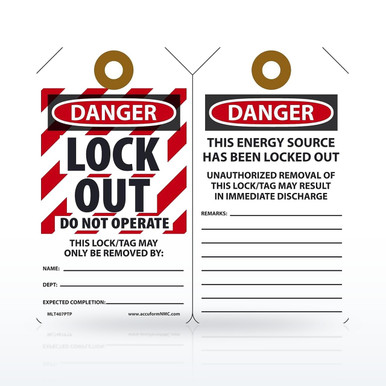
1910.147(b) definitions of lockout device and tagout device; (c)(5)(ii)(A) through (D).The attachment is part of the tag. It must be non-reusable, attachable by hand, self-locking, non-releasable, and hold at least 50 pounds, equivalent to a one-piece all-environment nylon cable tie. A tag on a piece of string does not meet the standard. The tag itself must stay legible in wet, damp and corrosive conditions and must carry a legend such as Do Not Start, Do Not Open, Do Not Close, Do Not Energize or Do Not Operate.
1910.147(c)(5)(ii)(C)(2) attachment means; (c)(5)(ii)(A)(2) and (3) weather and corrosive environments; (c)(5)(iii) legend.What extra does a tagout program have to do?
- Place the tag where the lock would go, or as close as safely possible and immediately obvious to anyone trying to operate the device.
- Train employees on the limitations of tags: that they are warnings and not restraints, may not be removed without the authorized person’s permission, must never be bypassed or defeated, must be legible to everyone in the area, must withstand the environment, may evoke a false sense of security, and must be attached so they cannot come off accidentally.
- Include affected employees, not just authorized ones, in the annual inspection review where tagout is used.
- Demonstrate, in the written program, the additional measures that make the tagout equivalent to a lock.
Why do most programs use a lock and a tag together?
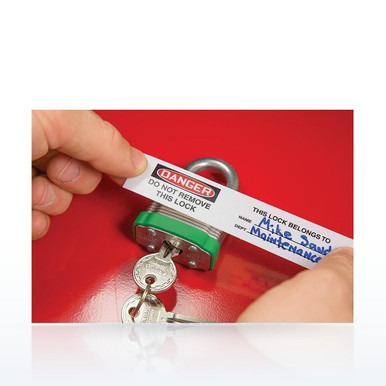
Because each does something the other cannot. The lock stops the switch from moving. The tag tells the person standing at the switch whose lock it is, why it is there and that it may not be removed. The standard requires lockout devices to identify the worker who applied them, and a tag or a labeled lock is how that is done. For electrical work, 1910.333 requires both on each disconnect except in the narrow one-circuit, one-shift case. A lockout tag with a grommet that fits the padlock shackle lets the two go on as one unit.
1910.147(c)(5)(ii)(D) identifiable; 1910.333(b)(2)(iii)(A) and (E).Construction has a different rule. 1910.147 does not apply to construction; the construction electrical standard, 1926.417, requires tags on deactivated controls and on de-energized equipment at every point where it could be energized, and does not itself require locks. Equipment-specific Part 1926 standards and NFPA 70E add lockout requirements for construction work in practice.
1910.147(a)(1)(ii)(A); 1926.417(a) through (c).Lockout tags, padlocks and tag attachments
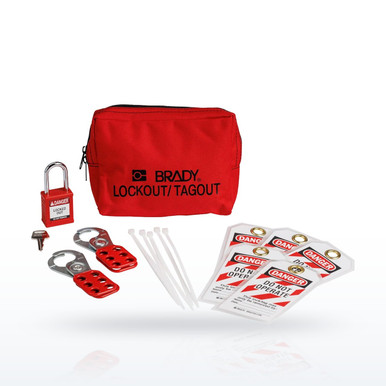
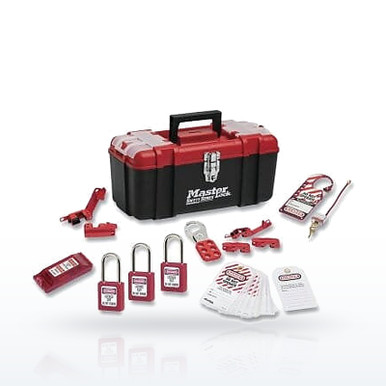
18 items · prices liveTag material, pull-out strength and legend are as published by the manufacturer; the attachment must meet the 50-pound rule in 1910.147(c)(5)(ii)(C)(2). Free shipping on orders over $199.

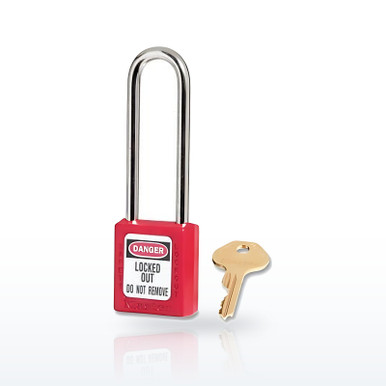
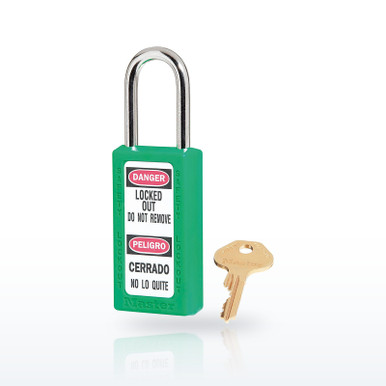
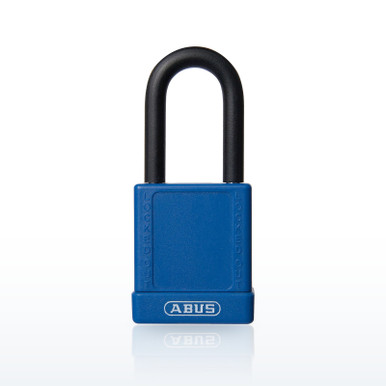
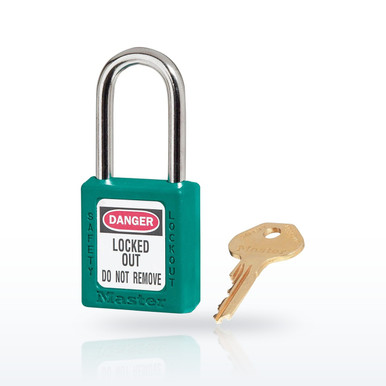
Custom-printed tags, tags by the roll and keyed-alike padlock sets are quoted on request: call (925) 215-7337.
Questions people ask
What is the difference between lockout and tagout?
Lockout puts a lock on the energy-isolating device so it cannot be operated. Tagout puts a warning tag on it saying it may not be operated; nothing physically stops the switch. (1910.147(b).)
When can you use tagout instead of lockout?
Only when the device cannot be locked, or when the employer demonstrates full employee protection by adding measures such as pulling a fuse, removing a valve handle, blocking the switch or opening another disconnect. (1910.147(c)(2) and (c)(3).)
Is tagout alone OSHA compliant?
It can be, in those two cases, with the extra training, the tag placed where the lock would go, and the annual inspection extended to affected employees. Where the device can be locked and no additional measures are in place, a tag alone is a violation.
Does a lock need a tag too?
Under 1910.147 the lock must identify the worker; a tag is the usual way. For electrical work under 1910.333, a lock and a tag are both required except for a single circuit within one shift.
How strong must a lockout tag tie be?
At least 50 pounds, non-reusable, self-locking and attachable by hand, like a nylon cable tie. (1910.147(c)(5)(ii)(C)(2).)
What must a lockout tag say?
A warning such as Do Not Start, Do Not Open, Do Not Close, Do Not Energize or Do Not Operate, and the name of the employee who applied it. (1910.147(c)(5)(iii) and (c)(5)(ii)(D).)
Can anyone remove a tag?
No. A tag may not be removed without the authorization of the authorized person responsible for it, and it is never to be bypassed, ignored or defeated. (1910.147(c)(7)(ii)(B).)
Do new machines have to be lockable?
Yes. Since January 2, 1990, new, replaced or overhauled equipment must have energy-isolating devices designed to accept a lockout device. (1910.147(c)(2)(iii).)
Standards and ratings on this page are as published in the documents named and by the manufacturers named. The employer’s hazard assessment and written program decide what applies at a given workplace. Verify a rating on the product and its spec sheet before use.