
The lockout/tagout procedure step by step
Lockout/tagout has two halves, and OSHA fixes the order of both. To lock out: know the energy on the machine, shut it down by its normal controls, open every energy-isolating device, put your lock and tag on each one, release stored energy, then try the start button to prove it is dead. To restore: clear tools and people, tell the affected employees, and remove your own lock. The lock is personal: one worker, one lock, one key, and only the person who applied it takes it off. The employer provides the locks, tags and devices and writes the procedure for each machine.
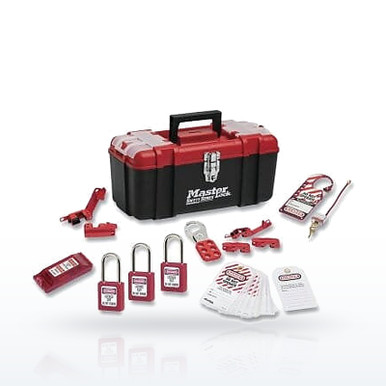 Master Lock 1457E410KA portable lockout kit14 pieces: four Zenex padlocks, hasps, breaker and plug lockouts, tags, in a carry case
Why is the order fixed? Each step protects the next one. If the lock goes on before the machine is shut down in an orderly way, the stoppage itself can create a hazard. If stored energy is released before the isolating devices are locked, the machine can re-pressurize or restart. If nobody tries the start button, a wrong breaker or a second feed goes unnoticed until someone is inside the machine. OSHA wrote the steps as a sequence in 1910.147(d) and (e) and requires the employer’s written procedure to follow it.
What has to be in place before anyone locks out?
The standard calls these the energy control program. A lock without the program behind it does not meet the rule.
What are the steps to lock out a machine?
- Prepare. Before anyone turns the machine off, the authorized employee knows from the written procedure what kinds of energy feed it (electrical, hydraulic, pneumatic, mechanical, chemical, thermal), how much, what the hazards are, and how each one is controlled.
- Shut down. Turn the machine off using its own stopping procedure: the stop button, the switch, the valve. An orderly shutdown, so that stopping it does not create a new hazard.
- Isolate. Find and operate every energy-isolating device the machine needs: the circuit breaker, the disconnect switch, the line valve, the blank. Push buttons, selector switches and other control-circuit devices are not isolating devices and cannot be used as one.
- Apply the lock and tag. Each authorized employee puts a lockout device on each isolating device so it is held in the safe or off position, and a tag that says the device may not be operated. Where a tag is used on a device that could have taken a lock, the tag goes at the same point the lock would have.
- Release stored energy. Bleed pressure, block or lower raised parts, let flywheels stop, discharge capacitors, restrain springs. If energy can build back up, keep checking until the work is done.
- Verify. Before any work starts, prove the isolation worked: try the start controls, check gauges or test with a meter. Return the controls to off. Now the machine is locked out and the work can begin.
OSHA’s own sample procedure in Appendix A puts notifying the affected employees first, before preparation, and lists the stored-energy examples: capacitors, springs, elevated machine members, rotating flywheels, hydraulic systems, and air, gas, steam or water pressure. The appendix is a non-mandatory template an employer can fill in for a simple machine.
1910.147 Appendix A, Typical Minimal Lockout Procedure, Sequence of Lockout steps (1) through (8).What are the steps to take the lock off and restart?
- Inspect the machine. Check the work area: tools and non-essential items removed, guards and components back in place and operationally intact.
- Check and notify people. Make sure every employee is clear of the machine or safely positioned, then tell the affected employees the locks are coming off before the machine is started.
- Remove your own lock. Each lock and tag comes off the isolating device by the employee who put it on. Then re-energize.
The one exception: if the worker who applied the lock has left the site, the employer may remove it under a specific written procedure that is part of the program. The employer must verify the worker is not at the facility, make all reasonable efforts to tell them the lock has been removed, and make sure they know before they go back to work. Cutting a lock off without that procedure is a violation.
1910.147(e)(3), exception, elements (i) through (iii).If the machine has to be powered up part way through the job to test or position something, the same release steps are followed in order, the machine is energized for the test, then de-energized and locked out again from the start of the application sequence before work continues.
1910.147(f)(1)(i) through (v).How does a crew lock out the same machine?
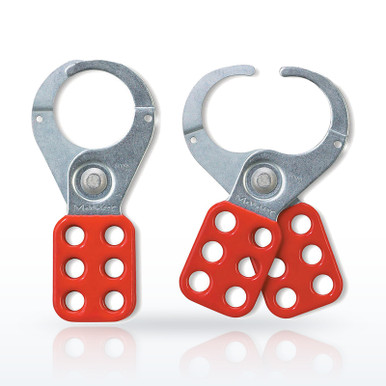
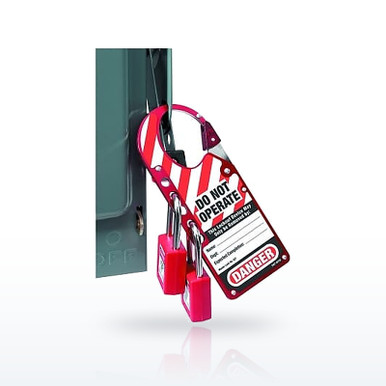
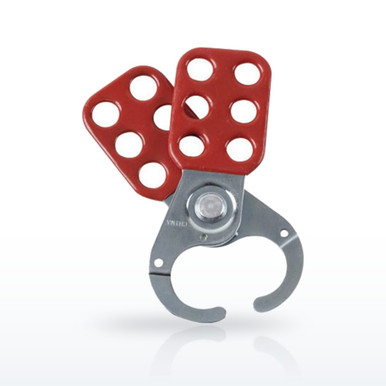
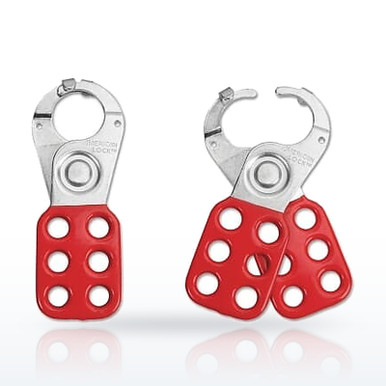
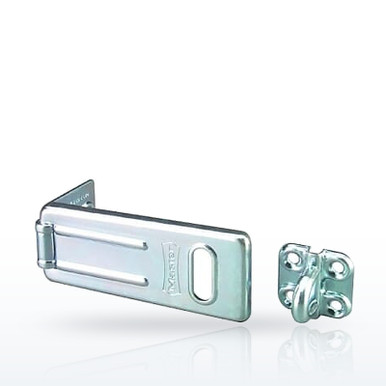
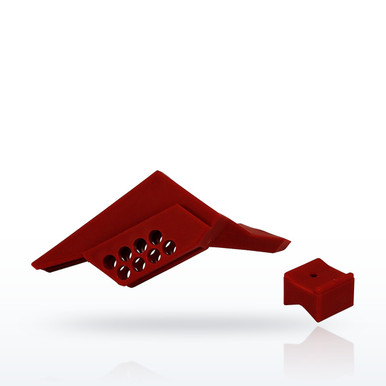
Each worker still puts on a personal lock. The usual hardware is a hasp (a multi-hole clamp that fits over the isolating device and takes several padlocks) or a lock box: the keys to the locks on the isolating devices go in the box, and every crew member puts a personal lock on the box. One authorized employee is responsible for the group and keeps track of who is still exposed. When more than one crew or craft is on the job, one authorized employee is designated to coordinate them. Nobody’s work is unprotected until the last personal lock is off.
1910.147(f)(3)(i) and (ii)(A) through (D): group lockout, primary responsibility, exposure status, coordination between crews, personal device on the group device or lockbox.At a shift change, the outgoing and incoming workers transfer protection in an orderly way so the equipment is never unlocked in between. Outside contractors and the site employer tell each other their lockout procedures before work starts, and the site’s own employees follow the contractor’s restrictions.
1910.147(f)(4) shift or personnel changes; (f)(2)(i) and (ii) outside personnel.What do the lock and the tag have to be?
- Durable: able to stand up to the environment for as long as the lockout lasts. Tags must stay legible in wet, damp and corrosive areas.
- Substantial: a lock that cannot be removed without excessive force or tools such as bolt cutters; a tag attachment that is non-reusable, self-locking, attachable by hand, and holds at least 50 pounds, equivalent to a one-piece nylon cable tie.
- Identifiable: the name of the worker who applied it.
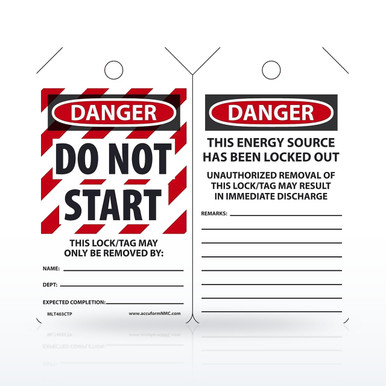
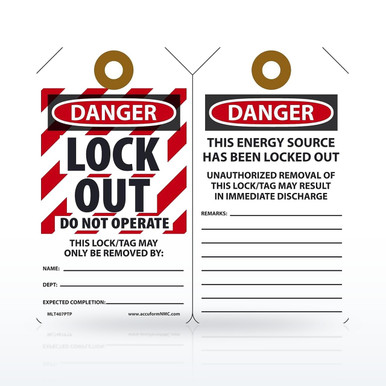
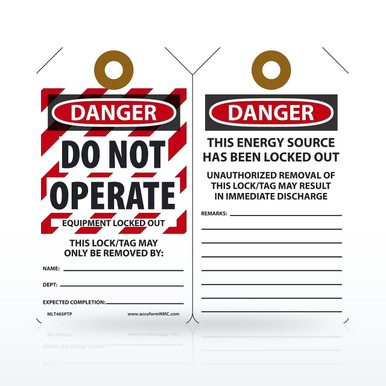
- Tags carry a warning legend such as Do Not Start, Do Not Open, Do Not Close, Do Not Energize or Do Not Operate.
- For electrical work on exposed de-energized parts, 1910.333 requires a lock and a tag on each disconnecting means, and a tag that prohibits unauthorized operation of the disconnect and removal of the tag.
When does a simple machine not need a written procedure?
OSHA allows the employer to skip the written document for a machine only when all eight conditions are met: no stored or residual energy that could endanger anyone, a single energy source that is easy to identify and isolate, isolating that source fully de-energizes the machine, it is locked out during the work, a single lockout device does it, the device is under the exclusive control of the worker, the work creates no hazard for other employees, and the employer has had no accidents from unexpected re-energization of that machine. Miss one condition and the written procedure is required. Cord-and-plug equipment is outside the standard entirely when the plug is unplugged and stays under the exclusive control of the worker doing the job.
1910.147(c)(4)(i), note (exception), conditions (1) through (8); 1910.147(a)(2)(iii)(A) cord and plug equipment.Lockout kits, padlocks, hasps, tags and devices
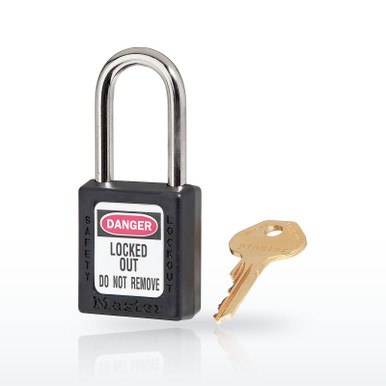
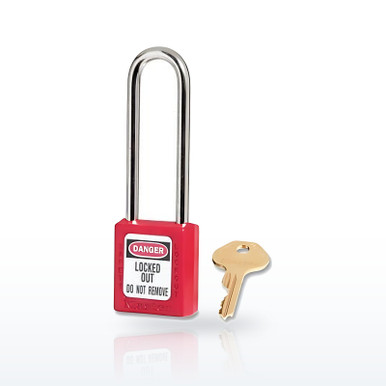
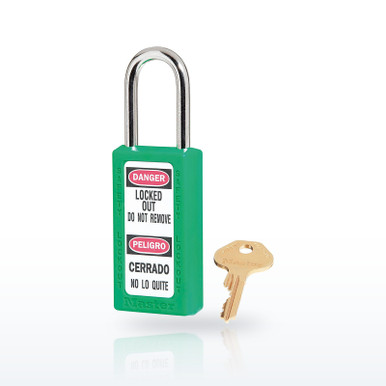
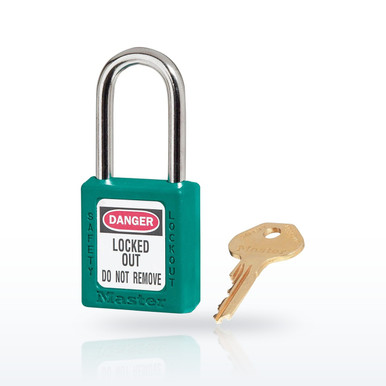
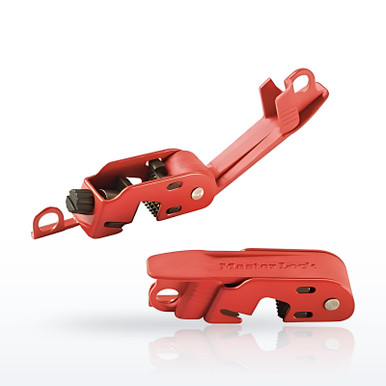
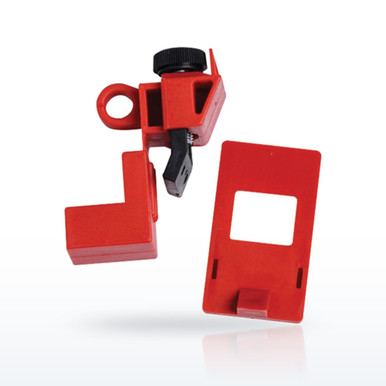
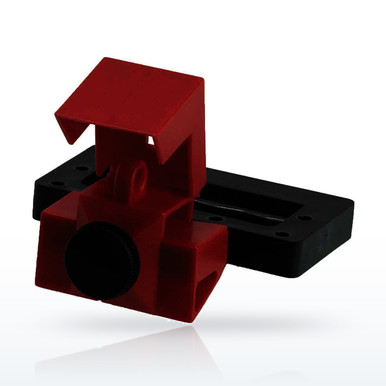
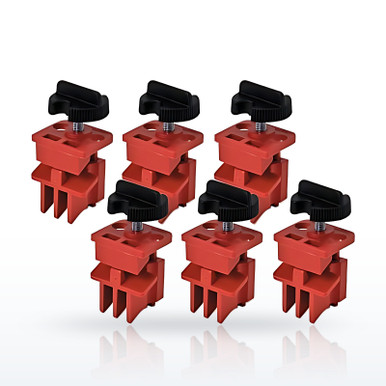
38 items · prices liveItems are described as the manufacturer publishes them. The isolating point on your equipment (breaker size, valve type, plug) decides which device fits; see each product page. Free shipping on orders over $199.

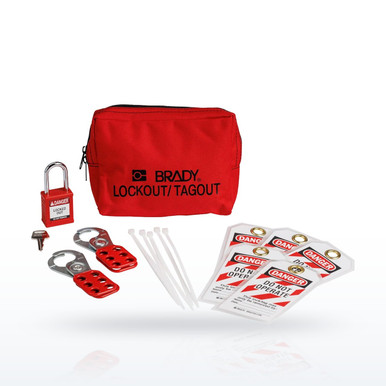
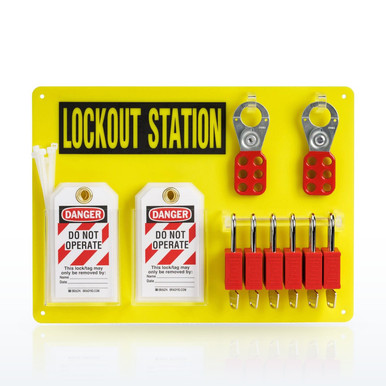
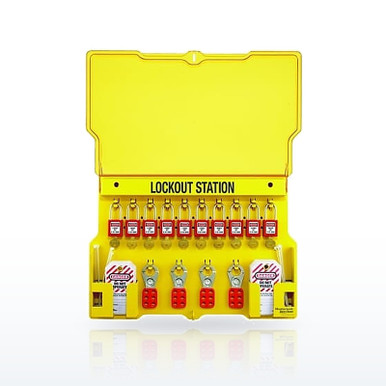









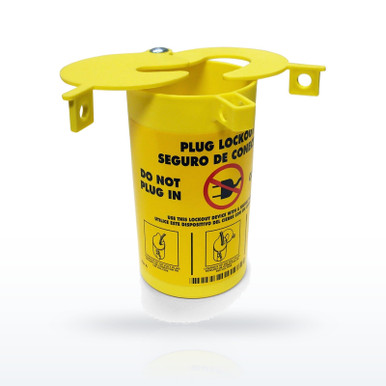
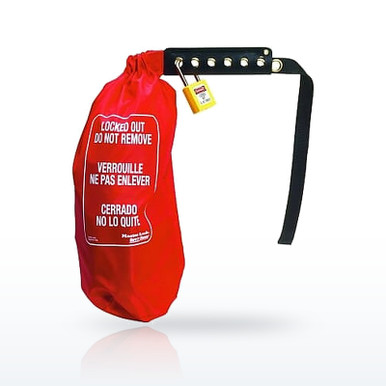
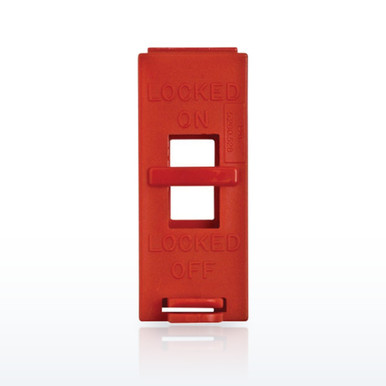
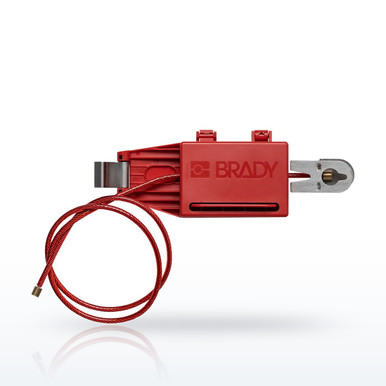


Keyed-alike sets, master-keyed systems and larger lockout stations are quoted on request: call (925) 215-7337.
Questions people ask
What are the 6 steps of lockout/tagout?
Prepare (know the energy), shut down, isolate every energy source, apply locks and tags, release stored energy, and verify by trying the controls. OSHA lists them in that order in 1910.147(d)(1) through (6).
What is the last step before work begins?
Verification: try the start button and test to prove the machine is de-energized, then return the controls to off. (1910.147(d)(6).)
Who can remove a lockout lock?
Only the employee who applied it. If that person has left the site, the employer may remove it under a documented procedure after verifying they are gone and making every reasonable effort to tell them. (1910.147(e)(3).)
Does every machine need its own written lockout procedure?
Yes, unless it meets all eight conditions of the exception in 1910.147(c)(4)(i): single energy source, no stored energy, one lock does it, and so on. Most machines with more than one feed need a written procedure.
How strong does a lockout tag attachment have to be?
At least 50 pounds, non-reusable, self-locking and attachable by hand, like a one-piece nylon cable tie. (1910.147(c)(5)(ii)(C)(2).)
Can I use the stop button as my lockout?
No. Push buttons, selector switches and control circuits are not energy-isolating devices. The lock goes on the breaker, disconnect or valve. (1910.147(b), definition of energy isolating device.)
How often is the lockout procedure inspected?
At least annually, by an authorized employee who is not the one using the procedure, with a written certification naming the machine, the date, the employees and the inspector. (1910.147(c)(6).)
Does 1910.147 apply to construction?
No. Construction is excluded from 1910.147; electrical lockout on construction sites is in 1926.417, and the equipment-specific rules in Part 1926 apply. (1910.147(a)(1)(ii)(A).)
Standards and ratings on this page are as published in the documents named and by the manufacturers named. The employer’s hazard assessment and written program decide what applies at a given workplace. Verify a rating on the product and its spec sheet before use.