
What color codes does OSHA require? Red, yellow and the ANSI Z535 colors
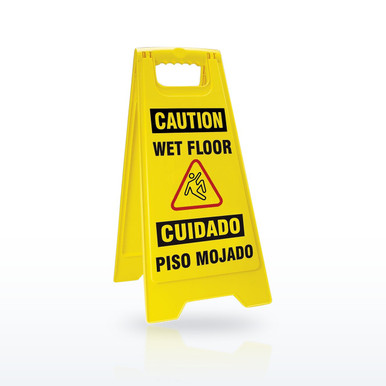
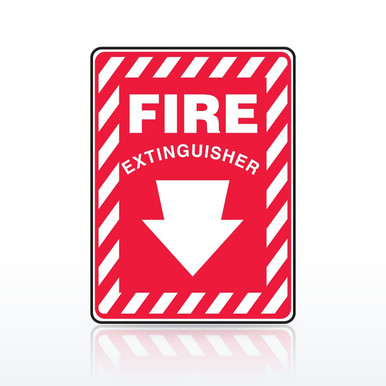
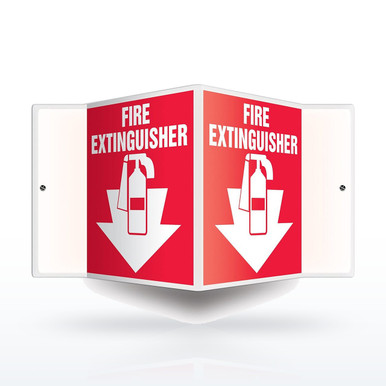
OSHA mandates two colors by name. Red is the basic color for fire protection equipment, for danger, and for stop: danger signs are painted red, emergency stop bars and stop buttons are red, and flammable-liquid safety cans are red with a yellow band or yellow lettering. Yellow is the basic color for caution and for marking physical hazards such as striking against, stumbling, falling, tripping and caught-in-between. The sign standard then fixes the color scheme for each sign class: danger signs in red, black and white; caution signs with a yellow background and black panel; safety instruction signs with a white background and green panel. Orange for warning, blue for notice and green for safety come from ANSI Z535, which OSHA names as the color reference.
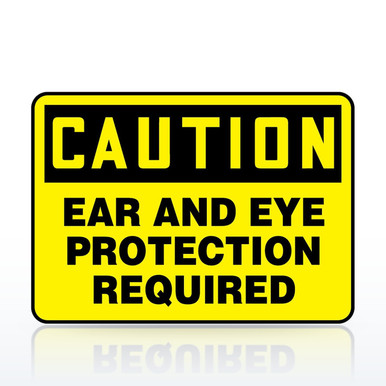 Accuform MPPA608VA caution sign, ear and eye protection requiredYellow background, black panel, aluminum, 10 x 14 in; listed by Accuform to 1910.145 and ANSI Z535
Why does OSHA fix the colors at all? A sign is read in a fraction of a second, usually from a distance and often before the words are legible. The color is the first message: red means something here can kill you right now, yellow means watch your footing or your hands. That only works if every facility uses the same colors the same way, which is why the color code is a regulation and not a style choice, and why the sign rule says all new and replacement signs must follow it.
Which colors does OSHA require, and where?
Everything in 1910.144 fits on one card each. Nothing else in the general industry standards assigns a color to a hazard class.
What does each sign class mean?
OSHA classifies signs by use, and requires employees to be instructed in what each class means. Danger signs warn of specific dangers and radiation hazards: employees are instructed that a danger sign indicates immediate danger and that special precautions are necessary. Caution signs are used only to warn against potential hazards or to caution against unsafe practices: employees are instructed that caution indicates a possible hazard against which proper precaution should be taken. Safety instruction signs are for general instructions and suggestions about safety measures. The wording should be concise, positive rather than negative, and accurate in fact.
1910.145(c)(1), (c)(2) and (c)(3); 1910.145(e)(2).The physical sign has to have rounded or blunt corners, no sharp edges, burrs or splinters, and fasteners placed so they are not a hazard. The rule applies to all signs except those for streets, highways and railroads, and it does not apply to bulletin boards or safety posters.
1910.145(d)(1); 1910.145(a)(1).What are the ANSI Z535 colors, and are they required?
- ANSI Z535 is the private standard OSHA points to for the color values. The 1910.145 color paragraphs name ANSI Z535.1-2006(R2011) Table 1 as the source for the red, black, white, yellow and green of danger, caution and safety instruction signs, so those values are the legal ones. The rest of the Z535 series (Z535.2 facility signs, Z535.4 product labels, Z535.5 tags and barricade tape) is not incorporated into 1910.145, but it is the format every major sign maker uses and OSHA has accepted Z535-format signs as meeting the standard.
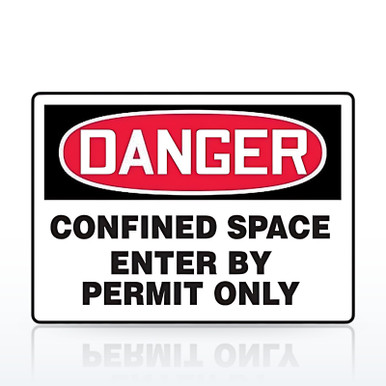
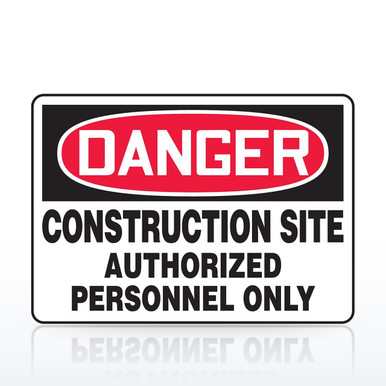
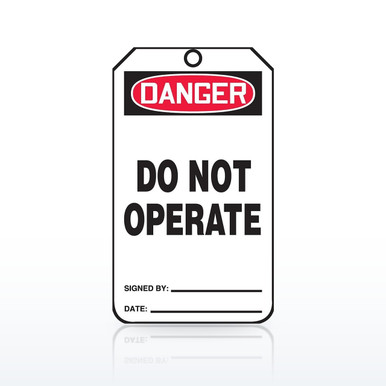
- DANGER: white letters on a red header. In Z535, a hazard that will result in death or serious injury if not avoided. Matches the OSHA danger class.
- WARNING: black letters on an orange header. A hazard that could result in death or serious injury. OSHA has no warning sign class; a warning tag is allowed under 1910.145(f)(7) in place of a caution tag.
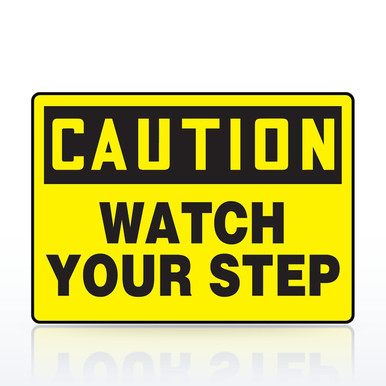
- CAUTION: black letters on a yellow header. A hazard that could result in minor or moderate injury. Matches the OSHA caution class.
- NOTICE: white letters on a blue header. Information that is not hazard-related, such as policy or procedure. Not an OSHA sign class.
- Safety green: green header, white letters, for safety instructions and the location of safety equipment such as first aid, eyewash and exits. Matches the OSHA safety instruction class, white with a green panel.
- The safety alert symbol, a triangle with an exclamation mark, goes beside DANGER, WARNING and CAUTION on a Z535 sign to show the hazard is to people; it is not used with NOTICE.
What colors do accident prevention tags use?
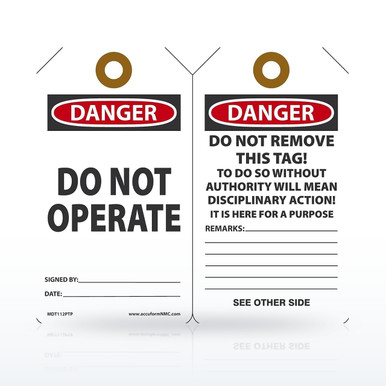
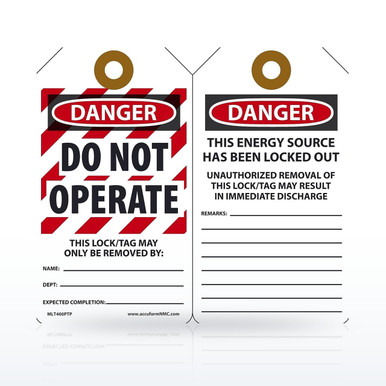
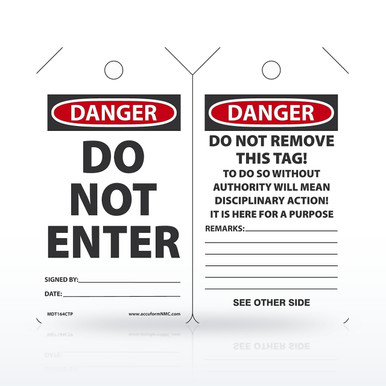
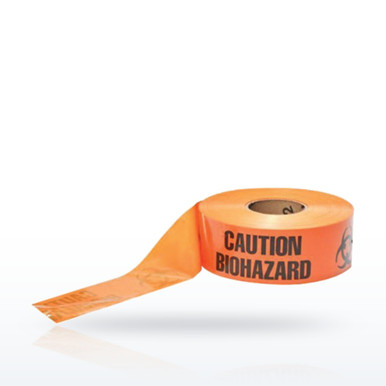
A tag must carry a signal word and a major message. The signal word is Danger, Caution, Biological Hazard or BIOHAZARD (or the biohazard symbol), readable from at least 5 feet. Danger tags are for major hazards where an immediate hazard threatens death or serious injury, and only those. Caution tags are for minor hazards, a non-immediate or potential hazard or unsafe practice, and only those. Warning tags may be used for a level between the two. The standard does not mandate tag colors, but its appendix lists red for Danger, yellow for Caution, orange for Warning, and fluorescent orange or orange-red for Biological Hazard, with lettering in a contrasting color. Tags on the market follow that scheme.
1910.145(f)(4)(i) and (ii); (f)(5), (f)(6), (f)(7) and (f)(8); Appendix A to 1910.145(f), color coding.What about barricade tape, floor marking and pipe colors?
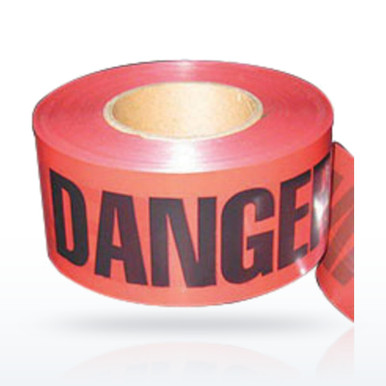
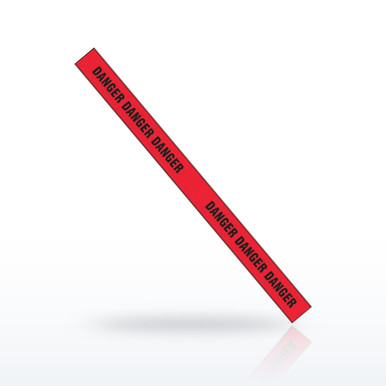
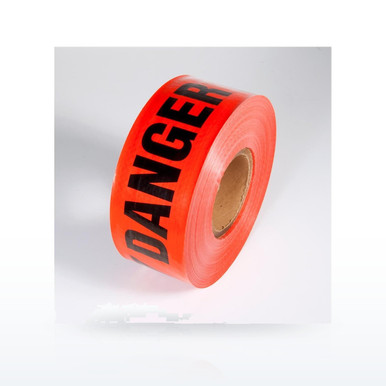
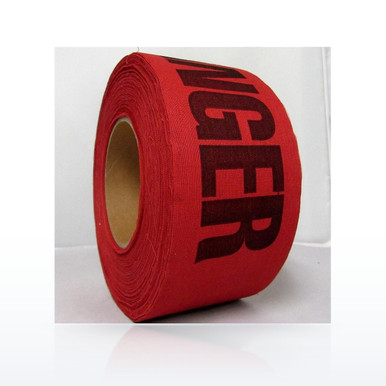
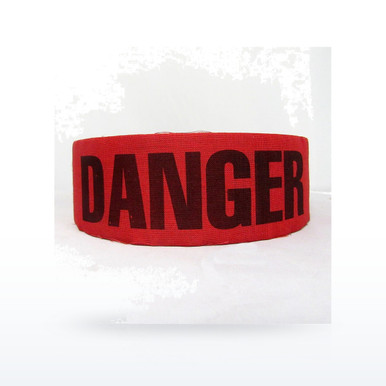
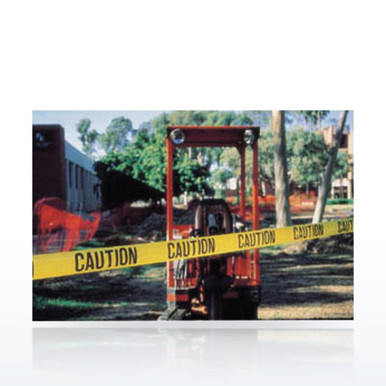
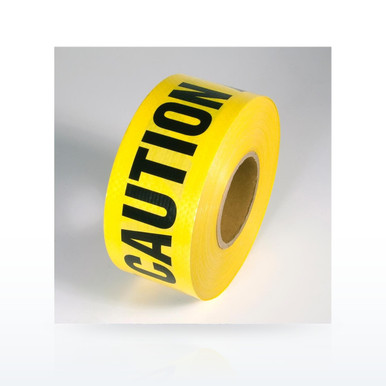
Barricade tape takes its color from the sign rule it stands in for: red with black DANGER lettering where the hazard is immediate, yellow with black CAUTION lettering where it is potential. Manufacturers make it to those colors and list the signs standard on the spec. Floor marking colors (yellow aisles, red for fire equipment keep-out) are not fixed by 1910.144 beyond red and yellow; the materials handling rule only requires that permanent aisles and passageways be appropriately marked, without naming a color. Pipe marking colors come from ASME A13.1, a separate standard that OSHA does not incorporate for general industry. Electrical equipment at over 600 volts gets a specific legend: permanent, conspicuous warning signs reading DANGER, HIGH VOLTAGE, KEEP OUT at the entrance.
1910.144(a)(1)(ii) and (a)(3); 1910.176(a) marked aisles; 1910.303(h)(5)(iii)(B) high-voltage entrance signs. Tape colors as published by the manufacturers (Harris Industries, INCOM).Signs, tags and barricade tape by signal word
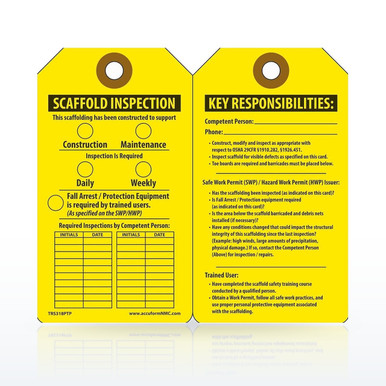
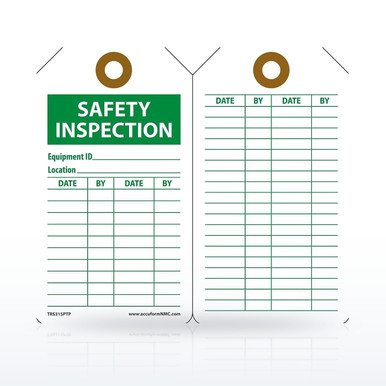
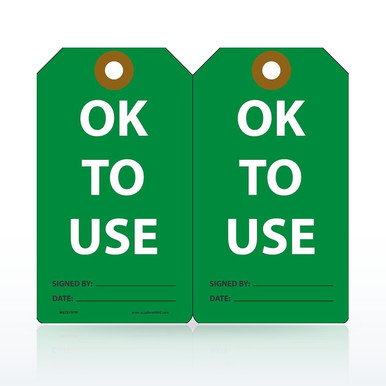
23 items · prices liveEach item is listed with the signal word and colors its manufacturer publishes. The signal word that applies to a given hazard is set by the employer’s assessment under 1910.145(c) and (f), not by this page. Free shipping on orders over $199.

Custom legends and sizes, and ANSI Z535 format signs in orange WARNING and blue NOTICE, are quoted on request: call (925) 215-7337.
Questions people ask
What are the OSHA safety colors?
Only two are mandated by name: red for fire protection equipment, danger and stop, and yellow for caution and physical hazards. Sign color schemes for danger (red, black, white), caution (yellow, black) and safety instruction (white, green) are set in 1910.145. (1910.144(a); 1910.145(d).)
Does OSHA require ANSI Z535 signs?
OSHA incorporates ANSI Z535.1-2006(R2011) for the color values of its danger, caution and safety instruction signs. The rest of the Z535 format is not mandated in general industry, but signs built to it meet 1910.145 and are what manufacturers make. (1910.145(d)(2), (d)(4), (d)(6); 1910.6.)
What does a red sign mean?
Danger: an immediate hazard, with special precautions necessary. Red is also the color of fire protection equipment and emergency stops. (1910.145(c)(1)(ii); 1910.144(a)(1).)
What does a yellow sign mean?
Caution: a possible hazard against which proper precaution should be taken, including physical hazards such as tripping, falling and being caught between. (1910.145(c)(2)(ii); 1910.144(a)(3).)
What does an orange sign mean?
Warning, in ANSI Z535: a hazard that could result in death or serious injury, between caution and danger. OSHA has no warning sign class but allows warning tags at that level. (1910.145(f)(7); ANSI Z535.2.)
What does a blue sign mean?
Notice, in ANSI Z535: information not related to personal injury, such as a policy or procedure. It is not an OSHA sign class.
What color is a safety instruction sign?
White background with a green panel and white letters; any letters on the white are black. (1910.145(d)(6).)
What colors do OSHA tags have to be?
No color is mandated. OSHA’s appendix to 1910.145(f) lists red for Danger, yellow for Caution, orange for Warning and fluorescent orange or orange-red for Biological Hazard. The signal word and major message are what is required. (1910.145(f)(4); Appendix A to 1910.145(f).)
Standards and ratings on this page are as published in the documents named and by the manufacturers named. The employer’s hazard assessment and written program decide what applies at a given workplace. Verify a rating on the product and its spec sheet before use.