
Rubber insulating gloves and leather protectors: when NFPA 70E requires them
NFPA 70E requires rubber insulating gloves, with leather protectors over them, whenever there is a danger of hand injury from electric shock through contact with energized conductors or circuit parts. In practice that is any time a hand or a hand-held tool can reach inside the restricted approach boundary of a part operating at 50 volts or more that has not been put in an electrically safe work condition: voltage testing, troubleshooting, racking, and any work on energized parts. The glove class is chosen by the voltage: Class 00 to 500 V, Class 0 to 1,000 V, Class 1 to 7,500 V, Class 2 to 17,000 V, and so on. The protectors are not optional; they keep the rubber from being cut or punctured, and the pair together satisfies the arc flash glove requirement in all four PPE categories.
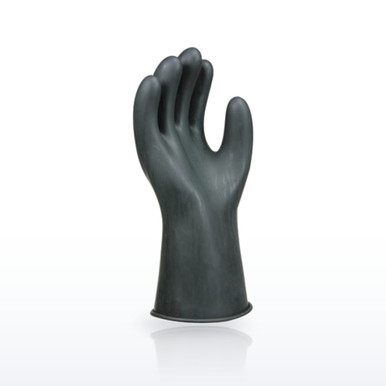
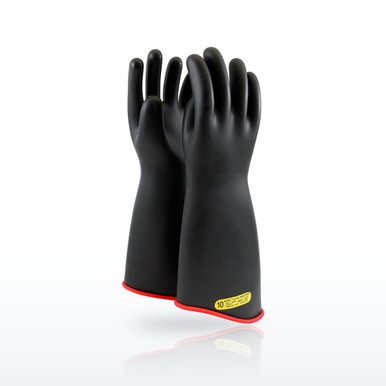
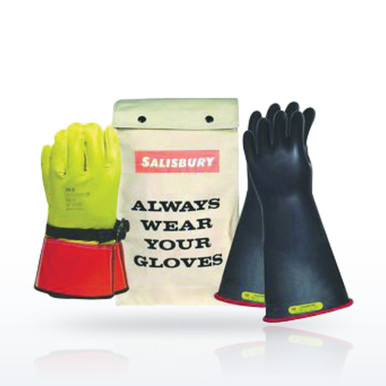
 Salisbury NG218B/12 Class 2 rubber insulating glovesClass 2, 17,000 volts AC maximum use, sold per pair; protectors sold separately
Why two gloves on each hand? The rubber glove is the insulation; it is the only thing between the hand and the voltage. Rubber that will withstand 17,000 volts in the test tank is also soft enough to be punctured by a wire end or a sharp panel edge, and a pinhole is a complete failure. The leather protector takes the mechanical abuse so the rubber does not. That is why both OSHA and NFPA 70E require the protector to be worn over the insulating glove, why the rubber glove has to be air tested before each day’s use, and why a rubber glove that has been used without its protector goes back for an electrical retest before it is used again.
When does NFPA 70E require insulating gloves?
The triggers in Article 130, in plain words.
Which glove class for which voltage?
Rubber insulating gloves come in six classes, each marked on the cuff with its class and with Type I (natural rubber, not ozone resistant) or Type II (ozone resistant). The maximum use voltage, ac rms, is: Class 00, 500 volts; Class 0, 1,000 volts; Class 1, 7,500 volts; Class 2, 17,000 volts; Class 3, 26,500 volts; Class 4, 36,000 volts. The class is chosen so the maximum use voltage is at or above the highest voltage the hand can contact, phase to phase. A 480-volt motor control center needs at least Class 00; a 4,160-volt switch needs Class 1; distribution work at 12,470 volts needs Class 2.
29 CFR 1910.137(a)(1)(ii) and (a)(1)(iv) (marking of class and type on the cuff), (c)(2)(i) and Table I-4 (maximum use voltages); ASTM D120, Standard Specification for Rubber Insulating Gloves, which uses the same classes.The maximum use voltage is lower than the proof-test voltage. Class 0 gloves are proof tested at 5,000 volts but used to 1,000, because the rating leaves margin for a wet glove, a scuffed surface and the fact that the glove may be the only insulation. NFPA 70E carries the same classes and uses OSHA’s table for the electrical test intervals.
29 CFR 1910.137 Table I-4 (proof-test and maximum use voltages); NFPA 70E-2024, 130.7(C)(7)(c) and Table 130.7(C)(7)(a), cited at section level.What are the rules for the leather protectors?
- Protectors are worn over insulating gloves. The only exceptions: Class 0 gloves under limited-use conditions where small equipment and parts require unusual finger dexterity, and Class 00 gloves under the same conditions when the voltage does not exceed 250 volts ac or 375 volts dc. Any other class may be used without protectors under those conditions only if the employer can show the chance of damage is small and the glove is one class higher than the voltage requires.
- A protector must be sized to the rubber glove and must leave the right gap between the protector cuff and the rubber cuff so the rubber still covers the wrist; the 2024 edition of NFPA 70E replaced the word gauntlet with that minimum distance.
- Protectors are not used for any other purpose, and a protector that has been worn over one class of glove is not moved to a glove of a higher class, because oil, grease and embedded metal in the leather can carry to the rubber.
- A rubber glove worn without its protector must be electrically retested before it is used again.
- The 2024 edition of NFPA 70E no longer limits protectors to leather; the Article 100 definition is now a glove or mitten worn over rubber insulating gloves. Leather remains what the catalog carries.
How often are insulating gloves inspected and tested?
Every day before use, and after any incident that could have damaged them, the gloves are inspected and air tested: roll the cuff to trap air, squeeze, and look and listen for leaks. Gloves with a hole, tear, puncture or cut, ozone cutting or checking, an embedded object, or a change in texture (swelling, softening, hardening, stickiness) are taken out of service. Electrically, gloves are tested before first issue and every 6 months after, and after repair or use without protectors. Tested gloves that have not been issued may sit for up to 12 months before they must be retested.
29 CFR 1910.137(c)(2)(ii) and (c)(2)(iii)(A) through (E); 1910.137(c)(2)(viii) and Table I-5 with footnote 1; NFPA 70E-2024, Table 130.7(C)(7)(a), which adopts the same intervals.Rubber insulating gloves and leather protectors by class
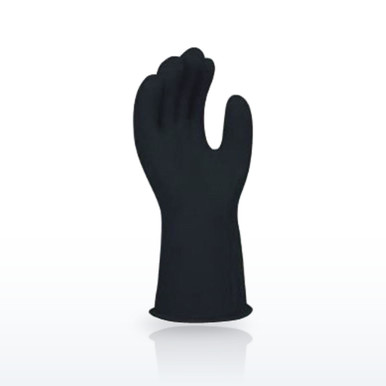
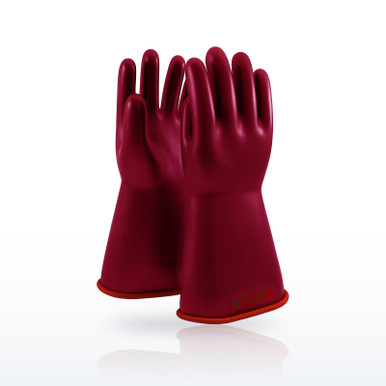
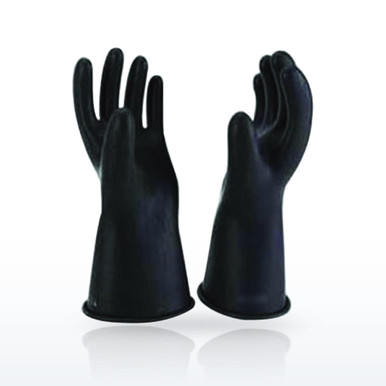
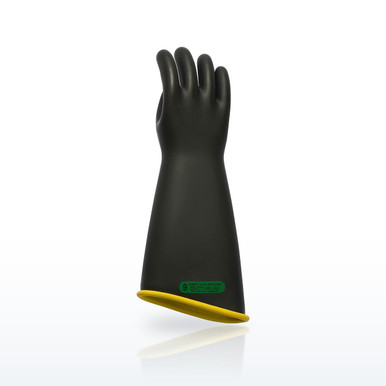
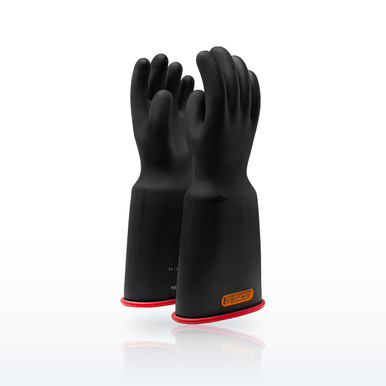
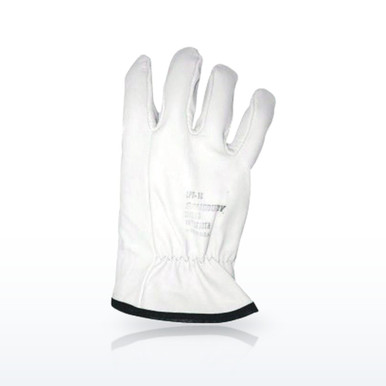
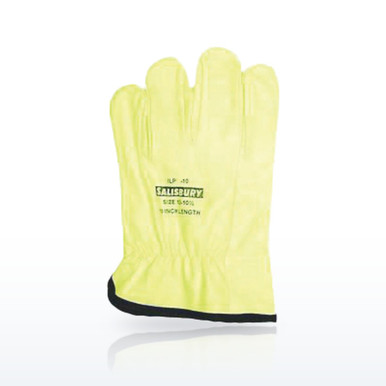
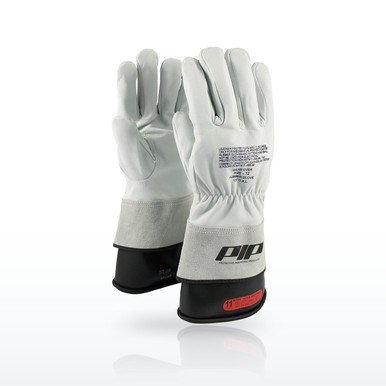
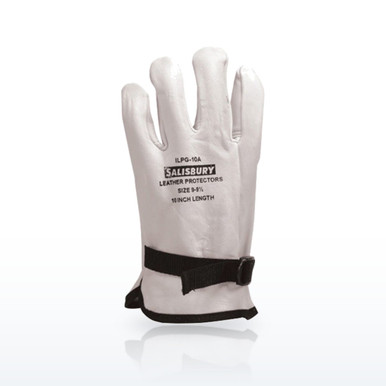
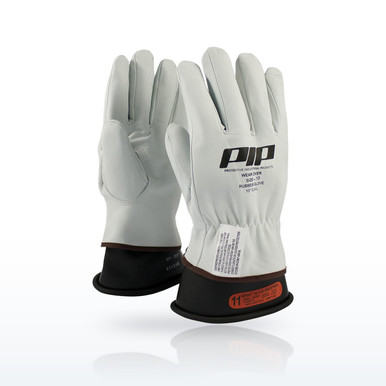
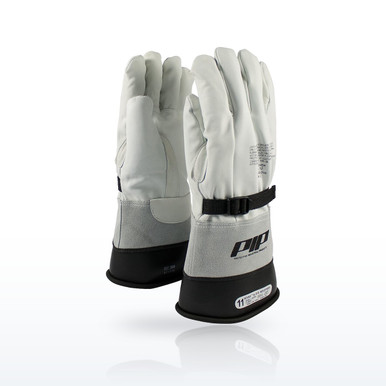
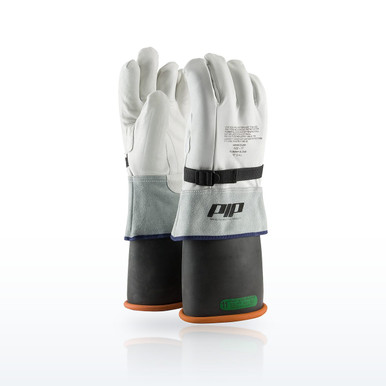
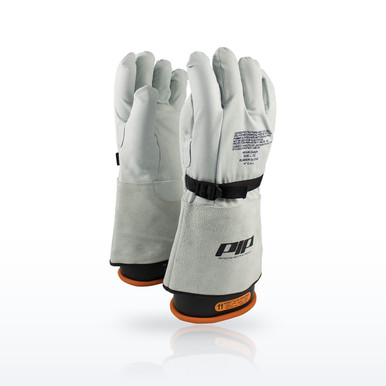
18 items · prices liveClass and maximum use voltage are as marked by the manufacturer under ASTM D120 and 29 CFR 1910.137. Gloves are sold per pair; protectors are sold separately and must be sized to the rubber glove. Free shipping on orders over $199.

Insulating sleeves, blankets and glove test kits are quoted on request: call (925) 215-7337.
Questions people ask
When are rubber insulating gloves required?
Whenever there is a danger of hand injury from electric shock through contact with energized conductors or circuit parts, which NFPA 70E ties to crossing the restricted approach boundary of parts at 50 volts or more. (130.7(C)(7)(a); 130.4(E).)
Do I need insulating gloves for 120 or 480 volts?
Yes, if the parts are energized and exposed and the hand can reach them. Class 00 covers up to 500 volts; Class 0 covers up to 1,000 volts, which includes 480 and 600-volt systems.
Do you have to wear leather protectors over rubber gloves?
Yes, with two narrow exceptions: Class 0 under limited-use conditions needing unusual finger dexterity, and Class 00 under the same conditions at 250 volts ac or less, both limited to work needing unusual finger dexterity. (1910.137(c)(2)(vii).)
Do insulating gloves count as arc flash gloves?
Yes. NFPA 70E Table 130.7(C)(15)(c) states that rubber insulating gloves with protectors satisfy the arc flash glove requirement in every category; no additional gloves are needed.
How often do insulating gloves need to be tested?
Air tested and inspected before each day’s use; electrically tested before first issue and every 6 months, and after repair or use without protectors. Tested but unissued gloves may wait up to 12 months. (1910.137(c)(2)(ii), (c)(2)(viii), Table I-5.)
What class of glove is 17,000 volts?
Class 2. Class 1 is 7,500 volts, Class 3 is 26,500 and Class 4 is 36,000. (1910.137 Table I-4.)
Can I use voltage-rated gloves instead of rubber insulating gloves?
They are the same thing. "Voltage-rated" and "lineman’s gloves" are trade names for rubber insulating gloves made to ASTM D120 and marked with a class.
Do the gloves need to be arc rated?
No. Rubber insulating gloves are rated for shock, not for arc flash, but worn with their protectors they meet the arc flash hand protection requirement in NFPA 70E. (130.7(C)(10)(d).)
Related guides
What is an arc flash?The heat hazard the gloves do not coverNFPA 70E PPE categories 1 to 4Where insulating gloves fit in each categoryHow to measure glove sizeSizing the protector to the rubber gloveWhat is lockout/tagout?The electrically safe work condition that makes the gloves unnecessaryStandards and ratings on this page are as published in the documents named and by the manufacturers named. The employer’s hazard assessment and written program decide what applies at a given workplace. Verify a rating on the product and its spec sheet before use.