
Traffic cone sizes and MUTCD requirements by road speed
The MUTCD sets two minimum heights. On daytime, low-speed roads a cone must be at least 18 inches tall. On freeways and other high-speed highways, and at night on any road, it must be at least 28 inches tall. For night work the cone must also be retroreflective or lit: a 28 to 36 inch cone carries a 6 inch white band 3 to 4 inches below the top and a 4 inch band 2 inches below that. Cones taller than 36 inches carry alternating orange and white stripes instead. All cones are predominantly orange. A 12 inch cone has no MUTCD standing; it is for parking lots, warehouses and indoor use.
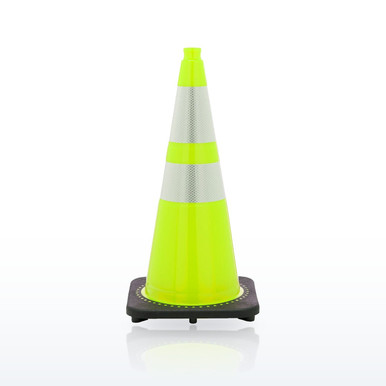 JBC Revolution Series 28 inch wide body traffic coneMUTCD and NCHRP-350 as published by JBC; 7 or 10 lb base, with or without 6 in and 4 in collars
Why does the height depend on speed? A driver at 60 mph covers 88 feet a second and needs to see the device far enough ahead to react. A taller cone shows above the hood of the car in front and reads from farther away, and the retroreflective bands return headlight light at night. On a 25 mph side street the sight distance is short and the smaller cone is enough. The MUTCD, which is the national standard for traffic control devices, writes the heights in as minimums, and OSHA makes Part 6 of the MUTCD the rule for protecting construction workers from traffic.
What does the MUTCD require of a cone?
Section 6K.03 of the 11th Edition, Standard and Guidance statements.
What speed is low-speed and what is high-speed?
The 11th Edition text for cones uses the words freeways, high-speed highways, and low-speed roadways rather than a number. The figure in the previous edition that illustrates the same devices labels the two cone sizes as 45 mph and above for the 28 inch minimum and 40 mph and below for the 18 inch minimum, and that is the split most agencies and work-zone plans use. Where a state or local agency has written its own number into its traffic control manual or permit, that number governs.
MUTCD 11th Edition, Section 6K.03, paragraph 01; MUTCD 2009 Edition, Figure 6F-7 Channelizing Devices, cone panels labeled Night/High-speed (45 mph and above) and Day/Low-speed (40 mph and below).Night counts as high-speed for cone height. Any road, any speed: once the work runs into darkness the cone must be at least 28 inches and must be retroreflective or lit. A plain 18 inch cone with no collar is a daytime device only.
MUTCD 11th Edition, Section 6K.03, paragraphs 01 and 02.What does OSHA require on a construction site?
OSHA does not write its own cone sizes. The construction standard requires that construction areas be posted with legible traffic control signs and protected by traffic control devices at points of hazard, and that the design and use of every device, including cones, barricades and markings, used to protect construction workers conform to Part 6 of the MUTCD. OSHA incorporates the MUTCD by reference in 1926.6; the edition named there is the 2009 Edition with its 2012 revisions. The 11th Edition carries the cone requirements forward in the same terms, with the section renumbered from 6F.64 to 6K.03.
29 CFR 1926.200(g)(1) and (2); 29 CFR 1926.6 incorporation by reference. MUTCD 2009 Edition Section 6F.64 Cones; MUTCD 11th Edition Section 6K.03 Cones.Flaggers, their garments and their signaling also follow MUTCD Part 6, which is where the hi-vis class requirement for flaggers comes from.
29 CFR 1926.201(a).What are the other channelizing devices, and when is a cone not enough?
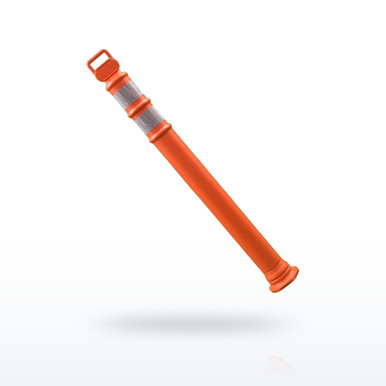
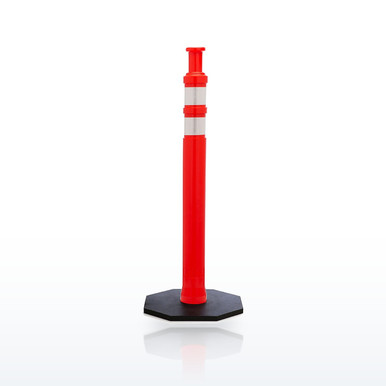
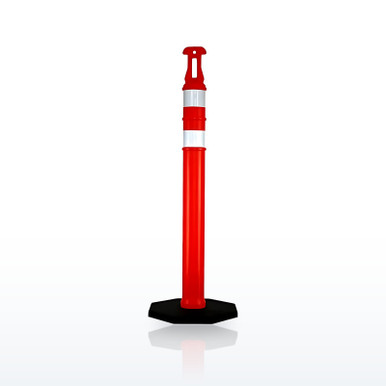
- Tubular markers: at least 18 inches high and 2 inches wide facing traffic; 28 inches on freeways and high-speed highways. Narrower than a cone, used where space is tight.
- Delineator posts and drums: taller devices for lane closures and long tapers; drums are a minimum of 36 inches high.
- Every channelizing device must be crashworthy, meaning it has been shown to break away or yield safely when struck. Manufacturers state this as NCHRP 350 or MASH acceptance.
- A cone guides traffic; it does not close a road. Closing a road or lane to traffic takes a Type 3 barricade.
- The retroreflective material on a device must show a similar color day and night.
Traffic cones by height, and delineators
17 items · prices liveHeight, weight and collar configuration are as published by the manufacturer. MUTCD and NCHRP 350 conformance is stated on the product page where the manufacturer claims it; a non-reflective cone is a daytime device. Free shipping on orders over $199.
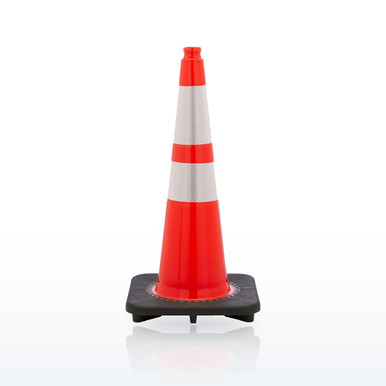
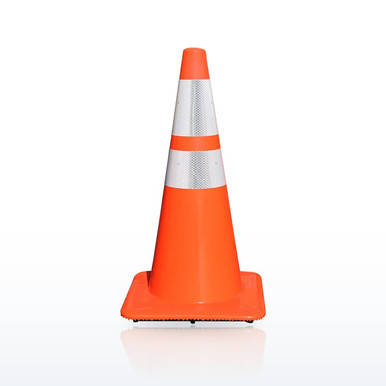
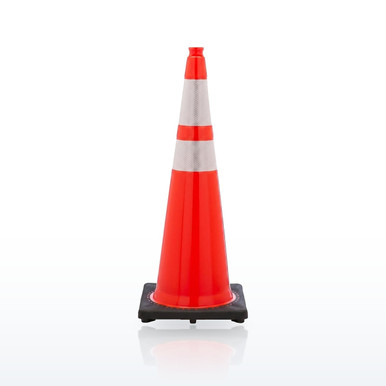

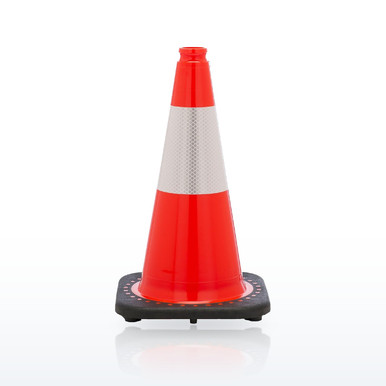
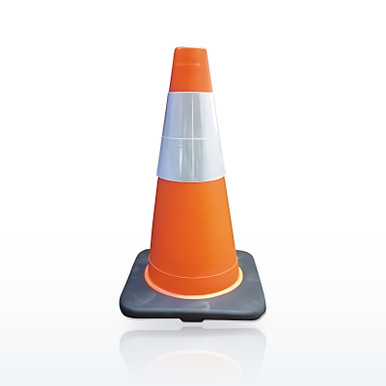
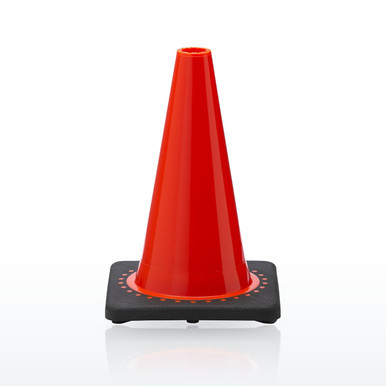
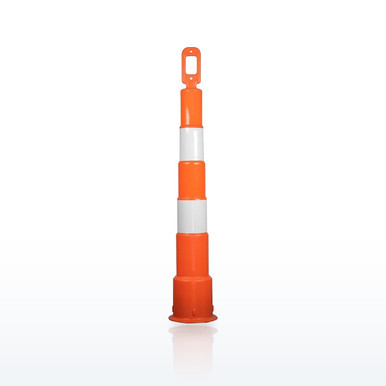

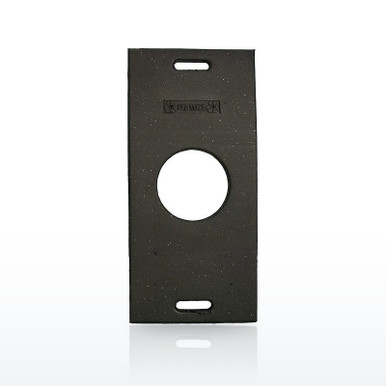


Type 3 barricades, drums, cone bars, sign stands and warning lights are quoted on request: call (925) 215-7337.
Questions people ask
What size traffic cone do I need for the highway?
At least 28 inches, with retroreflective collars for night. The MUTCD sets 28 inches as the minimum on freeways and other high-speed highways and for night use on any road. (Section 6K.03.)
What size cone is required for a 25 mph street in daytime?
At least 18 inches. The MUTCD minimum for daytime, low-speed roads.
Are 12 inch cones MUTCD compliant?
No. The MUTCD minimum is 18 inches. A 12 inch cone is for parking lots, warehouses, sports fields and other off-road use.
What are the reflective bands on a traffic cone?
On a 28 to 36 inch cone, a 6 inch white retroreflective band 3 to 4 inches below the top and a 4 inch band about 2 inches below it. They are required for night use. (Section 6K.03, paragraph 02.)
What is the difference between a 28 inch and a 36 inch cone?
Both meet the 28 inch minimum. The 36 inch cone is taller and usually heavier at the base, for higher-speed roads and windy sites. Above 36 inches the striping rule changes to alternating orange and white.
How heavy should a traffic cone be?
The MUTCD does not set a weight. It says to take steps to keep cones from blowing over or being displaced, allows doubling up cones, and says ballast should be the minimum needed. Manufacturers offer 3, 7, 10 and 12 pound bases.
Does OSHA require MUTCD cones on a job site?
On a construction site, yes: 1926.200(g)(2) requires traffic control devices used to protect workers to conform to MUTCD Part 6.
What does NCHRP 350 mean on a cone?
A crash-test acceptance showing the device yields safely when struck. The MUTCD requires every channelizing device to be crashworthy; manufacturers state NCHRP 350 or MASH acceptance on the product.
Standards and ratings on this page are as published in the documents named and by the manufacturers named. The employer’s hazard assessment and written program decide what applies at a given workplace. Verify a rating on the product and its spec sheet before use.