
Welding leathers and spats: foot and leg protection for welders
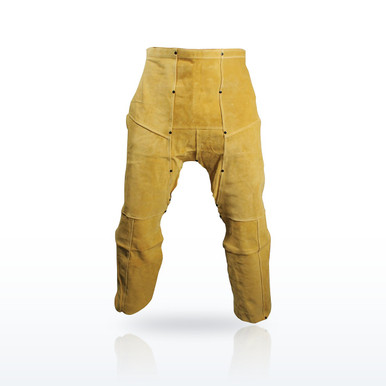
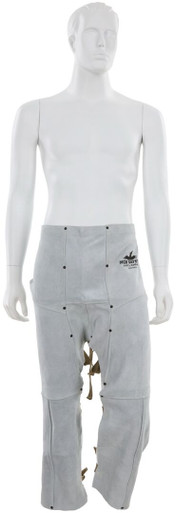
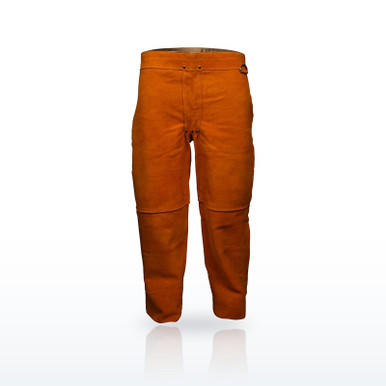
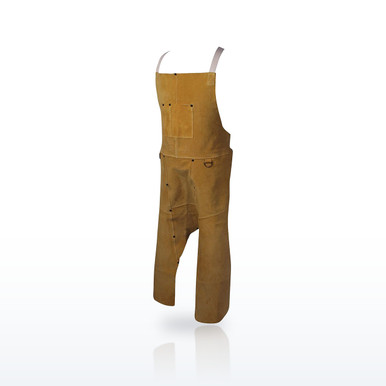
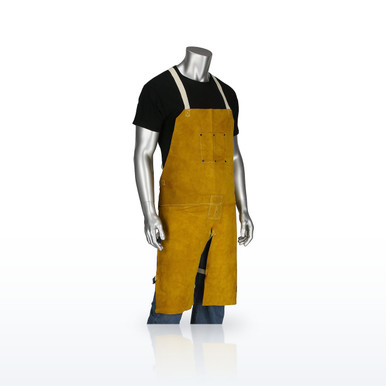
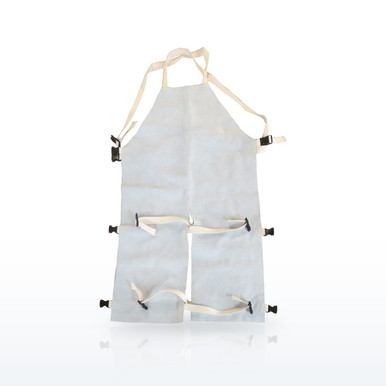
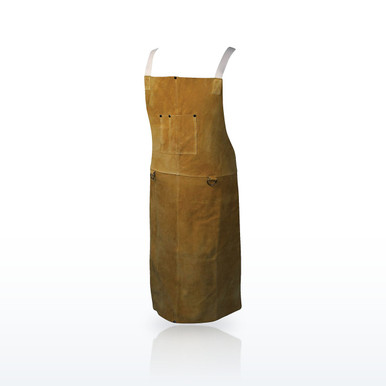
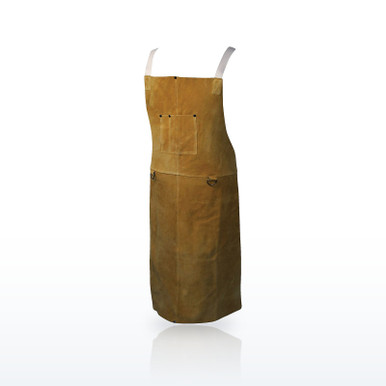
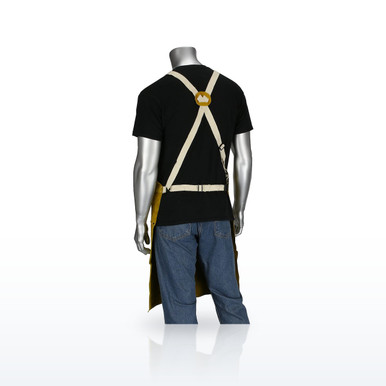
Slag and spatter fall. On the feet they land on the laces and the tongue of the boot, where a drop of molten metal burns through in seconds, and on the legs they catch in pant cuffs and pockets. OSHA requires protective clothing suited to the work for anyone exposed to welding hazards and protective footwear where falling objects or sole punctures are a danger, but names no garment. ANSI Z49.1 fills that in: flame-resistant leggings or an equivalent for heavy work, aprons for the front of the body, and, in its commentary, pants without cuffs that overlap the shoe tops. Welding spats are leather covers that strap over the boot and lace area; leggings and chaps cover the shin and thigh; a split-leg apron covers the lap and legs at a bench. Each is labeled by its maker for what it covers.
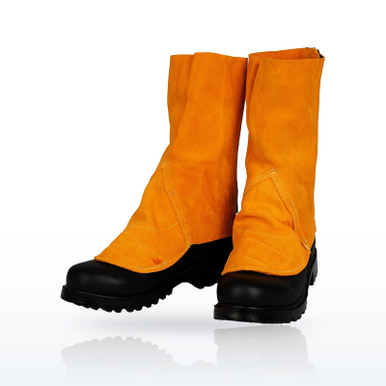 Tillman 530CL cowhide welding spats14 inches, mid-calf with toe coverage, as published by Tillman
Why are the feet and shins the part welders forget? The jacket, gloves and hood get the attention because the arc is in front of the face. But a welder stands, kneels or sits over the work, and everything that melts off the puddle and the rod goes down. A boot built to ASTM F2413 has a steel or composite toe, a puncture plate and maybe a metatarsal guard; it has no rating for molten metal, and its laces, tongue and seams are the weak point. A drop of slag that sits in a lace eyelet burns through to the foot before the welder can get the boot off. Spats cover that area with a flap of leather and nothing to catch the slag; leggings and chaps do the same for the shin and thigh, where slag lands when welding below waist height or sitting at a bench.
What does each piece cover?
As the manufacturers below describe their own garments.
What do OSHA and ANSI Z49.1 require below the waist?
OSHA’s welding standard requires that employees exposed to welding, cutting or brazing hazards be protected by PPE under the general rule, 1910.132, with clothing that varies with the size, nature and location of the work. The employer’s hazard assessment decides what that is for a given job, selects PPE that fits each employee, and pays for it, with an exception for ordinary safety-toe boots the employee may wear off the job. On construction sites, welders exposed to inert-gas metal-arc radiation must have the skin covered completely to prevent ultraviolet burns, which includes the ankle gap between the boot and the pant leg.
29 CFR 1910.252(b)(3); 1910.132(d)(1) and (h)(1) and (h)(2); 1926.353(d)(1)(iii).ANSI Z49.1 is the consensus standard the welding rule points to, and its clothing clause is where leggings and spats come from. Clothing is selected to minimize ignition, burning, trapped sparks and shock. Durable flame-resistant aprons protect the front of the body. Flame-resistant leggings or equivalent means are used for heavy work when necessary. The commentary adds that pants should not have cuffs, that front pockets should be eliminated, and that pants should overlap the shoe tops to prevent spatter from getting into shoes. Spats are the equivalent means for the foot: they do what the cuffless, overlapping pant leg is meant to do, with leather instead of cotton.
ANSI Z49.1:2021 clauses 4.3, 4.3.3, 4.3.4 and commentary E4.3.Where do safety boots and ASTM F2413 fit in?
OSHA’s foot protection rule, 1910.136, requires protective footwear where there is a danger of foot injury from falling or rolling objects, objects piercing the sole, or an electrical hazard, and it accepts footwear built to ASTM F2412 and F2413 or the older ANSI Z41. Those standards rate a toe cap against a 75 foot-pound impact and a 2,500-pound compression, a metatarsal guard against the same impact over the instep, a puncture-resistant plate, and electrical hazard and static-dissipative soles, as the footwear makers publish them. A fabrication shop with plate and pipe moving around usually meets the falling-object test, so welders wear safety-toe boots; what the boot does not do is resist molten metal, and that is what the spat is for. A metatarsal boot and a spat do different jobs and are often worn together: the Mt guard against a dropped plate, the spat against slag in the laces.
29 CFR 1910.136(a) and (b)(1)(i) through (iii); ASTM F2413 performance categories as published by footwear manufacturers (impact, compression, metatarsal, puncture resistance, electrical hazard, static dissipative); 1910.132(h)(2) and (h)(3) on paying for safety-toe and metatarsal footwear.How are welding leathers chosen and worn?
- Leather type: split cowhide is the standard for spats, chaps and aprons; boarhide (pigskin) is sold by its makers as lighter; chrome-tanned split leather for heat. Seams in aramid thread so a spark does not open them.
- Closures: hook-and-loop strips, buckles or snaps behind the leg or over the instep, with nothing on the front to catch slag. Snaps that do not corrode and that are backed with leather so they do not conduct heat to the skin.
- Fit: the spat covers the laces and the upper boot with the pant leg over the spat, not tucked inside it; chaps and leggings overlap the spat so there is no gap at the ankle.
- Position: below-waist welding, overhead work with the welder on his back, bench work on a stool and cutting on the ground are the jobs where leg and foot leather earn their place; a standing welder at a table with the work at chest height may need only cuffless pants over high boots, by the hazard assessment.
- Inspection: leather that has burned through, cracked or stiffened from heat is defective PPE and is replaced; 1910.132(e) does not allow damaged equipment to be used.
Welding spats, leggings, chaps and aprons
14 items · prices liveLeather type, length and closure are as published by the manufacturer on each product page; each item is labeled by what it covers, as the maker describes it. Free shipping on orders over $199.
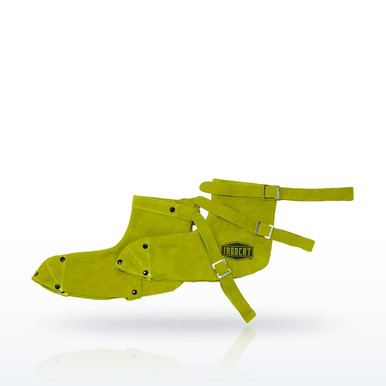
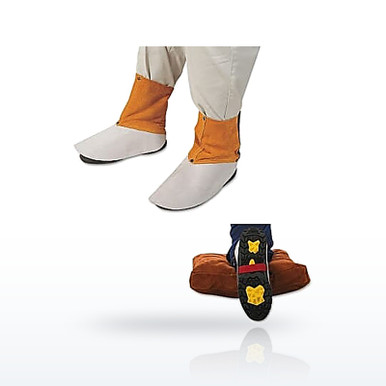
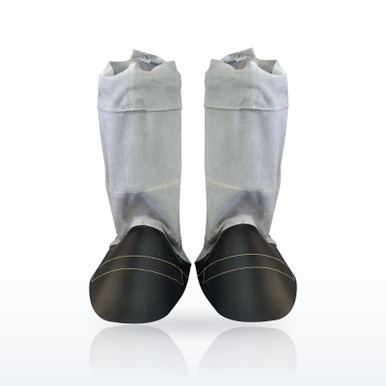
Welding jackets, sleeves and gloves are in the welding finder. Safety-toe and metatarsal boots are quoted on request: call (925) 215-7337.
Questions people ask
What are welding spats?
Leather covers that strap over the boot’s laces and tongue, from the toe to mid-calf, so slag and spatter cannot burn through the laces or fall into the boot. They are worn over the boot with the pant leg over them.
Does OSHA require welding spats?
Not by name. OSHA requires protective clothing suited to the work for anyone exposed to welding hazards, chosen by the employer’s hazard assessment. ANSI Z49.1, which OSHA references, calls for flame-resistant leggings or an equivalent for heavy work and for pants that overlap the shoe tops. (1910.252(b)(3); Z49.1:2021 clause 4.3.)
Do welders need steel toe boots?
Where falling or rolling objects or sole punctures are a hazard, OSHA 1910.136 requires protective footwear built to ASTM F2412 and F2413 or ANSI Z41. Most fabrication shops meet that trigger. The boot’s rating covers impact and compression, not molten metal.
What is the difference between leggings and chaps?
Leggings cover the shin from the knee to the boot; chaps cover the whole front of the leg from the waist down and strap behind the leg. Both are leather for welding; the maker states the length.
Why should welding pants have no cuffs?
Cuffs catch sparks and slag, which then burn against the ankle. ANSI Z49.1’s commentary says pants should not have cuffs and should overlap the shoe tops.
Can I tuck my pants into my boots when welding?
No. That opens the boot shaft to falling slag. The pant leg goes over the boot or over the spat.
What is a split-leg welding apron?
A leather apron cut into two legs so the welder can sit on a stool or walk. It covers the lap and the front of each leg at a bench; bib versions cover the chest as well.
How long do leather spats last?
Until the leather burns through, cracks or stiffens from heat, or a closure fails. Damaged PPE is not to be used under 1910.132(e).
Standards and ratings on this page are as published in the documents named and by the manufacturers named. The employer’s hazard assessment and written program decide what applies at a given workplace. Verify a rating on the product and its spec sheet before use.