
Welding jackets: leather vs FR cotton vs hybrid
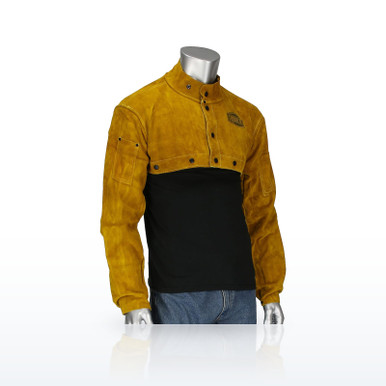
OSHA requires protective clothing for welding but does not name a fabric; the clothing must suit the size, nature and location of the work. ANSI Z49.1 says the clothing is chosen to limit ignition, burning, trapped sparks and electric shock, and its commentary points to leather or flame-resistant clothing because both are hard to ignite. Leather takes the most spatter and slag and lasts longest, but it is heavy and hot. Flame-resistant cotton, usually 9-ounce treated twill or sateen, is light and cool, will not keep burning when a spark lands, and is the usual choice for MIG and TIG at the bench. A hybrid jacket puts leather on the sleeves and front, where spatter lands, over an FR cotton body, which is what most welders doing overhead or heavy stick work end up in. The marks on the label tell you which tests the fabric passed.
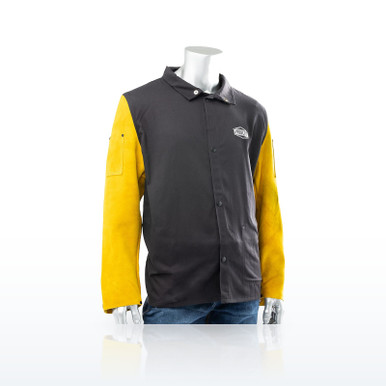
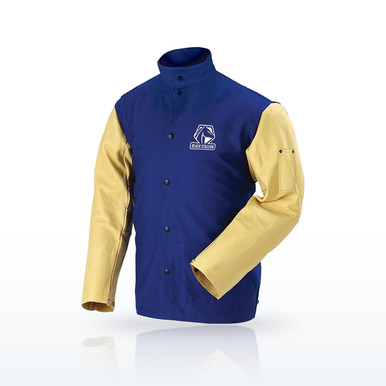 Black Stallion 60-373 hybrid welding coat9 oz FR cotton body, grain pigskin sleeves, as published by Black Stallion
Why is cotton not enough, and why is leather sometimes too much? A spark landing on an untreated cotton or polyester shirt starts a fire the welder cannot see under the hood; polyester melts into the skin. That is the hazard the clothing rule is written for. Flame-resistant cotton self-extinguishes when the spark leaves, which handles the light spatter of MIG and TIG. Stick welding and overhead work throw slag that burns through cotton on contact and pools in folds; leather takes it. But a full leather coat weighs several pounds, holds heat, and in summer the welder takes it off, which is the one thing the rule cannot allow. The hybrid exists because the hazard is not evenly spread over the body.
What does each jacket do?
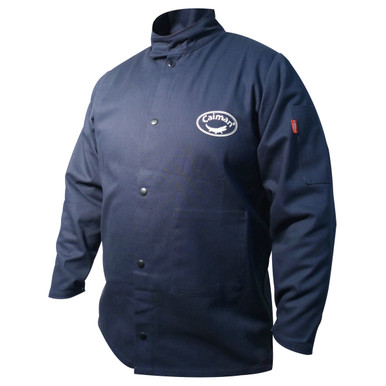
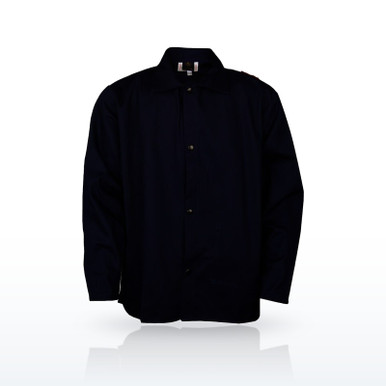
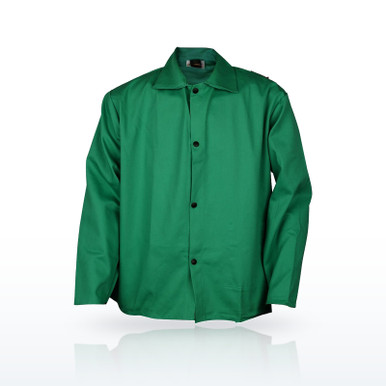
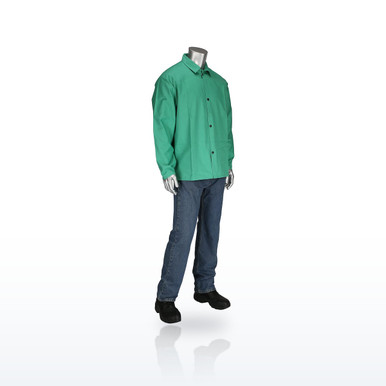
The three constructions, as the manufacturers below describe their own garments.
What does OSHA actually require for welding clothing?
Three sentences. Employees exposed to the hazards of welding, cutting or brazing are protected by PPE under 1910.132, and the clothing varies with the size, nature and location of the work. Under 1910.132 the employer assesses the hazards, selects PPE that protects against them and fits each employee, certifies the assessment, trains the employee, and pays for the equipment. On a construction site, welders and anyone exposed to the radiation of inert-gas metal-arc welding must have the skin covered completely to prevent burns from ultraviolet rays. That last sentence is the one that rules out short sleeves at a TIG bench: the arc burns skin like a sunlamp, spatter or no spatter.
29 CFR 1910.252(b)(3); 1910.132(d)(1), (f) and (h); 1926.353(d)(1)(iii).ANSI Z49.1, the consensus standard OSHA references, is more specific. Clothing is selected to minimize the potential for ignition, burning, trapping hot sparks or electric shock, and made of materials that minimize skin burns from sparks, spatter and radiation. All welders and cutters wear flame-resistant gloves. Durable flame-resistant aprons protect the front of the body; flame-resistant leggings or an equivalent go on for heavy work; capes, sleeves or shoulder covers go on for overhead work. The explanatory commentary adds that heavier materials such as leather or flame-resistant clothing are preferable because they are harder to ignite, that front pockets should be eliminated, that pants should not have cuffs, and that pant legs should overlap the shoe tops so spatter cannot get into the shoes.
ANSI Z49.1:2021 clauses 4.3, 4.3.1 through 4.3.5, and commentary E4.3.What do the marks on the label mean?
- ASTM D6413: the vertical flame test. A strip of fabric is held in a flame, and the lab records how long it keeps burning after the flame is removed (afterflame), how long it glows (afterglow) and how far up the char reaches. It is a test method, not a pass mark; the specification that cites it sets the limits. Ironcat and Tillman list it on their FR cotton.
- ASTM F1506: the specification for flame-resistant and arc-rated clothing for workers exposed to electric arcs. Under F1506 the fabric must average under 2 seconds afterflame and no more than 6 inches of char in the D6413 test, with no melting or dripping, before and after 25 launderings, and it must carry an arc rating from the ASTM F1959 arc test. A welding jacket marked F1506 with an ATPV in calories per square centimeter is also rated for electrical arc flash work; Ironcat’s Proban cotton-and-leather jacket lists 10 cal/cm2.
- NFPA 2112: the standard for flame-resistant garments for protection against short-duration flash fire, used in oil and gas. Its flame test is run before and after 100 industrial wash cycles. A welding jacket marked 2112 was built for refinery and plant hot work where a flash fire is the governing hazard.
- None of these is a welding-specific test. There is no U.S. standard that rates a jacket for spatter the way EN ISO 11611 does in Europe; the spatter claim on a leather or hybrid jacket is the manufacturer’s.
Which one for which job?
Match the jacket to the spatter, the position and the heat. Bench MIG on thin steel, TIG, and tack welding throw little; FR cotton covers them and the welder keeps it on. Stick on plate, flux-cored, carbon arc gouging and anything overhead throw slag that lands on the forearms, chest and shoulders; leather sleeves at minimum, a leather front or full leather coat for the heavy end. Outdoors in summer, a hybrid or FR cotton with leather sleeves is what gets worn through the shift, and the standard is met only by clothing that is actually on. Under the jacket, a cotton or FR shirt, not polyester. Pants without cuffs over the boot tops, leather spats or leggings for heavy work, and a leather apron for the front when sitting at a bench. The employer’s hazard assessment, not the welder’s preference, is what the standard asks to see.
29 CFR 1910.132(d)(1); ANSI Z49.1:2021 clause 4.3 and commentary E4.3; manufacturer use statements for the jackets listed below.How long does a welding jacket last, and how is it cleaned?
Leather is not washed; it is brushed, wiped, and retired when it cracks, stiffens from heat, or burns through. FR cotton is laundered by the care label; care labels commonly warn against chlorine bleach and fabric softener, which can mask or strip the treatment, and some state a wash count for the FR finish. Any garment with a hole, a burn-through, a missing closure or a melted patch is defective PPE under 1910.132(e) and is not to be worn. Aramid thread, which most of these makers use, keeps the seams from burning open.
29 CFR 1910.132(e); manufacturer care instructions for the garments listed below.Welding jackets, sleeves, capes and aprons by material
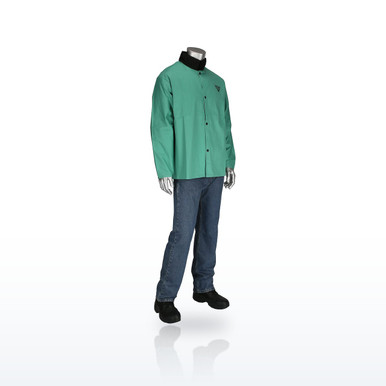
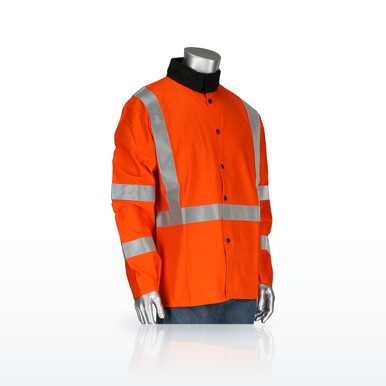
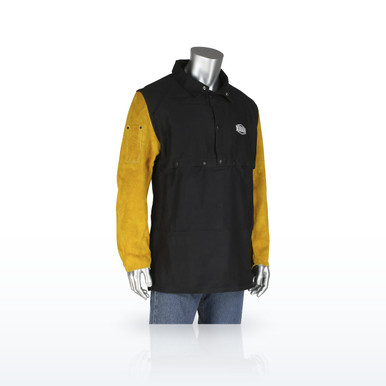
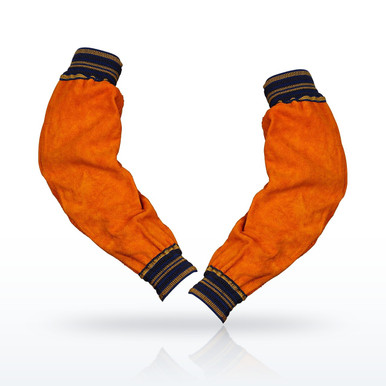
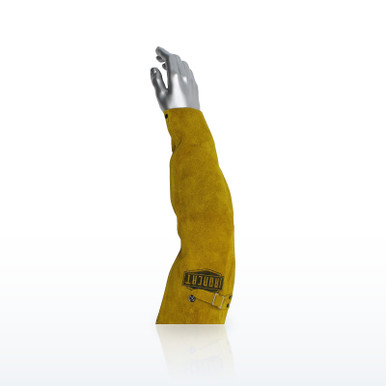
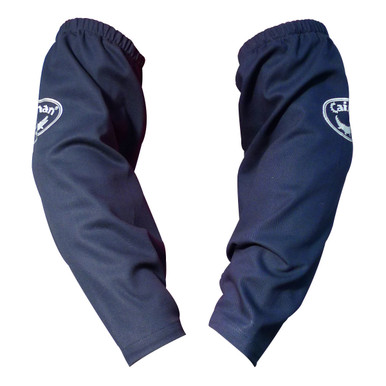
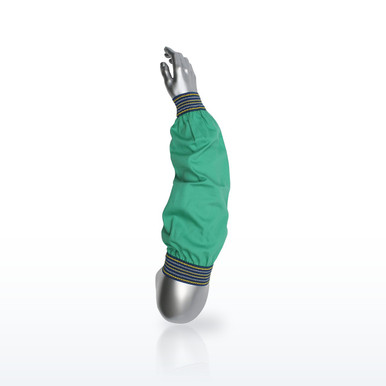
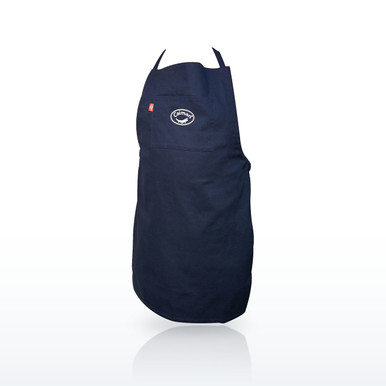
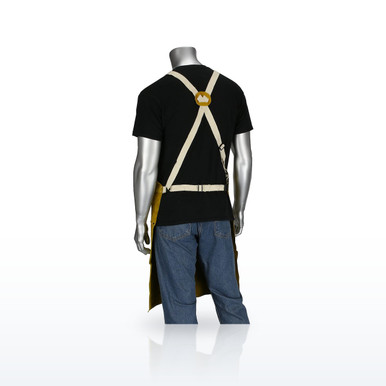
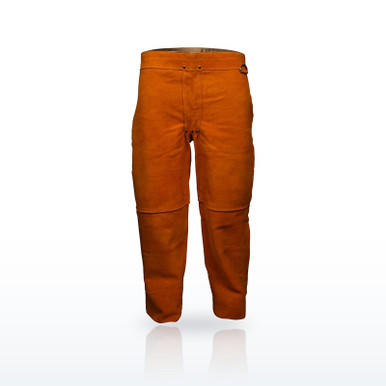
20 items · prices liveMaterial, weight and the standards each garment is tested to are as published by the manufacturer on each product page; each item is labeled by its construction as the maker describes it. Sizes are on the product page. Free shipping on orders over $199.
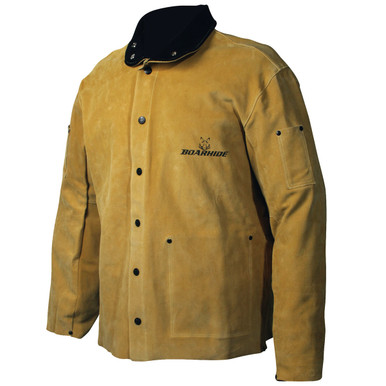
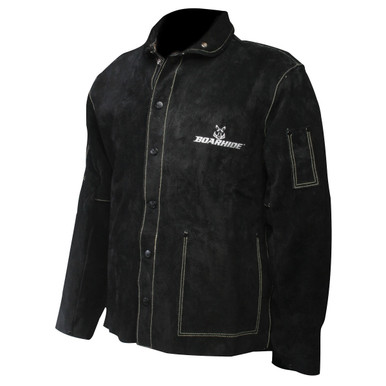
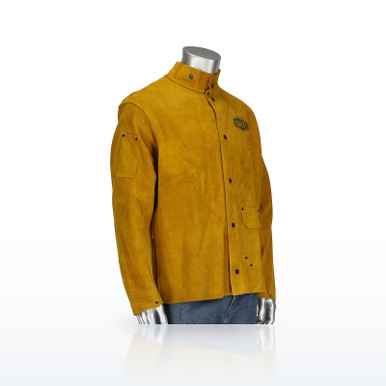
Welding gloves, bibs and leggings are in the welding finder.
Questions people ask
Does OSHA require a welding jacket?
OSHA requires protective clothing suited to the work for anyone exposed to welding hazards, chosen by the employer’s hazard assessment; it does not name a jacket or a fabric. On construction sites the skin must be completely covered against arc radiation. (1910.252(b)(3); 1926.353(d)(1)(iii).)
Is leather or FR cotton better for welding?
They do different jobs. Leather takes slag and heavy spatter and lasts; FR cotton is light, cool and self-extinguishing for light spatter. The hazard assessment matches the jacket to the process and position.
What is a hybrid welding jacket?
An FR cotton body with leather sleeves, and often a leather front and shoulders, so the spatter zones are leather and the rest breathes.
Can I weld in a regular cotton shirt?
Untreated cotton ignites and keeps burning; it does not meet the Z49.1 selection rule and leaves a MIG or TIG welder with a smoldering sleeve under the hood. FR cotton is treated to self-extinguish.
What does 9 oz mean on a welding jacket?
The fabric weight in ounces per square yard. 9-ounce FR cotton is the common weight for welding jackets; 7-ounce is lighter and cooler with less spatter resistance.
Does a welding jacket need to be arc rated?
Not for welding. An ATPV rating under ASTM F1506 is for electrical arc flash exposure; a jacket that carries one can be used for both, which is why some welding jackets list it.
How do I wash an FR welding jacket?
By the care label: follow the care label, which commonly rules out chlorine bleach and fabric softener. Leather is not washed. Replace any jacket with burn-throughs or holes; 1910.132(e) prohibits defective PPE.
Why do welding jackets have no front pockets?
Sparks and slag collect in pockets and cuffs and ignite there. ANSI Z49.1’s commentary says front pockets should be eliminated and pants should not have cuffs.
Standards and ratings on this page are as published in the documents named and by the manufacturers named. The employer’s hazard assessment and written program decide what applies at a given workplace. Verify a rating on the product and its spec sheet before use.