
What is an ANSI puncture rating, and what is needle-stick puncture?
An ANSI puncture rating is the force it takes to push a standard blunt probe through the glove material, on a scale of 1 to 5. Level 1 is 10 newtons and level 5 is 150 newtons, using the same probe and method as the European EN 388 test. A needle-stick rating is a different test with a different scale: a 25-gauge hypodermic needle is pushed through the material, and levels 1 to 5 run from 2 to 10 newtons. A glove that stops a blunt probe at level 4 can let a needle through at level 1, because a needle point slips between fibers that stop a wider probe. The abrasion level, 0 to 6, is how many revolutions of an abrasive wheel the material survives. All three levels are measured on the new glove and published by the manufacturer.
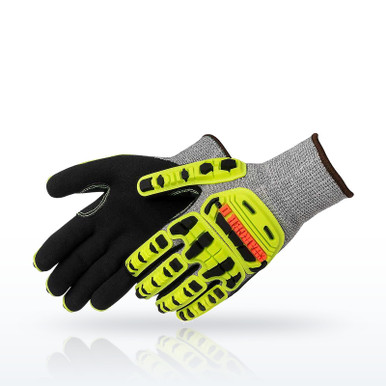 Liberty DayBreaker 0943 cut-resistant glovesANSI A6 cut, puncture level 4, abrasion level 5
Why are there two puncture tests? Until 2016 the only puncture test used a rounded steel probe about the size of a nail. It predicts nails, wire ends, splinters and sheet metal corners well. It predicts needles badly, because a hypodermic needle is a hollow tube with a beveled point that parts yarns instead of stretching them. Sanitation crews, recyclers, medical waste handlers and police kept getting needle sticks through gloves with high puncture levels. ANSI/ISEA 105-2016 added a second test with a real needle so a glove could be rated for that hazard honestly.
What do the ANSI puncture and needle-stick levels mean?
Two scales, two tests, both in ANSI/ISEA 105-2016. The number on a spec sheet means nothing until you know which test it came from.
How is the puncture test run?
A sample of the palm material is clamped flat and a steel probe with a rounded tip is driven through it at a fixed speed. The force at the moment of penetration is recorded in newtons. ANSI/ISEA 105 uses the probe and method of EN 388 clause 6.4, so a glove’s ANSI puncture level and the fourth digit of its EN 388 code come from the same test, though the two standards draw their level boundaries differently (EN 388 has four levels at 20, 60, 100 and 150 N; ANSI has five, adding level 1 at 10 N). A newton is about the weight of an apple; 100 newtons is roughly 22 pounds of force on the probe tip.
ANSI/ISEA 105-2016, puncture resistance by EN 388 clause 6.4; EN 388:2016 puncture levels 1 to 4 as published by manufacturers.The needle-stick test clamps the sample the same way but drives a 25-gauge hypodermic needle through it. Because the needle is thin and sharp the forces are far lower, which is why the needle scale tops out at 10 newtons where the probe scale begins. The two numbers are not convertible. A glove sold for sharps handling should publish an ASTM F2878 level; a puncture level alone does not describe needle protection.
ANSI/ISEA 105-2016, hypodermic needle puncture resistance by ASTM F2878.What is an ANSI abrasion level on a glove?
Abrasion is how long the glove material survives being rubbed. The sample is mounted on a Taber abrader and spun against two H-18 abrasive wheels under a set load until it wears through, and the revolutions are counted. Levels 0 to 3 use a 500-gram load: level 0 under 100 revolutions, level 1 at 100, level 2 at 500, level 3 at 1,000. Levels 4 to 6 use a 1,000-gram load: level 4 at 3,000 revolutions, level 5 at 10,000, level 6 at 20,000. Because the load doubles at level 4, a level 4 glove is a long way past level 3, not one step. Coated palms test on the coating; leather tests on the hide.
ANSI/ISEA 105-2016, abrasion resistance classification by ASTM D3389 (H-18 wheels; 500 g load for levels 0 to 3, 1,000 g for levels 4 to 6).On a jobsite abrasion level is the number that predicts glove life. A level 2 polyurethane palm on block and rebar lasts days; a level 4 or 5 nitrile or PVC palm lasts weeks on the same work. The product band tags each glove with the puncture level the manufacturer publishes; its abrasion level is on the product page.
Manufacturer spec sheets for the gloves in the band.How do the three ratings fit together?
- Cut (A1 to A9) is a blade drawn across the material: sheet metal edges, glass, box cutters.
- Puncture (1 to 5) is a blunt point pushed through: nails, wire, splinters, staples, metal burrs.
- Needle-stick (1 to 5) is a hypodermic needle pushed through: waste handling, sanitation, recycling, searches.
- Abrasion (0 to 6) is rubbing: block, rope, lumber, rough steel, concrete.
- A glove is rated on each independently. A high cut level does not imply a high puncture level, and neither implies needle protection. The hazard assessment names the hazard; the matching rating is the one to read.
Gloves by ANSI puncture level
30 items · prices liveEach glove is listed at the ANSI/ISEA 105 puncture level its manufacturer publishes (EN 388 probe method). The abrasion level and, where tested, the ASTM F2878 needle-stick level are on each product page. Free shipping on orders over $199.
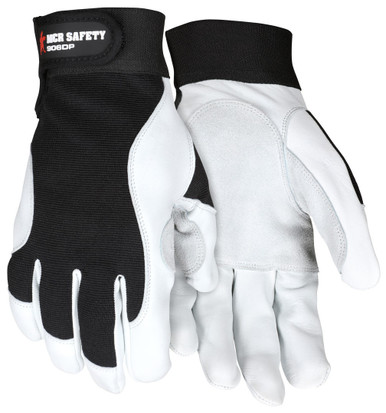
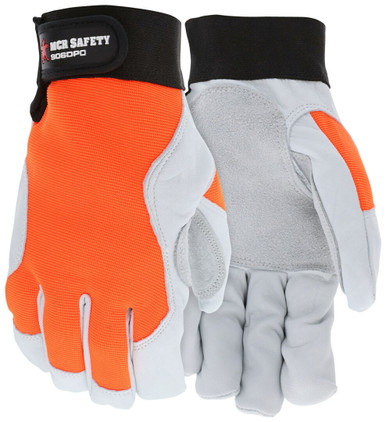
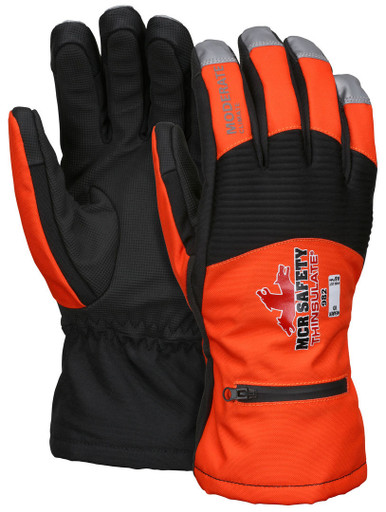
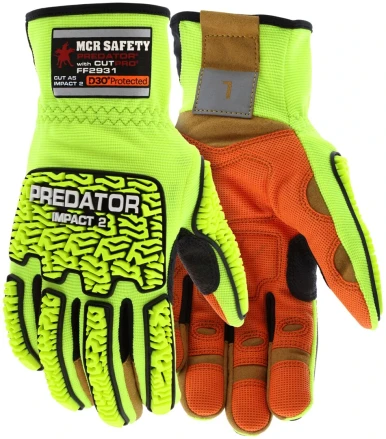
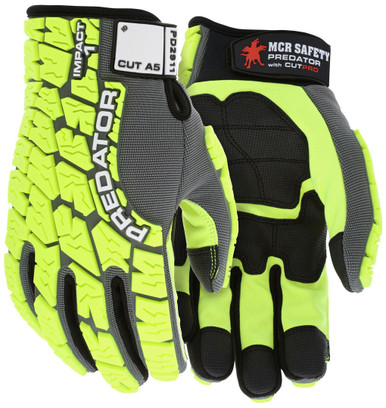
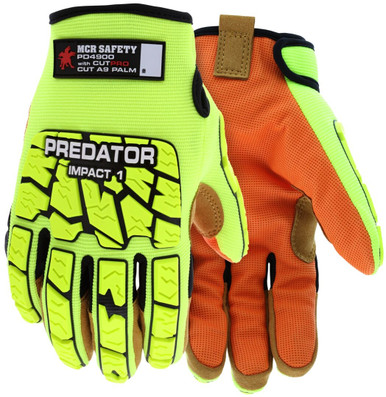
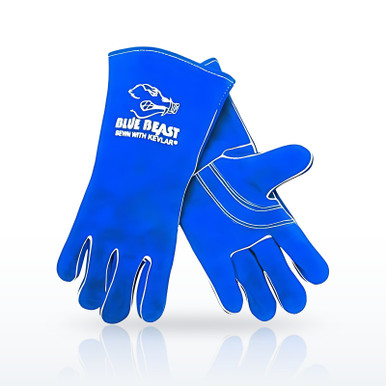
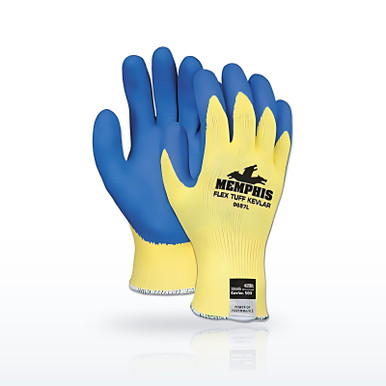
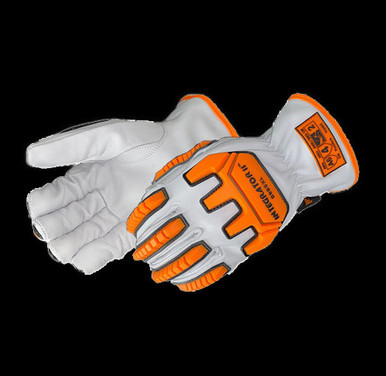
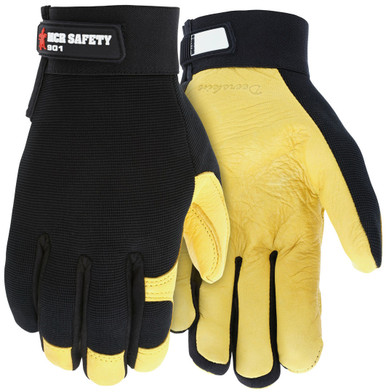
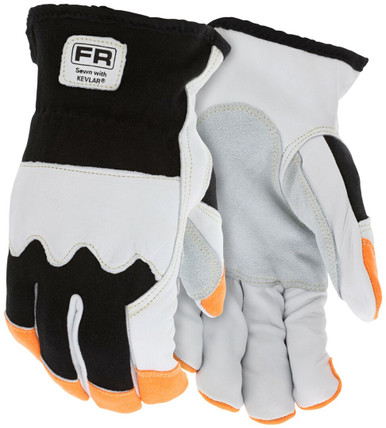
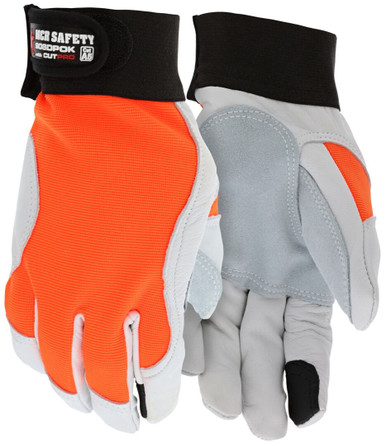
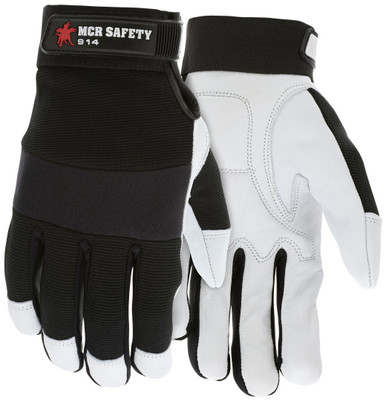
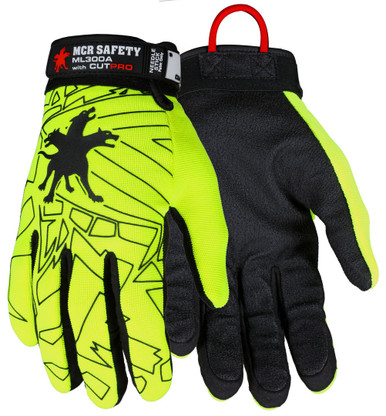
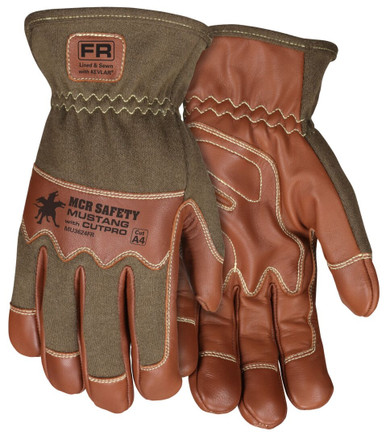
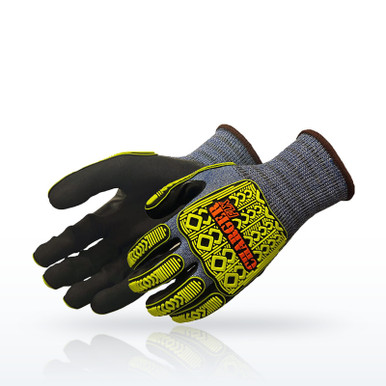
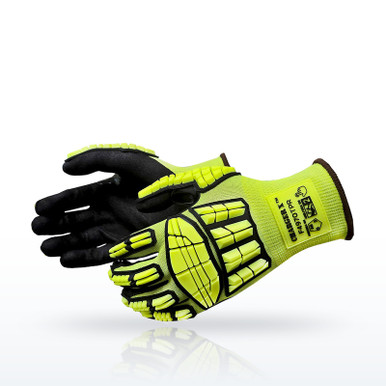
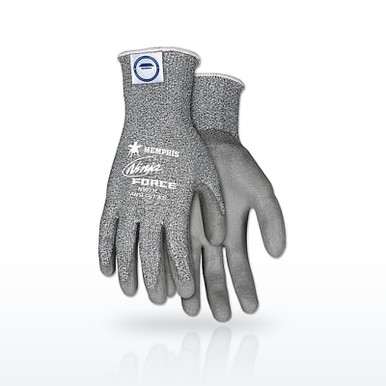
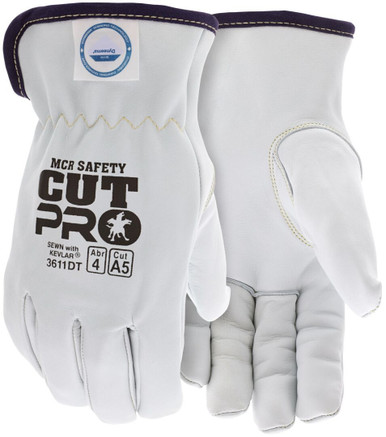
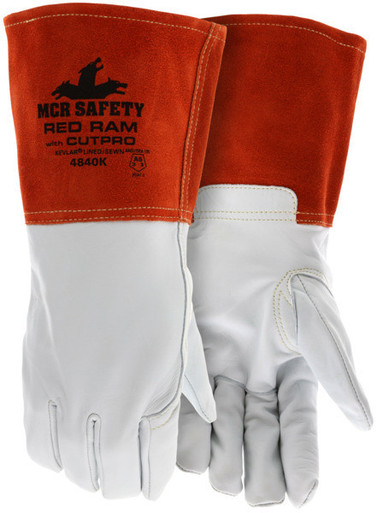
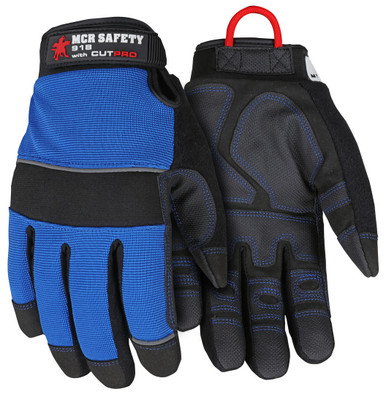

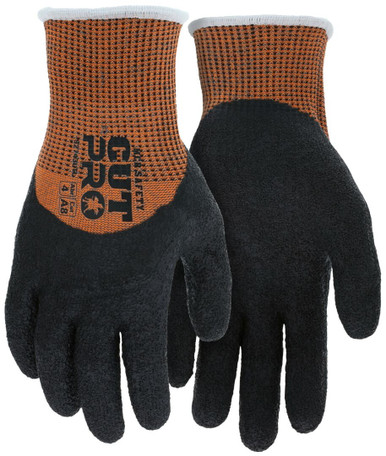
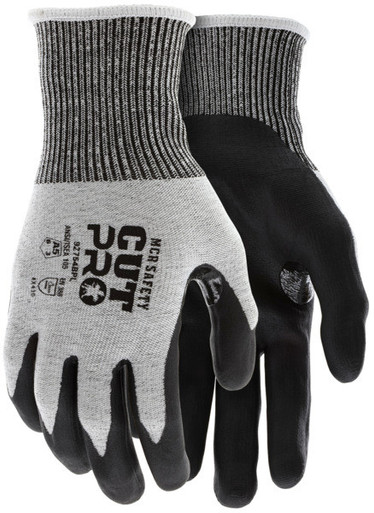
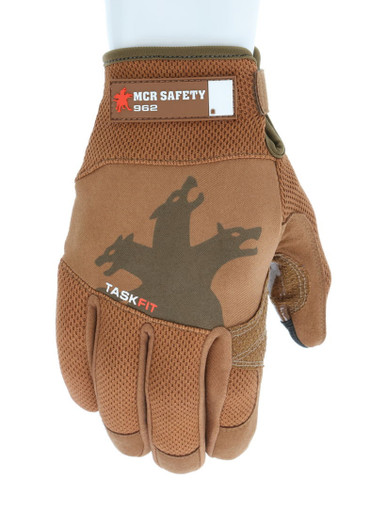
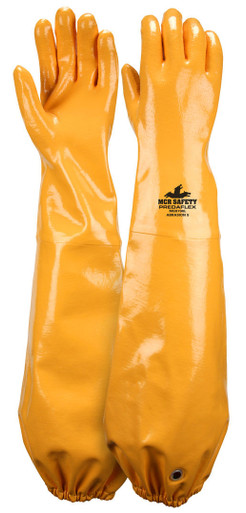
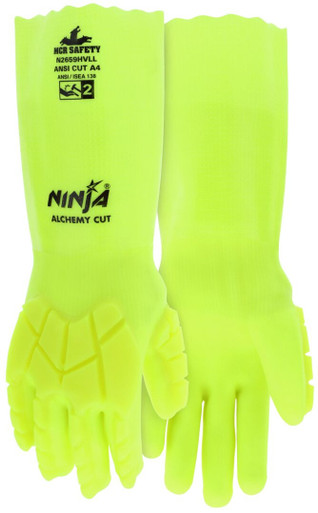
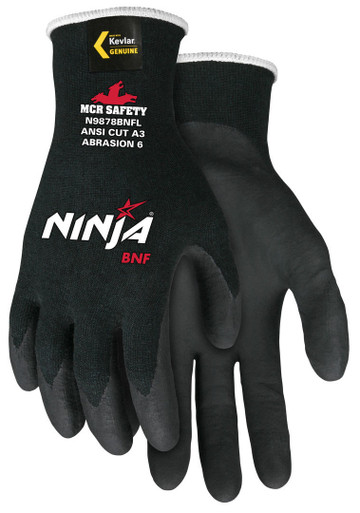
Gloves with a published ASTM F2878 needle-stick level are quoted on request: call (925) 215-7337. All gloves with a puncture level are on the work glove selector.
Questions people ask
What is ANSI puncture level 4?
The glove material withstood at least 100 newtons of force on the EN 388 blunt probe before it penetrated. Level 5 is 150 newtons. (ANSI/ISEA 105-2016.)
What is the highest ANSI puncture level?
Level 5, at 150 newtons or more with the EN 388 probe. The needle-stick scale also tops out at level 5, but at 10 newtons with a hypodermic needle.
Do puncture-resistant gloves stop needles?
Not unless they carry an ASTM F2878 needle-stick level. A needle parts yarns that stop a blunt probe, so a high puncture level says nothing about needles.
What is needle-stick puncture resistance?
A separate ANSI/ISEA 105-2016 test using a 25-gauge hypodermic needle, rated level 1 to 5 from 2 to 10 newtons, added in the 2016 edition for sanitation, medical, recycling and law enforcement work.
What is ANSI abrasion level 4?
The material survived at least 3,000 revolutions on a Taber abrader under a 1,000-gram load. Levels 0 to 3 are tested under 500 grams, so level 4 is a large step up from level 3.
Is ANSI puncture the same as EN 388 puncture?
Same probe and method; different level boundaries. EN 388 has four levels (20, 60, 100, 150 N); ANSI has five, adding level 1 at 10 N. An EN 388 puncture 4 and an ANSI puncture 5 both mean 150 N.
Does cut level tell you anything about puncture?
No. They are separate tests on separate scales. A glove publishes each one it was tested for.
Which gloves have the highest abrasion rating?
Level 6, 20,000 revolutions at 1,000 grams, is published mostly on nitrile, PVC and leather palms. The band and the glove selector list them by level.
Standards and ratings on this page are as published in the documents named and by the manufacturers named. The employer’s hazard assessment and written program decide what applies at a given workplace. Verify a rating on the product and its spec sheet before use.