
Heat-resistant gloves: what the ANSI/ISEA 105 heat and flame levels mean
ANSI/ISEA 105 rates a glove for contact heat on a 5-level scale. The glove material is pressed against a hot plate and the test finds the highest temperature at which the wearer would have 15 seconds before a second-degree burn and would feel pain only after 4 seconds of alarm time. Level 1 is 80°C (176°F), level 2 is 140°C (284°F), level 3 is 200°C (392°F), level 4 is 260°C (500°F) and level 5 is 320°C (608°F). Flame resistance is separate: levels 0 to 4 from a vertical flame test, where level 4 means the material did not ignite in either a 3-second or a 12-second exposure. The band below shows each glove at the heat level its manufacturer publishes.
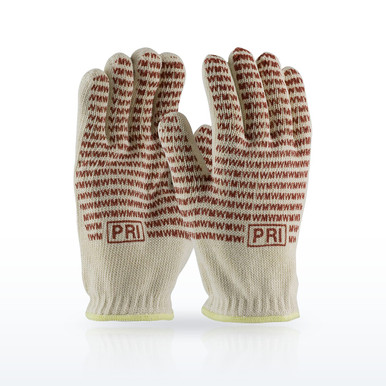 PIP 43-502 high heat glovesNitrile-coated cotton, ASTM F1060 contact heat level 4 (500°F)
Why is the heat level a time, not just a temperature? A hand does not burn at a temperature; it burns at a temperature held for a time. The same cotton hot mill glove that lets you carry a 400°F casting across the shop will burn you if you hold it for a minute. ANSI/ISEA 105 defines the level around the 15 seconds it takes to realize the glove is getting hot, let go and get clear, with a few seconds of pain warning before the burn begins. That is why a level is only useful alongside how long the task keeps the hand on the hot surface.
What do the ANSI heat levels mean?
Conductive (contact) heat under ASTM F1060, as classified in ANSI/ISEA 105-2016. The level is the highest contact temperature at which the glove gave at least 15 seconds to a second-degree burn and at least 4 seconds of alarm time before pain.
How does the ASTM F1060 contact heat test work?
A sample of the glove material, all its layers together, is placed on a hot plate set to a fixed temperature and a sensor on the other side records how fast heat comes through. From that curve the lab reads three times: the time until the sensor reaches the pain threshold, the time until it reaches the second-degree burn threshold, and the difference between them, the alarm time, which is the window the wearer has to feel heat and let go. The sample is run at increasing plate temperatures. The glove’s level is the highest temperature at which the time to burn was at least 15 seconds and the alarm time at least 4 seconds. A glove rated level 3 held 200°C for 15 seconds before burn conditions with 4 seconds of warning; it does not mean the glove is comfortable at 200°C or that it can be worn there indefinitely.
ASTM F1060-08, Standard Test Method for Evaluation of Conductive and Compressive Heat Resistance; ANSI/ISEA 105-2016 pass criteria as summarized in the PIP heat testing guide (15-second burn time, 4-second alarm time).The test is contact only. It says nothing about radiant heat from a furnace, convective heat from flame or hot gas, molten metal splash, or steam. ANSI/ISEA 105 rates only contact heat and flame; the European EN 407 standard adds convective heat, radiant heat and small and large molten metal splash as separate digits, and many of the gloves in the band publish an EN 407 code alongside the ANSI level.
ANSI/ISEA 105-2016 (conductive heat and flame only); EN 407 heat and flame pictogram with six performance digits as published by manufacturers.What do the flame resistance levels mean?
Flame resistance is a separate ANSI/ISEA 105 classification using the ASTM F1358 vertical flame test. The material is exposed to a flame for 3 seconds and then for 12 seconds, and the lab records whether it ignites and how long it keeps burning after the flame is removed (after-flame time). Level 0: ignited in the 3-second exposure with an after-flame over 2 seconds. Level 1: 3-second exposure, after-flame of 2 seconds or less. Level 2: 12-second exposure, after-flame over 2 seconds. Level 3: 12-second exposure, after-flame of 2 seconds or less. Level 4: no ignition in either the 3-second or the 12-second exposure. A glove can carry a heat level and no flame level, or the reverse; aramid and aluminized gloves usually publish both.
ANSI/ISEA 105-2016, flame resistance classification by ASTM F1358; PIP heat testing guide.A third heat classification, heat degradation resistance under ISO 17493, puts the glove material in a hot oven and checks that it does not melt, drip, separate or ignite: level 1 at 100°C, level 2 at 180°C, level 3 at 260°C, level 4 at 340°C. It is published less often and matters for gloves that will spend time near a heat source without touching it.
ANSI/ISEA 105-2016, heat degradation resistance by ISO 17493.How do you choose a heat level from the task?
- Measure or look up the surface temperature of what the hand touches, not the air. A 500°F oven rack and a 500°F casting need the same level; a hot room needs a different glove entirely.
- Match the level to that temperature with margin, then check the task time against the 15 seconds the level is built on. Longer holds need a higher level, a tool, or both.
- Read the whole code. A hot mill glove at level 3 with no cut level is for castings; the same temperature in a stamping plant with sharp edges calls for an aramid glove that publishes both a heat and an ANSI cut level.
- Steam, hot oil and molten metal pass through or stick to a fabric glove regardless of its contact rating. Those need a coated or aluminized glove the maker rates for the hazard.
- OSHA’s hand protection rule puts thermal burns and harmful temperature extremes on the list of hazards the employer must select gloves for; the heat level is the performance characteristic that selection rests on.
Heat-resistant gloves by ANSI contact heat level
19 items · prices liveEach glove is listed at the ASTM F1060 contact heat level, or the ANSI/ISEA 105 heat level, that its manufacturer publishes. Temperatures in group headings are the level thresholds, not the glove’s limit in use. Flame and EN 407 ratings, where published, are on the product page. Contractor Direct orders ship free.
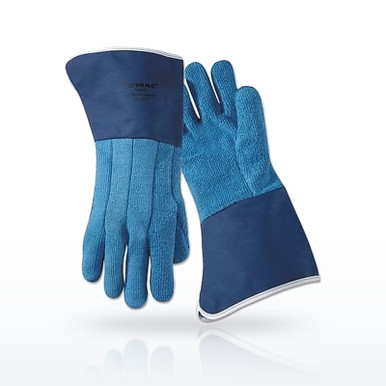
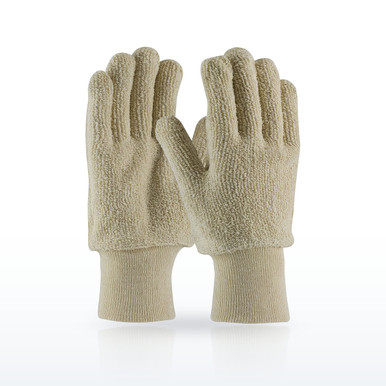
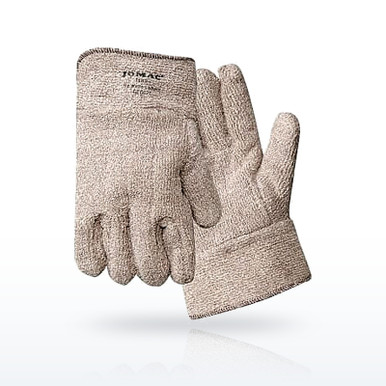
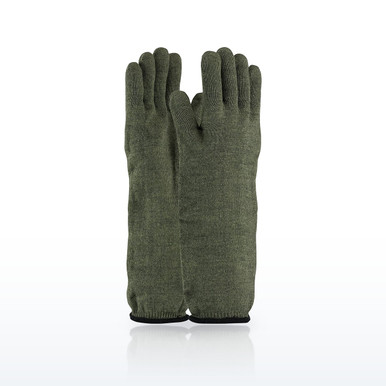
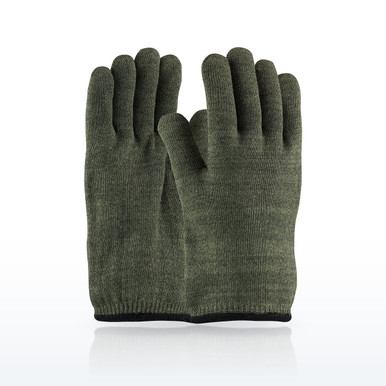
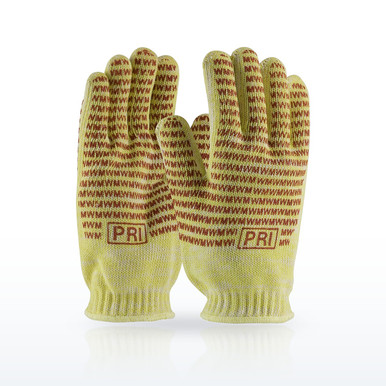
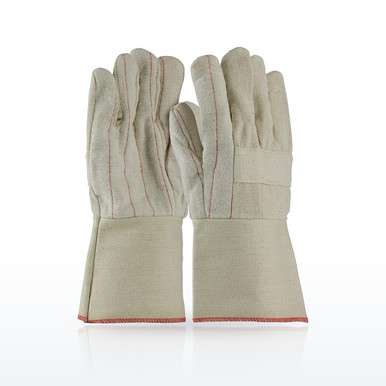
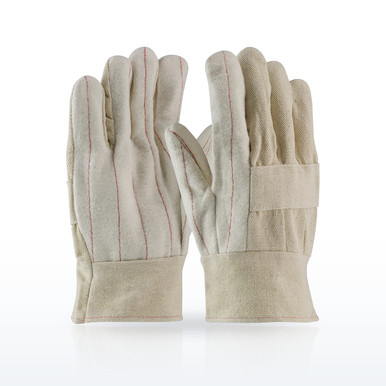
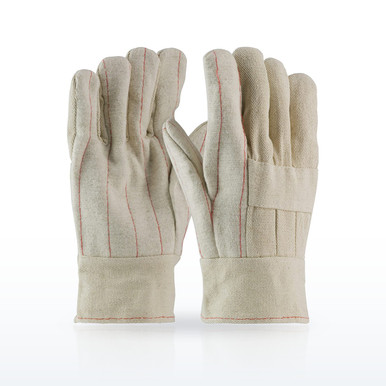
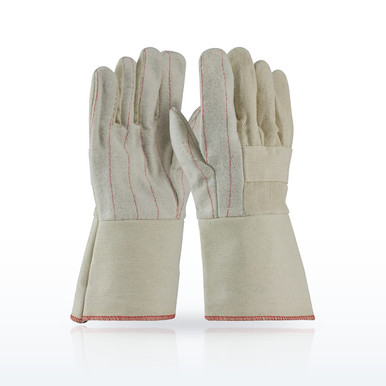
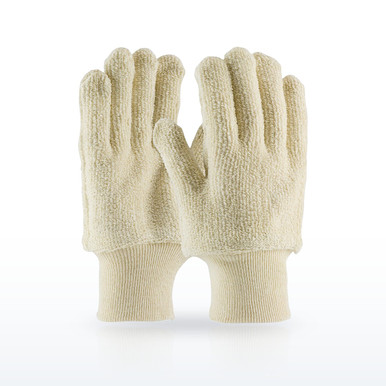
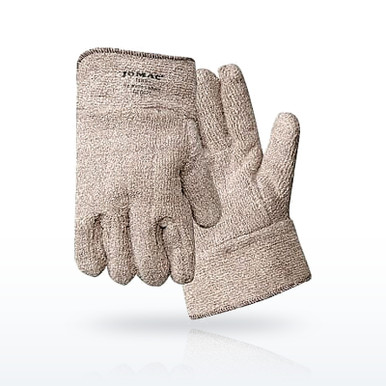
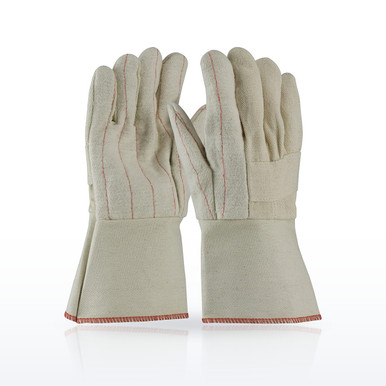
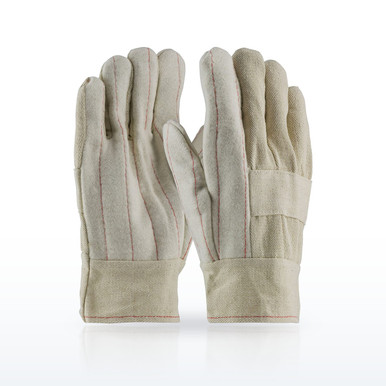
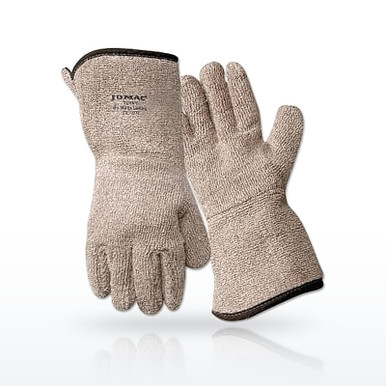
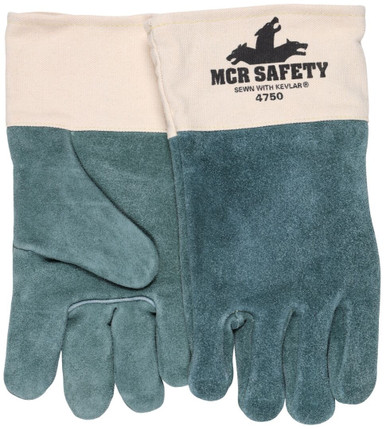
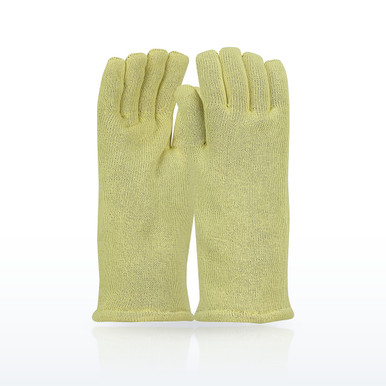
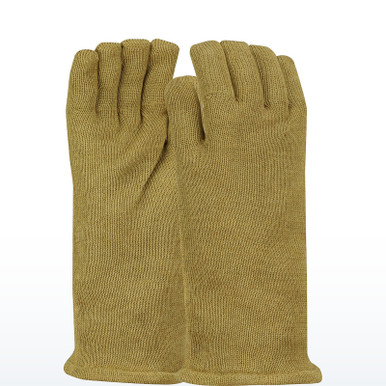
Welding gloves, which are rated for radiant heat and spatter rather than contact heat, are on the welding finder. Hot mill gloves without a published level are on the work glove selector.
Questions people ask
What is ANSI heat level 4?
A glove whose material, tested on a hot plate under ASTM F1060, gave at least 15 seconds before a second-degree burn and 4 seconds of alarm time at 260°C (500°F). (ANSI/ISEA 105-2016.)
What temperature are heat-resistant gloves rated for?
ANSI/ISEA 105 levels 1 to 5 correspond to 80, 140, 200, 260 and 320°C (176, 284, 392, 500 and 608°F) contact temperature, each for a 15-second burn time. Any glove’s rating is on its spec sheet.
Is the heat level how long I can hold something?
No. It is the temperature at which the glove gave 15 seconds before burn conditions. Longer contact needs a higher level or a tool.
What is the difference between heat resistant and flame resistant?
Heat resistance (ASTM F1060) is contact with a hot surface. Flame resistance (ASTM F1358) is whether the material ignites and keeps burning in a flame. ANSI/ISEA 105 rates them separately, levels 1 to 5 and 0 to 4.
What does EN 407 mean on a glove?
The European heat and flame standard. Its pictogram carries six digits: burning behavior, contact heat, convective heat, radiant heat, small molten metal splash and large molten metal splash. ANSI/ISEA 105 covers only the first two kinds of hazard.
Are welding gloves heat-resistant gloves?
They are built for radiant heat and spatter, and most are not tested under ASTM F1060. A welding glove without a published contact heat level has no ANSI heat rating.
Are hot mill gloves rated?
Some are. Hot mill is a construction (layered cotton or canvas with a nap), not a rating; the ones in the band carry a published ASTM F1060 level, and many others do not.
Does OSHA require heat-resistant gloves?
OSHA 1910.138 requires the employer to select hand protection for thermal burns and harmful temperature extremes based on the glove’s performance characteristics. The ANSI level is how that performance is stated.
Standards and ratings on this page are as published in the documents named and by the manufacturers named. The employer’s hazard assessment and written program decide what applies at a given workplace. Verify a rating on the product and its spec sheet before use.