
Gloves for bloodborne pathogens: what 1910.1030 requires
OSHA’s bloodborne pathogens standard requires gloves whenever an employee can reasonably be expected to touch blood, other potentially infectious materials, mucous membranes or broken skin, and whenever they handle contaminated items or surfaces. The employer provides them at no cost, in the right sizes, and keeps them within reach. A disposable glove is replaced as soon as practical once it is contaminated, and at once if it tears or punctures. It is never washed for reuse. A heavier utility glove may be cleaned and reused until it cracks, peels or tears. Employees allergic to the standard glove must be given a liner, a hypoallergenic glove or another alternative.
Why does the standard single out gloves? Hepatitis B, hepatitis C and HIV pass through broken skin and mucous membranes, not through intact skin. Hands are where the contact happens: first aid, cleanup, laundry, trash with sharps in it. A glove keeps blood off the small cuts and hangnails every working hand has, and it is the one piece of protective equipment the standard names in its own paragraph with its own rules for when it goes on and when it comes off.
What does 1910.1030 say about gloves?
The glove rules sit in paragraph (d)(3), the personal protective equipment part of the standard.
Who is covered by the bloodborne pathogens standard?
Any employee with occupational exposure: reasonably anticipated skin, eye, mucous membrane or parenteral contact with blood or other potentially infectious materials as part of their duties. On an industrial site that usually means the designated first aid responders, anyone assigned to clean up after an injury, and anyone who handles contaminated laundry, sharps or regulated waste. The employer lists those job classifications in a written exposure control plan.
29 CFR 1910.1030(b), definition of occupational exposure; (c)(1)(i) and (c)(1)(ii), exposure control plan.Other potentially infectious materials is a defined term. It covers specific body fluids (semen, vaginal secretions, cerebrospinal, synovial, pleural, pericardial, peritoneal and amniotic fluids, saliva in dental procedures), any body fluid visibly contaminated with blood, any fluid where it is hard to tell, and unfixed human tissue. Sweat, tears, urine and vomit are not on the list unless blood is visible in them.
29 CFR 1910.1030(b), definition of other potentially infectious materials.What makes a glove “appropriate” under the standard?
The standard does not name a material or a thickness. It sets a performance test: equipment is appropriate only if it does not permit blood or other potentially infectious materials to pass through to or reach the employee’s work clothes, street clothes, undergarments, skin, eyes, mouth or other mucous membranes under normal conditions of use, for the duration of use. Any glove that keeps liquid out for the length of the task passes; a glove that leaks or tears partway through does not.
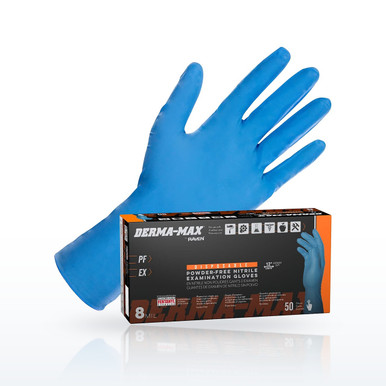
29 CFR 1910.1030(d)(3)(i).In practice employers use examination-grade nitrile or latex gloves. Exam grade means the manufacturer makes them to a medical glove specification (ASTM D6319 for nitrile, ASTM D3578 for latex) with a tighter limit on pinholes than an industrial-grade glove. Nitrile is the usual choice because it contains no natural rubber latex protein, so it does not trigger latex allergy, and it resists punctures better than latex of the same thickness. The product band shows the material and grade each manufacturer publishes.
ASTM D6319 (nitrile examination gloves) and ASTM D3578 (rubber examination gloves), as cited on manufacturer spec sheets. The standard itself names no material.How do you take a contaminated glove off?
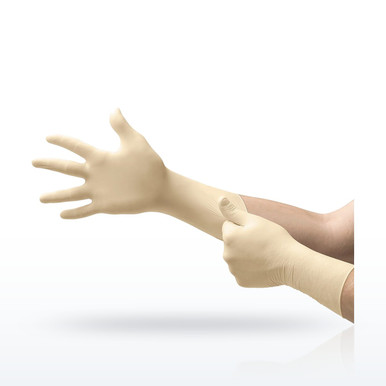
- Pinch the outside of one glove at the wrist with the other gloved hand, and peel it off so it turns inside out. Hold it in the still-gloved hand.
- Slide two bare fingers under the cuff of the remaining glove and peel it down over the first glove, so both end up inside out with the contaminated side inside.
- Drop them in the regulated waste container if they are contaminated with blood or OPIM; otherwise in the ordinary trash as the exposure control plan directs.
- Wash your hands with soap and running water as soon as possible after removing gloves. Where a sink is not available, an antiseptic hand cleanser or towelette is used and hands are washed with soap and water as soon as feasible.
Are gloves the only equipment required?
- Masks with eye protection (goggles, glasses with solid side shields, or a chin-length face shield) whenever splashes, spray, spatter or droplets of blood or OPIM may be generated and eye, nose or mouth contamination can be reasonably anticipated.
- Gowns, aprons, lab coats or similar clothing in occupational exposure situations, chosen by the degree of exposure expected.
- The employer cleans, launders, repairs, replaces and disposes of the equipment at no cost to the employee.
- Contaminated equipment comes off before leaving the work area and goes in a designated container.
Exam gloves and utility gloves
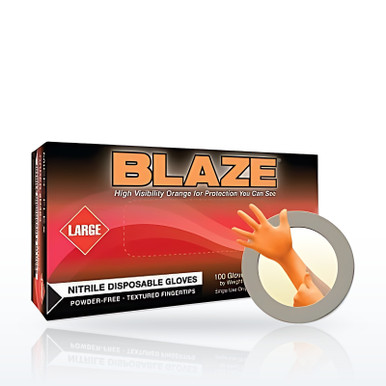
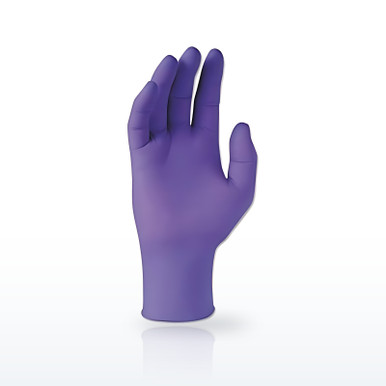
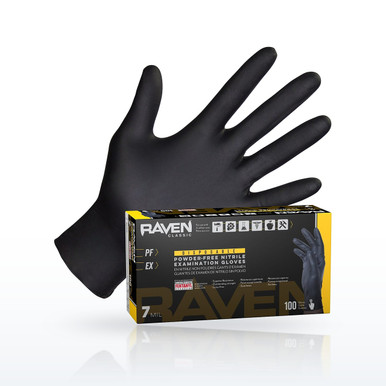
19 items · prices liveMaterial, thickness and grade are as published by the manufacturer; the ASTM specification and box count are on each product page. Contractor Direct orders ship free.
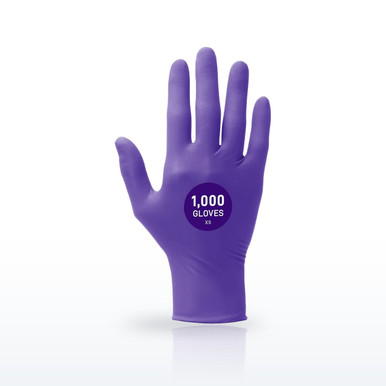
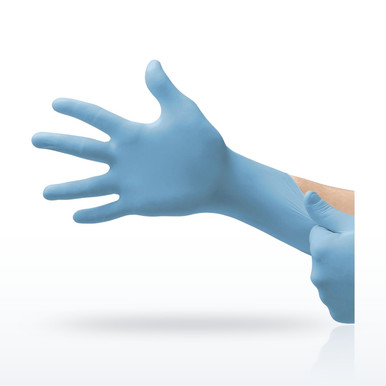
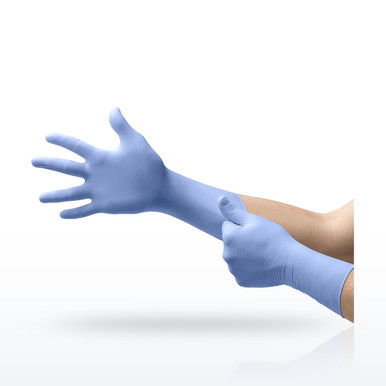
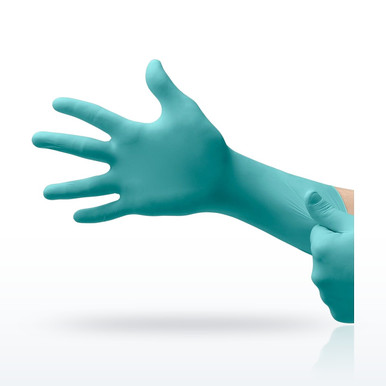
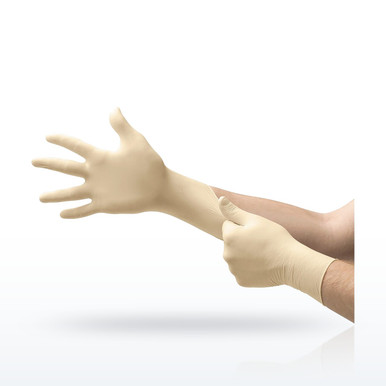
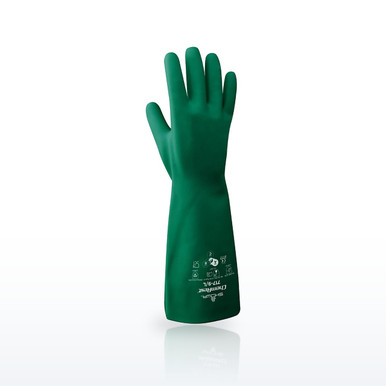
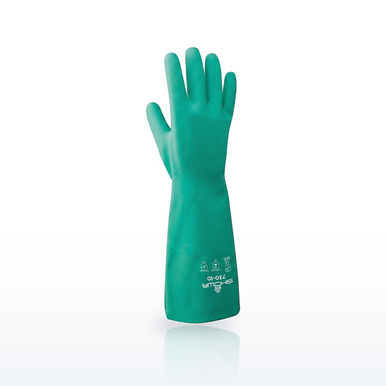
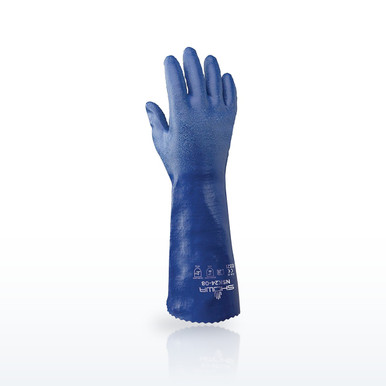
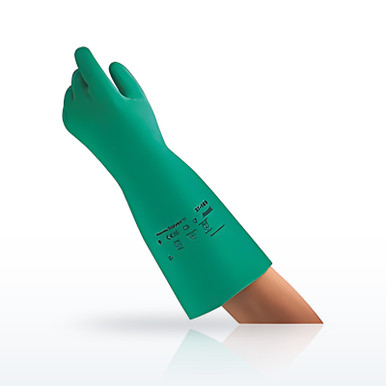
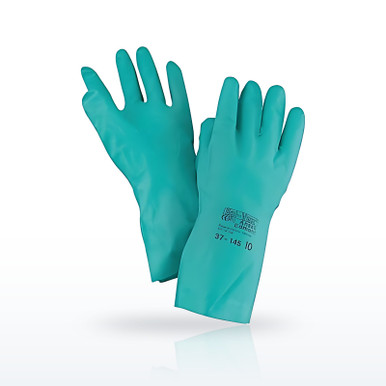
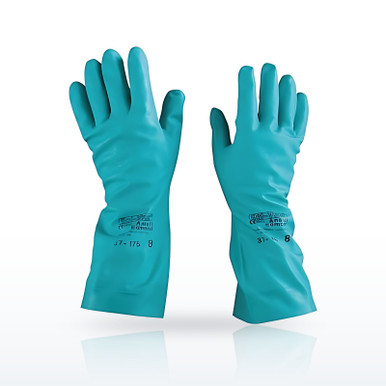
Bloodborne pathogen cleanup kits, which include gloves, are in the first aid finder. Every disposable glove we carry is on the work glove selector.
Questions people ask
Does OSHA require nitrile gloves for bloodborne pathogens?
No material is named. The standard requires gloves that keep blood and OPIM off the skin for the duration of use. Nitrile is the common choice because it is latex-free and resists puncture, and it is what most exam gloves are made of.
Can you wash disposable gloves and use them again?
No. 1910.1030(d)(3)(ix)(B) prohibits washing or decontaminating single-use gloves for reuse.
When do you change gloves?
As soon as practical once they are contaminated, and as soon as feasible if they tear, puncture or stop acting as a barrier. Between patients or tasks is the usual practice. (1910.1030(d)(3)(ix)(A).)
What is a utility glove?
A heavier reusable glove, usually unsupported nitrile or rubber, used for cleanup and decontamination. It may be cleaned and reused until it is cracked, peeling, torn, punctured or otherwise deteriorated. (1910.1030(d)(3)(ix)(C).)
Who pays for the gloves?
The employer. All personal protective equipment under 1910.1030 is provided, cleaned, replaced and disposed of at no cost to the employee. (1910.1030(d)(3)(i) and (iv).)
What if an employee is allergic to latex?
The employer must make hypoallergenic gloves, glove liners, powderless gloves or a similar alternative readily accessible to that employee. (1910.1030(d)(3)(iii).)
Do you need gloves to give first aid at work?
If the responder is a designated first aid provider with occupational exposure, yes: gloves whenever hand contact with blood can be reasonably anticipated. Most workplace first aid kits carry exam gloves for this reason.
Are gloves required to handle sharps containers or biohazard bags?
Yes. Handling or touching contaminated items or surfaces is one of the three triggers in (d)(3)(ix).
Standards and ratings on this page are as published in the documents named and by the manufacturers named. The employer’s hazard assessment and written program decide what applies at a given workplace. Verify a rating on the product and its spec sheet before use.