
ANSI Z308.1 Class A vs Class B first aid kits: what is in each
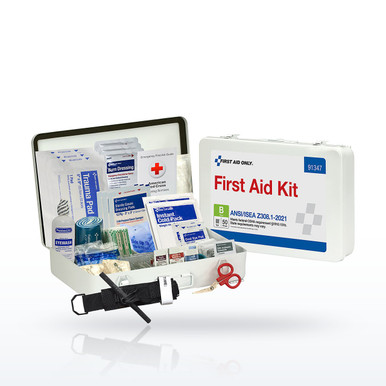
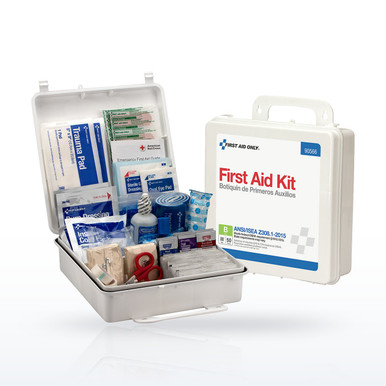
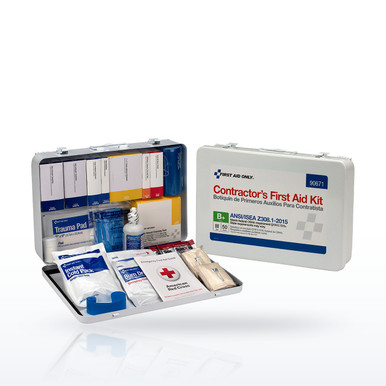
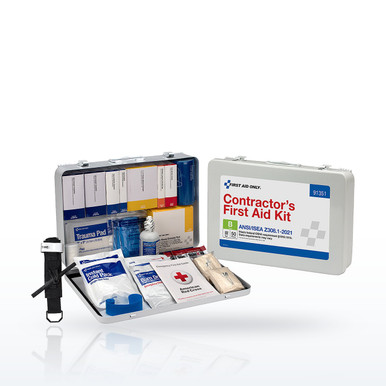
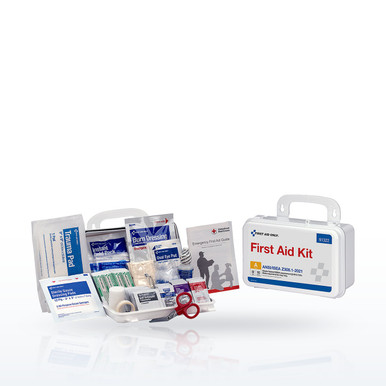
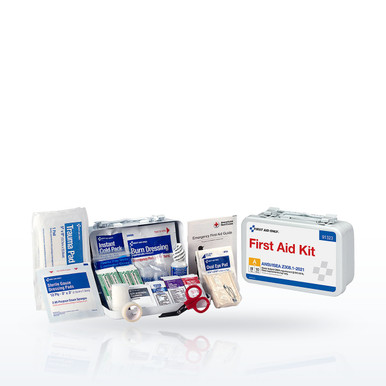
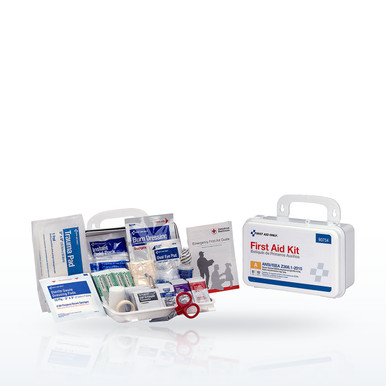
Class A and Class B are the two fills in ANSI/ISEA Z308.1-2021. Class A is the baseline kit for the common workplace injuries: cuts, scrapes, minor burns, eye irritation, sprains. Class B carries the same kinds of item in larger quantities and adds three things Class A does not have: a 4 x 24 inch splint, a tourniquet, and a 4-inch roller bandage. It is meant for larger crews, higher-risk work and sites with more complex hazards or a longer wait for help. Both classes come in the same four container types. The standard leaves the choice to the employer’s assessment of the workplace; nothing in it ties the class to a head count.
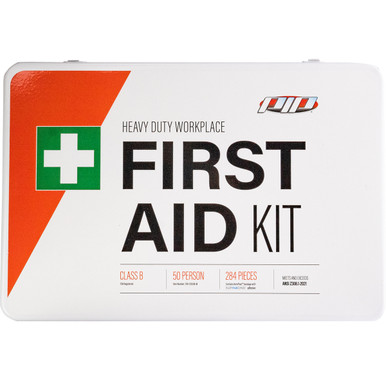 PIP 299-21050B-M ANSI Class B metal first aid kit, 50 personZ308.1-2021 Class B fill with splint and tourniquet
Why two classes? Before 2015 the standard had one minimum fill and every kit on the market met it. The 2015 edition split the fill in two so that a small office and a sawmill would not be buying the same kit. Class A is sized for the injuries nearly every workplace sees. Class B is for the workplace where a broken bone, a severe cut or a bad burn is a credible injury and the responder may be alone with it for a while. The 2021 edition kept the two classes and added a foil blanket and more sanitizer to both.
How does the standard say to choose?
There is no head-count rule. The standard describes the workplace, and the employer matches it.
Class A vs Class B: the minimum fill side by side
| Item (minimum size) | Class A | Class B |
|---|---|---|
| Adhesive bandages, 1 x 3 in | 16 | 50 |
| Adhesive tape, 2.5 yd | 1 | 2 |
| Antibiotic application, 1/57 oz | 10 | 25 |
| Antiseptic, 1/57 oz | 10 | 50 |
| Breathing barrier (CPR) | 1 | 1 |
| Burn dressing, gel-soaked, 4 x 4 in | 1 | 2 |
| Burn treatment, 1/32 oz | 10 | 25 |
| Cold pack, 4 x 5 in | 1 | 2 |
| Eye covering with attachment, 2.9 sq in | 2 | 2 |
| Eye and skin wash | 1 fl oz | 4 fl oz |
| First aid guide | 1 | 1 |
| Foil blanket, 52 x 84 in | 1 | 1 |
| Hand sanitizer, 1/32 oz | 10 | 20 |
| Medical exam gloves | 2 pairs | 4 pairs |
| Roller bandage, 2 in x 4 yd | 1 | 2 |
| Roller bandage, 4 in x 4 yd | none | 1 |
| Scissors | 1 | 1 |
| Splint, 4 x 24 in | none | 1 |
| Sterile pads, 3 x 3 in | 2 | 4 |
| Tourniquet, 1.5 in wide minimum | none | 1 |
| Trauma pads, 5 x 9 in | 2 | 4 |
| Triangular bandage, 40 x 40 x 56 in | 1 | 2 |
Quantities are minimums and manufacturers may exceed them; “A+” and “B+” on a label are manufacturer terms for a class fill with extras, not classes in the standard. A tourniquet under the 2021 edition means a device that can stop arterial bleeding in a limb; the thin rubber band used to draw blood does not qualify. Gloves are counted in pairs.
ANSI/ISEA Z308.1-2021 Table 1, minimum required supplies, as published by ISEA and reproduced by the kit manufacturers (First Aid Only, PIP).
What do the three Class B-only items do?
The splint is a padded, moldable 4 x 24 inch strip that immobilizes a wrist, forearm or ankle until the person reaches care. The tourniquet stops life-threatening bleeding from an arm or leg when pressure cannot; it is the item Stop the Bleed training is built around. The 4-inch roller bandage wraps a large dressing on a thigh, shoulder or torso where the 2-inch roll in a Class A kit is too narrow. Together they are what a responder needs for the injuries that cannot wait for an ambulance to be managed.
ANSI/ISEA Z308.1-2021 Table 1 (Class B items and sizes); Stop the Bleed, American College of Surgeons (tourniquet use).A Class A kit can be brought up to Class B. The manufacturers sell the three items and the quantity top-ups as refills, and a kit relabeled by its maker as Class B after the upgrade is a Class B kit. Mixing in loose supplies from a drugstore makes a kit that may hold the same things but no longer carries the manufacturer’s class label, which is what an inspector reads.
Manufacturer refill data for the kits in the band; ANSI/ISEA Z308.1-2021 labeling (kits marked with class and container type).Does the container type change with the class?
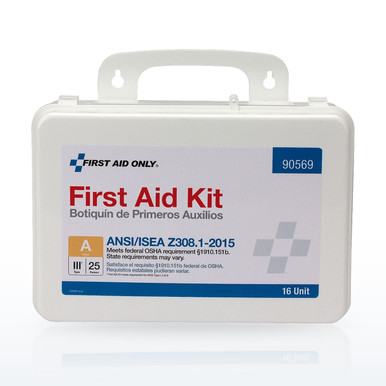
No. Both classes come in all four container types: Type I, mounted indoors; Type II, portable indoors; Type III, portable, mountable and water-resistant for indoor or outdoor use; Type IV, portable, mountable, waterproof and impact-resistant for vehicles and rough handling. A Class B fill in a Type I cabinet is a plant wall cabinet; a Class B fill in a Type III or IV case is a truck kit. The class says what is inside; the type says where it can live.
ANSI/ISEA Z308.1-2021 section 4 (kit classes and container Types I to IV).ANSI Class A and Class B kits and cabinets
18 items · prices liveClass and edition are as stated by each manufacturer on the kit label and product page; A+ and B+ are manufacturer terms for a class fill with extras. Crew size is the manufacturer’s sizing. Contractor Direct orders ship free.
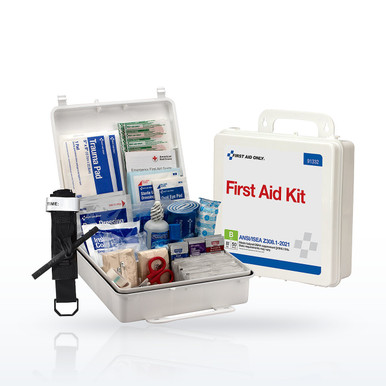
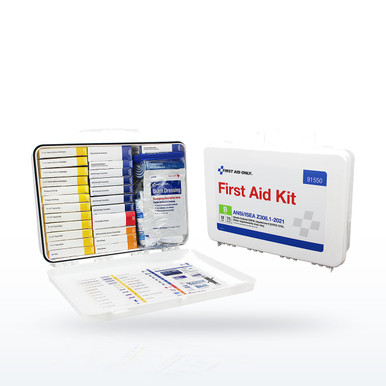
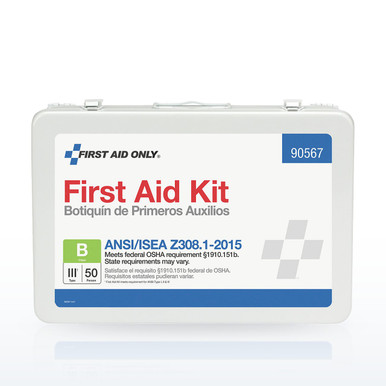
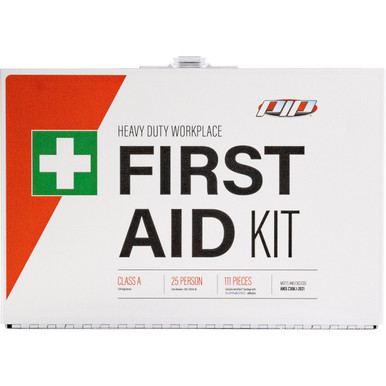
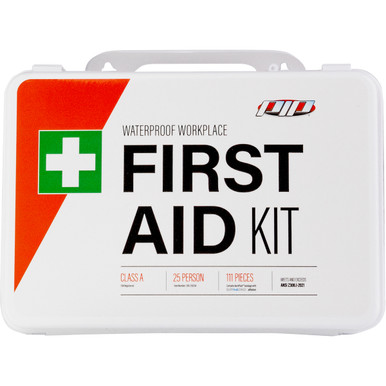
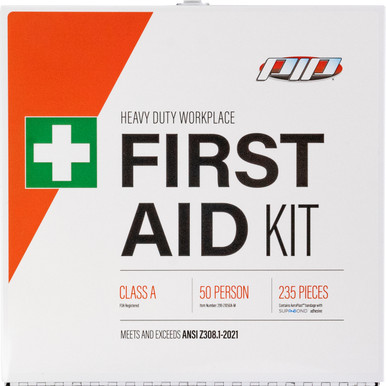
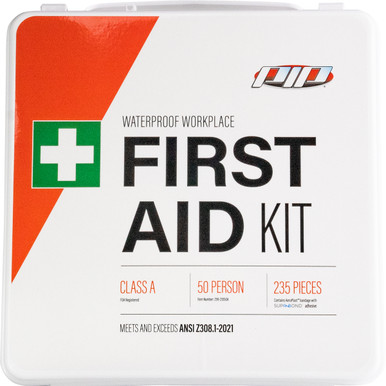
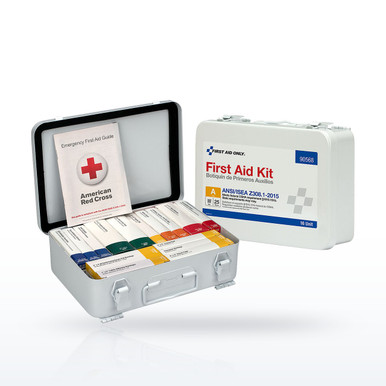
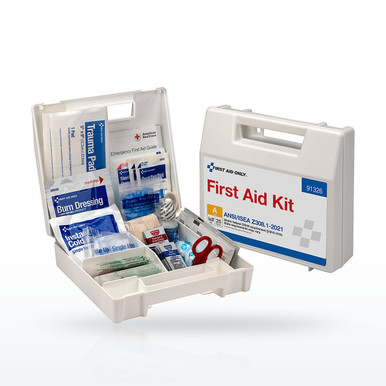
Refills to bring a kit from Class A to Class B, and bleeding control kits, are in the first aid finder and the guides below.
Questions people ask
What is the difference between a Class A and Class B first aid kit?
Class B holds more of each item and adds a 4 x 24 inch splint, a tourniquet and a 4-inch roller bandage. Class A is the baseline for common injuries; Class B is for higher-risk or larger workplaces.
Which first aid kit class does OSHA require?
Neither by name. OSHA requires adequate supplies (1910.151(b)); its Appendix A points to Z308.1. The employer picks the class from a hazard assessment.
How many people is a Class B kit for?
The standard does not set a number. Manufacturers size kits (25, 50 person) by how long the fast-moving items last between restocks; the class fill is the same in each size.
Does a Class A kit have a tourniquet?
Not under the 2021 table. Class B does. Where severe bleeding is a credible injury the standard’s guidance is a separate bleeding control kit.
What is an ANSI A+ kit?
A manufacturer’s label for a Class A fill with extra supplies beyond the minimum. It is still Class A under the standard.
Can I upgrade a Class A kit to Class B?
Yes, with the manufacturer’s refills for the splint, tourniquet, 4-inch roller and the quantity differences; the kit maker’s Class B label is what shows it.
What changed in Z308.1-2021?
A foil blanket was added to both classes, hand sanitizer went to 10 (A) and 20 (B) packets, the tourniquet was defined so a blood-draw band does not count, and guidance was added on bleeding control kits and hazard assessment. Effective October 15, 2022.
Standards and ratings on this page are as published in the documents named and by the manufacturers named. The employer’s hazard assessment and written program decide what applies at a given workplace. Verify a rating on the product and its spec sheet before use.