
What should be in a workplace first aid kit? The Z308.1 minimum fill
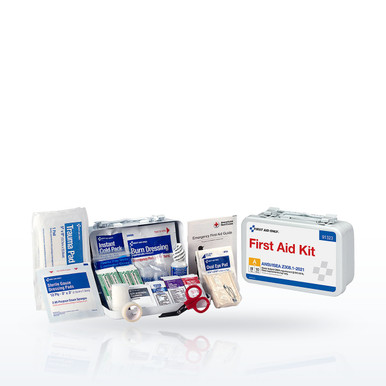
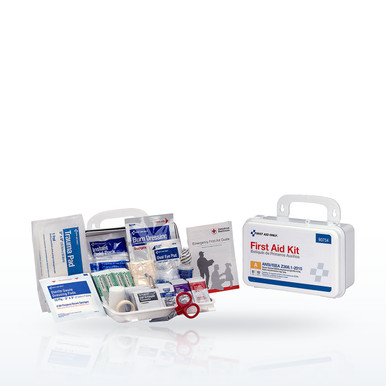
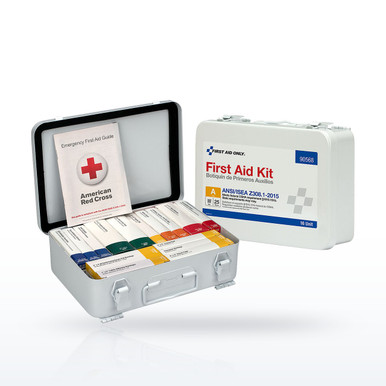
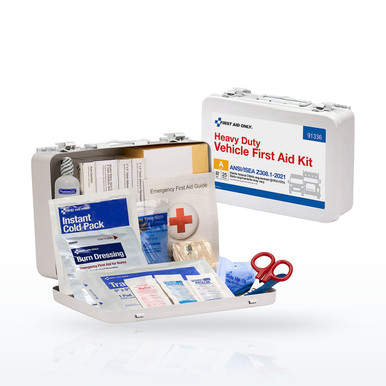
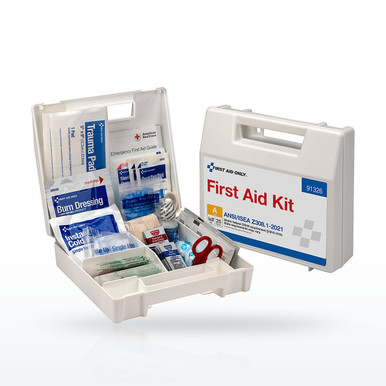
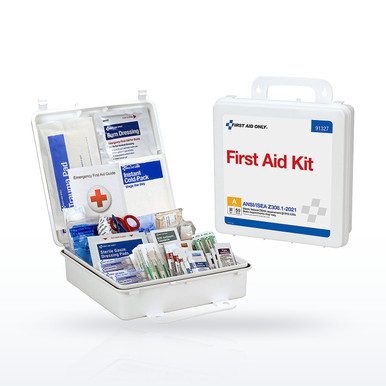
OSHA requires adequate first aid supplies but does not list them. The list comes from ANSI/ISEA Z308.1-2021, which OSHA’s own appendix points to. A Class A kit, the one for most workplaces, holds 19 kinds of item: 16 adhesive bandages, adhesive tape, 10 antibiotic packets, 10 antiseptic wipes, a CPR breathing barrier, a gel-soaked burn dressing, 10 burn treatment packets, a cold pack, 2 eye coverings, 1 ounce of eye wash, a first aid guide, a foil blanket, 10 hand sanitizer packets, 2 pairs of exam gloves, a 2-inch roller bandage, scissors, 2 sterile pads, 2 trauma pads and a triangular bandage. Class B is the larger fill for bigger or higher-risk sites and adds a splint, a tourniquet and a 4-inch roller bandage. Everything is inspected monthly and after each use.
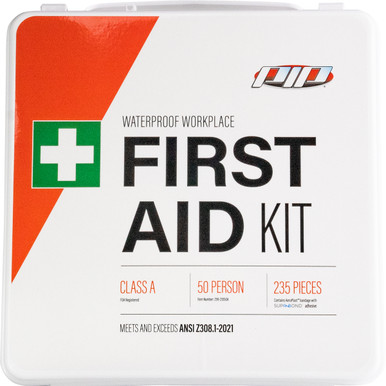
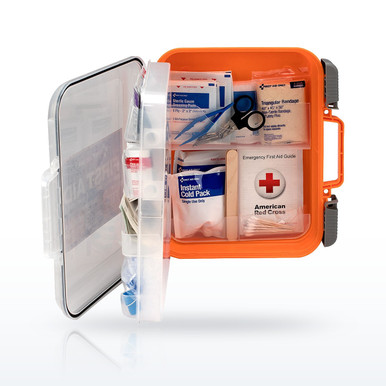
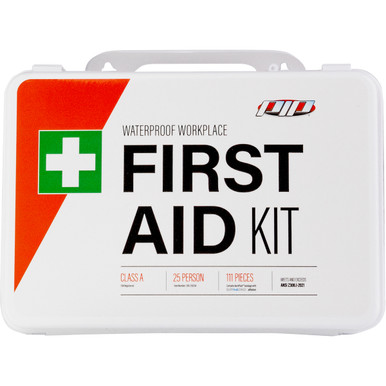 PIP 299-21025A ANSI Class A waterproof first aid kit, 25 personZ308.1-2021 Class A fill in a waterproof case
Why does a standard decide what goes in the kit? 1910.151(b) says adequate first aid supplies must be readily available and stops there. In 1978 ISEA wrote Z308.1 to say what adequate means, and OSHA added a non-mandatory appendix to 1910.151 saying that a kit meeting Z308.1 is adequate for a typical small worksite. The standard is revised about every six years; the 2021 edition took effect October 15, 2022. A kit labeled to an older edition is not wrong, but it is missing the items added since, and a manufacturer’s 2021 refill brings it current.
What does the 2021 edition change?
If your kit was bought before late 2022, these are the items to check.
What is in a Class A kit, item by item?
- Adhesive bandages, 1 x 3 inch: 16
- Adhesive tape, 2.5 yards total: 1
- Antibiotic application (ointment), 1/57 ounce packets: 10
- Antiseptic (wipes or packets), 1/57 ounce: 10
- Breathing barrier for CPR: 1
- Burn dressing, gel-soaked, 4 x 4 inch: 1
- Burn treatment (gel), 1/32 ounce packets: 10
- Cold pack, 4 x 5 inch: 1
- Eye covering with a means of attachment, 2.9 square inches: 2
- Eye and skin wash: 1 fluid ounce total
- First aid guide: 1
- Foil blanket, 52 x 84 inch: 1
- Hand sanitizer, 1/32 ounce packets: 10
- Medical exam gloves: 2 pairs
- Roller bandage, 2 inch x 4 yards: 1
- Scissors: 1
- Sterile pads, 3 x 3 inch: 2
- Trauma pads, 5 x 9 inch: 2
- Triangular bandage, 40 x 40 x 56 inch: 1
How big a kit does the crew need?
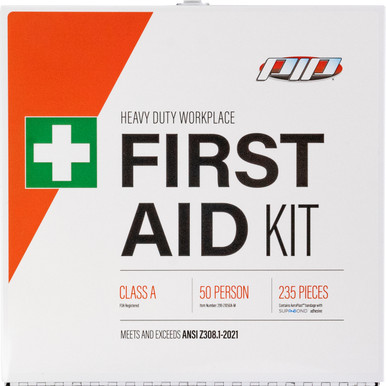
The standard sets the fill, not a head count. The “25 person” and “50 person” on kit labels are the manufacturer’s sizing: a 25-person kit carries the Class A fill with enough extra of the fast-moving items (bandages, antiseptic, gloves) for a crew that size between restocks. A 10-person kit also carries the full Class A fill, in a smaller case. The right question is how many kits, not how big: one within easy reach of every work area, so no one walks more than a minute or two for a bandage, and a kit on every vehicle that goes to a site.
ANSI/ISEA Z308.1-2021 section 4 (kit classes are defined by contents, not by number of employees); manufacturer sizing as labeled on each kit; 29 CFR 1926.50(d)(1) (supplies easily accessible).The container is typed by where it will live. Type I is wall-mounted indoors; Type II is portable indoors; Type III is portable, mountable and water-resistant for indoor or outdoor use; Type IV is portable, mountable, waterproof and impact-resistant, for vehicles and rough handling. Construction adds its own rule: the contents go in a weatherproof container with each item individually sealed, checked before the kit goes out and at least weekly on the job.
ANSI/ISEA Z308.1-2021 section 4 (container Types I to IV); 29 CFR 1926.50(d)(2).What should be added for your hazards?
- Burns (kitchens, welding, hot work, steam): more gel-soaked dressings in larger sizes, and a burn kit at the hazard. The minimum is one 4 x 4 dressing.
- Cuts from blades and sheet metal, saws, augers: a bleeding control kit with a real tourniquet and a hemostatic or packing gauze, and the training to use it.
- Eye hazards: more eye wash than the 1-ounce minimum, and where a corrosive is present, an eyewash station under 1910.151(c), which the kit does not satisfy.
- Food handling: blue metal-detectable bandages so a lost bandage shows up on the line.
- Remote sites and vehicles: a Type III or IV case, a foil blanket per person, and a larger supply of everything, since restocking is days away.
- Bloodborne pathogens: if employees are expected to give first aid, 1910.1030 applies to them and a BBP cleanup kit belongs beside the first aid kit.
How often is the kit inspected?
At least monthly, and after every use. Check expiration dates (antiseptics, ointments, eye wash and burn gel all expire), throw out anything used, opened, damaged or past date, restock to the fill, and wipe down the case and latches. Put the date and initials on a card inside the lid. Construction checks weekly on the job. Many cabinets now use a refill system where each item sits in a labeled slot so the gap shows at a glance; the band includes those refills.
ANSI/ISEA Z308.1-2021 inspection and maintenance guidance (monthly and after use, as summarized by ISEA and the manufacturers); 29 CFR 1926.50(d)(2) (weekly on each job).ANSI Class A first aid kits and cabinets
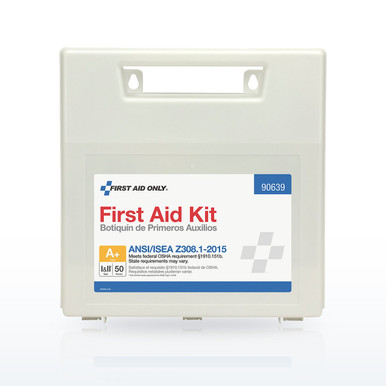
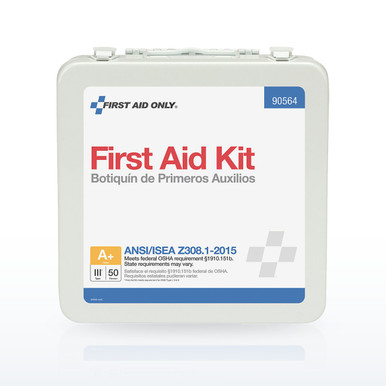
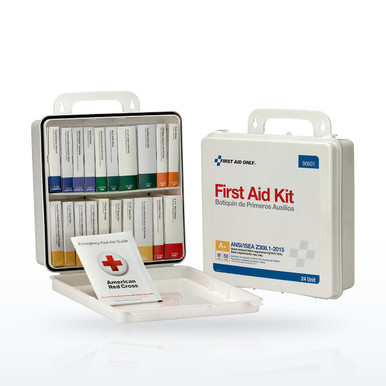
18 items · prices liveClass and edition are as stated by each manufacturer on the kit label and product page; A+ is a manufacturer term for a Class A fill with extras. Crew size is the manufacturer’s sizing. Free shipping on orders over $199.
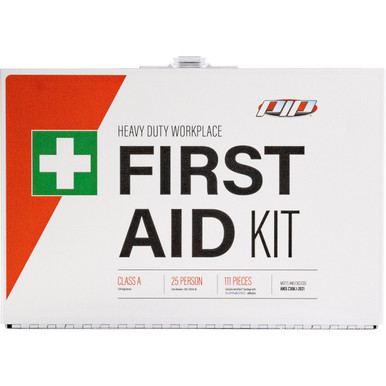
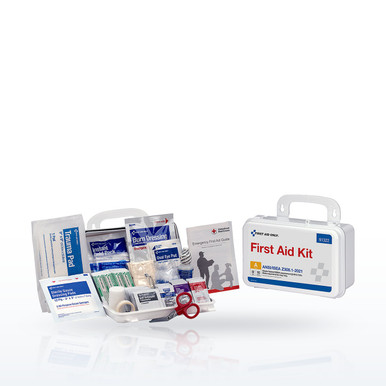
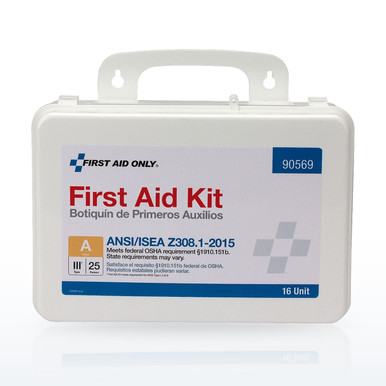
Class B kits, bleeding control kits and refills are in the first aid finder and the guides below.
Questions people ask
What does OSHA require in a first aid kit?
OSHA requires adequate supplies, readily available (1910.151(b)), and its non-mandatory Appendix A says a kit meeting ANSI Z308.1 is adequate for a typical small worksite. The item list is the standard’s.
How many items are in an ANSI Class A first aid kit?
19 kinds of item in the 2021 edition, from 16 adhesive bandages to a triangular bandage. The full list with quantities is above.
What is the difference between Class A and Class B?
Class B carries more of everything and adds a splint, a tourniquet and a 4-inch roller bandage. It is for larger crews, higher-risk work or sites far from help. The comparison guide is linked below.
Does a first aid kit need a tourniquet?
A Class B kit does; a Class A kit does not under the 2021 table. Where a severe cut is a credible injury, the standard’s guidance is a separate bleeding control kit with one.
How often should a first aid kit be checked?
Monthly and after every use under Z308.1. Construction sites check weekly on the job under 1926.50(d)(2).
Is a 25-person kit enough for 30 people?
The class fill is the same in a 10, 25 or 50-person kit; the number is the manufacturer’s estimate of how long the fast-moving items last. More kits in more places beats one bigger kit.
Do first aid supplies expire?
Yes: antiseptic wipes, ointments, burn gel, eye wash and some tapes carry dates. The monthly check is when they are caught.
Can I build my own kit?
Yes, if it holds at least the Table 1 fill in the stated sizes and the container suits the location. A kit labeled to Z308.1-2021 saves the work of proving it.
Related guides
OSHA first aid kit requirements1910.151 and Z308.1 togetherClass A vs Class B first aid kitsWhat is in each, side by sideBleeding control kits and tourniquetsStop the Bleed and Z308.1First aid provider under OSHAWhen a trained person is requiredBloodborne pathogensWhat 1910.1030 requires of first aidersStandards and ratings on this page are as published in the documents named and by the manufacturers named. The employer’s hazard assessment and written program decide what applies at a given workplace. Verify a rating on the product and its spec sheet before use.