
OSHA eyewash station requirements: what 1910.151(c) and ANSI Z358.1 require
OSHA’s rule is one sentence: where eyes or body may be exposed to injurious corrosive materials, suitable facilities for quick drenching or flushing must be provided within the work area for immediate use. OSHA does not say what suitable means. For that, inspectors and employers use ANSI/ISEA Z358.1, which sets the numbers: 0.4 gallons per minute to both eyes for 15 minutes, tepid water between 60 and 100°F, nozzles 33 to 53 inches off the floor, reachable within 10 seconds (about 55 feet) on the same level with nothing in the way, activated weekly and inspected in full once a year. A squeeze bottle supports the walk to the station; it does not replace one.
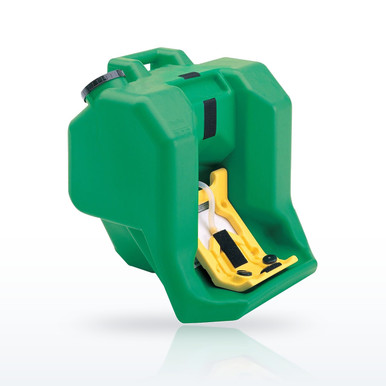 Haws 7500 portable gravity-fed eyewash, 16 gallonSelf-contained 15-minute station, listed by the manufacturer to ANSI Z358.1
Why is the OSHA rule so short? 1910.151(c) was written in 1971 and has not changed. It names the hazard (injurious corrosives), the response (quick drenching or flushing of the eyes and body) and the location (within the work area, for immediate use), and leaves the engineering to a consensus standard. ANSI Z358.1 has filled that role since 1981. OSHA has said in writing that it has not adopted Z358.1 as a regulation, that it refers employers to it as guidance, and that an inspector judging whether a facility is suitable may look to the current edition of it. In practice, a station that meets Z358.1 is what an inspector expects to find.
What does ANSI Z358.1 require of an eyewash station?
The numbers the standard sets for a plumbed or self-contained eyewash. An eye/face wash and a drench shower have their own figures, below.
How far can an eyewash station be from the hazard? The 10-second rule
The standard sets a time, not a distance. The station must be reachable within 10 seconds of the hazard. The appendix translates that for a person who has just been splashed and may not be able to see: about 55 feet. The path must be on the same level as the hazard with nothing in the way: no doors that lock or swing the wrong way, no stored pallets, no stairs. A single step up into an enclosure where the equipment sits is not counted as an obstruction.
ANSI/ISEA Z358.1-2014 section 5.4.2 and Appendix B5.Where the material is a strong acid or caustic, the standard’s guidance is that the station should be immediately adjacent to the hazard, because the damage is done in the first seconds. Battery charging areas are the common jobsite example: forklift electrolyte is sulfuric acid, and the powered industrial truck standard separately requires facilities for flushing and neutralizing spilled electrolyte at the charging installation.
ANSI/ISEA Z358.1-2014 Appendix B5 (strong acids and caustics); 29 CFR 1910.178(g)(2).OSHA has not written a distance into 1910.151(c). Its letters say the employer must assess the conditions at the site, and that whether a facility is suitable is judged against the current consensus standard. A station that is 10 seconds away meets what the inspector will measure against; a station two rooms and a stairwell away does not.
OSHA letters of interpretation, April 18, 2002 and November 1, 2002 (ANSI Z358.1 as guidance in judging suitability under 1910.151(c)); June 1, 2009 (employer determines whether employees can be exposed).How often must eyewash stations be tested and flushed?
| Equipment | Weekly | Yearly |
|---|---|---|
| Plumbed eyewash, eye/face wash or shower | Activate it long enough to confirm it flows and to flush stagnant water out of the line. | Full inspection against every requirement of the standard: flow, duration, temperature, height, pattern, path, sign. |
| Self-contained (gravity-fed) station | Visual check that the fluid is at the fill line, clear and not past its change date. Change the fluid on the manufacturer’s schedule. | Same full inspection. |
| Personal wash unit (bottle) | The weekly activation rule is written for plumbed and self-contained units. Check the seal and the expiration date when the first aid kit is inspected. | Replace at the expiration date on the bottle. |
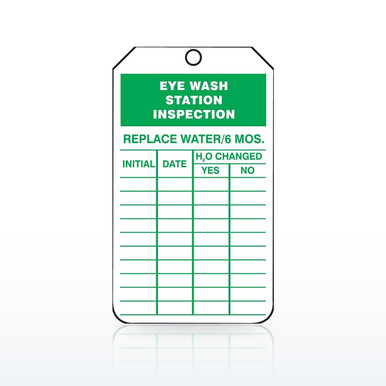
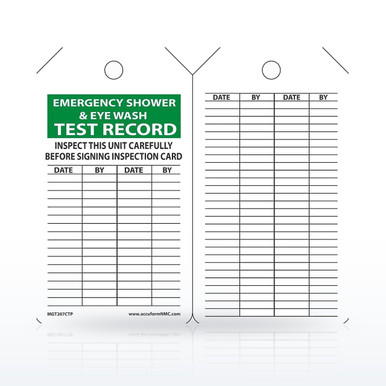
The weekly activation on a plumbed unit is what keeps the first seconds of water from being the rusty, bacteria-laden water that sat in the pipe all week. Write the date on a tag at the station; the tags in the band below are made for it. Every employee who may be exposed must be shown where the station is and how to use it.
ANSI/ISEA Z358.1-2014 sections 5.5.2 (plumbed units activated weekly), 5.5.3 (self-contained units visually checked weekly, fluid per the manufacturer), 5.5.5 (annual inspection), 5.5.4 (training); 4.6.2 and 4.6.5 for showers; 7.5.2 and 7.5.5 for combination units; Appendix B7.
Plumbed, self-contained or bottle: which counts?
A plumbed station is connected to a potable water supply and can run as long as the line is open. A self-contained station carries its own fluid, usually 9 to 16 gallons of preserved water or saline, which is enough for the 15 minutes at 0.4 gallons per minute. Both are stations under the standard and both must meet every figure above. The choice is the site: a plumbed unit needs a water line and, in an unheated area, a tempering valve to keep the water tepid; a self-contained unit needs a fluid change on schedule and a wall or stand.
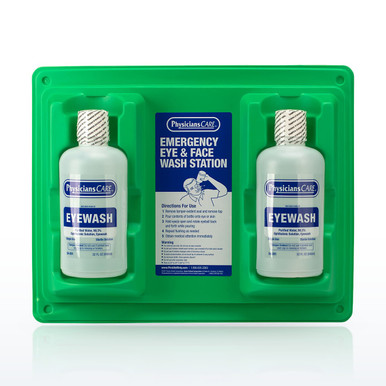
ANSI/ISEA Z358.1-2014 section 5 (eyewash equipment, plumbed and self-contained); 5.4.6 (tepid flushing fluid).A personal wash unit, the squeeze bottle or the wall station holding two of them, is supplemental equipment. The standard allows it to be kept in the immediate vicinity of people working in a hazardous area so flushing can start on the spot, and says it does not provide the same protection as a compliant eyewash. A 32-ounce bottle is gone in about a minute. It buys the walk to the station; it does not replace it. See the guide on eyewash bottles below for the detail.
ANSI/ISEA Z358.1-2014, personal wash units section and Appendix A1 (supplemental equipment).An eye/face wash flushes the whole face at 3 gallons per minute and is the choice where the splash hazard is to the face as well as the eyes. A drench shower is for the body: 20 gallons per minute with the head 82 to 96 inches off the floor. Where the material can hit eyes and body, a combination unit lets one person use both at once. The shower figures are in their own guide.
ANSI/ISEA Z358.1-2014 sections 6.1.6 (3 gpm), 4.1.2 (20 gpm), 4.1.3 (82 to 96 inches), 7.4.4 (combination units usable simultaneously).Does construction have the same rule?
Yes, word for word. 1926.50(g) uses the same sentence as 1910.151(c). On a jobsite the hazard is usually concrete and mortar (cement is caustic), masonry cleaners (acid), and form release and curing compounds; a self-contained station on a stand or a cart is the usual answer because there is no plumbing. A Z358.1 self-contained unit is a station; a bottle on the truck is not.
29 CFR 1926.50(g); ANSI/ISEA Z358.1-2014 section 5.Eyewash stations and supplies
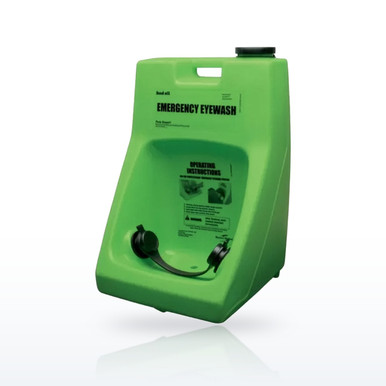
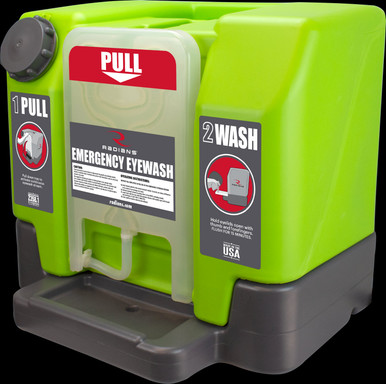
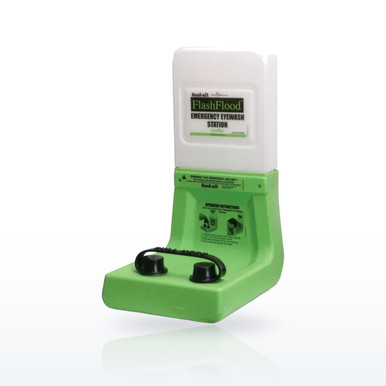
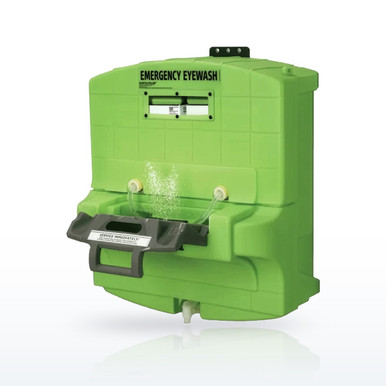
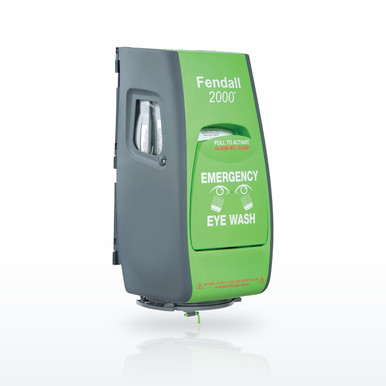
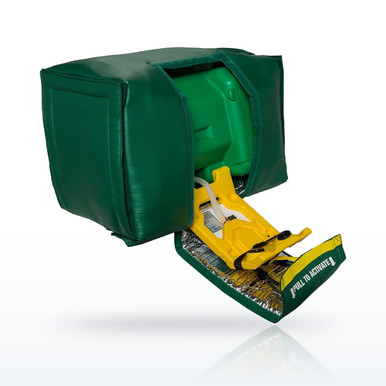
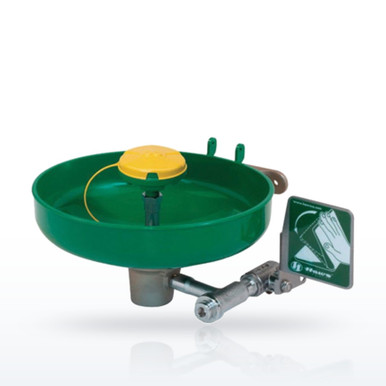
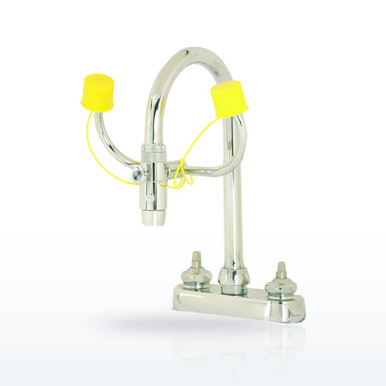
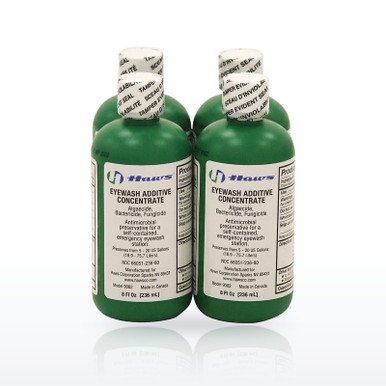
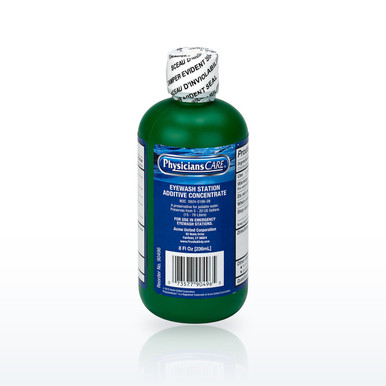
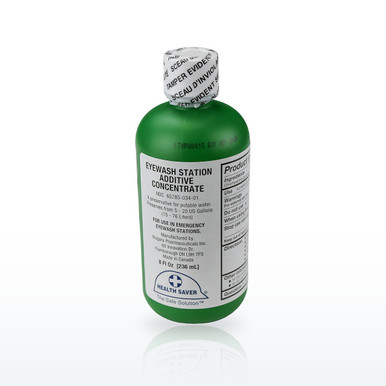
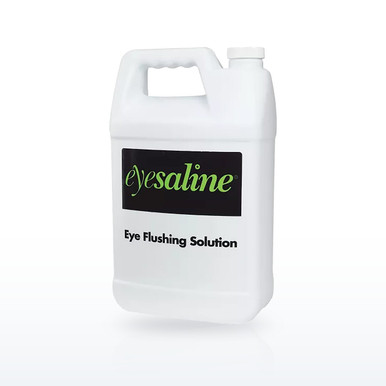
29 items · prices liveUnit type is as labeled by the manufacturer; flow, duration and the ANSI Z358.1 edition each unit is listed to are on the product page and spec sheet. Contractor Direct orders ship free.
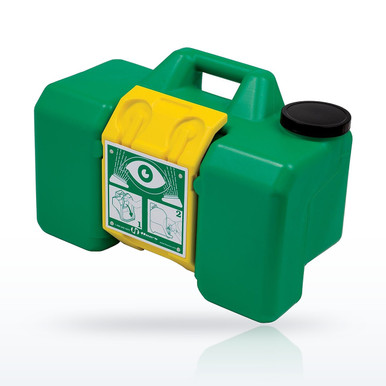
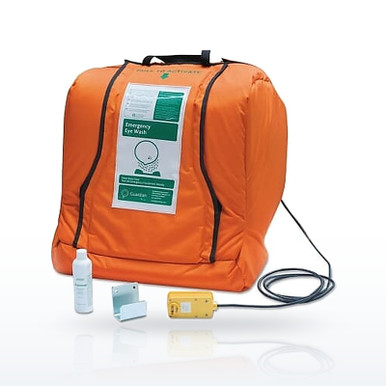
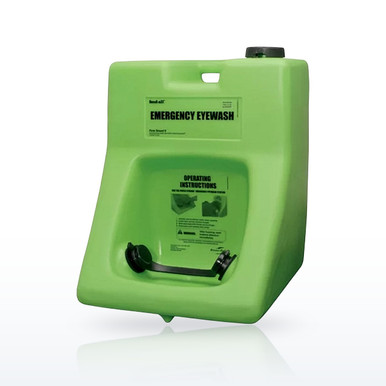
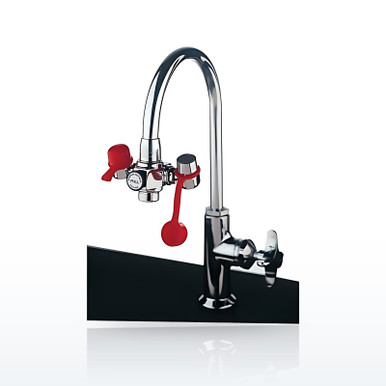
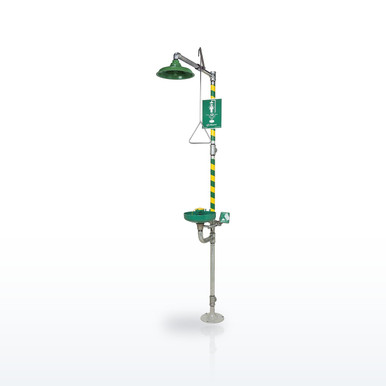
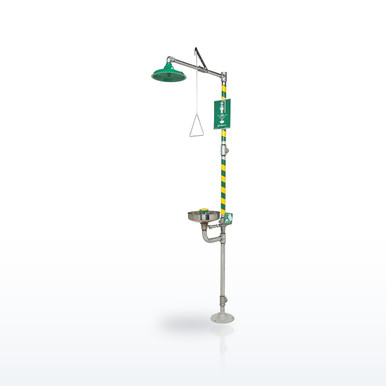
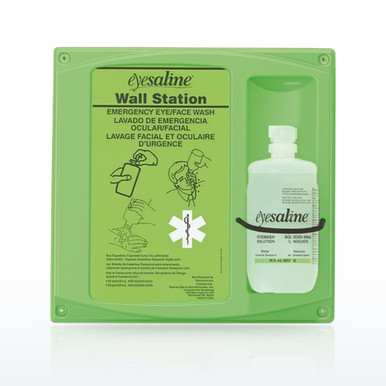
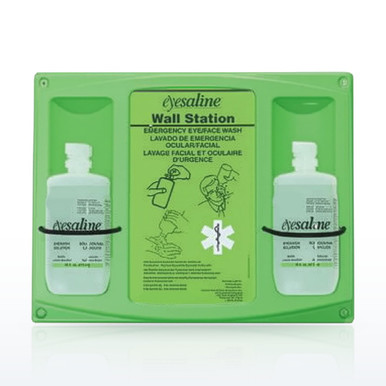
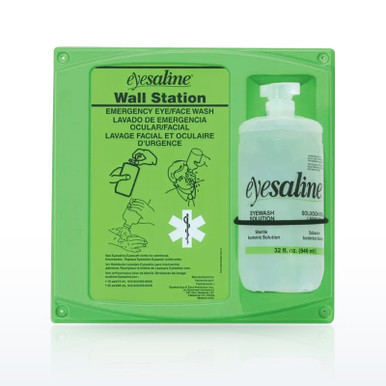
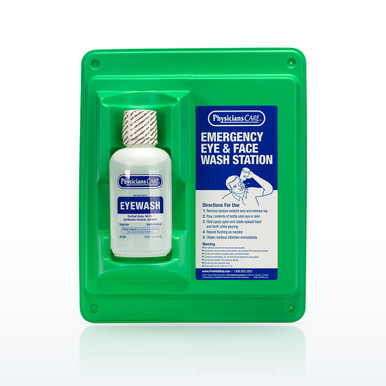

Drench showers and combination units are in the emergency shower guide below. Heated and freeze-protected units are quoted on request: call (925) 215-7337.
Questions people ask
What does OSHA require for eyewash stations?
1910.151(c): where eyes or body may be exposed to injurious corrosive materials, suitable facilities for quick drenching or flushing must be provided within the work area for immediate emergency use. Construction has the same sentence at 1926.50(g).
Is ANSI Z358.1 the law?
No. OSHA has said in interpretation letters that it has not adopted Z358.1, but that it refers employers to it and uses it to judge whether a facility is suitable. A citation is issued under 1910.151(c), with Z358.1 as the measure.
How far can an eyewash station be from the hazard?
Within 10 seconds of travel, which the standard’s appendix puts at about 55 feet, on the same level, with no obstructions in the path. For strong acids and caustics, immediately adjacent.
How often must an eyewash station be tested?
Plumbed units are activated weekly to confirm flow and clear the line. Self-contained units are checked weekly for fluid level and condition. Every unit gets a full inspection against the standard once a year.
How long do you flush your eyes?
15 minutes. The station must deliver 0.4 gallons per minute for that long, which is why a self-contained unit holds 6 gallons or more.
Does the water have to be warm?
Tepid: above 60°F and below 100°F. Cold water makes people stop early; hot water adds injury. Plumbed units in cold areas need a tempering valve.
Does a squeeze bottle count as an eyewash station?
No. Z358.1 treats bottles as personal wash units: supplemental equipment to start flushing while the person gets to a 15-minute station. They do not provide the same protection as a compliant eyewash.
Do I need an eyewash for bleach or cleaning chemicals?
If the safety data sheet (section 2) says the product causes serious eye damage or is corrosive, and employees open, pour or mix it, yes. OSHA’s 2009 letter says sealed containers that are never opened do not trigger the rule; the employer decides from the SDS whether exposure can occur.
Related guides
What is an eyewash station?Plumbed vs portable vs bottle, in plain wordsEyewash saline solutionSterile saline vs tap water, shelf lifeAre eyewash bottles OSHA compliant?What a personal wash unit can and cannot doEmergency showersFlow, height and temperature under Z358.1OSHA first aid kit requirements1910.151 and ANSI Z308.1Standards and ratings on this page are as published in the documents named and by the manufacturers named. The employer’s hazard assessment and written program decide what applies at a given workplace. Verify a rating on the product and its spec sheet before use.