
Bloodborne pathogen spill kits: what should be in one
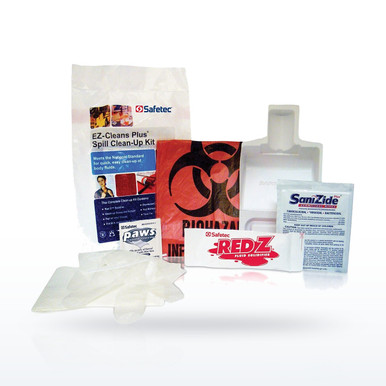
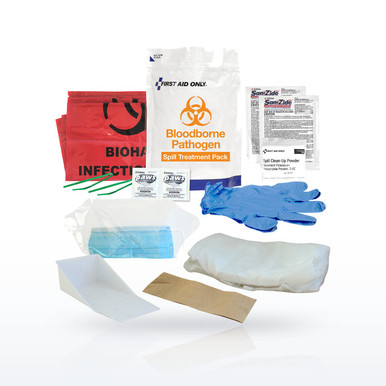
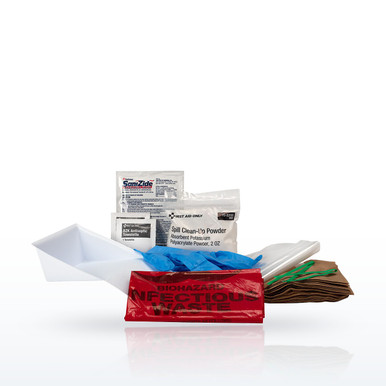
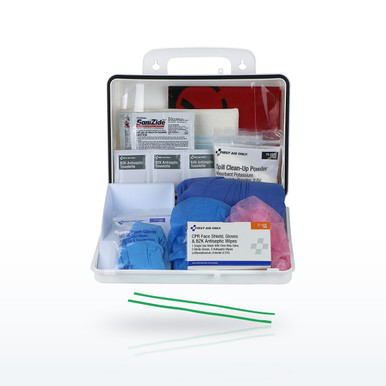
OSHA does not publish a spill kit list. What it does require, in 1910.1030, is that an employee who cleans up blood wears gloves and, if there could be splashing, eye and face protection and a gown; that the surface is decontaminated with an appropriate disinfectant; that contaminated glass is never picked up by hand; and that the waste goes into a closable, leakproof, biohazard-labeled or red container. A spill kit is those requirements packed in one box: nitrile gloves, eye protection, a gown or apron, absorbent powder or pads, a scoop and scraper, a disinfectant, a red biohazard bag with tie, hand sanitizer or antiseptic wipes, and instructions. Most kits are single-use and are replaced after one spill.
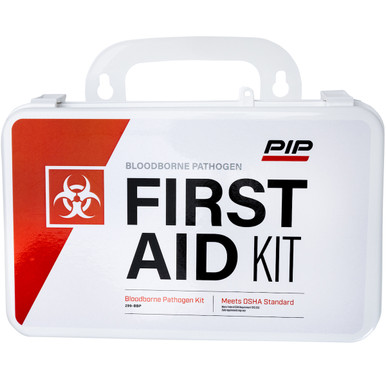
Why is a blood spill treated differently from any other spill? Hepatitis B, hepatitis C and HIV travel in blood and certain other body fluids, and hepatitis B stays infectious in dried blood on a surface for days. A worker who wipes up a spill with paper towels and bare hands can be exposed through a cut, a hangnail or a splash to the eye. The bloodborne pathogens standard treats cleanup as an exposure task and sets the barrier, the disinfectant and the waste container, which is exactly what a spill kit packages.
What does OSHA 1910.1030 require during a blood spill cleanup?
Five paragraphs do the work. Each one maps to an item in the kit.
What is in a bloodborne pathogen spill kit?
- Nitrile or other non-latex exam gloves, one or two pairs. Latex is allowed by the standard but many programs avoid it because of allergy; the standard requires an alternative for employees who are allergic.
- Eye protection and a mask, or a combined face shield, for splash during cleanup.
- A disposable gown, apron or sleeves, and often shoe covers, so clothing and skin do not get soaked.
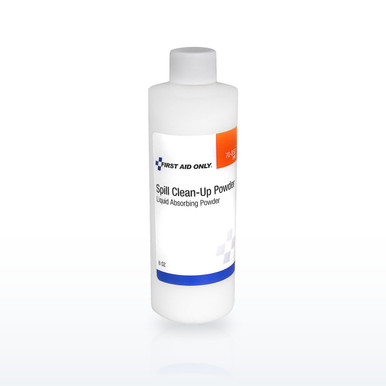
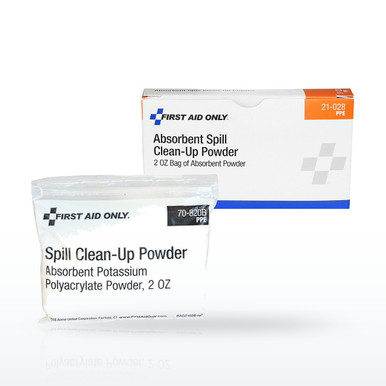
- An absorbent: a solidifying powder that turns liquid into a gel so it can be scooped, or absorbent pads and towels.
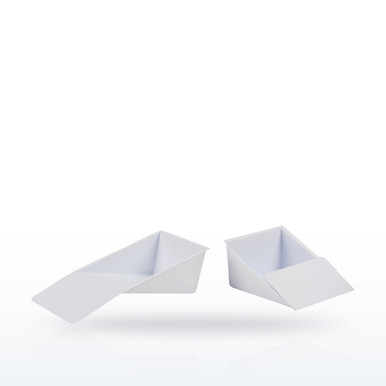
- A scoop and scraper, for the absorbed material and for any broken glass.
- A disinfectant: a germicidal wipe or towelette, or a bottle of an EPA-registered disinfectant. Some kits leave the disinfectant to the employer so the plan can name the product.
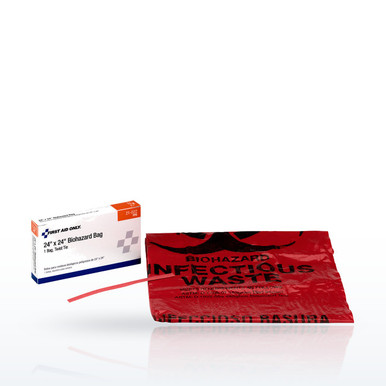
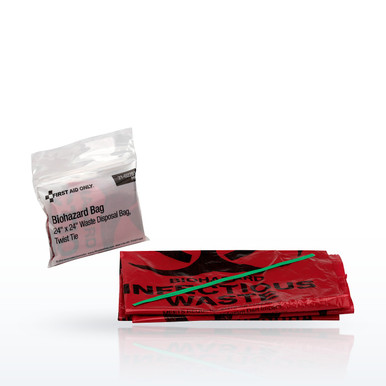
- A red biohazard bag with a tie, and a biohazard label if the bag is not printed.
- Antiseptic hand wipes or hand sanitizer for after the gloves come off.
- An instruction card with the cleanup sequence, and sometimes a sharps container or an eyewash bottle.
How is a blood spill cleaned up with the kit?
- Clear the area and put on the PPE. Gloves first, then eye and face protection and the gown. Check the gloves for tears.
- Cover the spill with the absorbent. Powder or pads. Let a solidifier set until the liquid is a gel.
- Scoop everything into the red bag. Use the scoop and scraper, never the hands, especially where glass may be present.
- Disinfect the surface. Apply the disinfectant to the area and leave it wet for the contact time on the product label. Wipe and bag the towels.
- Remove the PPE into the bag and close it. Gloves come off last. Tie the bag and keep it closed; if the outside is contaminated, put it in a second bag.
- Wash hands and restock. Wash with soap and water as soon as a sink is available; sanitizer is for the interval before that. Replace the kit or its used parts before the next shift.
Who needs a BBP spill kit, and where should it be?
Any employer whose employees can reasonably be expected to contact blood or other potentially infectious materials as part of their job. That includes designated first aid responders, housekeeping and custodial staff, security, school and childcare staff, and anyone assigned to clean up after an injury. OSHA regards designated first aiders as covered by the standard. The employer’s exposure determination, written without regard to PPE, is where those jobs are listed.
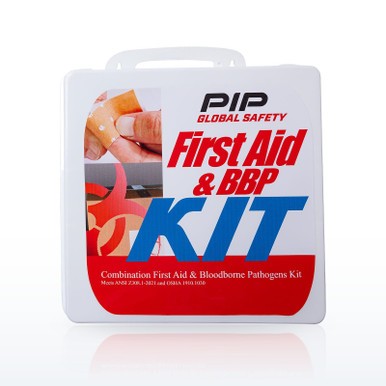
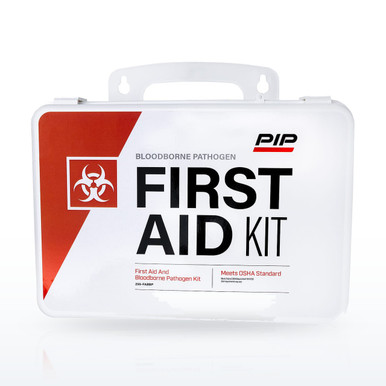
1910.1030(b) definition of occupational exposure; (c)(2)(i) and (ii) exposure determination; OSHA letter of interpretation, May 16, 2011 (designated first aiders are generally regarded as covered).Keep the kit where the first aid kit is, and anywhere blood is likely: production floors, shops, vehicles that carry a crew, restrooms and custodial closets. The PPE in it must be readily accessible at the worksite in the sizes employees need, which is the practical reason a kit sits next to the first aid cabinet rather than in an office drawer. A kit that has been used is restocked or replaced; most of the kits below are built for one spill.
1910.1030(d)(3)(iii) PPE readily accessible in appropriate sizes.Bloodborne pathogen spill kits and refills
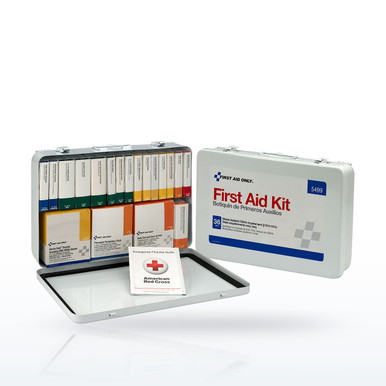
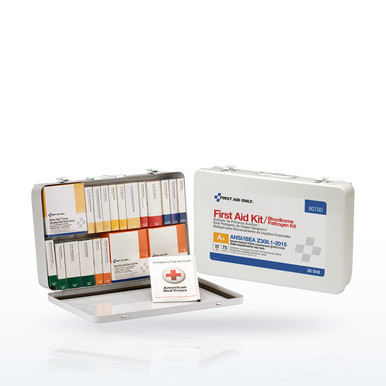
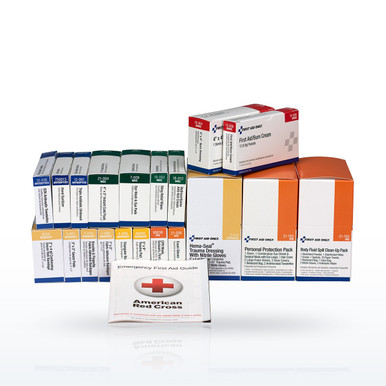
19 items · prices liveKits and refills whose manufacturer describes them as bloodborne pathogen, biohazard or body fluid spill kits. Contents and disinfectant type are as published by the manufacturer; see each product page. Contractor Direct orders ship free.

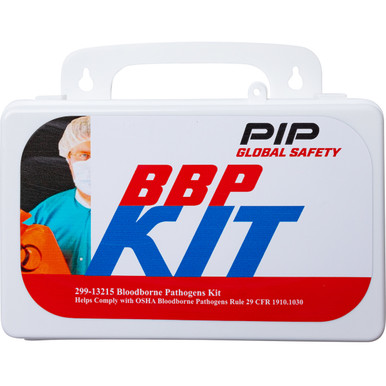
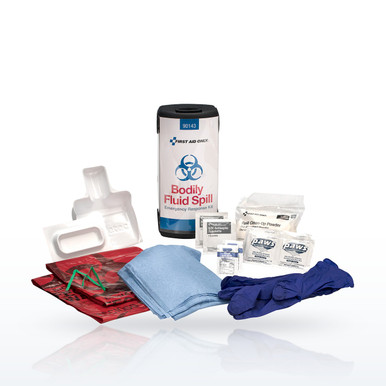
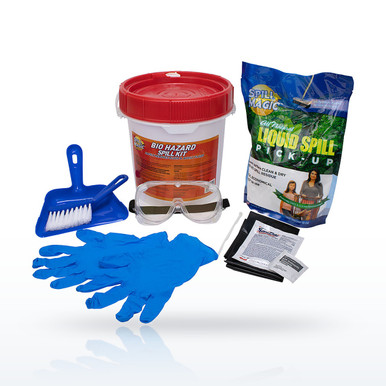
Disposable nitrile gloves, gowns and face shields in bulk are on the glove selector and the first aid finder.
Questions people ask
Does OSHA require a bloodborne pathogen spill kit?
Not by that name. 1910.1030 requires the gloves, eye and face protection, disinfectant, mechanical cleanup of glass and a labeled leakproof waste container that a spill kit contains. Having the kit is how most employers meet those paragraphs in one place.
What disinfectant does OSHA accept for a blood spill?
An EPA-registered tuberculocidal disinfectant, an EPA-registered disinfectant labeled for HIV and HBV, or household bleach diluted between 1:10 and 1:100, used as the label directs. Soap and water alone does not meet the rule. (OSHA letters of March 9, 2010 and July 15, 1999.)
Can I pick up broken glass from a blood spill with gloves on?
No. 1910.1030(d)(4)(ii)(D) says contaminated broken glass is not picked up directly with the hands, gloved or not. Use the scoop and scraper, a brush and dust pan, or tongs.
Does the waste from a spill cleanup have to go in a red bag?
Regulated waste goes in a closable, leakproof container that is either labeled with the biohazard symbol in fluorescent orange or orange-red, or is a red bag or red container. The kit bag meets that. (1910.1030(d)(4)(iii)(B) and (g)(1)(i).)
Is a paper towel and bleach enough?
Bleach at the right dilution is an accepted disinfectant, but the rule also requires gloves, eye and face protection where splashing is possible, no hand contact with glass, and a labeled container for the waste. The kit covers those; the towel and bottle do not.
Are first aid responders covered by 1910.1030?
OSHA regards designated first aiders as covered. The employer lists them in the exposure determination, offers the hepatitis B vaccine, and provides the PPE and the cleanup supplies. (1910.1030(c)(2); OSHA letter of May 16, 2011.)
How many spill kits should a workplace have?
The standard sets no count. PPE must be readily accessible at the worksite, so a kit goes wherever a spill is likely and where the first aid kit is, and a used kit is replaced before the next shift. (1910.1030(d)(3)(iii).)
Standards and ratings on this page are as published in the documents named and by the manufacturers named. The employer’s hazard assessment and written program decide what applies at a given workplace. Verify a rating on the product and its spec sheet before use.