
What is a self-retracting lifeline (SRL), and how does it differ from a lanyard?
A self-retracting lifeline is a fall arrest connector with a spring-loaded drum inside a housing. The line pays out as you move and reels back in so there is no slack, and when the line runs out fast, as it does in a fall, the drum locks and a brake arrests you within inches. A shock-absorbing lanyard is a fixed 6-foot strap with a tear-out energy absorber; it does nothing until you have fallen its full length. That is the difference that matters: a lanyard anchored at the D-ring allows a 6-foot free fall and needs about 17 to 18 feet of clearance, while an overhead SRL allows a free fall of inches and needs about 10. OSHA treats an SRL that limits free fall to 2 feet as a different device with a 3,000-pound strength rule; ANSI Z359.14-2021 sorts SRLs into Class 1 (overhead anchor) and Class 2 (anchor below the D-ring, tested over an edge).
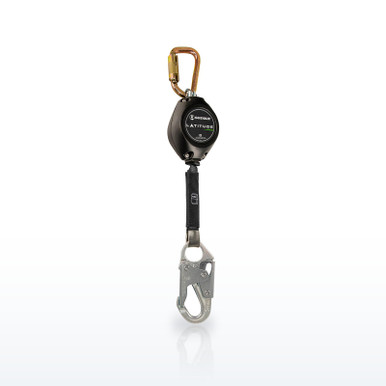
Why do SRLs exist if a lanyard works? A lanyard only works where there is room for it. Most falls in construction are from less than 20 feet, and a 6-foot lanyard needs most of that just to stop you. The SRL was built to take the free fall out of the fall: with no slack in the line, the drum locks before you have dropped more than a few inches and the arrest is over in a few feet. It also removes the trip hazard of a dangling lanyard and lets you move 10, 20 or 50 feet from the anchor without re-clipping. The cost is that an SRL is a mechanism with a brake, a spring and a housing that need inspection, and its behavior depends on where it is anchored, which is why the ANSI standard sorts them into classes.
SRL vs shock-absorbing lanyard: what changes?
Same harness, same anchor rules, very different fall.
How does an SRL work?
OSHA defines it as a deceleration device containing a drum-wound line which can be slowly extracted from, or retracted onto, the drum under slight tension during normal employee movement, and which, after onset of a fall, automatically locks the drum and arrests the fall. Inside the housing a spring keeps light tension on the line so it never goes slack. A centrifugal or inertial pawl engages when the drum spins past a set speed; the brake then slips a controlled amount to keep the force on the body under the limit. Some SRLs put the energy absorber in the housing, some in a pack at the harness end, and some leading-edge models use an external absorber on the line. The line is web for short personal units and galvanized or stainless cable for longer blocks and edge work.
29 CFR 1926.500(b), definition of self-retracting lifeline/lanyard; manufacturer user instructions for the devices listed below.Personal SRLs (the trade calls them SRL-Ps) are 6 to 11 feet long and mount on the harness D-ring, so the housing rides on your back and the hook goes to the anchor; twin-leg versions give 100 percent tie-off while moving between anchors. Anchor-mounted SRLs are 10 to 100 feet long and hang from the anchor with the line coming down to the harness. Rescue SRLs (SRL-R) add a retrieval crank for confined space work.
ANSI/ASSP Z359.14-2021 device types (SRL, SRL-R) as summarized by the manufacturers listed below; 29 CFR 1910.146(k)(3)(ii) for retrieval.What do Class 1 and Class 2 mean under ANSI Z359.14-2021?
| Class 1 | Class 2 | |
|---|---|---|
| Anchorage location | At or above the dorsal D-ring | Above, at, or up to 5 feet below the dorsal D-ring |
| Edge contact | Not tested for the line bearing on an edge | Tested with the line over a steel edge (leading edge use) |
| Maximum arrest distance | 42 inches | 42 inches |
| Average arresting force | 1,350 pounds or less | 1,350 pounds or less |
| Dynamic test weight | 310 pounds | 310 pounds, including a foot-level test |
| On the label | Class 1 | Class 2, plus a fall clearance table or diagram on the device and in the manual |
The 2021 edition replaced the 2014 Class A and Class B (which described arrest distance, 24 and 54 inches) and the separate SRL-LE type with these two classes, which describe where the device may be anchored. Devices made to the 2014 edition are still in service and are marked A, B or LE; the manufacturer’s instructions say what anchorage each allows. OSHA does not adopt Z359.14 by reference; it is the standard manufacturers certify to.
ANSI/ASSP Z359.14-2021, effective August 1, 2023, as summarized by 3M Fall Protection, Werner and WC Safety; maximum arrest distance 42 inches, average arresting force 1,350 pounds, 310-pound test weight.
Shock-absorbing lanyard vs SRL: free fall distance and clearance
The free fall is the whole story. With a lanyard, the first 6 feet of the fall are free fall by design, so the energy that hits the absorber is a 6-foot drop’s worth, and the absorber needs up to 4 feet to spend it. With an SRL anchored overhead there is no slack, so the fall is a few inches before the brake catches, the energy is small, and the arrest distance is short. Put the numbers from the manufacturer charts side by side for a 6-foot worker: lanyard at D-ring level, 6 feet free fall + 4 feet deployment + 1 foot harness stretch + 5 feet D-ring to feet + 2 feet margin, 18 feet below the anchor; overhead SRL, about 3.5 feet of arrest + 1 foot stretch + margin and swing allowance, about 10 feet. The SRL buys roughly 8 feet of clearance, which is the difference between a 12-foot scaffold being survivable or not.
29 CFR 1926.502(d)(16)(iii) and (iv); 3M Protecta energy-absorbing lanyard instructions (clearance formula); FallTech fall clearance guide (17 feet for a 6-foot lanyard, 10 feet for an overhead SRL, 19 feet for a foot-level SRL).The advantage disappears when the SRL is anchored at the feet. Then you fall the height of your D-ring plus any setback before the line goes over the edge and the brake sees a fall, the line bends over the edge under load, and the clearance climbs to about 19 feet. A Class 1 SRL is not rated for that at all. A Class 2 SRL is built and tested for it, carries an energy absorber sized for the longer free fall, and ships with a clearance chart for setback and anchor height. The same is true of a lanyard at foot level: the free fall becomes 11 to 12 feet and only a lanyard labeled for a 12-foot free fall under ANSI Z359.13 is built for it.
ANSI/ASSP Z359.14-2021 Class 2 anchorage and labeling; ANSI/ASSP Z359.13 12-foot free fall lanyard labeling; 1910.140(d)(2)(ii) (free fall over 6 feet only where the manufacturer designed and tested the system for it).When is a lanyard the better tool?
- Short reach from an anchor at or above the D-ring with plenty of clearance below, where the simplicity and low cost of a lanyard win.
- Hot work, arc flash or welding, where Kevlar or arc-rated web lanyards exist and the SRL housing would be in the way or exposed to slag.
- Tie-back use with a lanyard built for wrapping its own line around a beam, which removes the need for a separate anchor connector.
- Where the work is positioning or restraint, not arrest: those systems use their own lanyard types without an energy absorber.
- Everything else, especially anything under 18 feet of clearance or with an anchor below the D-ring, is SRL territory.
Self-retracting lifelines and energy-absorbing lanyards
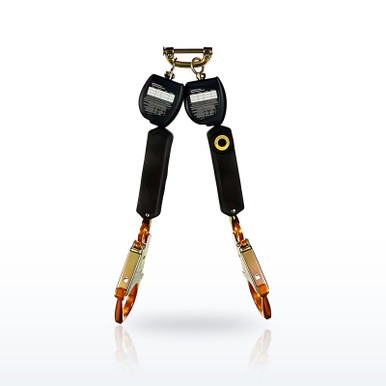
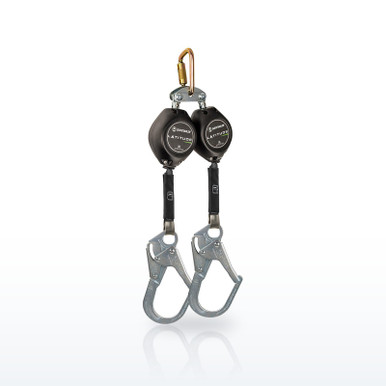
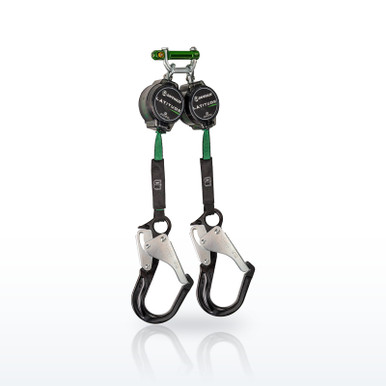
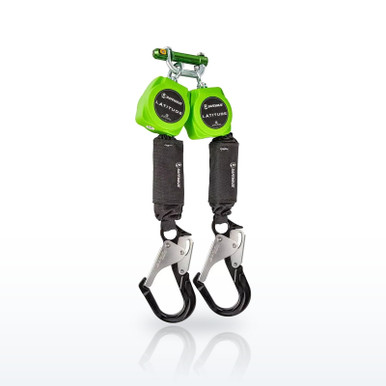
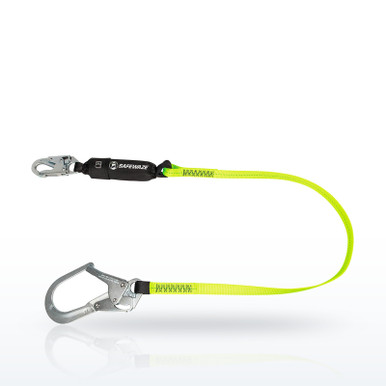
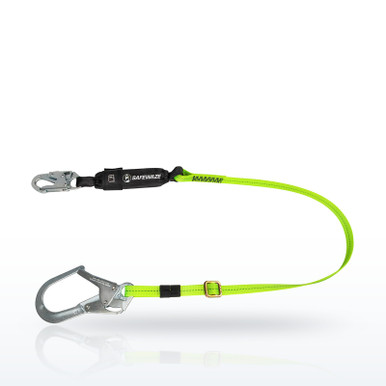
30 items · prices liveEach device is listed with the ANSI standard its manufacturer names on the spec sheet; the class or free fall rating, line length and connector are on the product page. Contractor Direct orders ship free.
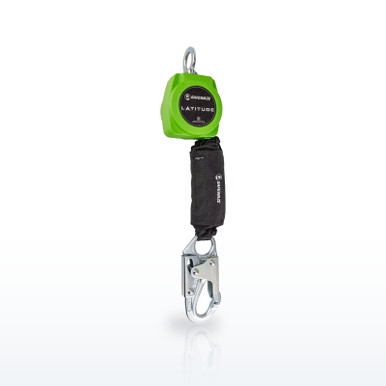
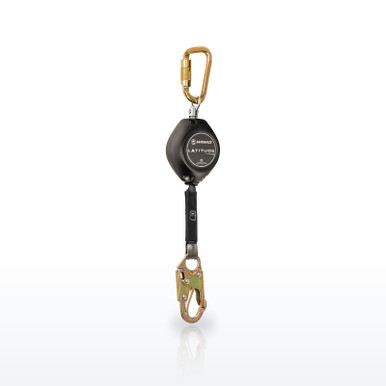
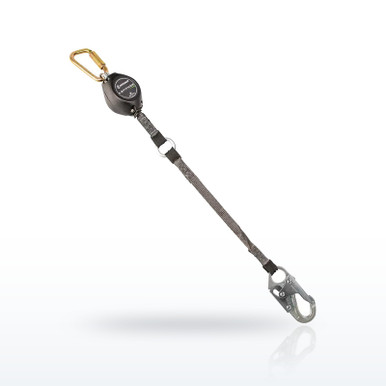
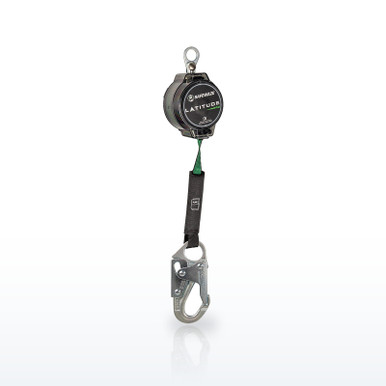
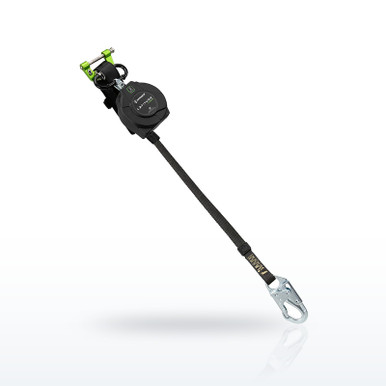
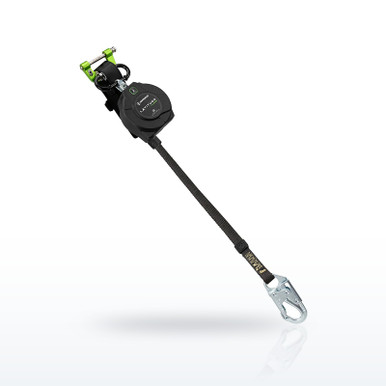
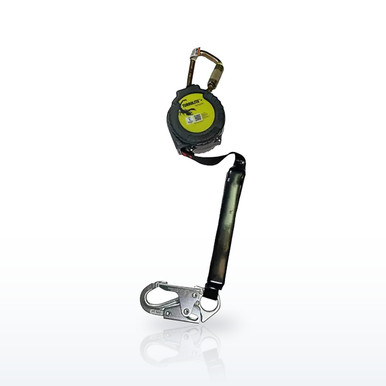
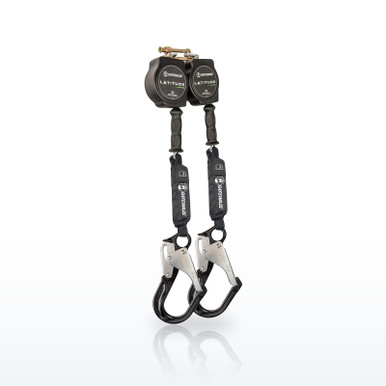
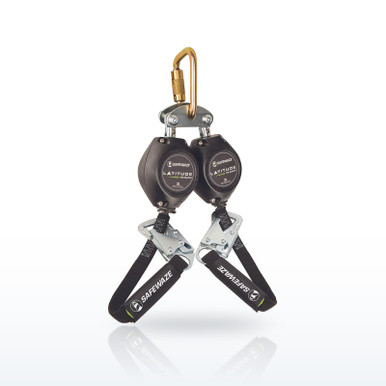
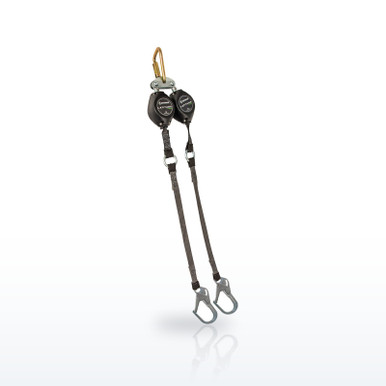
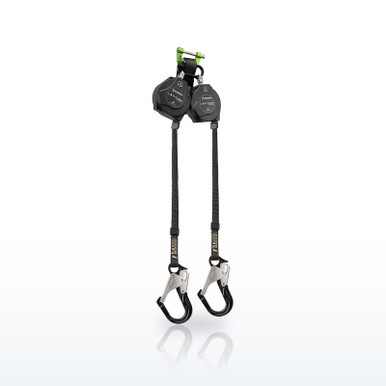
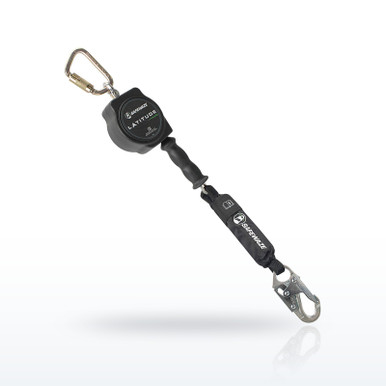
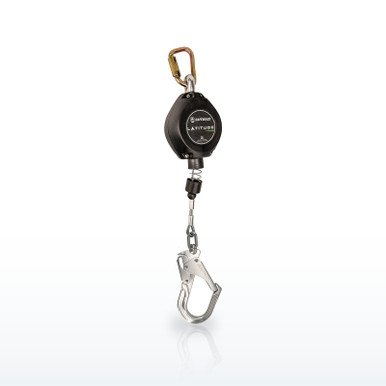
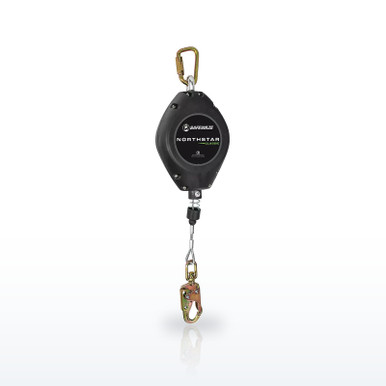
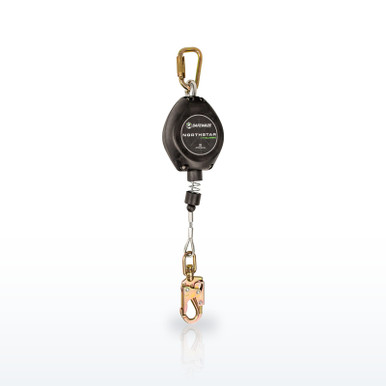
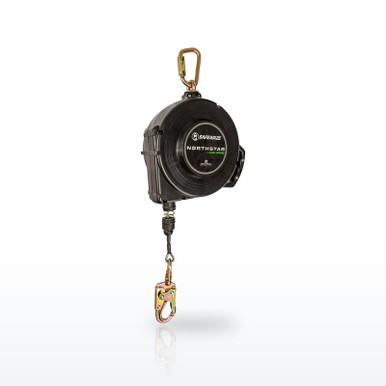
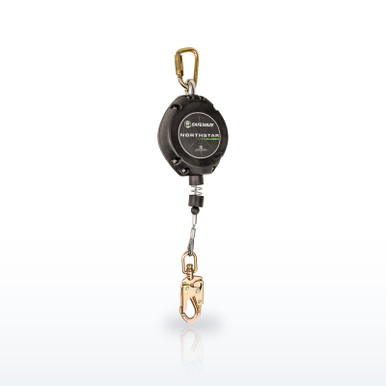
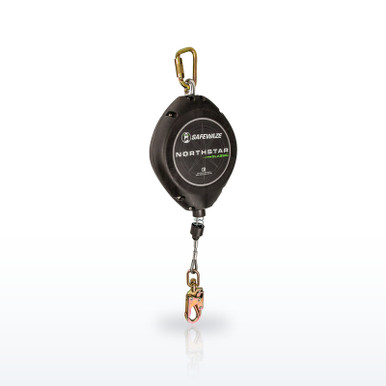
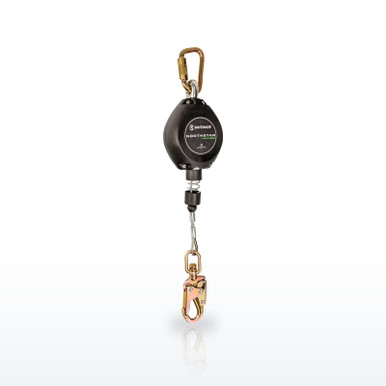
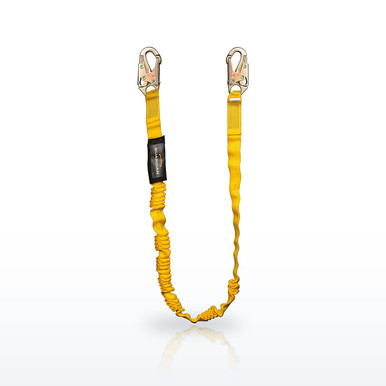
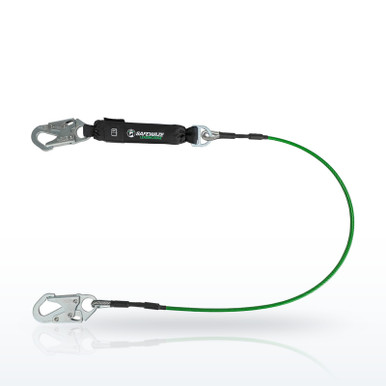
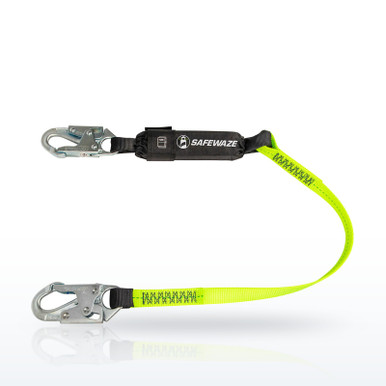
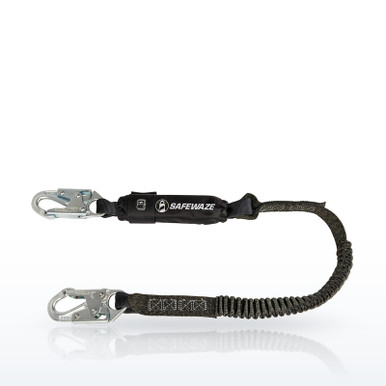
Rescue SRLs with retrieval cranks, arc flash SRLs and 50-to-100-foot cable blocks are on the fall protection finder.
Questions people ask
What is a self-retracting lifeline?
A fall arrest device with a drum-wound line that pays out and retracts as you move and locks the drum automatically when a fall starts. (1926.500(b).)
What is the difference between an SRL and a lanyard?
A lanyard is a fixed 6-foot strap that allows a 6-foot free fall before its absorber works. An SRL keeps the line tight and locks within inches, so the free fall and the clearance are much smaller when it is anchored overhead.
How much clearance does an SRL need compared with a lanyard?
Per manufacturer charts, about 10 feet for an overhead SRL against about 17 to 18 feet for a 6-foot lanyard at D-ring level. At foot level an SRL needs close to 19 feet and must be Class 2.
What is an SRL-P?
A personal SRL: a short (6 to 11 foot) web or cable unit that mounts on the harness D-ring instead of the anchor. Twin-leg versions allow 100 percent tie-off.
What do Class 1 and Class 2 mean?
ANSI Z359.14-2021 anchorage classes. Class 1 is anchored at or above the dorsal D-ring. Class 2 may be anchored up to 5 feet below it and is tested for the line going over an edge.
Can I use an SRL at foot level?
Only a Class 2 (or older LE) SRL, and only within the setback and anchor height on its clearance chart. A Class 1 SRL is overhead-only.
Does OSHA require an SRL instead of a lanyard?
No. OSHA requires that free fall stay at 6 feet or less, deceleration at 3.5 feet or less, and that the worker never contact a lower level. Where a lanyard cannot meet that, an SRL usually can. (1926.502(d)(16).)
How often does an SRL need to be inspected or serviced?
Before each use by the user, with a lock-and-retract function check, and periodically by a competent person per the manufacturer’s instructions. After it arrests a fall it is removed from service. (1926.502(d)(19) and (d)(21).)
Standards and ratings on this page are as published in the documents named and by the manufacturers named. The employer’s hazard assessment and written program decide what applies at a given workplace. Verify a rating on the product and its spec sheet before use.