
Class 2 vs Class 3 safety vest: the difference
The difference is how much high-visibility material the garment carries and where it sits. A Class 2 vest has at least 775 square inches of fluorescent background and 201 square inches of retroreflective tape. A Class 3 garment has at least 1,240 square inches of background and 310 of tape, and it must have a band of tape around each sleeve, so a sleeveless vest cannot be Class 3 on its own. Class 2 is the minimum for workers on or near a public road. Class 3 is what the MUTCD says flaggers should wear at night, and what many agencies specify for high-speed and low-light work. Both are printed on the label inside the garment.
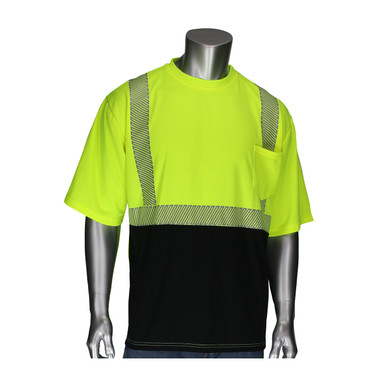
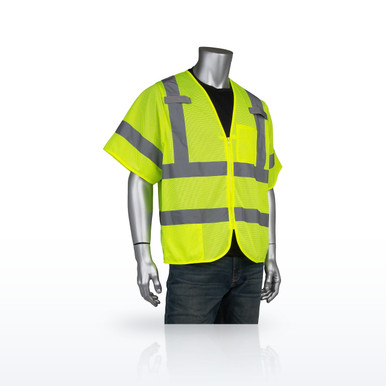 PIP 303-V101 Hi-Vis Vests, ANSI Type R Class 3 Dual-Sized Two Pocket Mesh VestType R Class 3 vest with sleeves, as rated by the manufacturer
Why are there two classes for roadway work? A driver sees a worker as a shape first and a person second. The amount of fluorescent color decides how far away the shape shows up by day; the amount and placement of retroreflective tape decides the same at night under headlights. Class 2 puts enough of each on the torso to be seen near traffic. Class 3 adds the arms, so the shape moves like a person and is identified as one sooner, from any side, at highway speed and in poor light. The standard fixes the minimums so a buyer can specify a class and get the same minimum from any manufacturer.
What does each class require?
The minimums in ANSI/ISEA 107-2020 Table 1 for Type R (roadway) garments. Areas are for the whole garment, front and back together.
Which class does the job need?
For anyone on foot inside the right-of-way of a public road who is exposed to traffic or to work vehicles, the floor is Class 2. The MUTCD, which OSHA incorporates by reference for flaggers, requires high-visibility apparel meeting ANSI/ISEA 107 Performance Class 2 or 3 for all workers within the right-of-way in a temporary traffic control zone, day or night, and puts the choice between the two classes on the person the employer designates for worker safety.
MUTCD 2009 edition section 6D.03 paragraph 04 and section 6E.02 paragraph 01 (ANSI/ISEA 107-2004 Class 2 or 3); MUTCD 11th edition section 6C.05 paragraph 01 (ANSI/ISEA 107-2015 Class 2 or 3, or equivalent revisions); 29 CFR 1926.201(a) and 1926.6(n)(1).Class 3 is the MUTCD’s guidance for flaggers at night, and it is the practical choice wherever the worker must be identified as a person at a distance: highway speeds, dusk and dark, rain, and busy backgrounds with a lot of other color. State and local agencies often write Class 3 into their contract specifications for night work. A Class 2 vest worn over a Class E pant gives a Class 3 outfit without buying a jacket.
MUTCD 2009 edition section 6E.02 paragraph 02 (Guidance: Class 3 for flagger nighttime activity); MUTCD 11th edition section 6C.05 paragraph 07; ANSI/ISEA 107-2020 Class E ensemble provision.Class 2 is enough where the hazard is lower: daytime work on local roads, utility and survey crews at a shoulder, parking and delivery work near a road, and most industrial yards. Class 1 is a different thing: it belongs to Type O, off-road garments, and is not allowed for roadway work at all.
ANSI/ISEA 107-2020 section 4 (garment types O, R, P and the classes each may carry); MUTCD 2009 section 6D.03 paragraph 04.How do you tell them apart on the garment?
- Read the label. It names the standard and year (ANSI/ISEA 107-2020 or 2015), the type and class in words and in a pictogram, the size, and whether the garment is flame resistant.
- Look for the sleeve bands. Tape around each sleeve is the mark of a Class 3 garment. A sleeveless vest with tape only on the body is Class 2 or Class 1 whatever its color.
- Compare the amount of color. A Class 3 garment covers the torso and the arms with fluorescent fabric; on a Class 3 vest the fabric reaches the shoulders and down the sleeves.
- Check the bands. Class 3 bands are 2 inches wide as a rule; a Class 2 vest may use narrower 1.38-inch bands.
- A vest with zip-off sleeves is rated at the class it meets with the sleeves on, and some manufacturers also publish its class with them off; the label and spec sheet state both where that applies.
Does the color change the class?
No. Fluorescent yellow-green, fluorescent orange-red and fluorescent red are the three background colors the standard allows, and a Class 2 or Class 3 garment can be any of them. The class is about area and placement, not color. Any other color, including blue, pink or plain non-fluorescent orange, is not a high-visibility background under the standard and does not count toward the minimum area.
ANSI/ISEA 107-2020 section 6 (background material color and luminance); MUTCD 11th edition section 6C.05 paragraph 02 (background shall be fluorescent orange-red, fluorescent yellow-green, or a combination).Class 2 and Class 3 garments
30 items · prices liveEach garment is listed at the ANSI/ISEA 107 type and class its manufacturer publishes. The edition, colors and sizes are on the product page. Contractor Direct orders ship free.
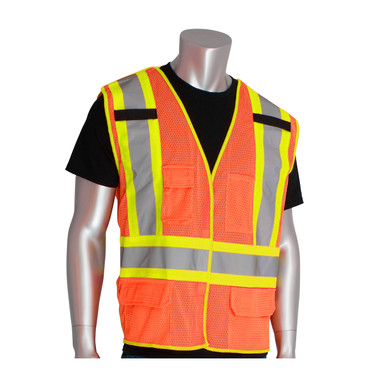
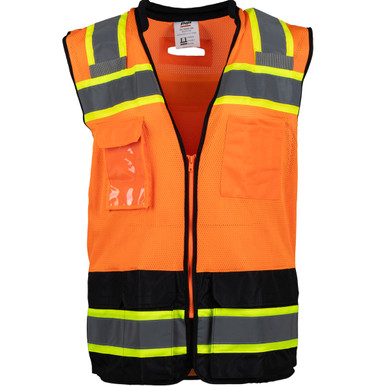
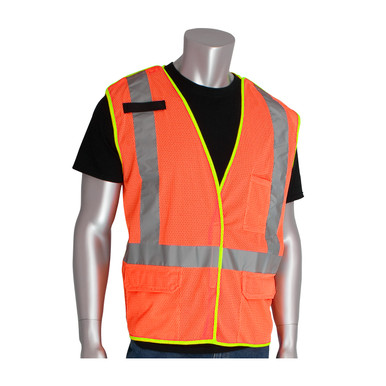
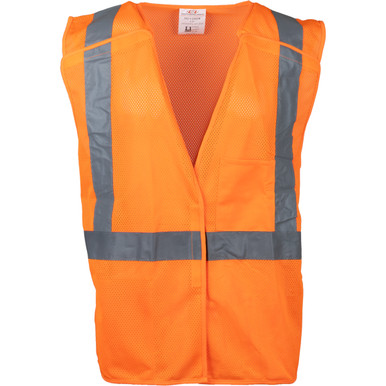
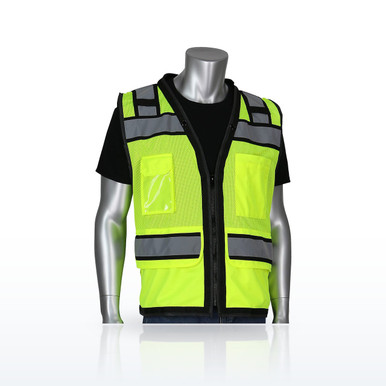
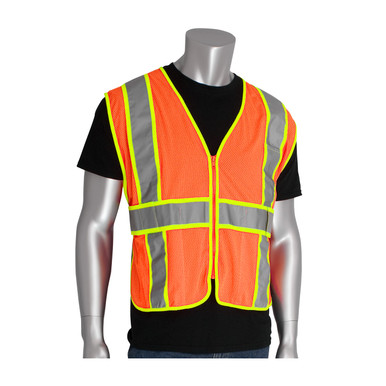
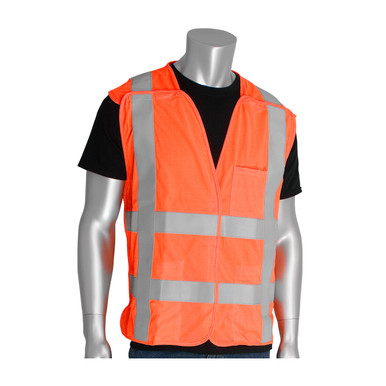
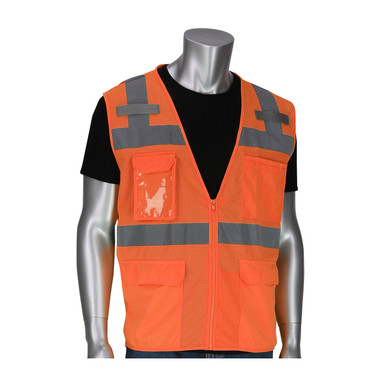
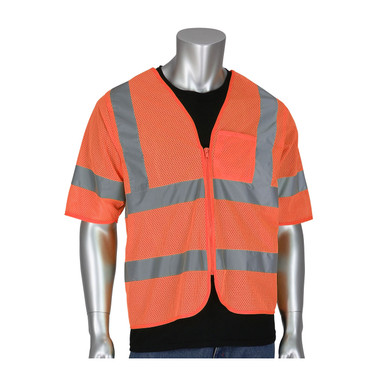
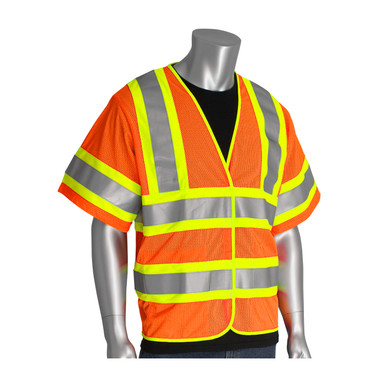
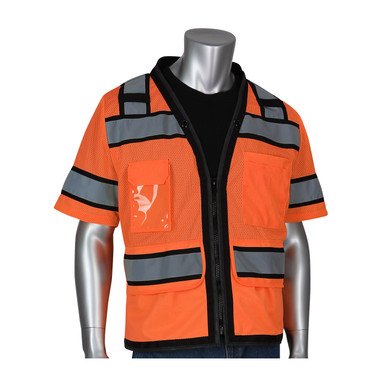
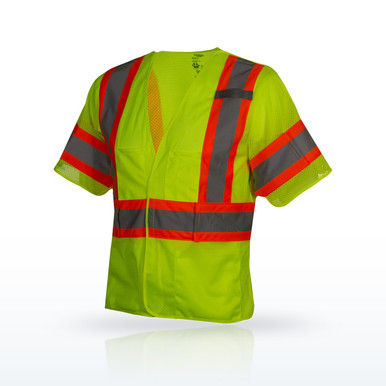
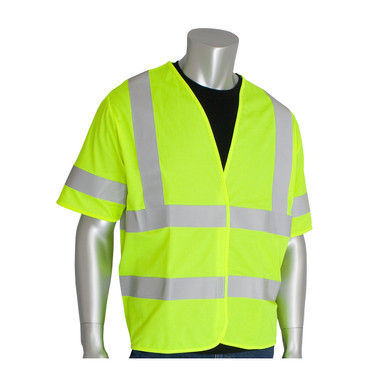
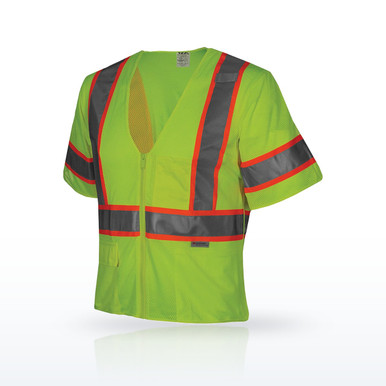
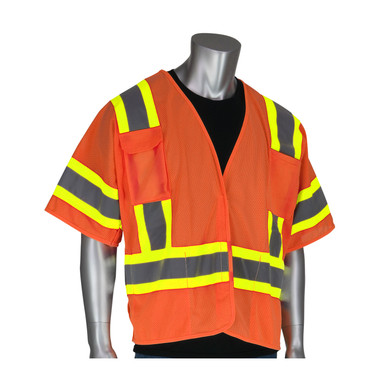
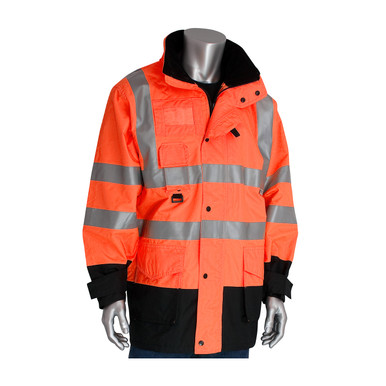
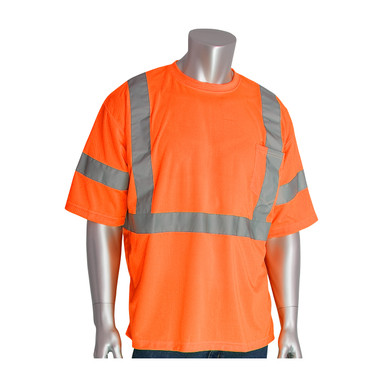
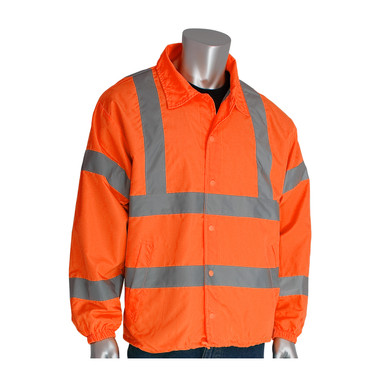
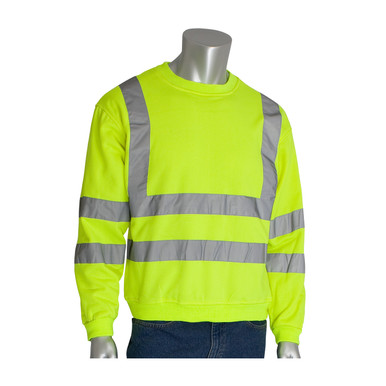
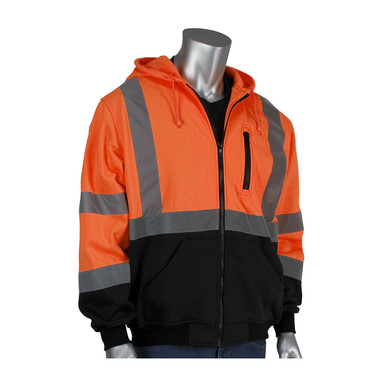
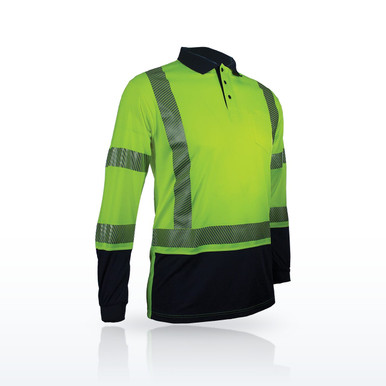
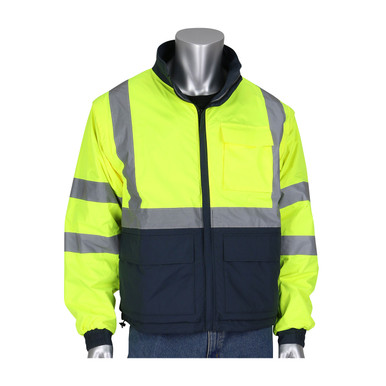
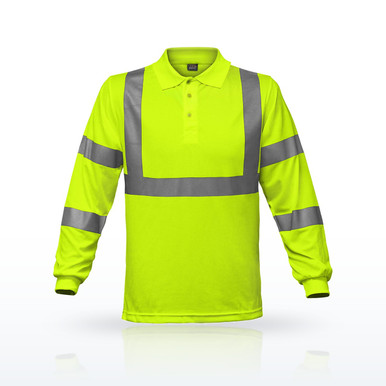
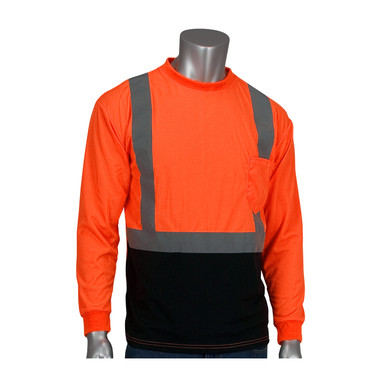
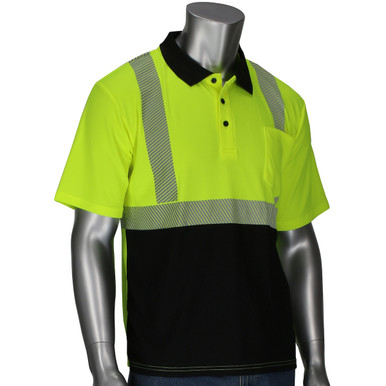
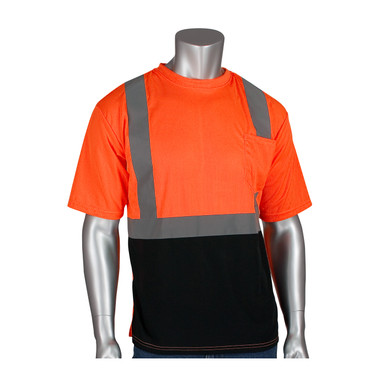
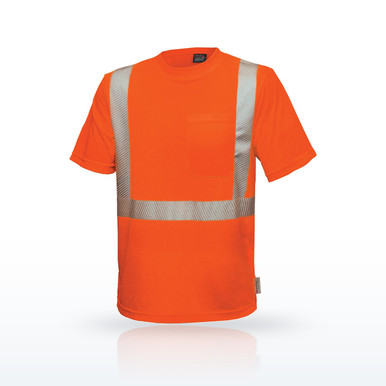
Every hi-vis garment we carry, filtered by type, class, material and pockets, is on the hi-vis finder.
Questions people ask
What is the difference between a Class 2 and a Class 3 safety vest?
Class 3 carries more material (1,240 square inches of background and 310 of tape against 775 and 201) and must have a tape band around each sleeve. A sleeveless vest cannot be Class 3 by itself.
Can a vest be Class 3?
Only if it has sleeves with a retroreflective band around each one and meets the Class 3 area minimums. Several manufacturers make Class 3 vests with short sleeves for that reason.
Do I need Class 2 or Class 3 for road work?
Class 2 is the minimum the MUTCD requires for workers in a traffic control zone. Class 3 is its guidance for flaggers at night and the common specification for high-speed and low-light work; the employer’s designated safety person makes the choice.
Is Class 3 always better than Class 2?
It is more visible, but it is also warmer and bulkier. In hot weather a Class 2 mesh vest that is worn all shift does more than a Class 3 jacket left in the truck. Match the class to the exposure.
Does a Class 2 vest with Class E pants equal Class 3?
Yes. The standard treats a Class 2 or 3 vest, shirt or jacket worn with Class E pants, shorts or bibs as a Class 3 ensemble.
Can I wear a Class 1 vest on the road?
No. Class 1 garments are Type O, for off-road work away from public traffic. Roadway work requires Type R Class 2 or 3.
Does orange or yellow-green change the class?
No. The class is set by area and placement of material. Both colors, and fluorescent red, are allowed at any class.
Standards and ratings on this page are as published in the documents named and by the manufacturers named. The employer’s hazard assessment and written program decide what applies at a given workplace. Verify a rating on the product and its spec sheet before use.