
Does OSHA require high-visibility clothing?
Yes, in three ways. OSHA names it outright for two groups: flaggers, whose warning garments must conform to Part 6 of the MUTCD, and excavation workers exposed to public traffic, who must wear warning vests of reflectorized or high-visibility material. For every other worker exposed to traffic in a work zone, OSHA requires it under the General Duty Clause, and said so in a 2009 letter of interpretation. Outside the road, the general PPE rule applies: the employer assesses the hazards, and where vehicles or equipment create a struck-by hazard, high-visibility clothing is the protective equipment for it. The class and type come from ANSI/ISEA 107, which the MUTCD adopts.
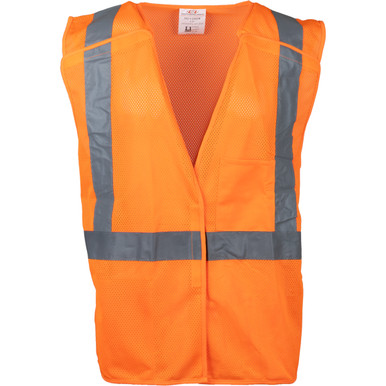
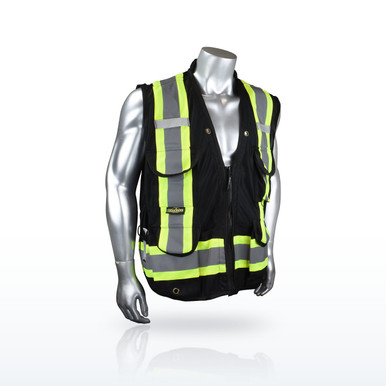
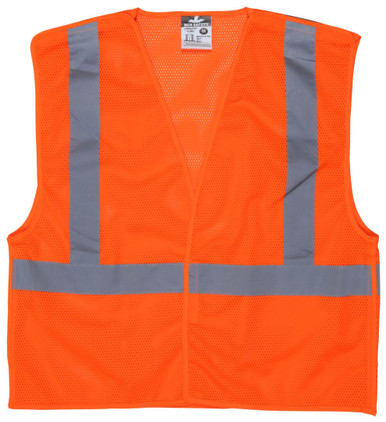 MCR Safety Luminator CL2MO Hi-Vis Vests, Hi-Vis Orange Safety VestType R Class 2 vest, the roadway minimum
Why is the answer spread over three rules? OSHA never wrote a single hi-vis standard. It wrote a flagger rule that points to the federal traffic-control manual, an excavation rule that names vests, and a general PPE rule that makes the employer find the hazards and equip for them. The Federal Highway Administration wrote the numbered requirement, Class 2 or 3, and put it into the MUTCD, which OSHA adopts for flaggers. Put together, the rules cover nearly everyone who works on foot around moving vehicles; the trick is knowing which one applies to your crew.
Where does OSHA require it?
The four places the requirement comes from.
What exactly does the MUTCD require, and who does it reach?
The MUTCD edition OSHA incorporates is the 2009 edition. Its worker-safety section requires all workers, including emergency responders, within the right-of-way who are exposed to traffic or to work vehicles and equipment in a temporary traffic control zone to wear high-visibility safety apparel meeting ANSI/ISEA 107 Performance Class 2 or 3, with the class chosen by the person the employer designates for worker safety. Its flagger section repeats the requirement for flaggers, day and night, and adds that Class 3 should be considered for flaggers at night.
MUTCD 2009 edition section 6D.03 paragraph 04 (Standard) and section 6E.02 paragraphs 01 and 02 (ANSI/ISEA 107-2004 Class 2 or 3).The current MUTCD, the 11th edition of December 2023, carries the same requirement in a renumbered section, now citing ANSI/ISEA 107-2015 or equivalent revisions. The MUTCD applies to all roads open to public travel through 23 CFR 655, not only federal-aid highways, and each state adopts it as its own traffic-control manual. OSHA still cites the 2009 edition for flaggers; a garment that meets the current ANSI edition satisfies both.
MUTCD 11th edition section 6C.05 paragraphs 01, 02 and 07; 23 CFR 655.601 (MUTCD incorporated by reference); 29 CFR 1926.6(n)(1).What happened to 23 CFR 634, the worker visibility rule?
Many guides and spec sheets still cite 23 CFR 634 as the rule that requires Class 2 or 3 on federal-aid highways. It was: the FHWA issued it in November 2006 with a compliance date of November 24, 2008, and it required all workers within the right-of-way of a federal-aid highway who were exposed to traffic or construction equipment to wear ANSI/ISEA 107 Class 2 or 3 apparel. In December 2009 the FHWA removed Part 634 from the Code of Federal Regulations and moved its requirements into the 2009 MUTCD, sections 6D.03 and 6E.02, so that they would apply to all roads open to public travel rather than only federal-aid highways. The requirement did not go away; it moved and got wider. The place to cite today is the MUTCD.
Worker Visibility final rule, 71 FR 67792 (November 24, 2006); MUTCD final rule, 74 FR 66730 (December 16, 2009), item 441 and the amendatory text removing and reserving 23 CFR part 634; OSHA standard interpretation, August 5, 2009 (discussing Part 634).What does OSHA require off the road?
- A written hazard assessment. The employer must assess the workplace for hazards that require PPE, document the assessment with a signed, dated certification, select PPE that protects against the hazards found, tell each employee what was selected, and make sure it fits.
- A struck-by hazard from vehicles or mobile equipment is the kind of hazard that assessment is meant to find. Warehouses with forklifts, loading docks, rail yards, airport ramps, ports, and plant roads are the common cases. Where the assessment finds it, high-visibility clothing is the selected PPE, and the employer pays for it.
- OSHA does not name a class for these settings. ANSI/ISEA 107 does: Type O Class 1 is for workers never exposed to public roadway traffic, and Type R Class 2 or 3 where vehicles move faster or the background is complex. Most employers pick Class 2 because it costs little more and works everywhere.
- Training. Employees must be trained on when the PPE is necessary, how to wear it, and its limitations, before they do the work.
Who pays, and can a worker bring their own vest?
The employer pays. Protective equipment used to comply with OSHA’s PPE rules must be provided at no cost to the employee, and high-visibility garments are not among the listed exceptions. An employee may wear a vest they own if the employer allows it, but the employer stays responsible for making sure it meets the required class and is in usable condition.
29 CFR 1910.132(h)(1) (employer-paid PPE) and (h)(2) through (h)(6) (exceptions); 1910.132(b) (employee-owned equipment).Class 2 and Class 3 garments for the MUTCD and OSHA rules
28 items · prices liveEach garment is listed at the ANSI/ISEA 107 type and class its manufacturer publishes; the edition and FR rating are on the product page. Free shipping on orders over $199.
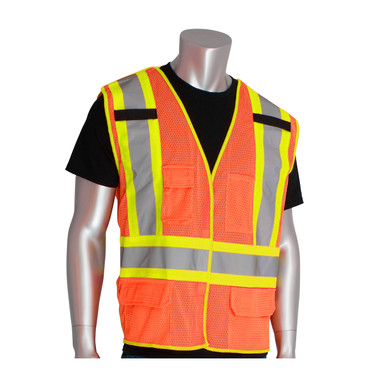
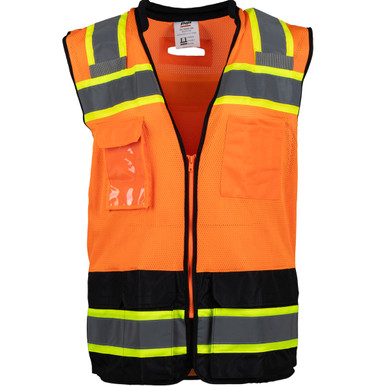
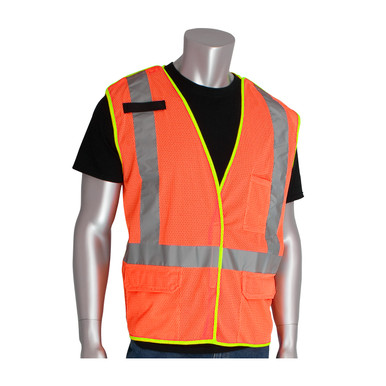
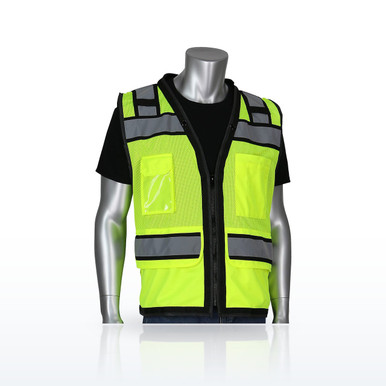
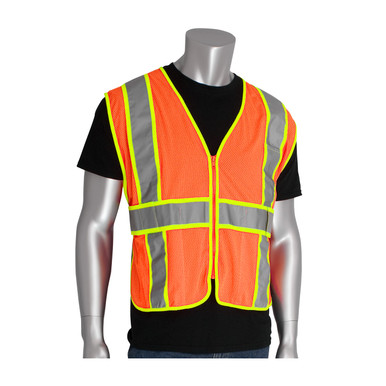
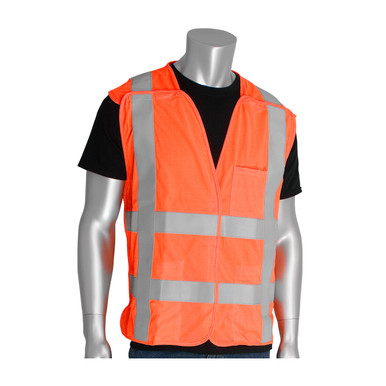
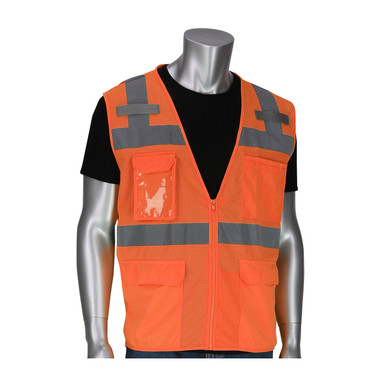
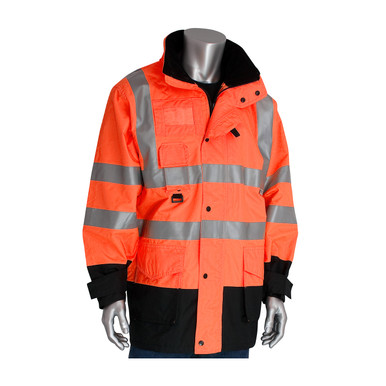
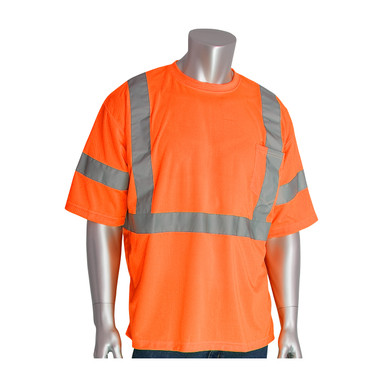
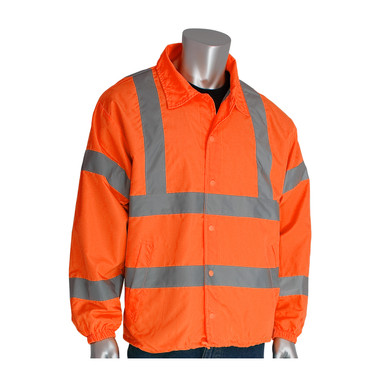
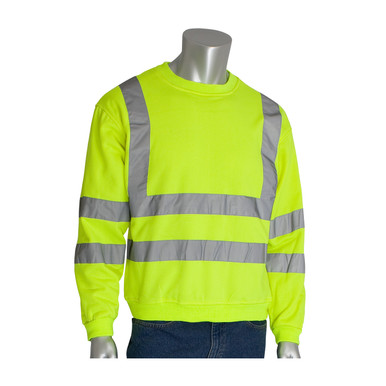
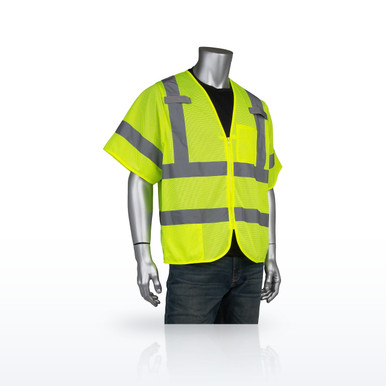
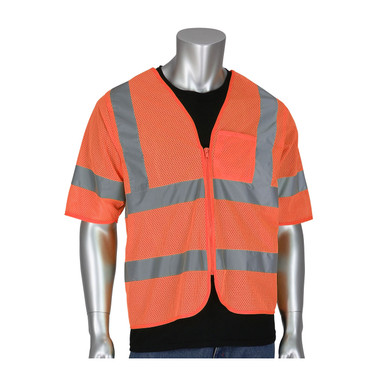
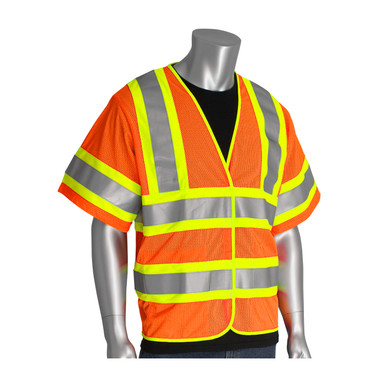
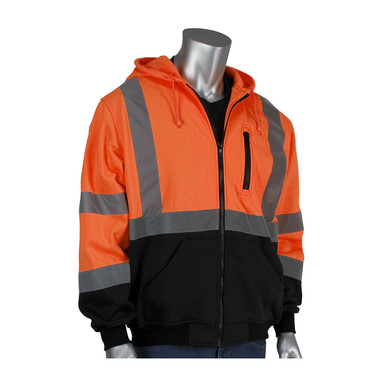
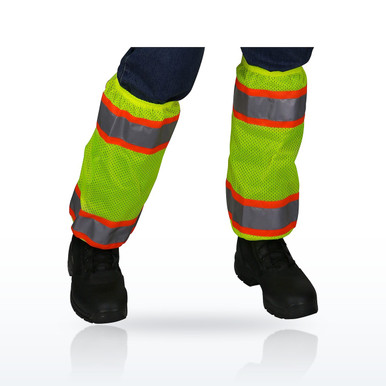
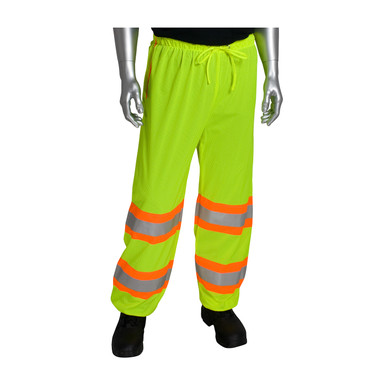
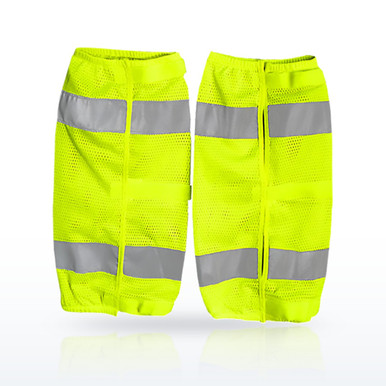
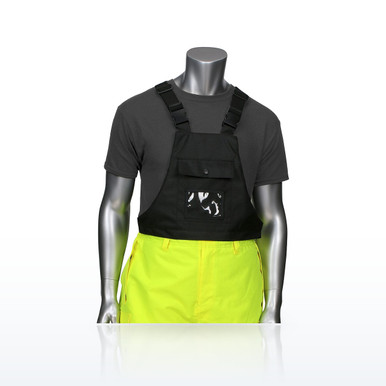
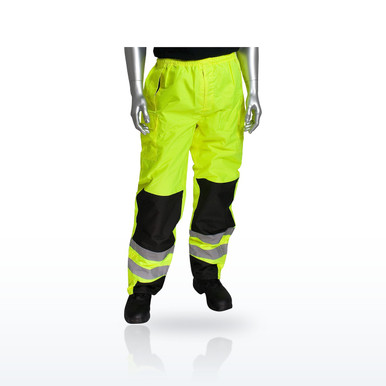
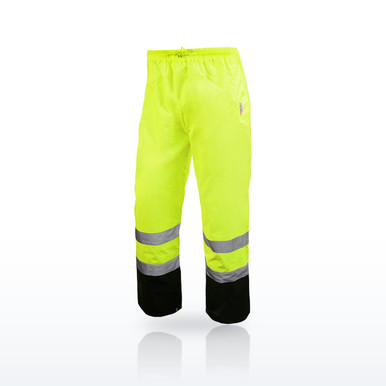
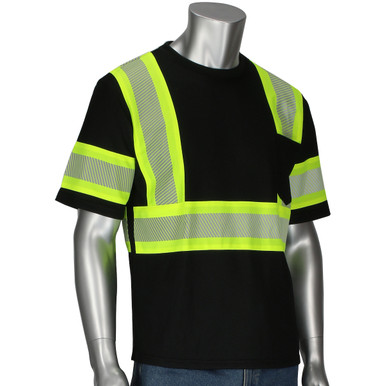
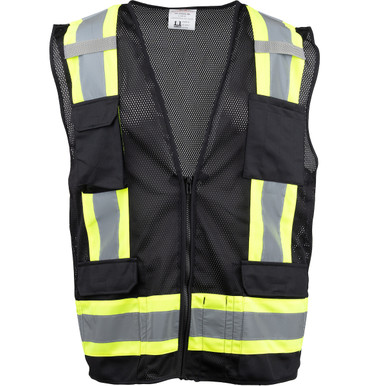
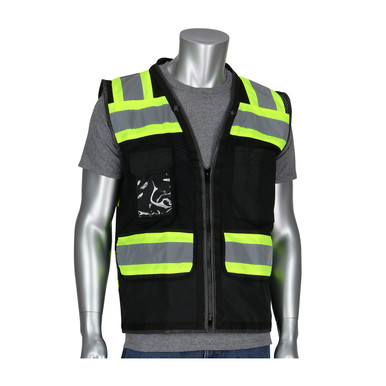
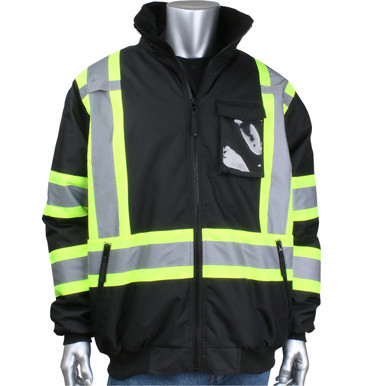
Type O Class 1 garments for off-road yards, and every other rated garment, are on the hi-vis finder.
Questions people ask
Does OSHA require safety vests?
Yes, for flaggers (1926.201(a) through the MUTCD) and for excavation workers exposed to public traffic (1926.651(d)), and for other work zone employees exposed to traffic under the General Duty Clause. Elsewhere the 1910.132 hazard assessment decides.
What class vest does OSHA require?
OSHA does not name a class itself. The MUTCD, which OSHA incorporates for flaggers, requires ANSI/ISEA 107 Class 2 or 3 for everyone in a traffic control zone.
Is 23 CFR 634 still in effect?
No. The FHWA removed it in December 2009 and placed its requirements in the MUTCD, sections 6D.03 and 6E.02 of the 2009 edition (6C.05 in the 11th edition), where they apply to all public roads.
Does OSHA require hi-vis in a warehouse?
Not by name. If the employer’s hazard assessment finds a struck-by hazard from forklifts or trucks, 1910.132 requires PPE for it, and hi-vis is that PPE. Type O Class 1 or Type R Class 2 are the usual choices.
Can OSHA cite an employer whose workers wear Class 1 on a highway?
Yes. The MUTCD requires Class 2 or 3 in a traffic control zone, and OSHA enforces the flagger rule directly and the rest under the General Duty Clause.
Does the worker have to pay for the vest?
No. PPE required to comply with OSHA rules is provided at no cost to the employee (1910.132(h)(1)).
Does the rule apply to utility and survey crews?
Yes. The MUTCD requirement covers all workers on foot within the right-of-way who are exposed to traffic or work vehicles, which includes utility, survey, towing and incident response personnel.
Standards and ratings on this page are as published in the documents named and by the manufacturers named. The employer’s hazard assessment and written program decide what applies at a given workplace. Verify a rating on the product and its spec sheet before use.