
What does Class E mean on hi-vis pants?
Class E is the rating for the lower half: pants, shorts, bib overalls, rain pants and gaiters that carry at least 465 square inches of fluorescent background and 109 square inches of retroreflective tape. The E stands for ensemble. A Class E garment is not a class on its own and does not meet any requirement by itself. Worn with a Class 2 or Class 3 vest, shirt or jacket, the whole outfit is rated Class 3. That is the usual way a crew gets to Class 3 in summer: a Class 2 mesh vest over Class E pants instead of a long-sleeve Class 3 garment.
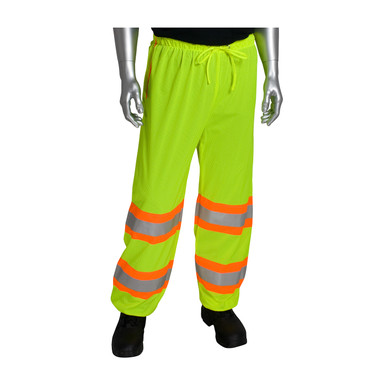
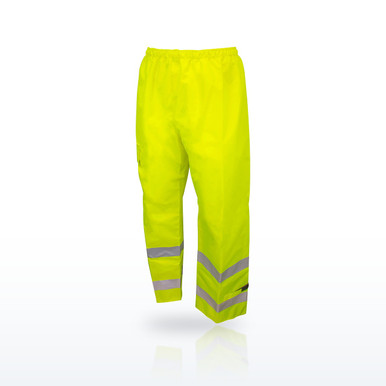
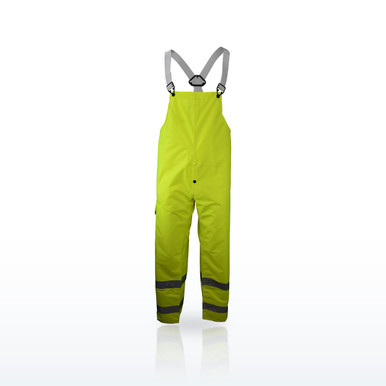
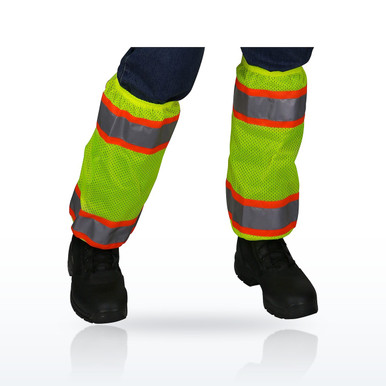 PIP 319-GT2 Hi-Vis Pants & Bibs, ANSI 107 Class E Two-Tone GaitersClass E pants, as rated by the manufacturer
Why does the lower body get its own rating? A driver at night sees retroreflective tape as moving points of light, and the points that say “person” fastest are the ones on the legs and arms, because they swing. The standard calls this biomotion. Pants with tape around the legs turn a vest-shaped blob into a walking figure at a longer distance than more tape on the torso could. Class E exists so that a manufacturer can rate pants for that job, and so that a vest and pants from different makers can be put together with a known result.
What does Class E require?
The minimums for supplemental Class E items in ANSI/ISEA 107-2020.
When do you need Class E pants?
When the job calls for Class 3 and the crew is in vests. The MUTCD requires Class 2 or 3 for everyone on foot in a traffic control zone and says Class 3 should be worn by flaggers at night; many agencies specify Class 3 for all night work. A Class 2 vest plus Class E pants meets Class 3 as an ensemble, which lets a crew keep its summer vests and still work the night shift in compliance.
MUTCD 11th edition section 6C.05 paragraphs 01 and 07; ANSI/ISEA 107-2020 section 4 (ensemble rating).When the lower body is what the driver sees. Workers who bend, kneel or work behind equipment show a driver their legs more than their torso: paving, striping, utility locating, traffic control setup. Rain pants and winter bibs cover ordinary pants, so they are the item that needs the rating in bad weather; a Class 3 jacket over plain rain pants leaves the legs dark.
ANSI/ISEA 107-2020 section 5 (placement of retroreflective material on garments with legs, biomotion); manufacturer spec sheets for the rain and insulated Class E garments listed below.When a site or contract says so. Nothing in OSHA or the MUTCD names Class E, because Class E is a component, not a level of protection. The requirement is always for Class 2 or Class 3; Class E is one way to get to Class 3.
MUTCD 11th edition section 6C.05; 29 CFR 1926.201(a).What does Class E not do?
- It does not make a non-rated shirt into anything. Class E pants under a plain T-shirt is no class at all; the upper garment must be Class 2 or 3 on its own.
- It does not raise a Class 1 (Type O) vest. The ensemble rule applies to Class 2 and Class 3 upper garments.
- It carries no type. Class E has no Type letter; the Type R or Type P on the upper garment’s label is what says where the outfit may be worn.
- It is not a flame-resistance rating. Class E pants are FR only if the label carries the FR line naming the test standard; otherwise they are labeled not flame resistant.
- It does not survive a black-bottom shortcut. Pants that are fluorescent only above the knee, with dark lowers, must still carry the 465 square inches in fluorescent fabric to be Class E; the label tells you whether they do.
How do you read a Class E label?
The pictogram shows pants or shorts with the letter E, and the words say Class E or Supplemental Class E; there is no type letter and no class number. The rest of the label is the same as any 107 garment: standard and year, manufacturer and style, size, the FR line, and the care instructions with the maximum number of wash cycles the tape is rated for. Some two-piece suits carry two labels, one for the jacket (Type R Class 3) and one for the pants (Class E); each piece is rated on its own.
ANSI/ISEA 107-2020 section 12 (labeling and marking) and sections 12 to 14 (care labeling); manufacturer labels for two-piece rain suits in the catalog.Class E pants, shorts, bibs and rain pants
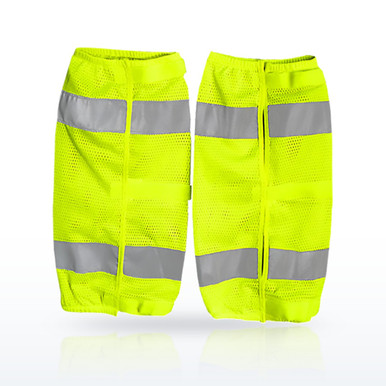
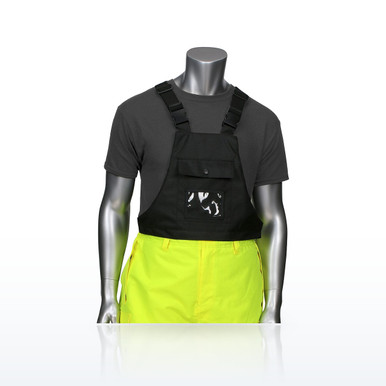
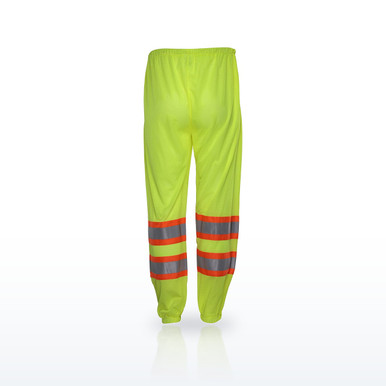
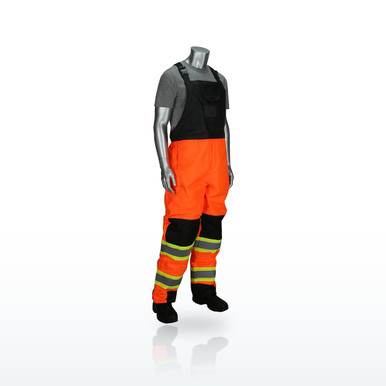
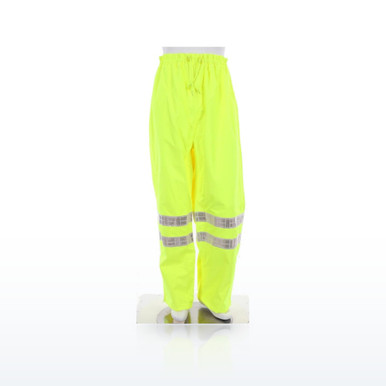
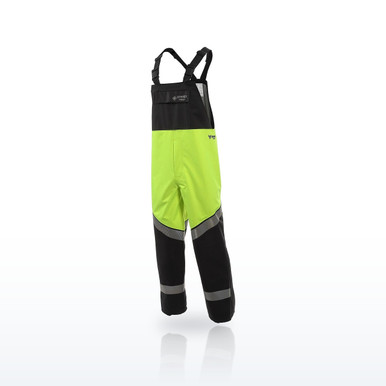
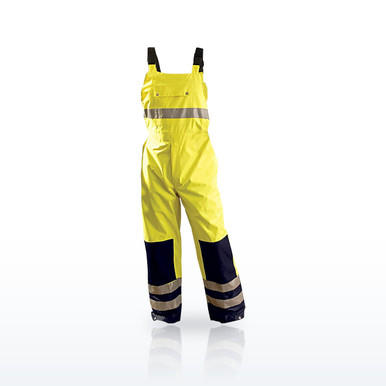
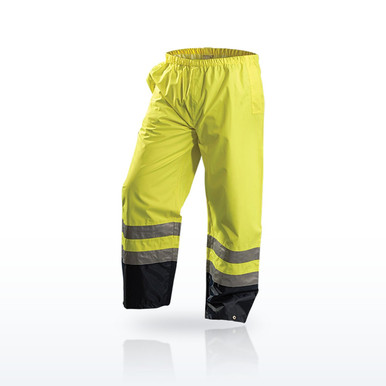
24 items · prices liveEach garment is listed at the ANSI/ISEA 107 class its manufacturer publishes. Class E items are worn with a Class 2 or 3 upper garment; the sizes, colors and FR line are on the product page. Free shipping on orders over $199.
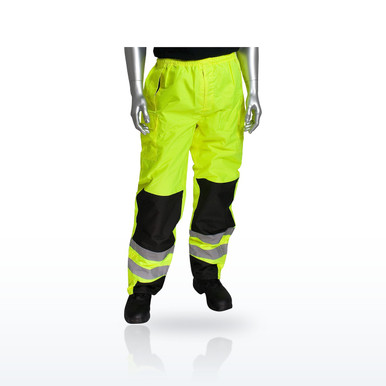
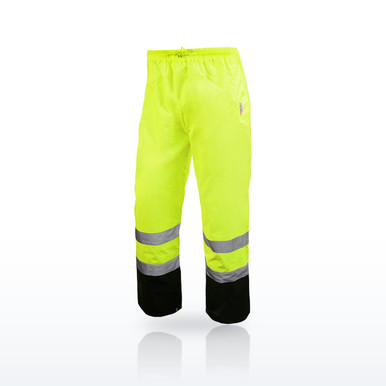
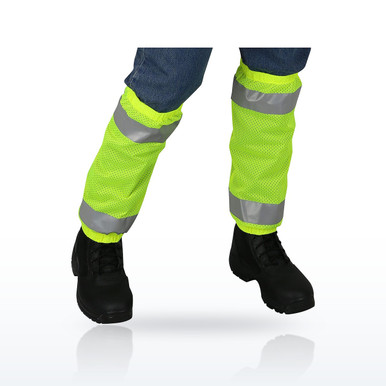
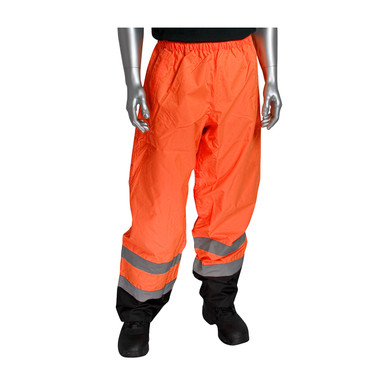
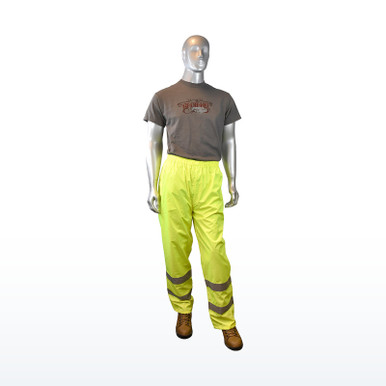
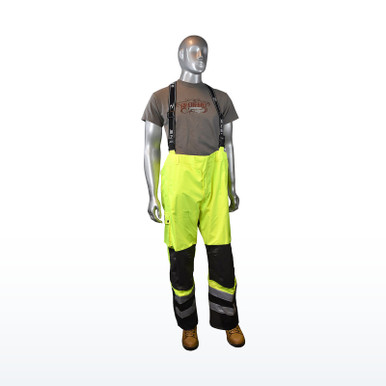
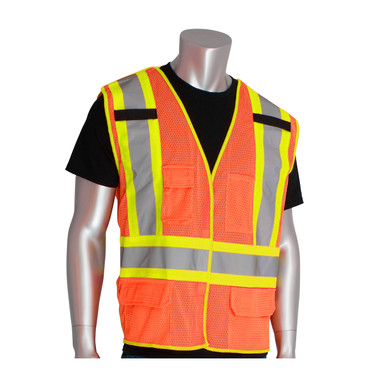
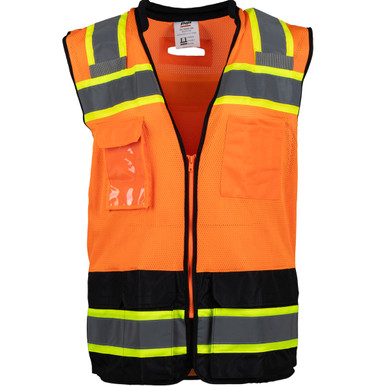
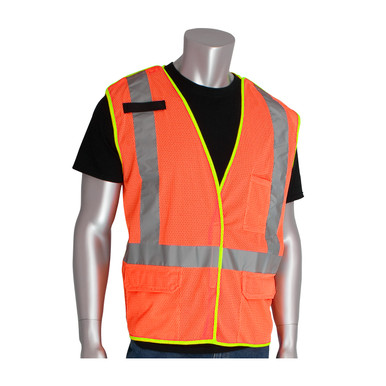
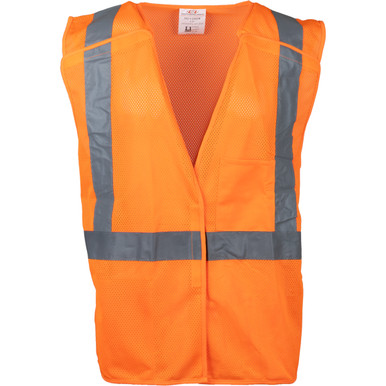
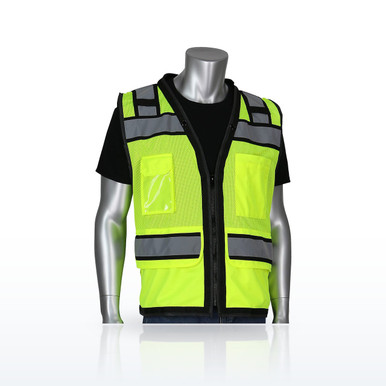
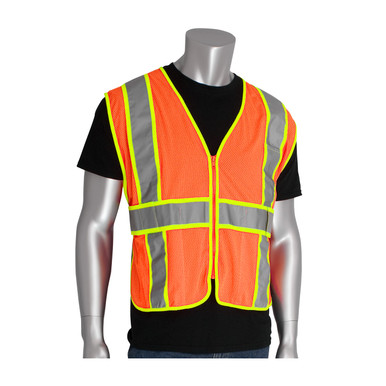
Class 2 vests and Class 3 jackets to pair with them are in the hi-vis finder.
Questions people ask
What does Class E mean?
The ANSI/ISEA 107 rating for pants, shorts, bibs, rain pants and gaiters with at least 465 square inches of background and 109 of tape. Worn with a Class 2 or 3 upper garment, the outfit is Class 3.
Can Class E pants be worn alone?
Not to meet any requirement. Class E is supplemental; the standard says it cannot be worn alone to meet a high-visibility requirement.
Does a Class 2 vest with Class E pants equal Class 3?
Yes. The ensemble of a Class 2 or 3 upper garment and a Class E lower garment is rated Class 3.
Does OSHA require Class E pants?
No rule names Class E. OSHA and the MUTCD require Class 2 or 3; Class E pants are one way to reach Class 3.
Are hi-vis shorts Class E?
They can be, if they carry the 465 and 109 square inch minimums and the label says Class E. Many shorts do not have the room and are sold as non-rated.
What is the difference between Class E and Class 3 pants?
There is no Class 3 for pants. Pants are rated Class E; the Class 3 rating belongs to the ensemble or to a full-body garment such as a coverall.
Do rain pants need to be Class E?
If the job calls for Class 3 and the pants cover the legs, yes; a Class 3 jacket over dark rain pants leaves the legs without tape. Class E rain pants keep the ensemble at Class 3.
Standards and ratings on this page are as published in the documents named and by the manufacturers named. The employer’s hazard assessment and written program decide what applies at a given workplace. Verify a rating on the product and its spec sheet before use.