
Hi-vis for flaggers and roadway work: what the MUTCD requires
Flaggers must wear high-visibility apparel meeting ANSI/ISEA 107 Performance Class 2 or 3, by day and by night. The background must be fluorescent orange-red, fluorescent yellow-green, or a combination; the retroreflective material must be orange, yellow, white, silver, yellow-green or a fluorescent version of those, and it must identify the wearer as a person. At night the MUTCD says Class 3 should be worn. The same Class 2 or 3 rule covers every worker on foot in the traffic control zone, including utility crews, surveyors, tow operators, law enforcement and emergency responders. OSHA enforces the flagger rule directly through 1926.201(a). The old federal-aid rule, 23 CFR 634, was folded into the MUTCD in 2009 and now reaches every public road.
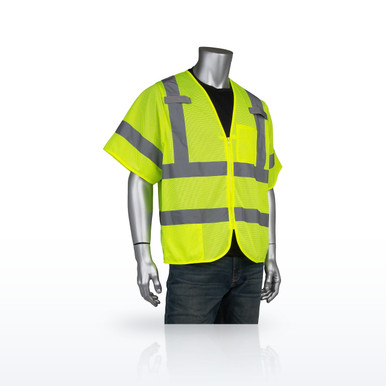 PIP 303-V101 Hi-Vis Vests, ANSI Type R Class 3 Dual-Sized Two Pocket Mesh VestType R Class 3 vest for night flagging, as rated by the manufacturer
Why do flaggers have their own rule? A flagger stands in or beside the open lane and depends on being seen to do the job at all: a driver who does not see the flagger does not see the stop paddle either. The flagger is also the worker closest to traffic, often alone, and often at the point where drivers first meet the work zone. The MUTCD treats flagger apparel as part of the traffic control device, which is why OSHA’s construction rule sends employers to the MUTCD for it rather than writing its own.
What does the MUTCD require of a flagger’s apparel?
The flagger section, in the 2009 edition OSHA incorporates and in the current 11th edition.
Who else in the work zone is covered?
Everyone on foot. The worker-safety section requires all workers, including emergency responders, within the right-of-way who are exposed either to traffic or to work vehicles and equipment within the temporary traffic control zone to wear ANSI/ISEA 107 Class 2 or 3 apparel. The MUTCD definition of a worker is anyone on foot whose duties place them within the right-of-way: construction and maintenance forces, survey crews, utility crews, responders to incidents in the right-of-way, and law enforcement directing traffic or handling crashes and lane closures. A tow operator hooking up on the shoulder is an incident responder on foot. Equipment operators inside a cab are not on foot; the moment they step down, they are.
MUTCD 2009 edition section 6D.03 paragraph 04 and section 1A.13 item 256 (definition of worker); MUTCD 11th edition section 6C.05 paragraph 01.Firefighters and other emergency responders working in the right-of-way must wear it too, with one exception: while engaged in emergency operations that directly expose them to flame, fire, heat or hazardous materials, they may wear retroreflective turnout gear specified by other bodies such as the NFPA instead. Emergency, incident and law enforcement personnel may also choose an ANSI/ISEA 207 public safety vest, which has less background material in exchange for access to a duty belt and tear-away features; ANSI/ISEA 107 now carries that design as Type P.
MUTCD 2009 edition section 6D.03 paragraphs 05, 07 and 08; MUTCD 11th edition section 6C.05 paragraphs 04 through 06; ANSI/ISEA 107-2020 section 4 (Type P).How does OSHA enforce it?
OSHA’s construction standard says signaling by flaggers and the use of flaggers, including the warning garments worn by flaggers, shall conform to Part 6 of the MUTCD, and it incorporates the 2009 edition with its 2012 revisions by reference. A flagger in a Class 1 vest, a faded vest, or a plain orange T-shirt is a 1926.201(a) violation. For the rest of the crew OSHA uses the General Duty Clause: its 2009 letter of interpretation states that employees in highway work zones who are exposed to public or construction traffic must wear high-visibility garments, because struck-by injury is a recognized hazard and the federal rule shows the industry accepts high-visibility apparel as the feasible way to address it. Excavation crews exposed to traffic have their own rule, 1926.651(d).
29 CFR 1926.201(a); 29 CFR 1926.6(n)(1); OSHA standard interpretation of August 5, 2009; 29 CFR 1926.651(d).What about 23 CFR 634?
The FHWA worker visibility rule, 23 CFR 634, took effect for federal-aid highways on November 24, 2008 and required Class 2 or 3 for all workers in the right-of-way exposed to traffic or construction equipment. When the FHWA published the 2009 MUTCD it removed Part 634 from the CFR and placed its requirements in MUTCD sections 6D.03 and 6E.02, so they apply to all roads open to public travel, with a compliance date of December 31, 2011 for roads that were not federal-aid. The requirement is unchanged; its address is the MUTCD, and through state adoption of the MUTCD it is now the rule on city streets and county roads as well as interstates.
MUTCD final rule, 74 FR 66730 (December 16, 2009), items 441, 452 and 453 and the amendatory text removing and reserving 23 CFR part 634; Worker Visibility final rule, 71 FR 67792 (November 24, 2006).What does a flagger outfit look like in practice?
- Day: a Type R Class 2 vest or shirt at minimum, in orange-red or yellow-green. Many agencies specify orange for flaggers so they stand out from the rest of the crew and from yellow-green signs.
- Night, rain, high speed: Type R Class 3, which means sleeves with tape around each arm, or a Class 2 vest over Class E pants, which the ANSI standard counts as a Class 3 ensemble.
- Worn as the outer layer, zipped or closed, over the jacket, not under it. The MUTCD requirement is that the apparel be visible; a vest under a coat is not.
- Clean and unfaded. The FHWA guidance for worn apparel is that it should be replaced when it is faded, torn, dirty, worn, defaced, or not visible at 1,000 feet by day or night.
- The flagger’s stop paddle, lighting of the flagger station at night, and flagger training are separate MUTCD requirements in the same chapter; the apparel is only part of it.
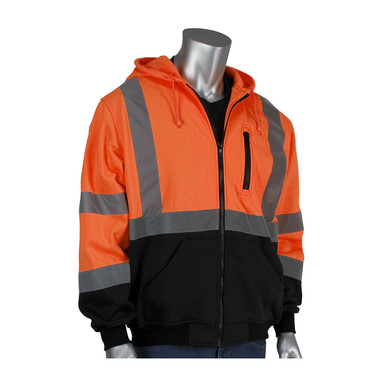
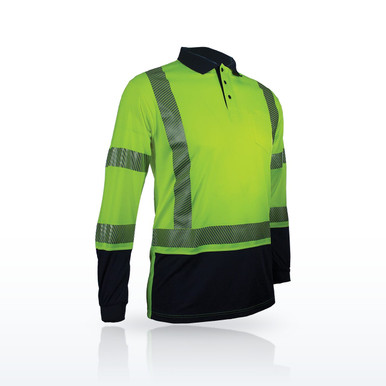
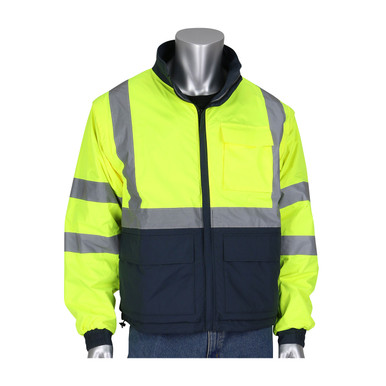
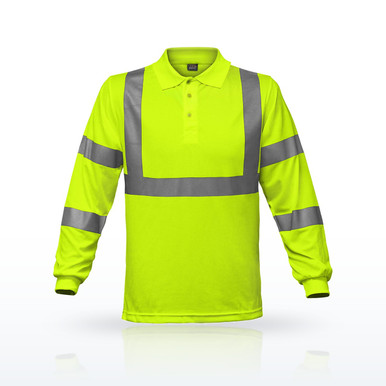
Type R garments for flaggers and roadway crews
30 items · prices liveEach garment is listed at the ANSI/ISEA 107 type and class its manufacturer publishes. Type R is the roadway type the MUTCD rule calls for. Colors and sizes are on the product page. Contractor Direct orders ship free.
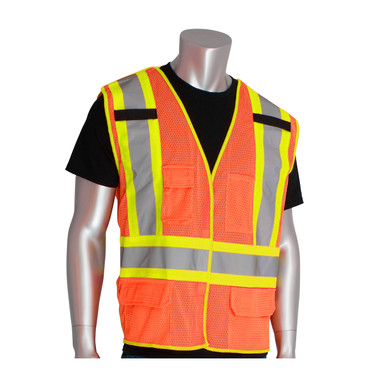
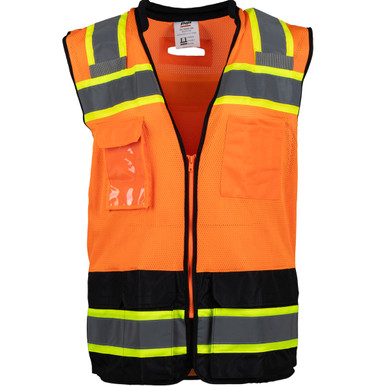
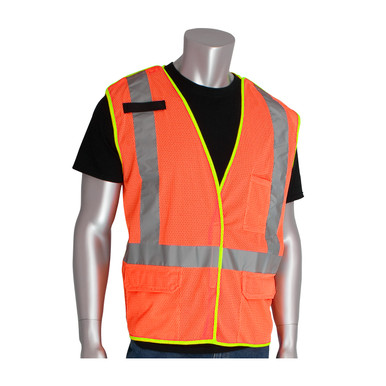
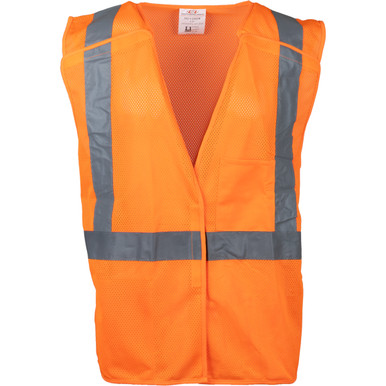
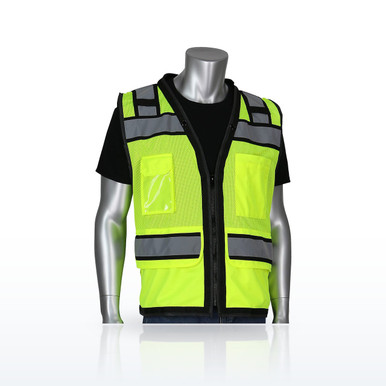
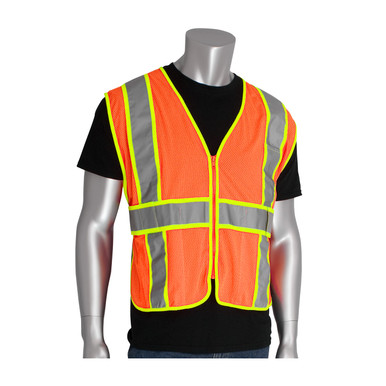
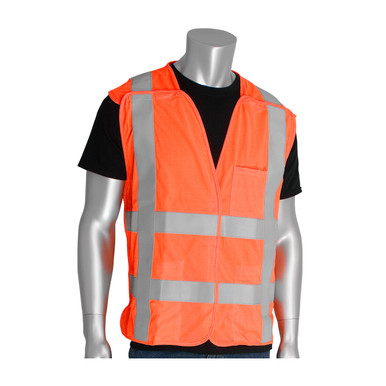
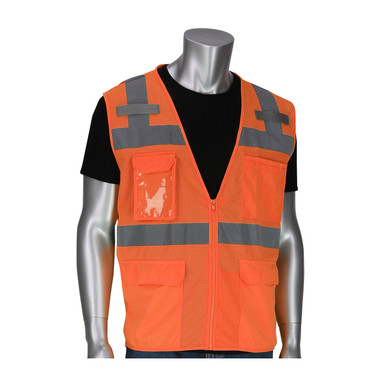
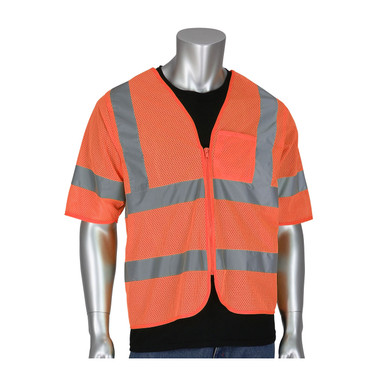
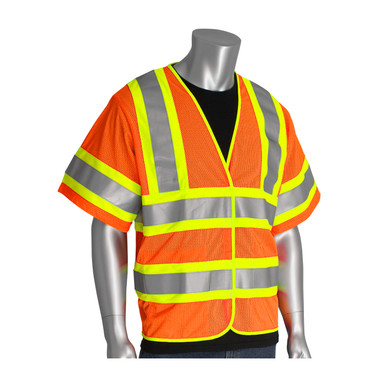
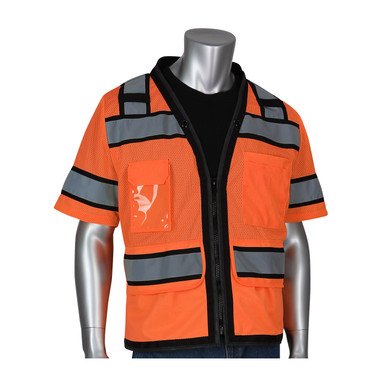
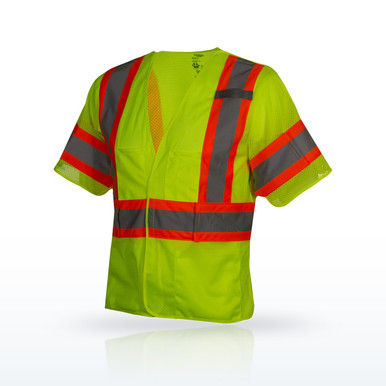
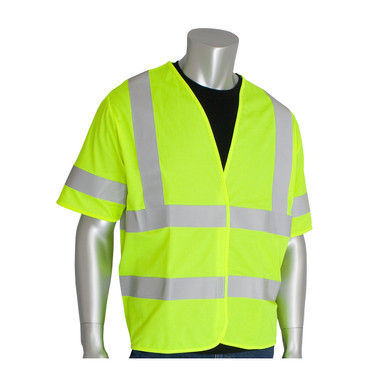
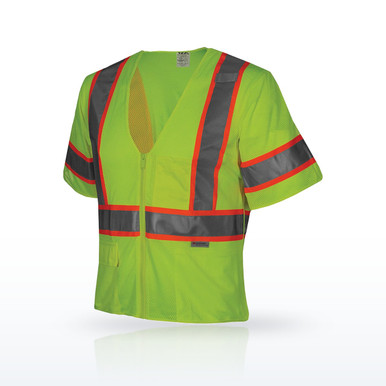
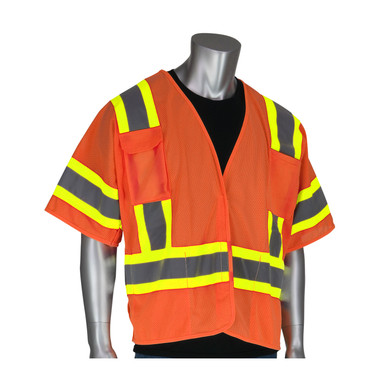
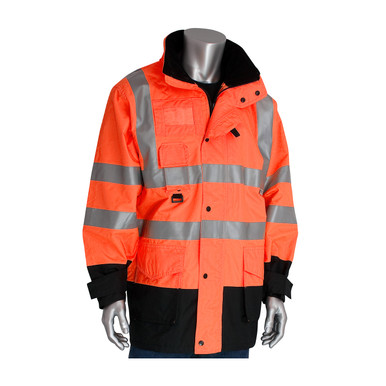
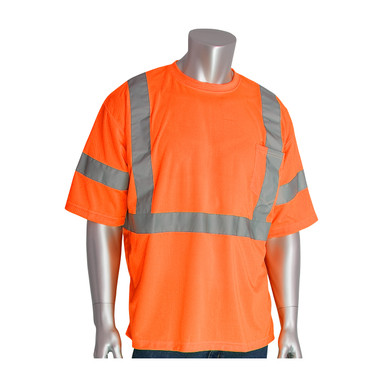
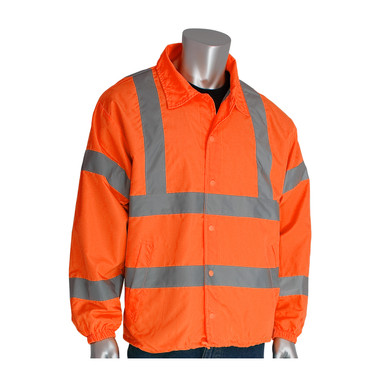
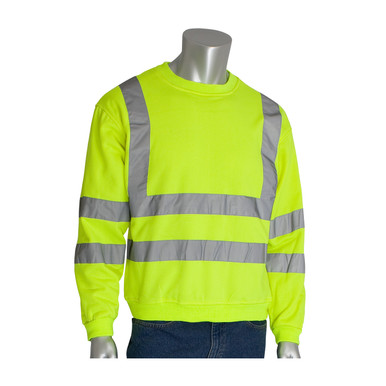
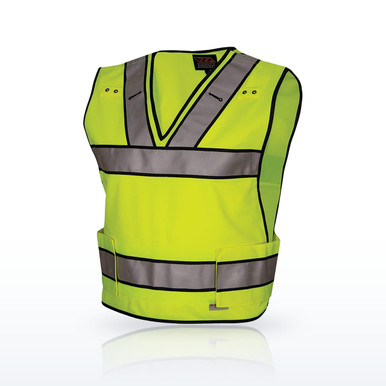
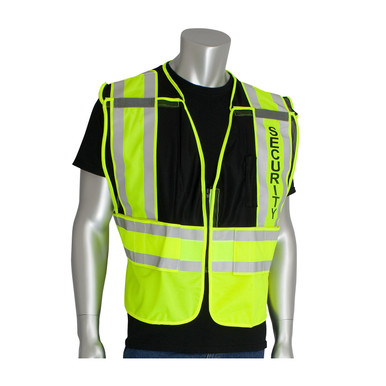
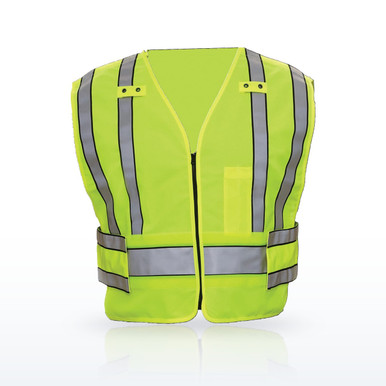
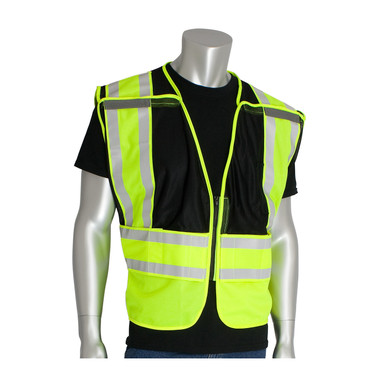
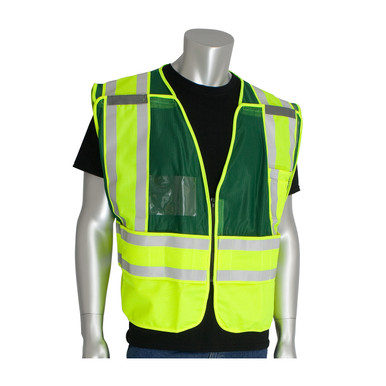
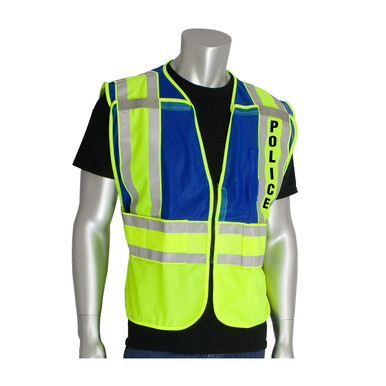
Type P public safety vests for law enforcement and responders, and Class E pants, are in the hi-vis finder.
Questions people ask
What class vest does a flagger need?
ANSI/ISEA 107 Class 2 or 3, day and night, under the MUTCD flagger section. Class 3 should be worn at night.
Does a flagger have to wear orange?
The MUTCD allows fluorescent orange-red, fluorescent yellow-green, or a combination. Some state and local agencies specify orange for flaggers in their own standards; check the contract.
Is Class 3 required at night?
The MUTCD puts it as guidance: Class 3 should be worn for nighttime flagging. Many agencies make it a contract requirement. Either way, a Class 2 vest with Class E pants meets Class 3 as an ensemble.
Does OSHA cite 1926.201 for a flagger without a vest?
Yes. 1926.201(a) requires flagger warning garments to conform to Part 6 of the MUTCD, which requires Class 2 or 3.
Is 23 CFR 634 still the rule?
No. It was removed in December 2009 and its requirements moved into the MUTCD, where they now apply to all public roads, not only federal-aid highways.
Can police wear their own vest?
Officers directing traffic must wear Class 2 or 3 apparel, or, as the MUTCD option allows, a public safety vest meeting ANSI/ISEA 207 (Type P in the current 107 standard).
Does the rule cover a tow truck driver on the shoulder?
Yes. Anyone on foot in the right-of-way exposed to traffic is a worker under the MUTCD and must wear Class 2 or 3.
Who decides between Class 2 and Class 3?
A person designated by the employer to be responsible for worker safety, under the MUTCD. Agencies may set a higher minimum in their contracts.
Standards and ratings on this page are as published in the documents named and by the manufacturers named. The employer’s hazard assessment and written program decide what applies at a given workplace. Verify a rating on the product and its spec sheet before use.