
Do nitrile gloves conduct electricity? Rubber gloves and electrical shock
Nitrile rubber is not a conductor, and a dry nitrile glove will not carry current the way a wet or metal-backed glove would. That is a different thing from protecting you against shock. A disposable nitrile glove has no voltage rating: it is not made under the rubber insulating glove standard, it is not marked with a class, it is thin, it is made to a sampling rule that allows pinholes, and it has never been proof-tested at voltage. OSHA requires employees working where there are electrical hazards to use electrical protective equipment that meets 1910.137, which means a rubber insulating glove marked with its class, air-tested before each day’s use and electrically retested every 6 months, worn under a leather protector. A nitrile glove on a live circuit is bare hands with a false sense of security.
 Salisbury E0011B Class 00 rubber insulating glovesClass 00, 500 volts AC maximum use, sold per pair
Why does “non-conductive” not mean “shock protection”? Almost any dry plastic or rubber is an insulator in the sense that a meter reads no current through it at low voltage. Shock protection is a stronger claim: that a glove will hold off a stated voltage, with a safety margin, across its whole surface, after being flexed, stretched, stored and worn, with no pinhole anywhere. That claim is only true of a glove that was designed for it, made thick enough for it, tested at a proof voltage well above its use voltage, and retested on a schedule. The rubber insulating glove standard and 1910.137 exist to make that claim checkable. A disposable nitrile glove was designed to keep blood and chemicals off the skin for one task, and the rules it is made under say nothing about voltage.
What separates an insulating glove from a nitrile glove?
Five differences, each of them something OSHA or the glove standard requires of the real thing.
What does OSHA require for electrical work?
The general industry electrical rules say that employees working in areas where there are potential electrical hazards shall be provided with, and shall use, electrical protective equipment appropriate for the parts of the body to be protected and the work to be performed. That equipment has to be maintained in a safe, reliable condition and periodically inspected or tested as 1910.137 requires. And where the insulating material could be damaged during use, it has to be protected, the rule’s own example being an outer leather covering over rubber insulating gloves.
29 CFR 1910.335(a)(1)(i), (ii) and (iii).1910.137 is the standard those requirements point to, and it is written entirely around rubber insulating equipment: blankets, matting, covers, line hose, gloves and sleeves. Its note says rubber insulating gloves meeting ASTM D120 are deemed to comply with the performance requirements of paragraph (a). Nothing in it covers a disposable glove, and no disposable glove maker claims that its gloves meet it.
29 CFR 1910.137(a) and the Note to paragraph (a) (ASTM D120, Standard Specification for Rubber Insulating Gloves).For a site electrician the practical line is the voltage. Live parts at 50 volts or more must be guarded, and live parts an employee may be exposed to are de-energized before the work unless the employer can show that de-energizing adds hazards or is infeasible; parts under 50 volts to ground need not be de-energized where there is no added burn or arc exposure. Where the work must be done live, the worker wears class-rated gloves with protectors. There is no voltage at which a nitrile glove is the required equipment.
29 CFR 1910.303(g)(2)(i) (guarding of live parts at 50 volts or more); 1910.333(a)(1) (de-energize unless infeasible; under 50 volts to ground); 1910.335(a)(1)(i).Is a nitrile glove worse than nothing?
In one way, yes. A bare hand touching a live conductor gets a shock the worker feels and pulls away from. A thin glove with a pinhole or a wet spot can arc through at the one point of failure and the worker has no warning before it happens. The glove also invites the worker closer to the conductor than they would otherwise go. That is why the rule does not accept “some insulation”; it accepts a tested class or nothing, with the circuit locked out.
29 CFR 1910.137(c)(2)(iii)(A) (equipment with a hole, tear, puncture or cut may not be used); 1910.333(a)(1).Nitrile gloves still have a place on an electrical job, under the rubber glove as a liner for sweat, or for the cleanup and the chemical work around the job. They just are not the layer that stops the current.
Manufacturer instructions for the rubber insulating gloves listed below; liners do not change the class.What about static (ESD) and nitrile?
Electrostatic discharge is a separate subject. Some nitrile gloves are sold as anti-static or ESD-safe for electronics assembly, which means they bleed off a static charge in a controlled way so it does not jump to a component. An ESD glove is designed to be slightly conductive, which is the opposite of an insulating glove, and it carries no voltage rating either. The product page states which claim a glove makes; neither one implies the other.
Manufacturer product data for ESD gloves; 29 CFR 1910.137 does not cover static control.Rubber insulating gloves and protectors
15 items · prices liveClass is as marked on the cuff and published by the manufacturer; the maximum use voltage for each class is in 1910.137 Table I-4 and on the product page. Protectors are worn over the rubber glove. Contractor Direct orders ship free.
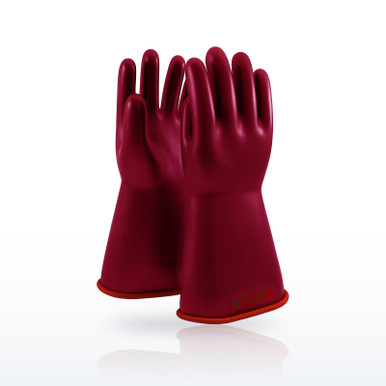
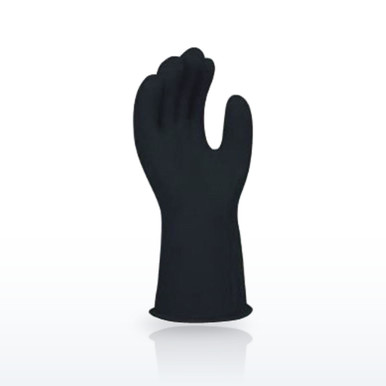
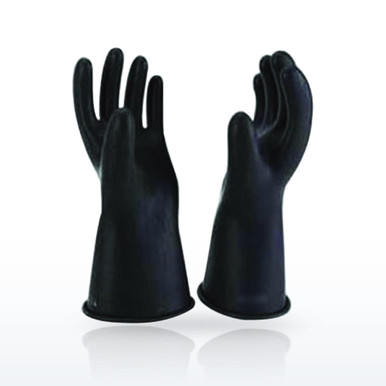

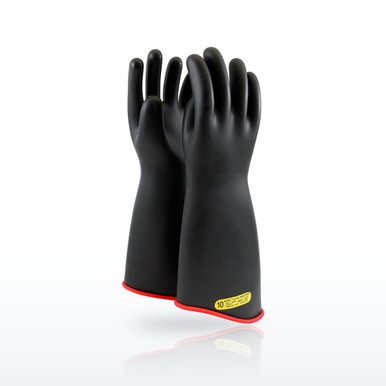
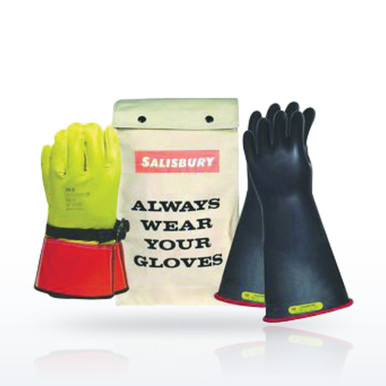
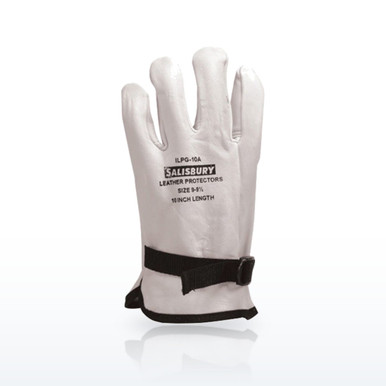
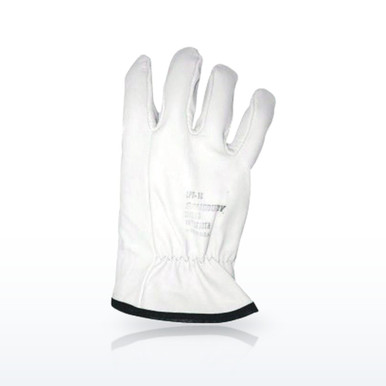



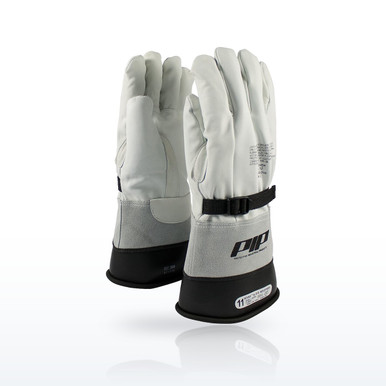
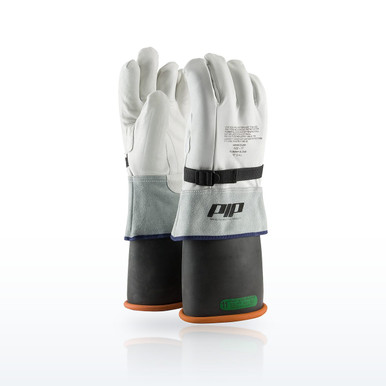
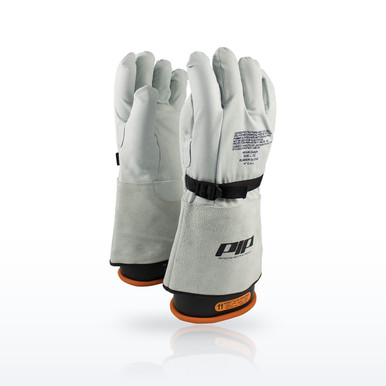
Sizes and cuff styles are on each product page. Electrical retesting every 6 months is the employer’s responsibility under 1910.137(c)(2)(viii).
Questions people ask
Do nitrile gloves conduct electricity?
Dry nitrile rubber is not a conductor. But a disposable nitrile glove has no voltage rating, is thin, is allowed pinholes under its own standard, and has never been proof-tested, so it is not shock protection and is not the equipment OSHA requires for electrical work.
Can I use nitrile gloves for electrical work?
Not as protection from shock. OSHA 1910.335(a)(1)(i) requires electrical protective equipment that meets 1910.137, which is a class-marked rubber insulating glove, worn under a leather protector.
What gloves do electricians wear?
Rubber insulating gloves marked with a class (00 through 4) for the voltage, with leather protector gloves over them, air-tested daily and electrically retested every 6 months. (1910.137(c)(2).)
Are latex or vinyl gloves any better?
No. None of the disposable glove materials is made or tested under the rubber insulating glove standard. The class mark is what matters, not the material name.
What voltage can a Class 00 glove be used on?
Up to 500 volts AC, per 1910.137 Table I-4. Class 0 is 1,000 volts AC. Household and most commercial building wiring is within Class 00 or Class 0.
Do rubber insulating gloves expire?
They are tested rather than dated: electrically before first issue and every 6 months after, and gloves tested but not issued may be placed in service only if tested within the previous 12 months. (1910.137 Table I-5.)
Is an ESD glove an insulating glove?
No. An ESD or anti-static glove is made slightly conductive so static drains off safely; it carries no voltage rating and is not electrical protective equipment.
Does a thicker nitrile glove help?
A thicker glove is a better chemical and tear barrier. It is still unrated and untested at voltage, so it changes nothing for shock.
Standards and ratings on this page are as published in the documents named and by the manufacturers named. The employer’s hazard assessment and written program decide what applies at a given workplace. Verify a rating on the product and its spec sheet before use.