
Electrical insulating rubber gloves: classes 00 to 4 and the testing OSHA requires
Rubber insulating gloves are classed by voltage. Class 00 is for up to 500 volts AC, Class 0 up to 1,000, Class 1 up to 7,500, Class 2 up to 17,000, Class 3 up to 26,500 and Class 4 up to 36,000. The class is marked on the cuff, along with Type I (not ozone-resistant) or Type II (ozone-resistant). OSHA requires the gloves to be inspected and air-tested before each day’s use, electrically retested before first issue and every 6 months after, worn under leather protector gloves except in the narrow cases the rule allows, stored away from light, heat and ozone, and taken out of service for any hole, cut, swelling or ozone cracking. The employer has to certify the tests and be able to show the records.
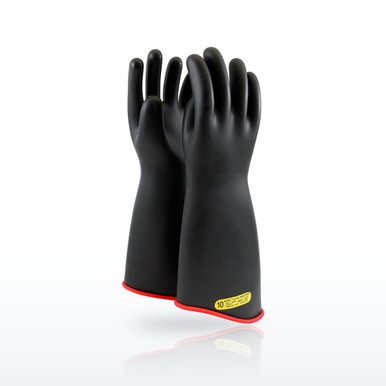
 Salisbury NG218B/12 Class 2 rubber insulating glovesClass 2, 17,000 volts AC maximum use, sold per pair
Why are insulating gloves tested instead of just replaced? Rubber ages. Ozone in the air cracks it, sunlight and heat harden it, oil swells it, and a pinhole from a wire end is invisible. None of that can be seen reliably on a dark glove, and all of it lets current through. So the rule treats the glove as an instrument: proof-tested by the maker at a voltage well above the use voltage, air-tested by the wearer every day for leaks, and sent back to a lab on a 6-month clock to be proof-tested again. A glove that fails any step is out, however new it looks.
What does OSHA require of the gloves in service?
The in-service rules in 1910.137(c), in the order a crew meets them.
Rubber insulating glove classes: use and test voltages
| Class | Maximum use voltage, AC | AC proof test | DC proof test |
|---|---|---|---|
| 00 | 500 V | 2,500 V | 10,000 V |
| 0 | 1,000 V | 5,000 V | 20,000 V |
| 1 | 7,500 V | 10,000 V | 40,000 V |
| 2 | 17,000 V | 20,000 V | 50,000 V |
| 3 | 26,500 V | 30,000 V | 60,000 V |
| 4 | 36,000 V | 40,000 V | 70,000 V |
Maximum use voltage is the AC voltage (rms) rating of the protective equipment that designates the maximum nominal design voltage of the energized system that may be safely worked; the proof-test voltage is applied to every glove before issue and at each retest. The nominal design voltage is the phase-to-phase voltage on multiphase circuits; phase-to-ground counts only where exposure is limited to phase-to-ground or multiphase exposure is insulated away. Type I gloves are not resistant to ozone; Type II are. Color is not part of the class system; the class is read from the cuff label.
29 CFR 1910.137 Table I-4 (maximum use voltages), Table I-1 (AC proof test) and Table I-2 (DC proof test); 1910.137(a)(1)(ii) (Type I and Type II marking); Table I-4 footnote 1 (definition of maximum use voltage).
How do you pick the class?
From the voltage of the system the hands can touch, read against Table I-4. A 480-volt panel is within Class 00; 600-volt gear is Class 0; 4,160-volt and 7,200-volt distribution is Class 1; 12,470- and 13,800-volt is Class 2; 25,000-volt is Class 3; 34,500-volt is Class 4. The class has to cover the nominal voltage of the system, not the voltage the worker expects to see on the one conductor in hand. Where the employer wants to use a glove without protectors under the exception, the glove is chosen one class higher than the voltage requires.
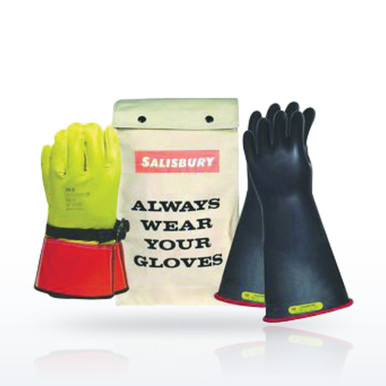
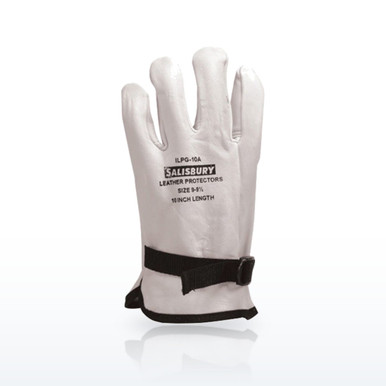
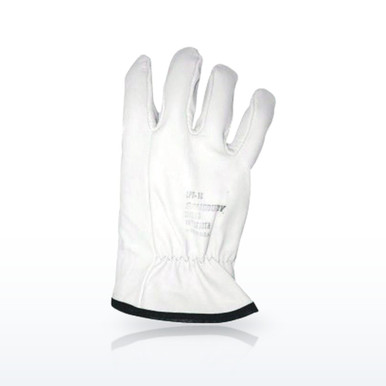
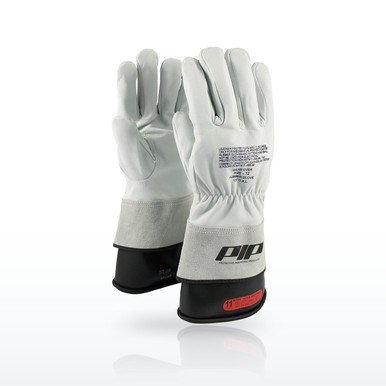
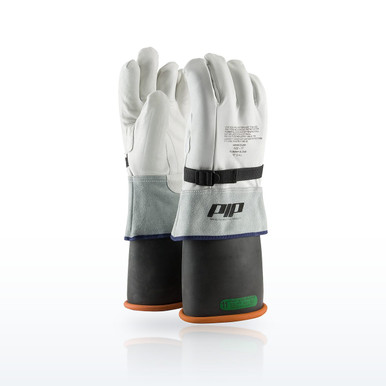
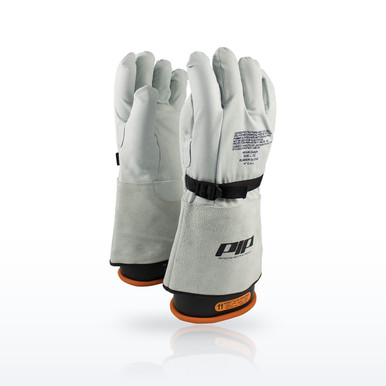
29 CFR 1910.137(c)(2)(i) (maximum use voltages per Table I-4); 1910.137(c)(2)(vii)(C).Length and cuff are the other choices. Gloves come in 11-, 14-, 16- and 18-inch lengths; longer gloves cover more forearm for reaching into gear, and sleeves cover the rest when the shoulder is in the zone. Straight, contour and bell cuffs are a fit preference, not a rating. A leather protector is sized to the rubber glove and is shorter than it, so the rubber shows above the leather; the protector must not be pulled up over the rubber cuff or used for any other purpose.
Manufacturer sizing data for the gloves listed below; 29 CFR 1910.137(c)(2)(vii) (protector gloves).What does the lab do at the 6-month test?
The glove is filled with water, lowered into a tank of water, and a proof voltage from Table I-1 (or the DC value from Table I-2) is applied between the water inside and the water outside for the time the test method requires, while the leakage current is measured. A glove that flashes over, punctures or leaks more than the allowed current fails. The test method has to reliably show whether the glove can withstand the voltage; ASTM D120 and the field-test method F496 are the ones the industry uses and that OSHA names in its notes to the rule. Each glove then gets a stamp or tag with the test date, which is what the employer’s certification points to.
29 CFR 1910.137(c)(2)(viii) and (ix); Note to 1910.137(c)(2)(ix) (ASTM F496, Standard Specification for In-Service Care of Insulating Gloves and Sleeves); Note to 1910.137(a) (ASTM D120).Repairs are limited. A glove with a minor defect may be patched or treated with a compatible liquid compound, but only in the area between the wrist and the reinforced edge of the opening, never in the hand or fingers, and any repaired glove is retested before it goes back into service.
29 CFR 1910.137(c)(2)(x)(D) and (c)(2)(xi).What other rules apply to the work?
- Employees working where there are potential electrical hazards must be provided with, and must use, electrical protective equipment appropriate for the body parts and the work, maintained in a safe condition and periodically inspected or tested as 1910.137 requires.
- Where the insulating material could be damaged during use, it has to be protected; the rule’s own example is a leather outer covering over rubber insulating gloves.
- Live parts an employee may be exposed to are de-energized before the work unless the employer can show that de-energizing creates greater hazards or is infeasible. Parts under 50 volts to ground need not be de-energized where there is no added burn or arc exposure.
- Electric power generation, transmission and distribution work has its own rules in 1910.269: when rubber gloves are the insulation, rubber sleeves are worn too unless the other energized parts are insulated from the employee, and the gloves go on and come off only from a position outside the minimum approach distance.
- NFPA 70E, the consensus electrical safety standard, calls for rubber insulating gloves with leather protectors for work inside the restricted approach boundary and for the glove class to match the voltage; it is not an OSHA rule, but OSHA treats it as the recognized practice.
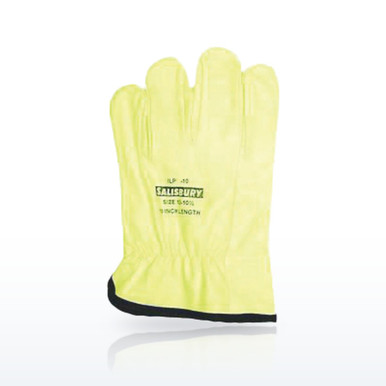
Rubber insulating gloves and protectors by class
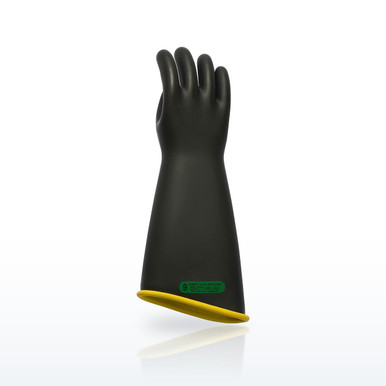
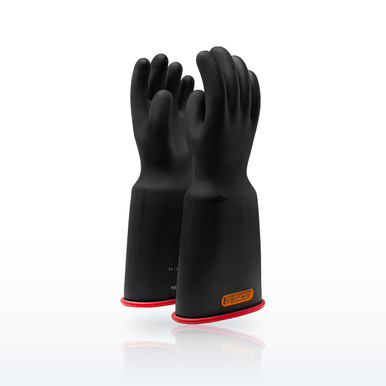
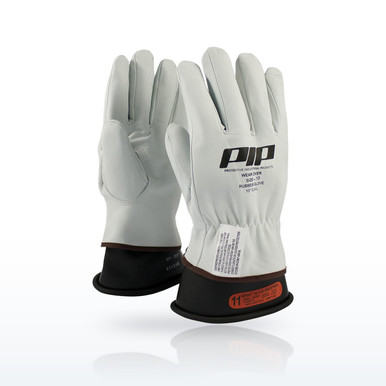
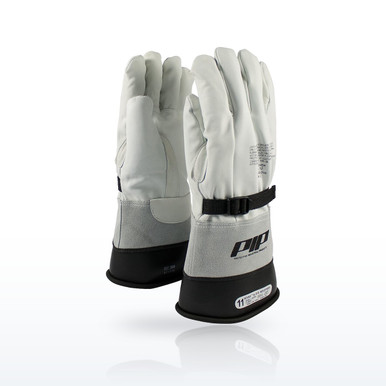
18 items · prices liveClass and Type are as marked on the cuff and published by the manufacturer; the maximum use voltage for each class is from 1910.137 Table I-4. Length, cuff style and sizes are on each product page. Protectors are worn over the rubber glove and sized to it. Free shipping on orders over $199.
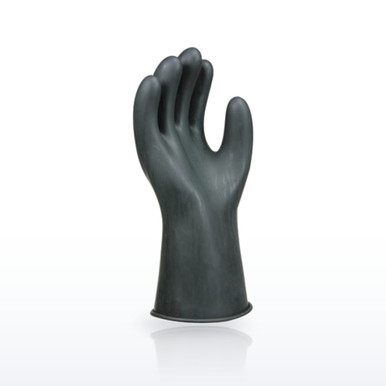
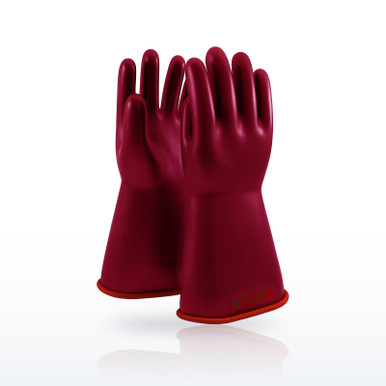
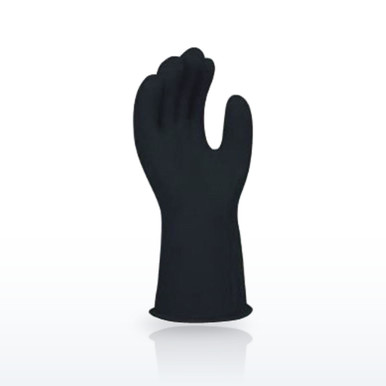
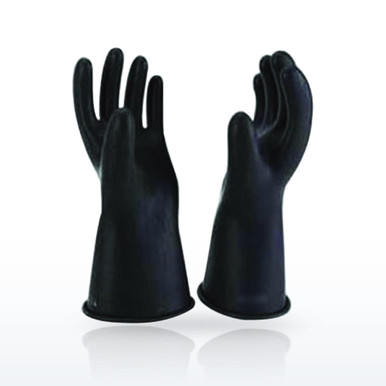

Electrical retesting every 6 months is the employer’s responsibility under 1910.137(c)(2)(viii); we can refer you to a test lab. Call (925) 215-7337.
Questions people ask
What are the classes of rubber insulating gloves?
Six: Class 00 (500 volts AC maximum use), 0 (1,000), 1 (7,500), 2 (17,000), 3 (26,500) and 4 (36,000). (1910.137 Table I-4.)
How often do insulating gloves have to be tested?
Electrically before first issue and every 6 months after, plus when their insulating value is in doubt, after a repair, and after use without protectors. Gloves in storage may be issued only if tested within the last 12 months. (1910.137 Table I-5.)
Do insulating gloves need to be air-tested every day?
Yes. 1910.137(c)(2)(ii) requires inspection for damage before each day’s use and an air test along with the inspection.
Do you have to wear leather protectors over rubber gloves?
Yes, except Class 0 for limited-use work needing high finger dexterity, Class 00 the same but only up to 250 volts AC or 375 volts DC, and other classes only where the employer shows low risk of damage and uses a glove one class higher. (1910.137(c)(2)(vii).)
What class of glove for 480 volts?
Class 00 covers up to 500 volts AC. Class 0 covers up to 1,000 and is often chosen for 480-volt work for margin; the employer’s assessment decides.
What is the difference between Type I and Type II?
Type I gloves are not resistant to ozone; Type II are. Both are marked on the cuff. (1910.137(a)(1)(ii).)
Can a rubber insulating glove be repaired?
Only minor defects, only between the wrist and the reinforced edge of the opening, and only with a compatible patch or liquid compound; it is retested before reuse. (1910.137(c)(2)(x)(D) and (xi).)
Does the color of the glove mean anything?
Not under the standard. Class is read from the cuff label; manufacturers use colors for visibility and for spotting cuts, not to signal class.
Standards and ratings on this page are as published in the documents named and by the manufacturers named. The employer’s hazard assessment and written program decide what applies at a given workplace. Verify a rating on the product and its spec sheet before use.