
OSHA hand protection requirements: what 1910.138 says
OSHA’s hand protection standard is two paragraphs. The employer must select hand protection and require employees to use it when hands are exposed to hazards such as skin absorption of harmful substances, severe cuts or lacerations, severe abrasions, punctures, chemical burns, thermal burns and harmful temperature extremes. And the employer must base the selection on an evaluation of the glove’s performance characteristics against the task, the conditions, how long it is worn and the hazards identified. The standard does not name a glove, a material or a cut level. The hazard assessment, written and certified under 1910.132(d), is where the hazard and the glove get matched, and the glove’s ANSI or EN rating is how the match is shown. OSHA does not require cut-resistant gloves by name; it requires gloves that match a cut hazard once one is identified, which in practice is a glove at a stated ANSI cut level.
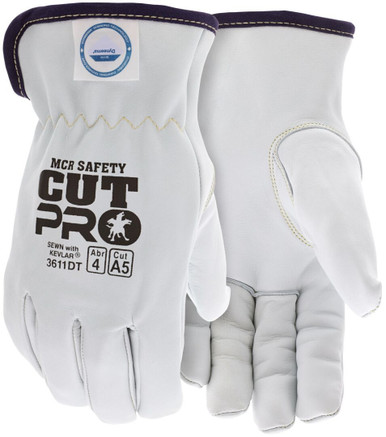 MCR Safety 3611DT leather drivers glove, ANSI A5Cut-resistant leather work glove, sold per pair
Why is the standard so short? OSHA wrote 1910.138 in 1994 as a performance standard: it tells the employer what outcome is required and leaves the method open, because the hazards to hands range from a solvent to a band saw to a cryogenic line and no single glove rule could cover them. The method comes from three other places. 1910.132(d) requires a hazard assessment that identifies the hazard and selects the PPE. Appendix B to Subpart I gives the selection guidance. And the consensus standards, ANSI/ISEA 105 for cut, puncture and abrasion and ANSI/ISEA 138 for impact, give the ratings that let the selection be written down and checked. A short standard with a long paper trail.
What are the seven hazards 1910.138 names?
The list in paragraph (a) is introduced with “such as”, so it is not closed, but these are the hazards OSHA expects every hazard assessment to look for.
What does the employer have to do, step by step?
- Assess the workplace for hand hazards. The employer must assess the workplace to determine whether hazards are present, or likely to be present, that require PPE. For hands that means walking the tasks and naming the sharp, hot, cold, rough and chemical contacts.
- Select the glove from its performance characteristics. The selection has to be based on an evaluation of the glove’s performance against the task, the conditions, the duration of use and the hazards identified. Appendix B says to ask the manufacturer for documentation that the glove meets the test standard for the hazard before buying it.
- Have each employee use it, and make sure it fits. The employer selects the PPE, has each affected employee use it, tells each employee what was selected, and selects PPE that properly fits each employee.
- Certify the assessment in writing. A written certification that names the workplace evaluated, the person certifying, the dates, and identifies itself as a certification of hazard assessment.
- Train each employee. When the gloves are necessary, what gloves, how to put them on, take them off, adjust and wear them, their limitations, and their care, maintenance, useful life and disposal. The employee has to demonstrate understanding, and retraining is required when the workplace or the gloves change.
- Pay for them. PPE required by the standard is provided at no cost to the employee, with the exceptions in 1910.132(h)(2) through (h)(6), which cover items such as non-specialty safety-toe footwear, everyday clothing and weather gear, not gloves selected for a hazard.
- Keep it in usable condition. PPE is provided, used and maintained in a sanitary and reliable condition. Defective or damaged PPE may not be used.
Does OSHA require cut-resistant gloves?
Not by name. No OSHA standard says “cut-resistant gloves” or names an ANSI level. What 1910.138 says is that hand protection is required when hands are exposed to severe cuts or lacerations, and that it must be selected from its performance characteristics for that hazard. Once the hazard assessment identifies a cut hazard, a glove with no cut rating, or with a rating below the hazard, does not meet the selection requirement. In practice that is a requirement for cut-resistant gloves at a level the assessment names, and the ANSI/ISEA 105 level on the glove is how compliance is shown.
29 CFR 1910.138(a) and (b); 1910.132(d)(1)(i); ANSI/ISEA 105-2016 Table 1 and section 7 (marking).OSHA citations for hand injuries are written under 1910.138(a) (no hand protection, or the wrong kind, for a named hazard) and 1910.132(d)(1) (no hazard assessment, or one that missed the hazard). The defense is the paper: an assessment that names the cut hazard and the level, gloves marked at that level, and training records. The level itself is a judgment call the standard leaves to the employer, which is what the ANSI scale is for.
29 CFR 1910.138(a); 1910.132(d)(1) and (d)(2); 1910.132(f)(2) and (f)(3) (demonstrated understanding and retraining).Construction has its own PPE section, which says the same things with less detail: PPE is provided and used wherever hazards require it, and it must be of safe design and construction for the work. Construction employers generally apply the 1910.132 and 1910.138 method as the recognized practice.
29 CFR 1926.95(a) and (c); 1926.28(a).What does Appendix B add?
- OSHA is unaware of any glove that protects against all hand hazards, and common glove materials give only limited protection against many chemicals. Select the glove for the application, and decide how long it can be worn and whether it can be reused.
- Know the glove’s performance characteristics for the specific hazard (chemical, cut, flame), assessed by standard test procedures, and ask the manufacturer for documentation that the glove meets the test standard before buying.
- Study the work for dexterity needed, duration, frequency and degree of exposure, and the physical stresses on the glove.
- Where performance is acceptable, regularly changing a cheaper glove can be more cost-effective than reusing an expensive one.
- For chemicals: determine the toxic properties, including skin absorption; any chemical-resistant glove is generally acceptable for dry powders; select for a mixture by the component with the shortest breakthrough time; and make sure employees can remove gloves without contaminating their skin.
What is not in 1910.138?
Electrical shock. Rubber insulating gloves are covered by 1910.137 and the electrical work rules in 1910.335, with their own class marks and 6-month test cycle. Bloodborne pathogens. Gloves for blood and other potentially infectious material are in 1910.1030(d)(3)(ix). Hazardous waste and emergency response. HAZWOPER has its own PPE program requirement. Welding. 1910.252 requires employees exposed to welding, cutting and brazing hazards to be protected by PPE under 1910.132, with the clothing depending on the size, nature and location of the work. Each of those standards applies in addition to the general rule, not instead of it.
29 CFR 1910.137 and 1910.335(a)(1); 1910.1030(d)(3)(ix); 1910.120(g); 1910.252(b)(3).Rated gloves for the hazards 1910.138 names
32 items · prices liveEach glove is listed at the rating its manufacturer publishes for the hazard in the group heading: ANSI/ISEA 105 cut, puncture and abrasion levels, or the chemical-resistant coating. Other ratings for the same glove are on the product page. Contractor Direct orders ship free.
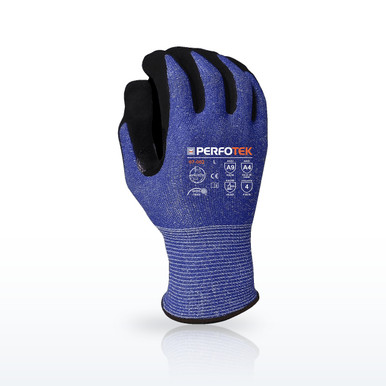
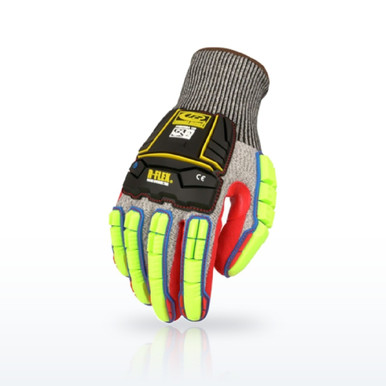
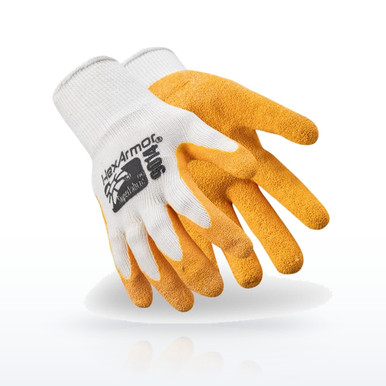
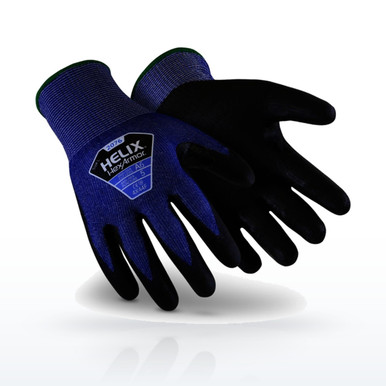
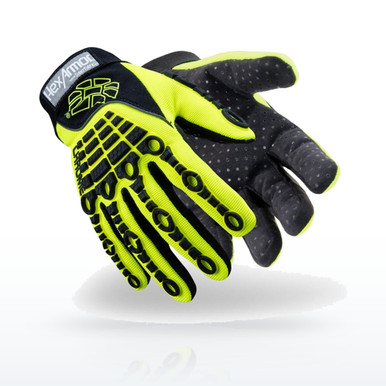
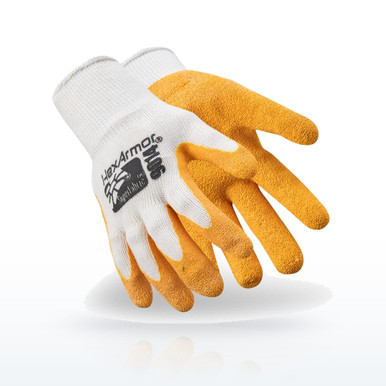
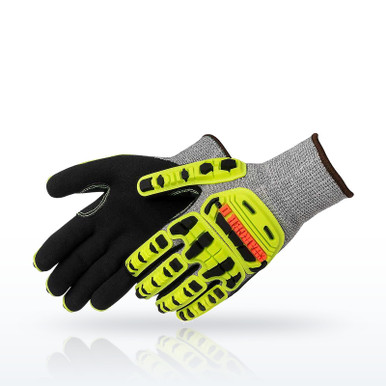
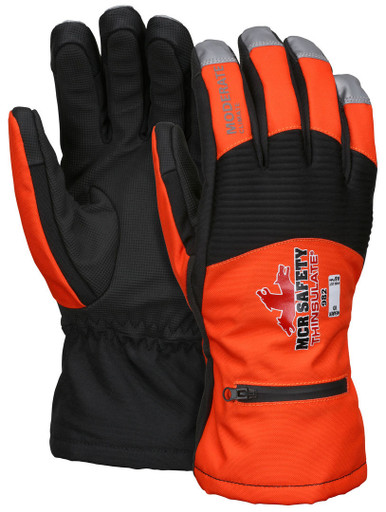
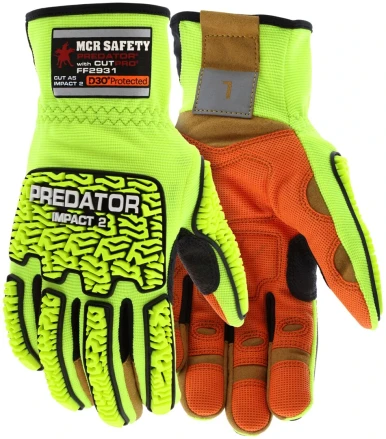
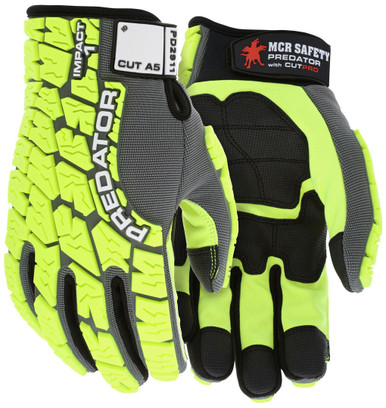
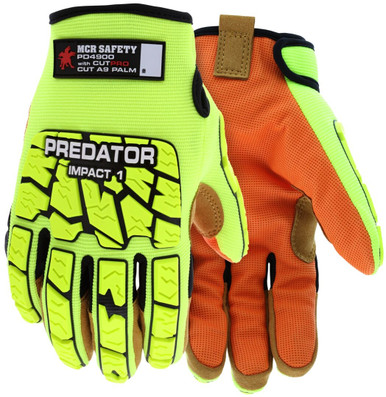
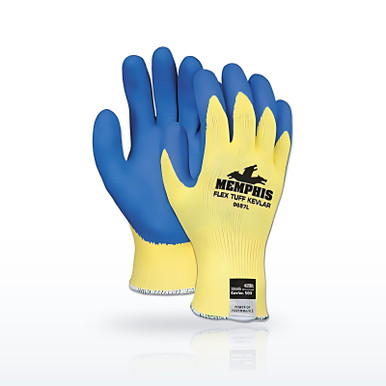
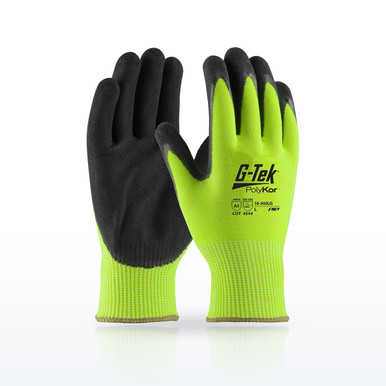
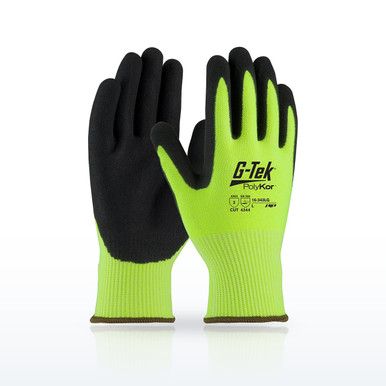
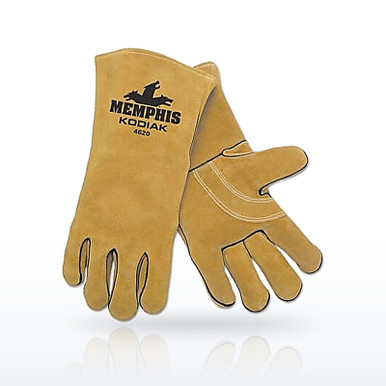
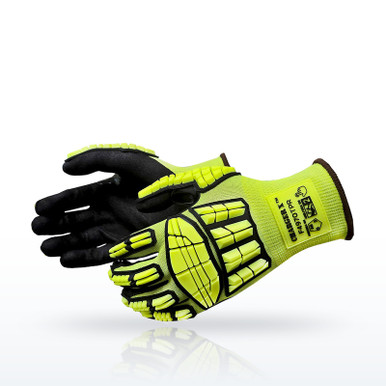
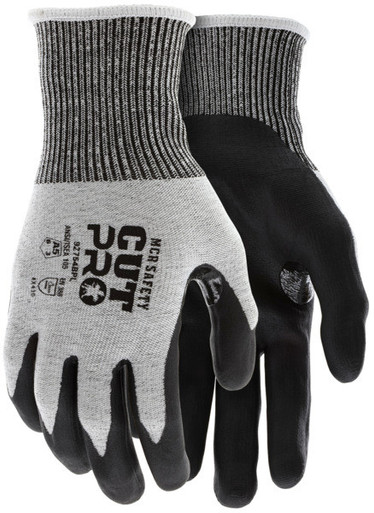
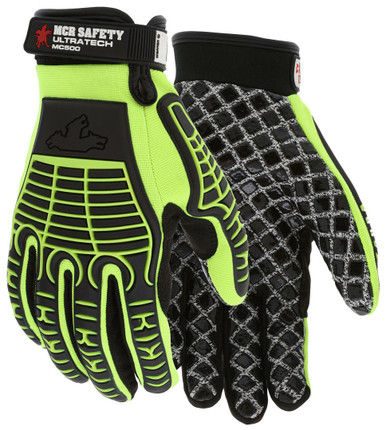
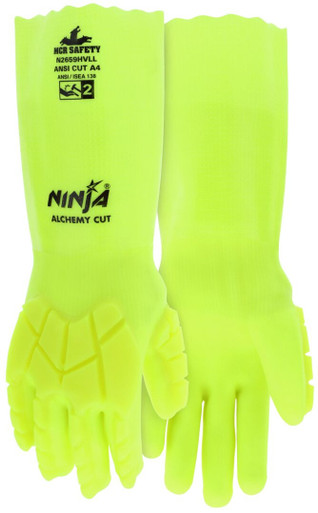
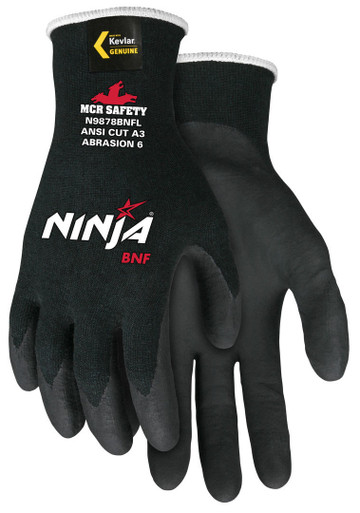
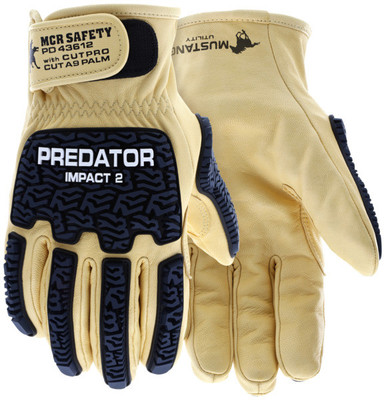
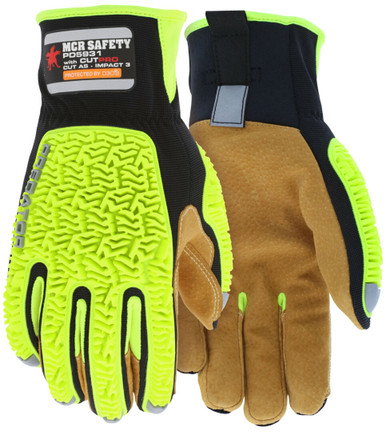
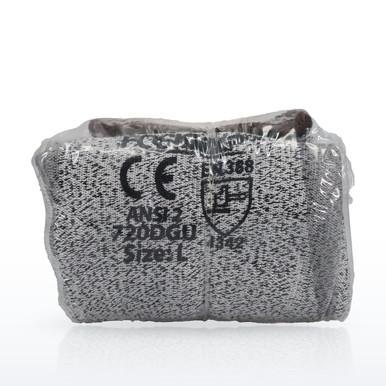
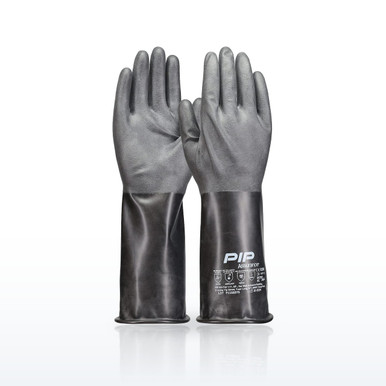
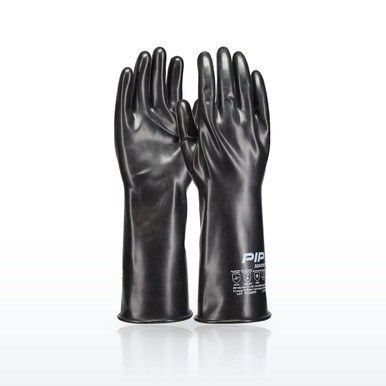
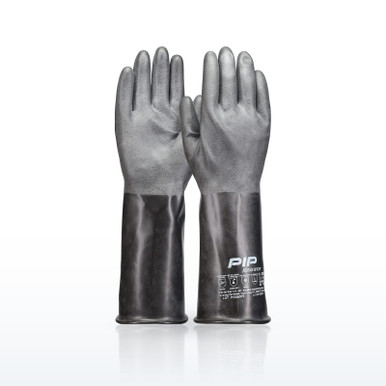
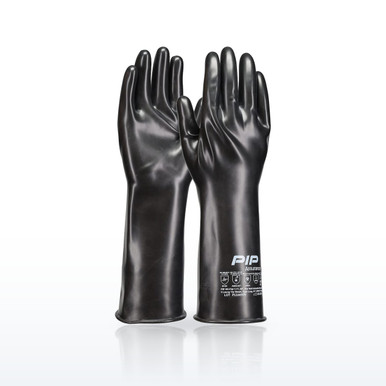
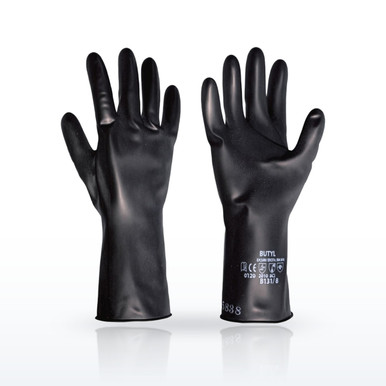
The work glove selector filters the whole catalog by cut level, coating, cuff and brand; chemical gloves by material and thickness are on it as well.
Questions people ask
What does OSHA 1910.138 require?
Hand protection, selected by the employer and used by employees, when hands are exposed to skin absorption of harmful substances, severe cuts or lacerations, severe abrasions, punctures, chemical burns, thermal burns or harmful temperature extremes; and a selection based on the glove’s performance characteristics for the task, conditions, duration and hazards.
Does OSHA require cut-resistant gloves?
Not by name. Once a hazard assessment identifies a cut hazard, 1910.138 requires hand protection matched to it, which in practice is a glove at an ANSI/ISEA 105 cut level the employer names.
Does OSHA require a specific ANSI cut level?
No. The level is the employer’s determination in the hazard assessment under 1910.132(d). OSHA cites when the glove does not match the hazard, not for the level chosen.
Does OSHA require gloves on every job?
No. Gloves are required where the hazard assessment finds a hand hazard. Some tasks, such as work near rotating machinery, are safer without gloves, and the assessment is where that is decided.
Who pays for work gloves?
The employer, where the gloves are PPE required by the standard (1910.132(h)(1)). The exceptions in 1910.132(h)(2) through (h)(6) are for items such as non-specialty safety-toe footwear and everyday clothing, not for gloves selected for a hazard.
Does the hazard assessment have to be written?
The assessment must be verified by a written certification naming the workplace, the certifier, the dates, and identifying itself as a certification of hazard assessment. (1910.132(d)(2).)
What training does OSHA require for gloves?
When and what PPE is necessary, how to put it on, take it off, adjust and wear it, its limitations, and its care, useful life and disposal, with the employee demonstrating understanding. (1910.132(f).)
Is 1910.138 the construction standard?
General industry. Construction uses 1926.95 and 1926.28, which require PPE wherever hazards require it; the 1910.132 and 1910.138 method is the recognized way to meet them.
Related guides
ANSI cut levels A1 to A9The scale the assessment is written inANSI A4 vs A5 vs A6 glovesWhat the three common levels protect againstReading a chemical resistance chartPermeation, breakthrough and degradationImpact-rated gloves: ANSI/ISEA 138Levels 1, 2 and 3How to measure glove sizeFit is part of the ruleStandards and ratings on this page are as published in the documents named and by the manufacturers named. The employer’s hazard assessment and written program decide what applies at a given workplace. Verify a rating on the product and its spec sheet before use.