
EN 388: how to read the four numbers and the letters on a glove
The code under the EN 388 hammer pictogram reads left to right: abrasion (1 to 4), blade cut by the Coupe test (1 to 5), tear (1 to 4), puncture (1 to 4), then a letter A to F for cut resistance on the ISO 13997 straight-blade test, and a P if the glove passed the knuckle impact test. Higher is better in every position. An X means that test was not run or does not apply; a 0 means the sample was tested and fell below level 1. A glove marked 4X42F has abrasion level 4, no Coupe result, tear level 4, puncture level 2 and the highest ISO cut letter. The letter is the number that lines up with the ANSI cut level on US gloves, and the two are close but not the same scale.
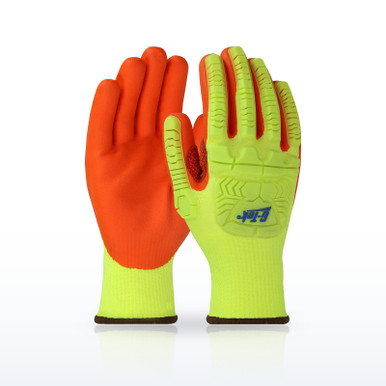
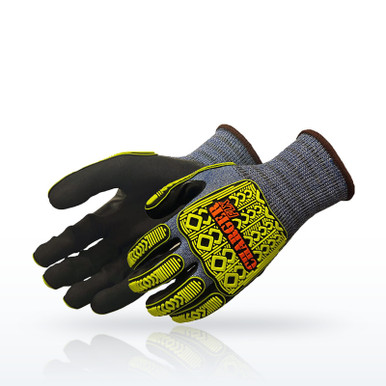 Liberty Safety DayBreaker F4953, EN 388 4X42EPANSI A6 cut, impact P, sold per pair
Why do US gloves carry a European marking? Most work gloves are sold on both sides of the Atlantic, so manufacturers test to both the US standard (ANSI/ISEA 105) and the European one (EN 388) and print both on the cuff. EN 388 covers four mechanical hazards in one code, where ANSI prints only the cut level as a badge and leaves abrasion and puncture to the spec sheet. Read correctly, the EN code tells you more about a glove at a glance than any other marking on it. Read wrongly, the second digit gets mistaken for the cut level, which is the most common error on a jobsite.
What does each position in the EN 388 code mean?
Six positions, in this order, under the pictogram of a hammer striking a surface. Example: 4X42FP.
EN 388:2016 performance levels
| Test | Level 1 | Level 2 | Level 3 | Level 4 | Level 5 |
|---|---|---|---|---|---|
| Abrasion (cycles) | 100 | 500 | 2,000 | 8,000 | |
| Coupe blade cut (index) | 1.2 | 2.5 | 5.0 | 10.0 | 20.0 |
| Tear (newtons) | 10 | 25 | 50 | 75 | |
| Puncture (newtons) | 20 | 60 | 100 | 150 | |
| ISO 13997 cut (newtons) | A: 2 | B: 5 | C: 10 | D: 15 | E: 22 · F: 30 |
| Impact (EN 13594) | P: pass, mean 7 kN or less |
Each level is the minimum result for that level. A 0 in any digit means the sample was tested and did not reach level 1; an X means not tested or not applicable. Where the Coupe blade dulls during the test on a hard-fiber glove, the 2016 edition requires the ISO 13997 test, and the Coupe digit is marked X. The ISO 13997 letter scale has six steps, A to F, not five.
EN 388:2016+A1:2018, clause 6 performance level tables; EN ISO 13997; EN 13594:2015 (impact test).
What changed in the 2016 edition and the 2018 amendment?
- The ISO 13997 straight-blade cut test was added as the fifth position, with letters A to F, because the Coupe blade dulls on glass and steel fibers and overstates the cut resistance of the toughest gloves. On any glove where the blade dulls, the Coupe digit becomes X and the letter is the cut rating.
- The impact test from EN 13594 (motorcycle gloves) was added as an optional sixth position, marked P on a pass.
- A1:2018 is a technical amendment to the 2016 edition; gloves tested to either carry the same six-position code. A four-digit code with no letter is a 2003-edition result, and its second digit is a Coupe number, not a straight-blade one.
ANSI cut level vs EN 388: how do you convert between the two scales?
Both the US scale (ANSI/ISEA 105, levels A1 to A9) and the EN letter scale (ISO 13997, A to F) are run on the same kind of machine, a TDM-100, with a straight blade drawn across the material until it cuts through at 20 millimeters. ANSI reports the load in grams; EN reports it in newtons. One newton is about 102 grams of load, which gives the arithmetic line-up: A (2 N) is about 204 grams, inside ANSI A1; B (5 N) is about 510 grams, A2; C (10 N) is about 1,020 grams, A3; D (15 N) is about 1,530 grams, A4; E (22 N) is about 2,243 grams, A5; F (30 N) is about 3,059 grams, A6. Above F the EN scale stops; ANSI keeps going to A9 at 6,000 grams.
ANSI/ISEA 105-2016 Table 1 (A1 200 g through A9 6,000 g, ASTM F2992-15); EN 388:2016+A1:2018 ISO 13997 levels (A 2 N through F 30 N); 1 N = 101.97 gram-force.That line-up is a conversion of the threshold numbers, not an equivalence of the tests. ANSI/ISEA 105 and EN 388 differ in sample conditioning, in how the blade is handled between cuts and in how the cut-through load is calculated, and the glove makers who test to both say the two cannot be compared as if they were the same test. You will see gloves in our catalog marked F that carry ANSI A6, A7, A8 or A9, and gloves marked E at A4 or A5. The practical rule: read the ANSI level on a US jobsite where the hazard assessment is written in ANSI levels, read the EN letter where the specification is European, and never derive one from the other for a written PPE requirement. Each product page here shows both as the manufacturer published them.
PIP, ANSI/ISEA 105 vs EN 388 comparison (the standards are not equivalent and cannot be compared as such); ASTM F2992-15 and EN ISO 13997 test procedures.The Coupe digit never converts to ANSI at all. It is a different blade, a different motion and a different load, and on a glass- or steel-core glove it is marked X. If a European glove carries only a four-digit code with a 5 in the second position, it tells you the glove did well on the Coupe test and nothing about its straight-blade cut load.
EN 388:2016+A1:2018, clause 6 (Coupe test versus ISO 13997 test); ANSI/ISEA 105-2016 section 5.1 (cut, ASTM F2992 only).What does EN 388 not cover?
- Chemicals: that is EN ISO 374, with its own beaker pictogram and letter list.
- Heat and flame: EN 407, a flame pictogram with six digits.
- Cold: EN 511, three digits.
- Electrical shock: rubber insulating gloves are tested and classed under ASTM D120 and IEC 60903, and OSHA 1910.137; EN 388 says nothing about voltage.
- Vibration, needle-stick and back-of-hand impact above a plain pass: ANSI/ISEA 138 grades impact into levels 1 to 3 where EN 388 gives only P.
- Fit and general requirements, including sizing and pH, which are in EN ISO 21420 (formerly EN 420).
Gloves by EN 388 cut letter
32 items · prices liveThe EN 388 code shown is the manufacturer’s published marking for the glove, as it appears on the cuff. The ISO 13997 letter is the fifth position. The ANSI level is on the product page. Free shipping on orders over $199.
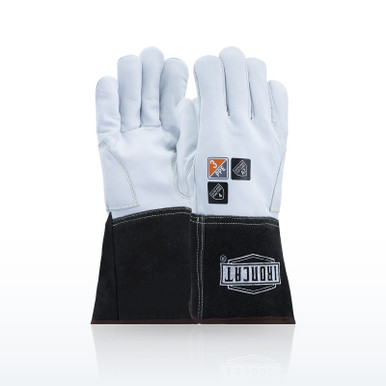
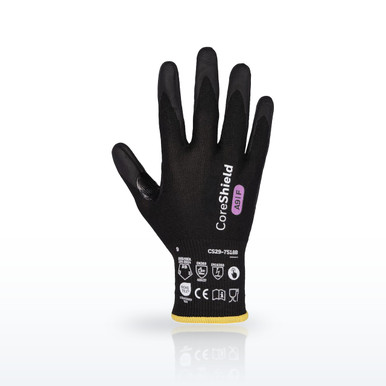
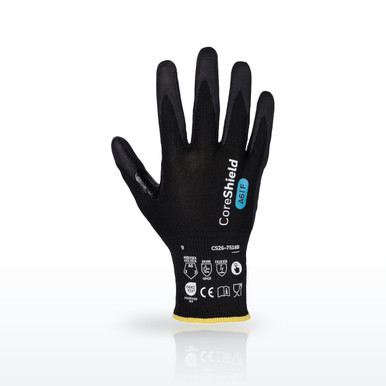
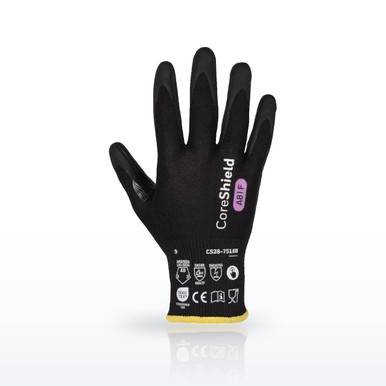
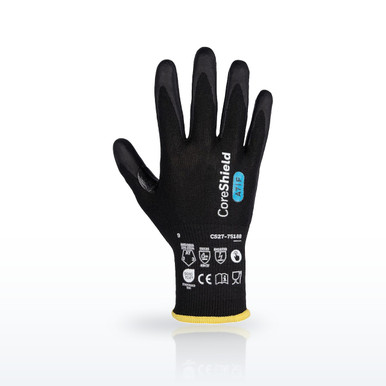
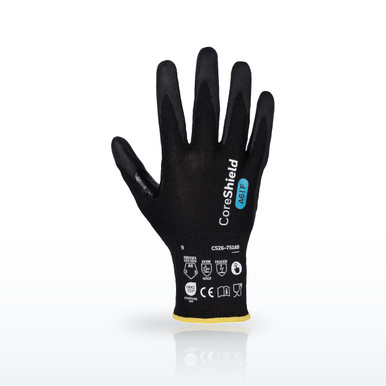
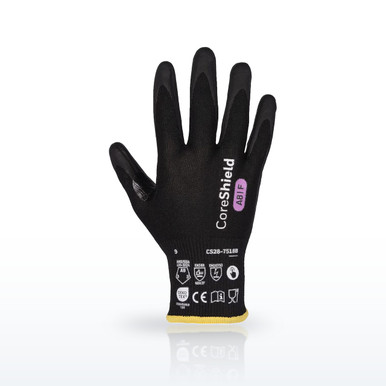
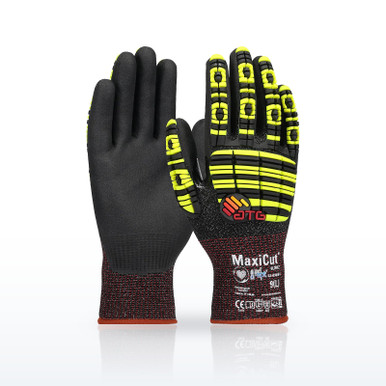
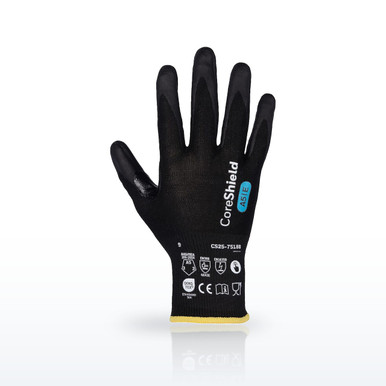
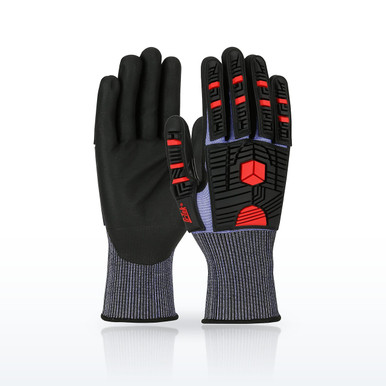
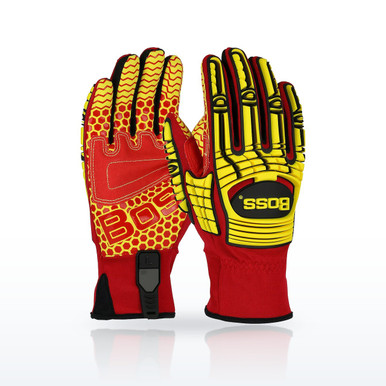
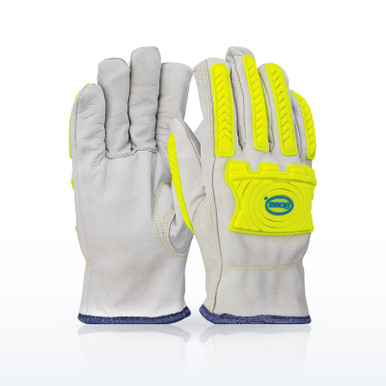
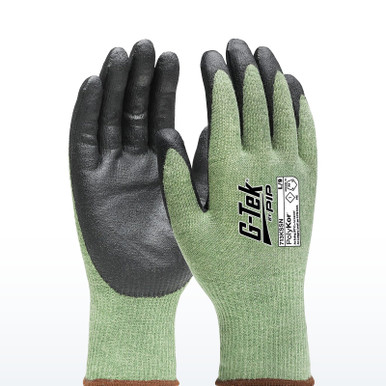
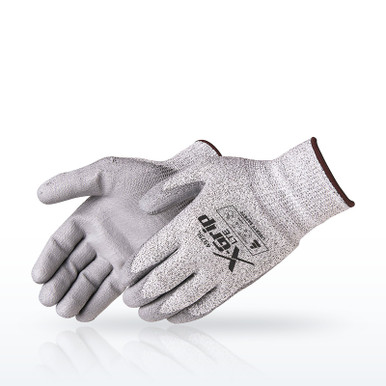
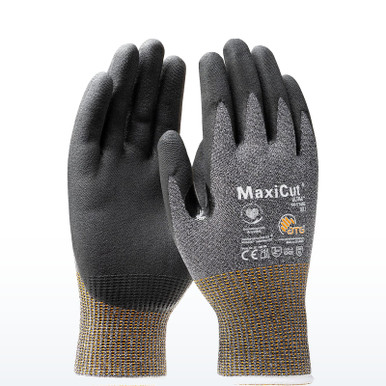
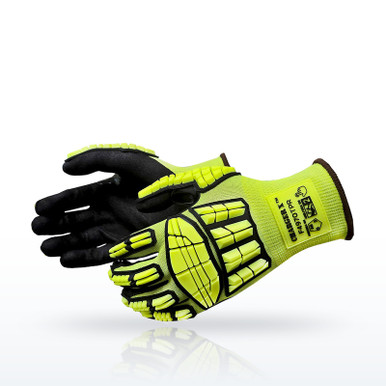
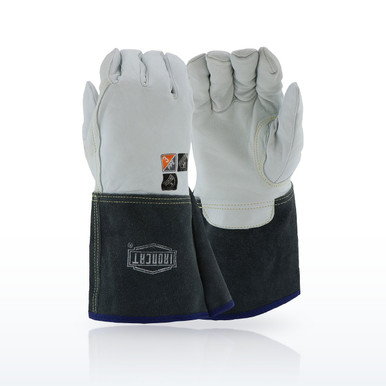
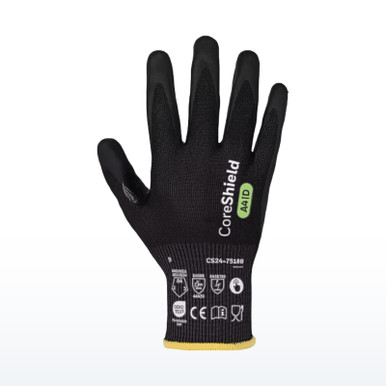
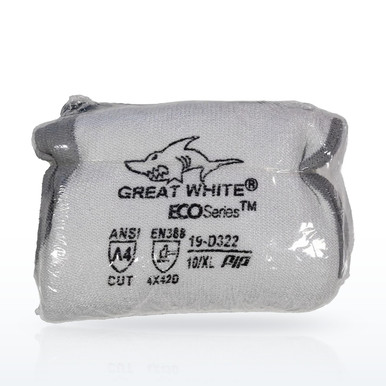
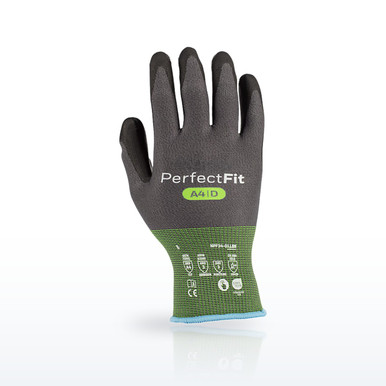
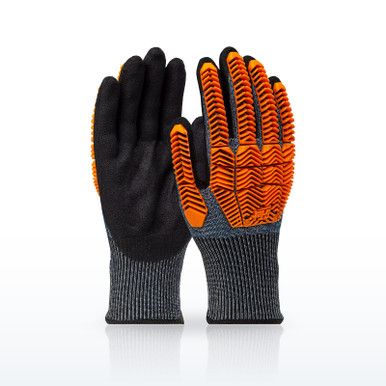
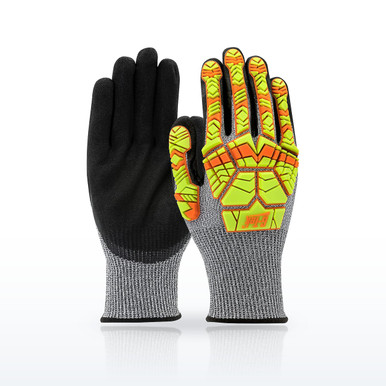
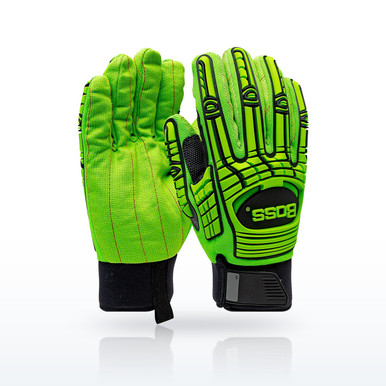
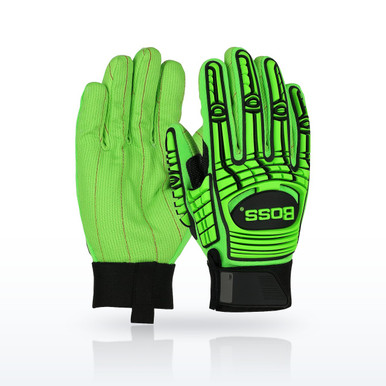
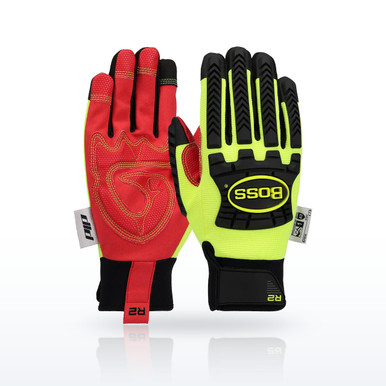
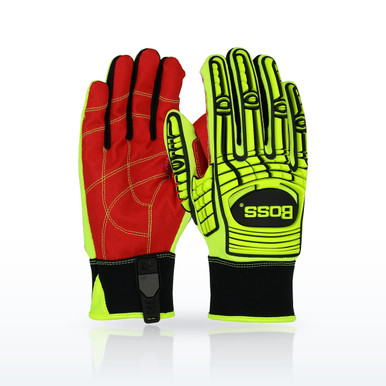
Every glove with a published EN 388 code is on the work glove selector, where you can filter by ANSI level, coating and brand as well.
Questions people ask
What do the 4 numbers on EN 388 mean?
Abrasion (1 to 4), Coupe blade cut (1 to 5), tear (1 to 4) and puncture (1 to 4), in that order. Higher is better. The letter after them is the ISO 13997 straight-blade cut level, A to F.
What does the X mean in EN 388?
The test was not performed or does not apply. On a cut-resistant glove with glass or steel fiber the Coupe digit is X because the blade dulls, and the letter is the cut rating.
What does 4X42F mean?
Abrasion 4, Coupe cut not tested, tear 4, puncture 2, ISO 13997 cut F (30 newtons). No P, so no impact claim.
What is EN 388 cut level F in ANSI?
F is a cut-through load of 30 newtons, about 3,059 grams, which is inside the ANSI A6 band. The glove makers test both separately; gloves marked F carry ANSI ratings from A6 to A9. Read the ANSI level on the product page for a US specification.
Is EN 388 level 5 the same as ANSI A5?
No. A Coupe level 5 is an index on a rotating blade; ANSI A5 is 2,200 to 2,999 grams on a straight blade. There is no conversion between the Coupe digit and ANSI.
What does the P mean on EN 388?
The glove passed the knuckle impact test from EN 13594: a 5 joule strike transmitted a mean of 7 kilonewtons or less. It is a pass, not a level; ANSI/ISEA 138 grades impact into levels 1 to 3.
Does OSHA recognize EN 388?
OSHA does not adopt EN 388 or ANSI/ISEA 105 by reference. 1910.138 requires hand protection selected from its performance characteristics for the hazard; either marking is evidence of those characteristics.
Is a higher EN 388 abrasion number always better?
For wear life, yes: level 4 survived 8,000 cycles, level 1 survived 100. It says nothing about cut, which is the letter.
Standards and ratings on this page are as published in the documents named and by the manufacturers named. The employer’s hazard assessment and written program decide what applies at a given workplace. Verify a rating on the product and its spec sheet before use.