
Fall arrest vs fall restraint vs positioning: what each system does
All three use a harness and a line to an anchor, but they do different jobs. Fall arrest stops a fall that has already started: a shock-absorbing lanyard or self-retracting lifeline, a 5,000-pound anchor, and enough clearance below you. Fall restraint keeps the fall from happening: a line short enough that you cannot reach the edge, so there is no free fall at all. Positioning holds you in place on a wall, pole or rebar so you can work with both hands, with a free fall limited to 2 feet and a separate fall arrest system backing it up. The equipment is not interchangeable: a restraint lanyard has no energy absorber, a positioning lanyard is not a fall arrest lanyard, and only a fall arrest system is built for a free fall.
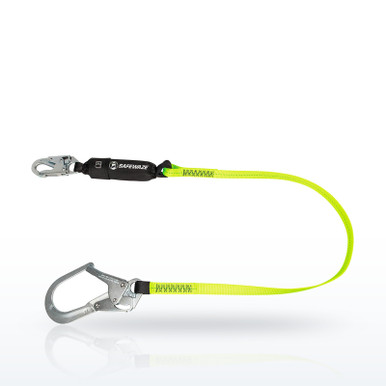
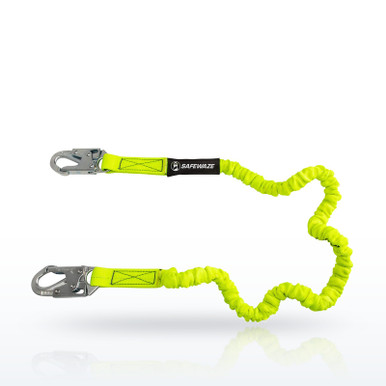
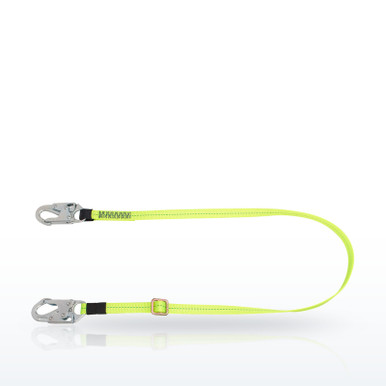
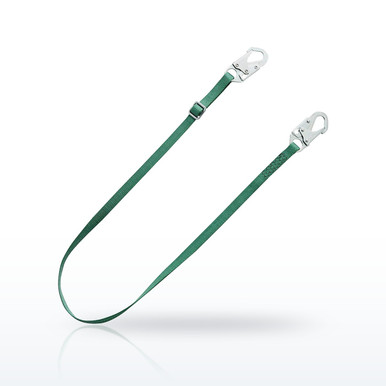
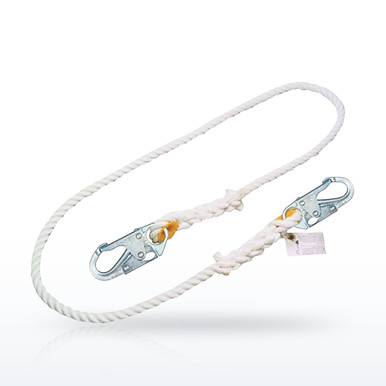
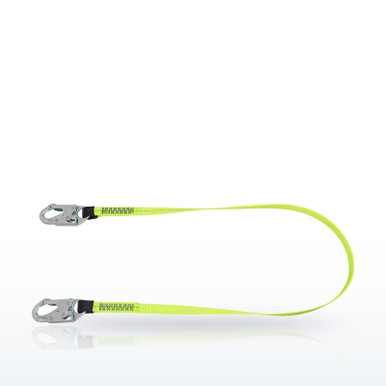 Safewaze FS88860 6-foot web restraint lanyardFixed-length restraint lanyard, ANSI Z359.3, no energy absorber
Why does the difference matter? Because the gear is rated for one job. A positioning lanyard clipped to a side D-ring will not limit the force of a 6-foot fall. A restraint lanyard has no energy absorber because it was never meant to be loaded by a falling body. A fall arrest lanyard anchored at the feet will free fall farther than it was built for. The system type decides the anchor strength, the D-ring you connect to, the lanyard, and whether you need to calculate clearance. OSHA writes separate rules for each.
What does OSHA require of each system?
Three sets of rules, side by side.
What is a personal fall arrest system?
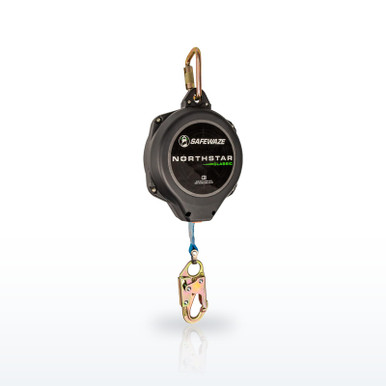
A system used to arrest an employee in a fall from a working level: an anchorage, connectors, a full-body harness, and a lanyard, deceleration device or lifeline between them. The deceleration device is the part that does the work: a shock-absorbing lanyard with a tear-out pack, a self-retracting lifeline that locks and brakes, or a rope grab on a vertical lifeline. You connect at the back D-ring. The system is sized by the fall you could take: a 6-foot shock-absorbing lanyard anchored at the D-ring allows a 6-foot free fall and then 3.5 feet more to stop, so you need something like 17 to 18 feet of clear space below the anchor. An overhead SRL locks in inches and needs far less.
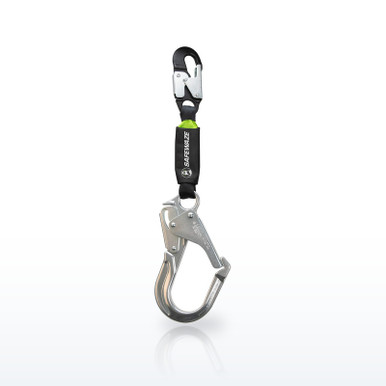
29 CFR 1926.500(b), definitions of personal fall arrest system and deceleration device; 1926.502(d)(16)(iii) and (iv) and (d)(17); 1910.140(b) and (d)(1); clearance figure from manufacturer fall clearance charts (3M, FallTech) for a 6-foot energy-absorbing lanyard.Equipment for fall arrest: full-body harness (ANSI Z359.11), energy-absorbing lanyard (ANSI Z359.13), self-retracting lifeline (ANSI Z359.14 Class 1 overhead or Class 2 for anchorage below the D-ring), vertical lifeline with rope grab (ANSI Z359.15), and a 5,000-pound anchorage connector (ANSI Z359.18). The energy absorber is not optional: a plain web lanyard with no absorber is not a fall arrest lanyard.
ANSI/ASSP Z359.11, Z359.13, Z359.14, Z359.15 and Z359.18 as named on each manufacturer’s spec sheet; 29 CFR 1926.502(d)(9) and (d)(13).What is fall restraint?
A restraint system keeps you from getting to the edge in the first place. The lanyard is fixed-length or adjustable, with no energy absorber, and it is rigged so that at full stretch you are still inside the edge. There is no free fall, so there is no arresting force, no clearance calculation and no swing. OSHA’s construction standard does not have a restraint section; OSHA has said since 1995 that it accepts a properly used restraint system in place of fall arrest, and suggests the anchor hold at least 3,000 pounds or twice the expected force. The general industry rule, written in 2016, defines a travel restraint system outright and requires the restraint line to hold 5,000 pounds. Because there is no fall, a body belt is still allowed for restraint.
OSHA letter of interpretation, November 2, 1995 (restraint accepted in lieu of fall arrest; 3,000 pounds or twice the expected force suggested); OSHA letter of interpretation, May 11, 2001 (body belt in restraint); 29 CFR 1910.140(b), definition of travel restraint system, and (c)(14).The catch is rigging. A 6-foot restraint lanyard on an anchor 4 feet from the edge is a fall arrest situation with the wrong lanyard. Measure from the anchor to the edge with the lanyard fully extended and the worker leaning, and remember that an adjustable lanyard can be let out. On a flat roof the typical setup is an anchor well back from the edge and a lanyard short enough that the worker cannot reach the parapet.
OSHA letter of interpretation, November 2, 1995: the restraint system is rigged so the employee cannot get to the fall hazard; manufacturer instructions for restraint lanyards.What is a positioning system?
A positioning device system is a body belt or body harness system rigged to allow an employee to be supported on an elevated vertical surface, such as a wall, and work with both hands free while leaning. Think rebar tying, formwork, pole climbing and tower work: the positioning lanyard goes from one hip D-ring around the structure to the other hip D-ring, and the worker leans back into it. OSHA limits the free fall in a positioning system to 2 feet and requires the anchorage to hold twice the potential impact or 3,000 pounds. Positioning holds you in place; it does not catch a fall. If a fall is possible, a separate fall arrest connection at the dorsal D-ring is required alongside it.
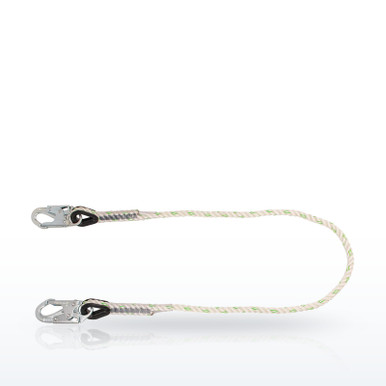
29 CFR 1926.500(b), definition of positioning device system; 1926.502(e)(1) and (e)(2); 1910.140(b), definition of positioning system, and (e)(1)(i).Equipment for positioning: a harness with side (hip) D-rings, a positioning lanyard (ANSI Z359.3) in web, rope, chain or cable, often adjustable, and for rebar a chain assembly with large rebar hooks. The side D-rings on a harness are rated for positioning only; they are not fall arrest attachment points.
ANSI/ASSP Z359.3 as named on each manufacturer’s spec sheet; ANSI/ASSP Z359.11 D-ring pictograms showing approved use of each attachment; 29 CFR 1926.502(d)(17).Which lanyard goes with which system?
- Fall arrest: energy-absorbing lanyard (Z359.13) or SRL (Z359.14), connected to the back D-ring, on a 5,000-pound anchor. Never a positioning or restraint lanyard.
- Restraint: fixed or adjustable lanyard with no absorber (Z359.3 restraint lanyard), connected to the back D-ring or, in restraint only, a body belt, rigged so you cannot reach the edge.
- Positioning: positioning lanyard (Z359.3) between the two hip D-rings around the structure, free fall limited to 2 feet, with a fall arrest connection as well where a fall is possible.
- One harness can serve all three if it has the D-rings: a construction harness with a dorsal D-ring and two side D-rings is the usual choice. A harness with only a back D-ring is fall arrest and restraint only.
- Read the label. Lanyards are marked with the standard and the use; a lanyard without an energy absorber is marked for restraint or positioning, not fall arrest.
Lanyards and SRLs by system
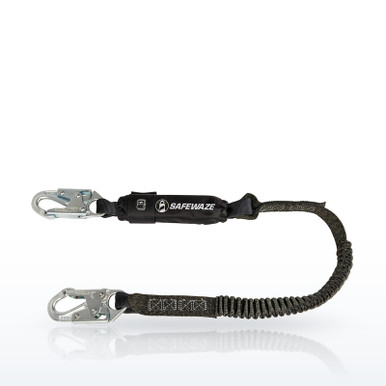
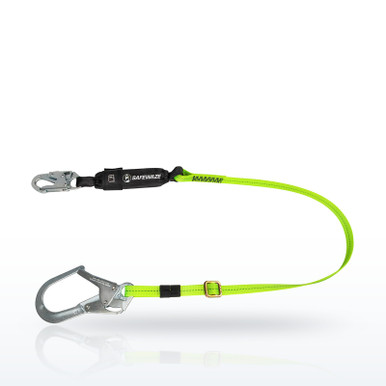
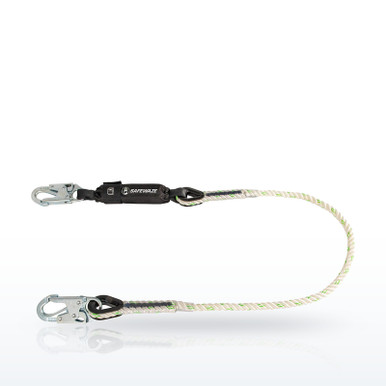
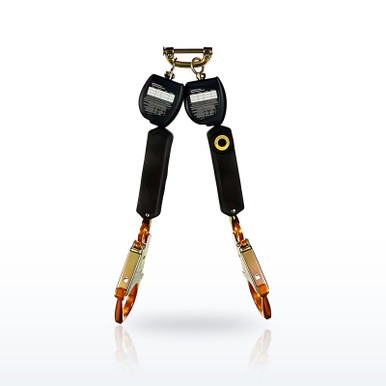
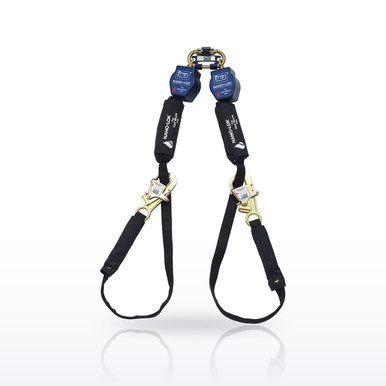
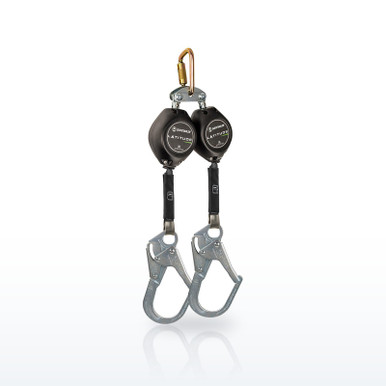
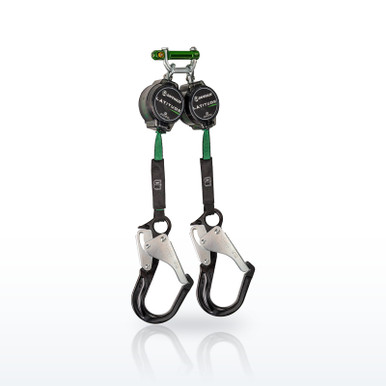
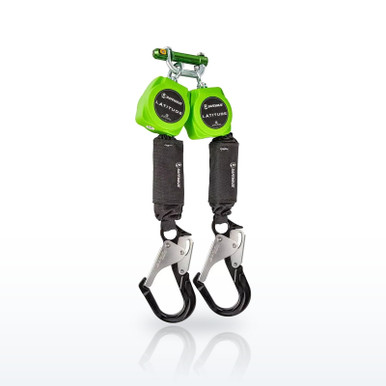
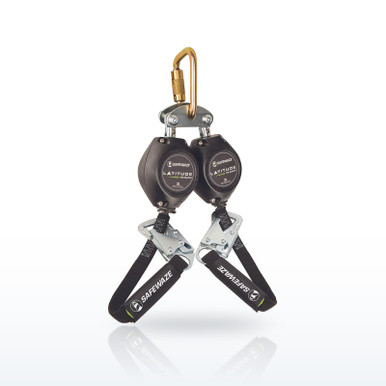
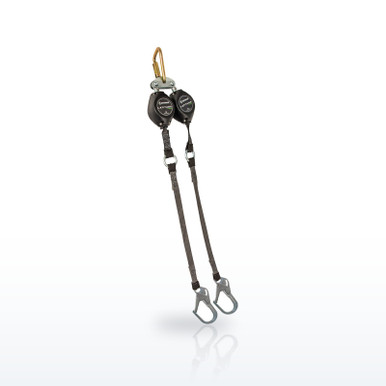
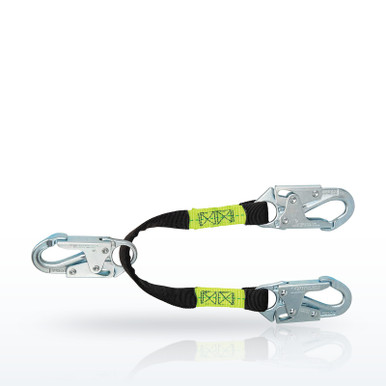
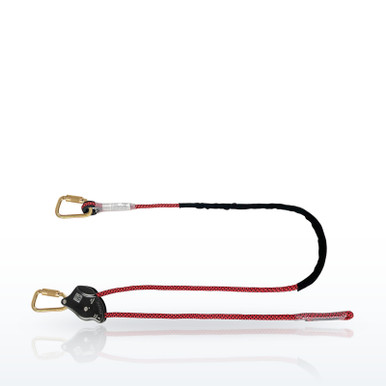
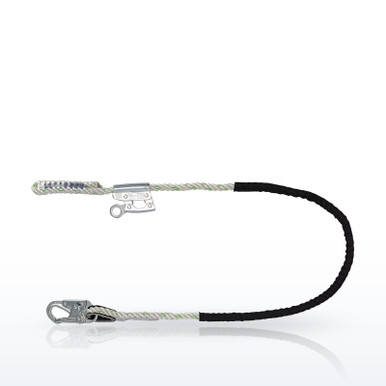
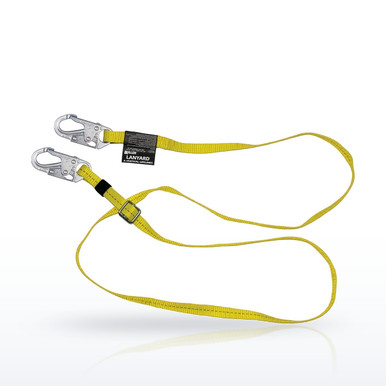
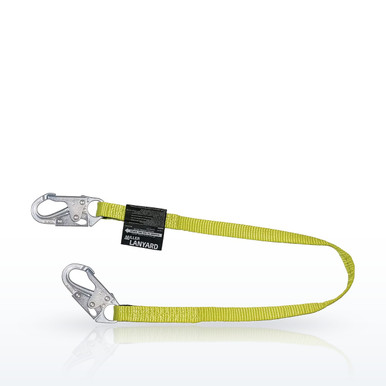
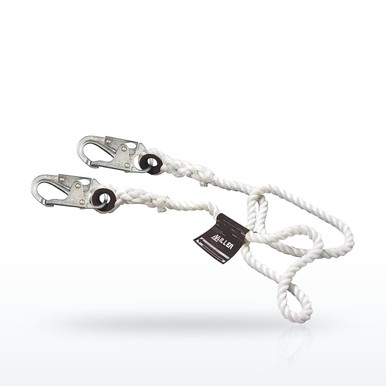
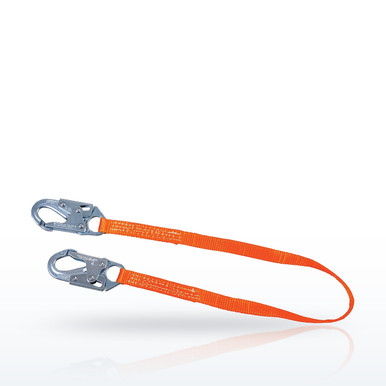
29 items · prices liveEach item is listed with the ANSI standard its manufacturer names on the spec sheet: Z359.13 and Z359.14 for fall arrest, Z359.3 for restraint and positioning lanyards. The use is on the product label. Free shipping on orders over $199.
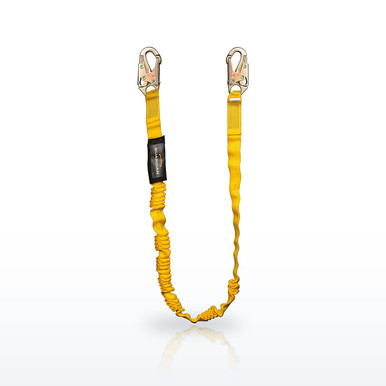
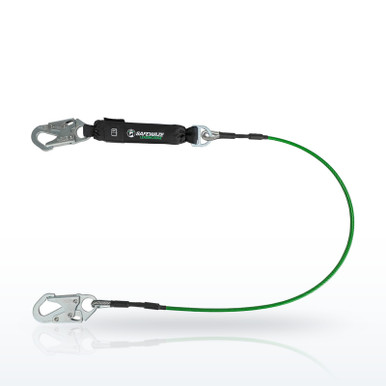
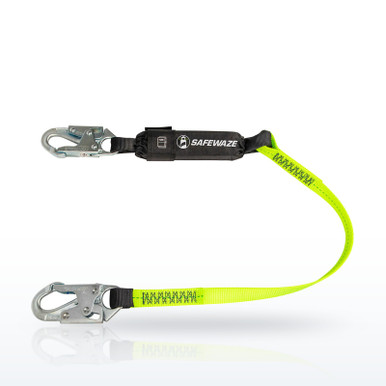
Full-body harnesses with side D-rings for positioning, and anchors for all three systems, are on the fall protection finder.
Questions people ask
What is the difference between fall arrest and fall restraint?
Fall arrest stops a fall after it starts and needs an energy absorber, a 5,000-pound anchor and clearance below. Fall restraint keeps you from reaching the edge, so there is no fall; the lanyard has no absorber and is rigged short.
What is the difference between fall arrest and positioning?
Positioning holds you against a wall or pole with both hands free, from the hip D-rings, with free fall limited to 2 feet. It does not catch a fall; where a fall is possible you also connect a fall arrest system at the back D-ring. (1926.502(e).)
Can I use a positioning lanyard for fall arrest?
No. It has no energy absorber and is not tested for a 6-foot free fall, and the side D-rings it connects to are not fall arrest attachment points. Fall arrest uses the dorsal D-ring and a Z359.13 lanyard or Z359.14 SRL.
Does fall restraint require a harness?
OSHA allows a body belt in a restraint system because there is no fall to arrest. Most employers use a harness anyway so the same gear works for arrest. (OSHA letter, May 11, 2001.)
How strong does a restraint anchor need to be?
OSHA’s construction letter suggests at least 3,000 pounds or twice the expected force; the general industry rule requires the restraint line itself to hold 5,000 pounds (1910.140(c)(14)). Many employers simply use a 5,000-pound anchor for everything.
What free fall is allowed in a positioning system?
2 feet. (1926.502(e)(1).)
What is the anchor requirement for positioning?
Twice the potential impact load or 3,000 pounds, whichever is greater. (1926.502(e)(2).)
Do I need to calculate clearance for restraint?
No, if it is truly restraint: the worker cannot reach the edge, so there is no fall. If the lanyard lets the worker past the edge, it is not restraint and the fall arrest rules apply.
Standards and ratings on this page are as published in the documents named and by the manufacturers named. The employer’s hazard assessment and written program decide what applies at a given workplace. Verify a rating on the product and its spec sheet before use.